From a quarter-midget in Columbus to a 2002 pole at Kentucky Speedway, nine Indianapolis 500 starts and a team she built into a long-running IndyCar operation.
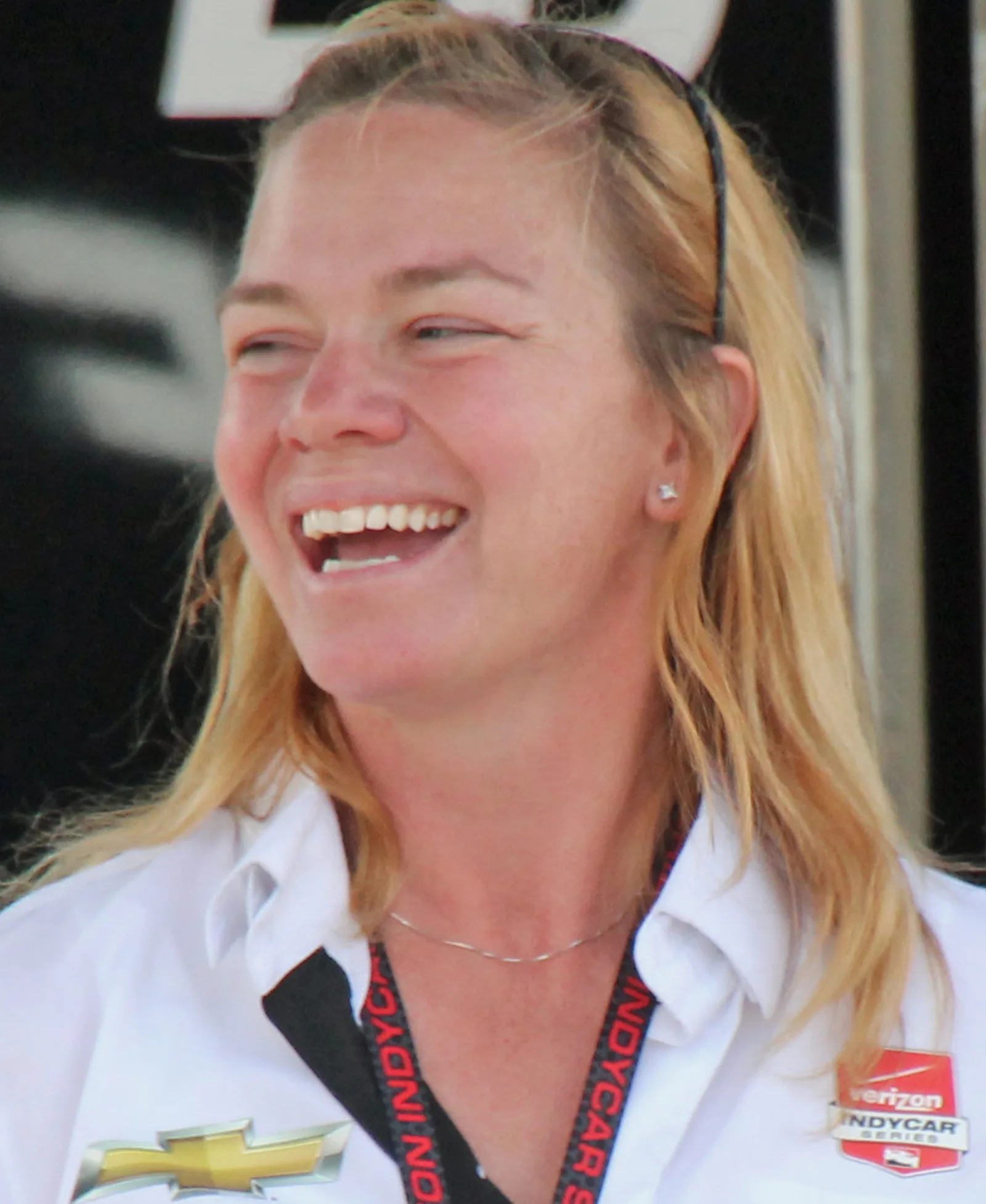
Retired American driver Sarah Fisher raced in open-wheel events from 1999 to 2010, later running her own team and serving as IndyCar's pace car driver. She finished second at the 2001 Miami race and in 2002 became the first woman to win a pole in a major American open-wheel race.
Sarah Fisher is a retired American race driver, born in Columbus, Ohio, in 1980. She competed in the Indy Racing League, later the IndyCar Series, and in the Indianapolis 500 between 1999 and 2010. She also raced in NASCAR's West Series in 2004 and 2005.
How did Fisher's racing begin?
At five, Fisher's parents signed her up for a quarter-midget event, her first competitive outing. She moved on to go-karts at eight and won three World Karting Association championships, and in 1995 she was named Rookie of the Year in the Dirt Track Racing Round-Up.
Her family's support shaped her path. Her father, Dave, was a self-employed mechanical engineer who had competed in go-kart events, and her parents first crossed paths at a street event for karts in Commercial Point.
A quarter-midget racer who became the first woman to take a pole in American open-wheel racing.
How did she move from karts to sprint cars?
Late in 1995 Jeff Gordon's stepfather, John Bickford, put her forward for the Lyn St. James Foundation scheme and covered the costs. Fisher did not enjoy the school, which focused on media work rather than on the act of driving.
A 360 cubic-inch sprint car came next, and she made eight World of Outlaws starts in it. By 1997 she was racing 410 cubic-inch cars with the All Star Circuit of Champions, competing in all 62 races that season and finishing second at Eldora Speedway.
Her father broke an arm at the start of 1998, so Fisher rebuilt two engines with his help. She took part in forty events that year and learned the techniques of driving sprint cars.
Why did Fisher switch to asphalt in 1999?
A sponsor's chief executive suggested she race on pavement, so her parents looked at three asphalt divisions and chose the United States Auto Club midget series, the most competitive form of racing they had seen. She also entered ARCA and NAMARS-sanctioned events on asphalt ovals in the Midwest.
She won five feature races from 23 entries and broke the lap record at Winchester Speedway. That same year she graduated seventh of 178 students from Teays Valley High School, and her results drew the attention of Team Pelfrey's owner.
How did Fisher's IRL debut come about?
Team Pelfrey owner Dale Pelfrey signed her to a three-year contract on August 24, 1999, and she passed an IRL rookie test at Las Vegas Motor Speedway, with Johnny Rutherford overseeing it. It made her the youngest person to pass that test at the time.
Her IRL debut came at Texas Motor Speedway, where she qualified 17th and became the youngest IRL entrant ever. She retired after 66 laps with a failed timing chain and finished 25th.
In January 2000 an attorney helped her end the Pelfrey contract, and she signed with Derrick Walker's new IRL team. She moved to Indianapolis and worked with four-time Indianapolis 500 winner Al Unser as her driver coach.
What did her first full seasons with Walker Racing produce?
In 2000 she was 13th at Phoenix International Raceway, and she became the third woman to compete in the Indianapolis 500, the youngest of the three. She started 19th but retired late in the race after a collision and finished 31st.
Her season had flashes of real pace. She became the youngest woman to reach a podium after finishing third, and at Kentucky Speedway she became the youngest woman to lead a lap in the series. She finished 18th in the drivers' standings and was named the IRL's Driver of the Year in an Open Wheel Magazine poll.
In 2001 she was the first woman competing full-time in the IRL. Her second-place run in Miami, the Infiniti Grand Prix, was the best finish of her IRL career. It stood as the highest finish by a woman until Danica Patrick won the 2008 Indy Japan 300.
At the Indianapolis 500 that year she qualified 15th but retired after seven laps. A crash in practice at Richmond left her with neck pain, yet the IRL medical staff cleared her, and she qualified second for the SunTrust Indy Challenge and finished 17th. She ended the season 19th in points with 188, and fans voted her the series' Most Popular Driver.
Why did she leave Walker Racing?
On April 8, 2002, Fisher asked to leave Walker Racing after the team moved over to CART, a rival series. Sponsorship problems also made a full IRL season unrealistic, and she wanted to help the IRL become the country's premier open-wheel series rather than move to CART.
Dreyer and Reinbold Racing hired her two days after the Toyota Pro/Celebrity Race, replacing the injured Robbie Buhl at the Firestone Indy 225, where she finished fourth, her best result of the year.
How did the 2002 Kentucky pole change her profile?
She qualified ninth for the 2002 Indianapolis 500 and finished 24th, and then agreed to race for Dreyer and Reinbold for the remainder of the year. After leading four laps on her way to eighth at the Michigan Indy 400, she posted a Kentucky Speedway track record of 221.390 mph.
That lap earned the Belterra Casino Indy 300 pole, a first for a woman in American open-wheel racing. Across ten races she banked 161 points and finished 18th, and fans again picked her as the IRL's Most Popular Driver.
What were the 2003 and 2004 seasons like?
In 2003 her only top-ten finish came at Phoenix, where she was eighth. At the Indianapolis 500 she qualified 24th and retired after fourteen laps with an engine problem, and she finished 31st.
She finished the 2003 season 18th with 211 points after a difficult year in an underpowered car. Fans voted her Most Popular Driver for a third straight year.
In 2004 she moved to Kelley Racing. She qualified 19th for the Indianapolis 500 and finished 21st in a rain-shortened race. Later that year she made her stock car debut in the NASCAR West Series at Phoenix, filling in for Kerry Earnhardt in the No. 20 Bill McAnally Racing car, and she finished 21st after a battery failure.
How did her NASCAR West Series career develop?
In 2005 she drove a full NASCAR West Series season through the Richard Childress Racing development programme, after Childress offered her a contract with full support from Chevrolet. Stock cars were heavier and less powerful than the open-wheel cars she knew, and she found them difficult to control.
Her first top-ten came in an eighth-place finish in the King Taco 150 at Irwindale Speedway. Later she qualified third for the Coors Light 200 at Evergreen Speedway and led the first laps by a woman in the series' history, finishing 11th. She finished 12th in the standings with 1,471 points.
The season brought her the West Series rookie crown, and fans voted her Most Popular Driver. She also took a berth in the Toyota All-Star Showdown exhibition, coming home 11th.
How did the 2006 and 2007 seasons go?
Without a full NASCAR programme, Fisher returned to Indianapolis to prepare for an IndyCar seat. She missed the 2006 Indianapolis 500, but Dreyer and Reinbold signed her for the Meijer Indy 300 in Kentucky, where she finished in her starting position of twelfth. She then drove the season-ending Indy 300 at Chicagoland and finished 16th, and she ended 2006 25th in the standings.
In 2007 she returned to Dreyer and Reinbold, which had expanded to two cars. She qualified eighth at Homestead-Miami, her best qualifying of that season, and finished 11th. Her first and best road-course result came at St. Petersburg, where she was 15th.
At Indianapolis that year she qualified 21st and finished 18th in a rain-shortened race. She struggled with an uncompetitive car for the rest of the season, but had top-ten finishes at Texas, where she was tenth, and at Iowa, where she was seventh. She finished 17th in the championship with 275 points.
What did her own team achieve?
In February 2008 Fisher left Dreyer and Reinbold and set up Sarah Fisher Racing with a group of partners that included her husband. She drove part-time in the No. 67 car, and fan funding helped her raise $1 million in sponsorship to enter the 2008 Indianapolis 500.
She qualified 22nd at Indianapolis but was caught up in a spin by Tony Kanaan late in the race, and she finished 30th. At Kentucky she finished 15th after a suspension failure, and at Chicagoland she was 24th after a heavy collision with a SAFER barrier. She was 34th in the final standings with 37 points.
In 2009 she raced four ovals, and she finished 13th at Kansas. She qualified 21st at Indianapolis and finished a career-best 17th, breaking the record for the most Indianapolis 500 starts by a woman with eight. The media then gave her the Scott Brayton Award for racing spirit.
What were her final years as a driver?
In 2010 Fisher handed her seat at St. Petersburg and Alabama to Graham Rahal, and her schedule was cut from nine rounds to seven. At Indianapolis she started 29th and finished 26th after a multi-car crash on lap 124.
Her best results that year were fifteenth places at Texas and Chicagoland, and she was 26th in the standings with 92 points. She believed her driving was cutting into the time she needed to run the team, and in November 2010 she announced her retirement. Ed Carpenter took over the No. 67 car for 2011.
What did Fisher do after retiring from driving?
In her first season as a team owner, she focused on the oval races of the 2011 championship. That spring she joined the National Women's Business Council, an advisory panel on women's business issues, for a three-year term.
Late in 2011 she formed a partnership with the oil businessman Wink Hartman, and the renamed Sarah Fisher Hartman Racing began full-time IndyCar competition in 2012. Carpenter won the team's only IndyCar race at the 2011 Kentucky Indy 300, and Josef Newgarden took second places in 2013 and 2014.
In 2015 the operation combined with Ed Carpenter's squad, creating CFH Racing. Fisher sold her share in early 2016, though she stayed on to help with sponsorship development, and she also launched an indoor karting venue in Speedway, Indiana.
Did Fisher return to racing after 2010?
Yes, on dirt. In 2015 she entered the Chili Bowl midget race, where she reached the C-Features and was eliminated after finishing sixth in its first race. She returned in January 2016 but was knocked out in the I-Main heat.
In March 2016 IndyCar's president of competition, Jay Frye, offered her the role of pace car driver for most of the races, after Johnny Rutherford stepped back from the role for all but two events. She was the sole pace car driver for 2017, shared the job with Oriol Servia in 2018, and drove the pace car at the Indianapolis 500 in the years that followed.
What is Fisher's broader legacy?
Fisher was the first female driver with midget and sprint car experience to compete at the Indianapolis 500. In 2007 Sports Illustrated placed her on its roster of the world's leading women drivers.
Her philanthropy included support for the Girl Scouts' Girls Go Tech campaign in 2002 and a 2011 fundraiser for the ALS Association's Indiana chapter, which raised more than $25,000. In 2010 she co-wrote a practical book aimed at women entering motorsport.