A Texan driver and constructor whose Chaparral cars won sports car titles, the Triple Crown and the 1980 Indianapolis 500, and reshaped racing aerodynamics.
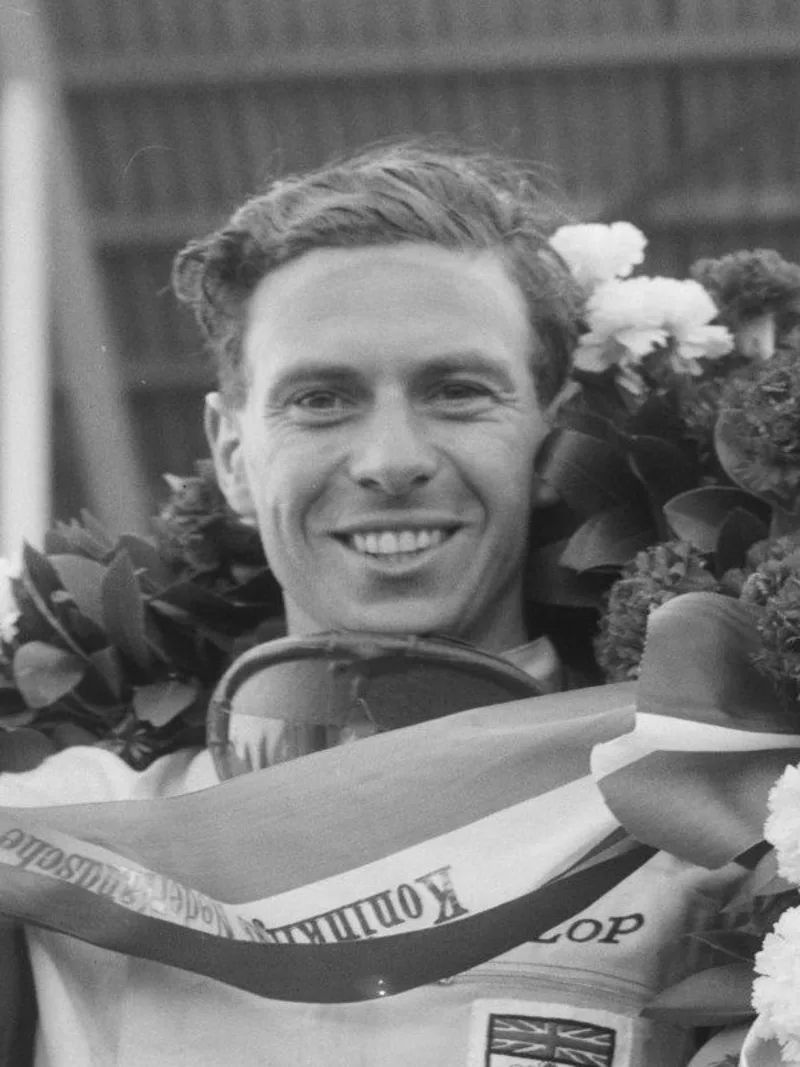
Jim Hall is a retired American driver and constructor, born in Texas in 1935. He won the USRRC title in 1964 and 1965, designed the Chaparral cars that pioneered downforce, and in 1980 took the Indianapolis 500 with a Chaparral 2K driven by Johnny Rutherford.
Jim Hall is a retired American driver, race car constructor and team owner. He is best known as a designer, but he was also one of the strongest American drivers of his generation, winning consecutive United States Road Racing Championships in 1964 and 1965. His Chaparral cars won in every series they entered, from sports cars to Indy cars, and they helped establish downforce as a core design goal in racing.
Who was Jim Hall?
James Ellis Hall was born on 23 July 1935 in Abilene, Texas, and was raised in Colorado and New Mexico. He studied engineering at the California Institute of Technology, where local sports car events became his outlet. His cars and his driving built a reputation that outlasted his time at the wheel.
Hall's career moved from the driver's seat into design and team management. His Chaparral sports racers became famous for their engineering, and he later ran a team that set records in the Can-Am and Formula 5000 series.
Hall's cars won in every series they entered, and his downforce ideas now sit in the design brief of most major racing categories.
How did Hall get into racing?
A planned post with General Motors on the Corvette fell through in the late 1950s recession. Instead Hall joined his older brother Dick at Carroll Shelby Sport Cars in Dallas, the area's leading importer of European road and race cars. The dealership gave him a chance to drive the new racers, and he often won in them.
Riverside, site of the 1960 United States Grand Prix, is where people first took real notice of him. Driving his own Lotus-Climax, which was past its best, he ran fifth for much of the race until a differential failure ended his run a few laps from the finish. Competition Press wrote that Texas had another driver capable of following Shelby.
How did the Chaparral name begin?
At Riverside he was approached by Troutman and Barnes, two California builders wanting backing for a front-mid-engined two-seater. Hall backed the project and named the car Chaparral. The first car won the Road America 500 and other races.
Hall soon began planning a successor that he would build himself. The Chaparral 2, later known as the 2A to separate it from later models, was about four times stiffer than the leading sports cars of its day. Its torsional rigidity was a central part of its performance.
Why did Chaparral matter for Formula One?
Several breakthroughs are credited to him, among them movable wings, side-mounted radiators, semi-automatic gearboxes and composite monocoques, and many of these ideas later reached Formula One. He was one of the first to show the performance value of a stiff chassis, and his designs were copied widely.
He had also been a Formula One driver. He received a seat with the British Racing Partnership for 1963 after a strong drive at the 1962 Mexican Grand Prix. He scored three World Championship points that season, with his best finish fifth at the German Grand Prix at the Nurburgring. The team was in decline, and that limited his results.
How did the 2A dominate sports car racing?
The 2A was built in Midland, Texas, with the help of his partner Hap Sharp, and it proved a revelation when it arrived. Hall put it on pole at the 1963 Los Angeles Times Grand Prix in October, its debut, against a field containing later world champions such as Surtees, Clark and Hill. He led easily until an electrical fire ended the race.
In 1964 and 1965 Hall and Sharp dominated American sports car racing with the 2A and later the 2C. He took the 1964 USRRC crown outright and the unlimited class in 1965. Chaparrals were so strong that in 1965 they made 22 starts in major races, collecting 16 wins and 16 fastest laps against international opposition.
Hall also won at Road America in 1962 and 1964, and Watkins Glen gave him two sports car Grands Prix, in 1964 and 1965. In 1965 he added the Canadian Grand Prix for sports cars and the Pacific Northwest Grand Prix.
What happened at the 1965 Sebring 12 Hours?
The biggest upset came at Sebring that year. Hall and Sharp put the 2A on pole, nine seconds quicker than the previous year's pole time set by John Surtees in a factory Ferrari. Most observers did not expect the Chaparral to survive against a field of factory-backed Fords and Ferraris, but it did.
The Ford team had seven cars, with Phil Hill, Richie Ginther, Bruce McLaren, Ken Miles and Dan Gurney among the drivers. The leading Ferrari was driven by Pedro Rodriguez and Graham Hill. The Chaparral held on through monsoon-like conditions and the punishing 12 hours on Sebring's runway.
What was the downforce revolution?
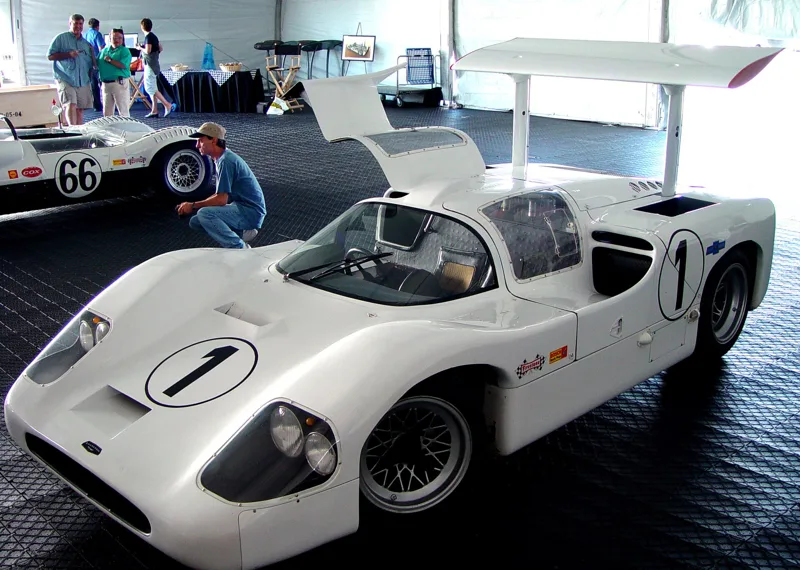
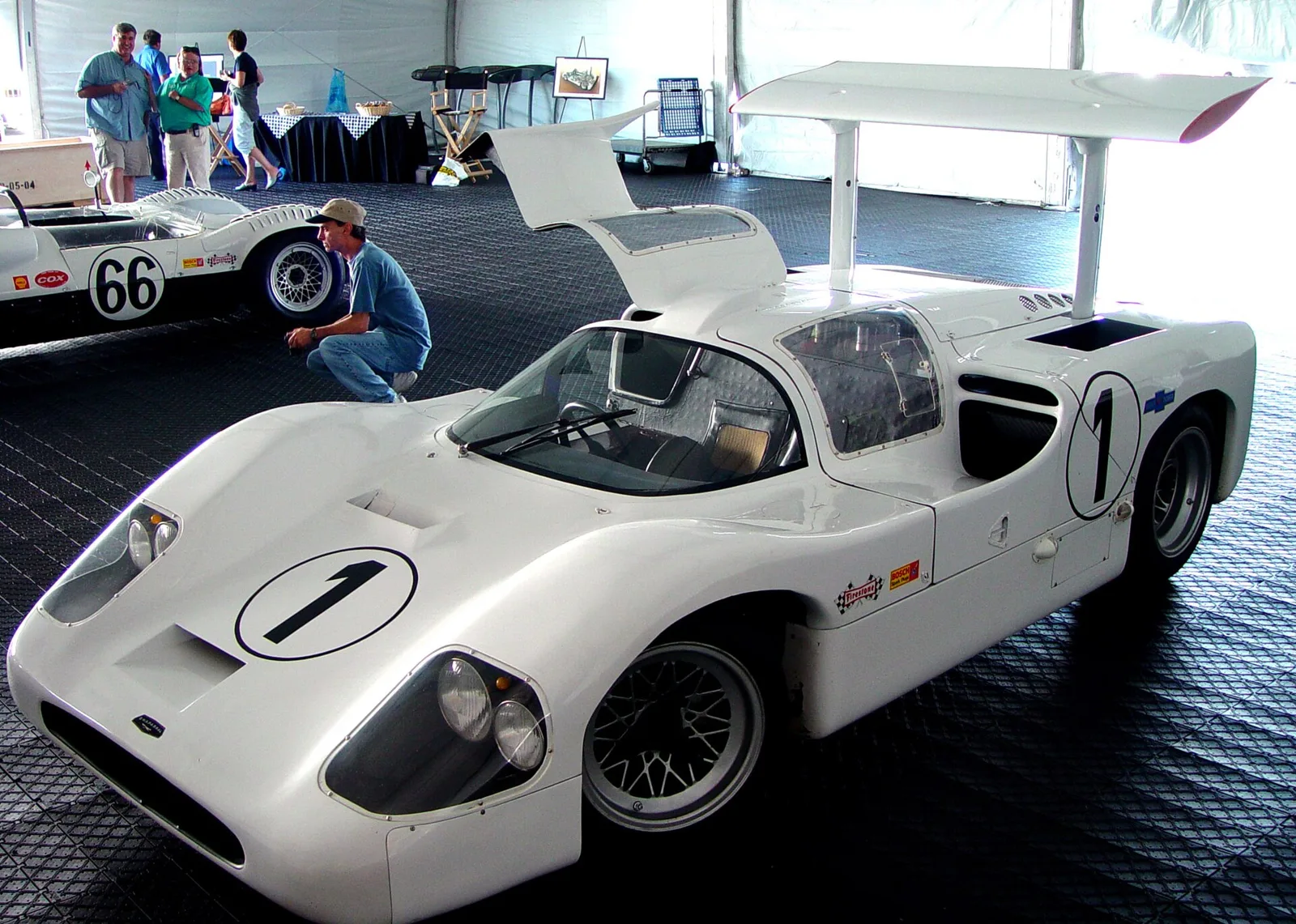
The Chaparral 2E of 1966 brought the idea into full view. The 2E carried radiators mounted at the sides, a semi-automatic gearbox and a huge articulated wing on pillars above the rear deck. Sam Posey described the cars arriving at Bridgehampton as an event that stopped the paddock.
The 2E's wing was symmetrical, so it produced little drag in the neutral position and substantial downforce when tilted in corners. An adjustable duct in the nose balanced the effect, and a cockpit pedal controlled both devices. Phil Hill said the wing let the driver out-brake and out-corner everybody. The 2E was the fastest car of the first Can-Am season, but reliability problems kept it from turning poles into wins.
How did the Chaparral win in endurance racing?
The Midland team also converted older chassis for endurance racing. The Chaparral 2D coupe won the 1966 Nurburgring 1000 km. The 2F, which borrowed the 2E's wing and nose duct, won the BOAC 500 at Brands Hatch, where Phil Hill and Mike Spence finished ahead of a Ferrari 330 P4 whose drivers were Jackie Stewart and Chris Amon.
In an interview with Motor Sport, he said he was proud of those results. An American car winning a major European road race was rare, and the victory at the Nurburgring stood out in his memory.
Why did Hall stop driving?
In 1968 Hall was asked to drive a Lotus 56 turbine car at Indianapolis. Jim Clark had already been killed in another race, Mike Spence died in practice, and Jackie Stewart was injured. He had never driven an Indy car, and he turned the offer down.
Later that year, at the Las Vegas Can-Am, the 2G was involved in a crash. Hall was about to pass a slower car after a pit stop when McLaren driver Lothar Motschenbacher suffered a suspension failure, and Hall's car crashed in the desert. He survived, but his knees were badly damaged and recovery took half a year before he could walk unaided.
He returned briefly in 1970, racing a works Camaro in the Trans-Am series. He still had the pace for laps at a time, but could not sustain it over a full race.
What was the 2J, and why was it banned?
The Chaparral 2J was a suction ground effect car for the 1970 Can-Am. It used a snowmobile engine to drive fans that reduced the pressure under the car, and it was over two seconds quicker in qualifying than the title-winning McLaren M8D at Riverside. It was the first car with vacuum-protecting skirts.
Other teams lobbied against it, and the FIA banned the design. Hall left the series and racing in disgust. The idea did not disappear, because Gordon Murray at Brabham later applied a similar concept to the BT46B, which won the 1978 Swedish Grand Prix in its only race entry.
How did Haas-Hall Racing become so successful?
Carl Haas, a Lola importer, suggested an Indy car entry, and the two formed Haas-Hall Racing. Haas supplied the sponsorship and the Lola cars, while Hall ran the team. The money for Indy did not materialise at first, so they joined the SCCA Formula 5000 series instead.
The team was almost unbeatable in the 1970s. Brian Redman drove it to three straight F5000 titles, and it won four more championships when the series became the second-generation Can-Am. Between 1974 and 1980 the partnership picked up seven straight series titles.
Once the sponsorship arrived, Hall moved into Indy car racing. In 1978 the team's first Indy car season brought victories at the Indianapolis 500, the Pocono 500 and the California 500. That made Haas-Hall the first and still only team to win the Triple Crown of Indy car racing.
What was the Chaparral 2K?
Hall later commissioned the young designer John Barnard to build a ground effect Indy car called the Chaparral 2K, which was nicknamed the Yellow Submarine after its Pennzoil colours. It was the first Indy tunnel car, and in 1979 Al Unser led the race until a transmission problem stopped him.
The 2K came back in 1980 to win the Indianapolis 500 with Johnny Rutherford, and Rutherford also won the 1980 CART championship in the car. It remains one of the defining cars of Hall's career.
What is Hall's legacy?
Hall's influence reaches well beyond his own wins. The Permian Basin Petroleum Museum in Midland has an entire wing devoted to the Chaparral story, with seven restored cars. Chaparral cars are regular guests at major concours and vintage events, including Goodwood.
In 2009 Gil de Ferran, a former driver, dressed his Acura ARX-02a in Chaparral livery, and the car won the season-ending American Le Mans race at Laguna Seca. Honours followed in the 1990s and 2000s, starting with a 1994 induction into the Motorsports Hall of Fame of America.
What are Hall's main results and honours?
| Year | Event or honour | Result |
|---|---|---|
| 1962 and 1964 | Road America 500 | Wins |
| 1964 | USRRC | Champion |
| 1965 | USRRC unlimited class | Champion |
| 1965 | 12 Hours of Sebring | Victory over factory Fords and Ferraris |
| 1966 | Nurburgring 1000 km and BOAC 500 | Chaparral 2D and 2F wins |
| 1970 | Can-Am | 2J qualified over two seconds faster than the McLaren M8D |
| 1978 | Indy car Triple Crown | Indianapolis 500, Pocono 500, California 500 |
| 1980 | Indianapolis 500 | Win with the Chaparral 2K and Johnny Rutherford |
| 1994 | Motorsports Hall of Fame of America | Inducted |
| 2012 | SCCA Hall of Fame | Inducted |