A. J. Foyt won the 61st Indianapolis 500 for a record fourth time, inheriting the lead when Gordon Johncock's car failed, in a race that also saw Janet Guthrie qualify.
A. J. Foyt won the 1977 Indianapolis 500 for a record fourth time, on Sunday 29 May 1977. Tom Sneva was second, and Janet Guthrie became the first woman to qualify for the field. The win came after Gordon Johncock's crankshaft broke with 16 laps left.
The 1977 Indianapolis 500 was the 61st running of the race, held on Sunday 29 May 1977 at the Indianapolis Motor Speedway in Indiana. A. J. Foyt won it for a record fourth time, inheriting the lead after Gordon Johncock's car failed on lap 184. The race is also remembered for Janet Guthrie's qualification and for the last Indianapolis 500 owned by Tony Hulman.
Who won the 1977 Indianapolis 500?
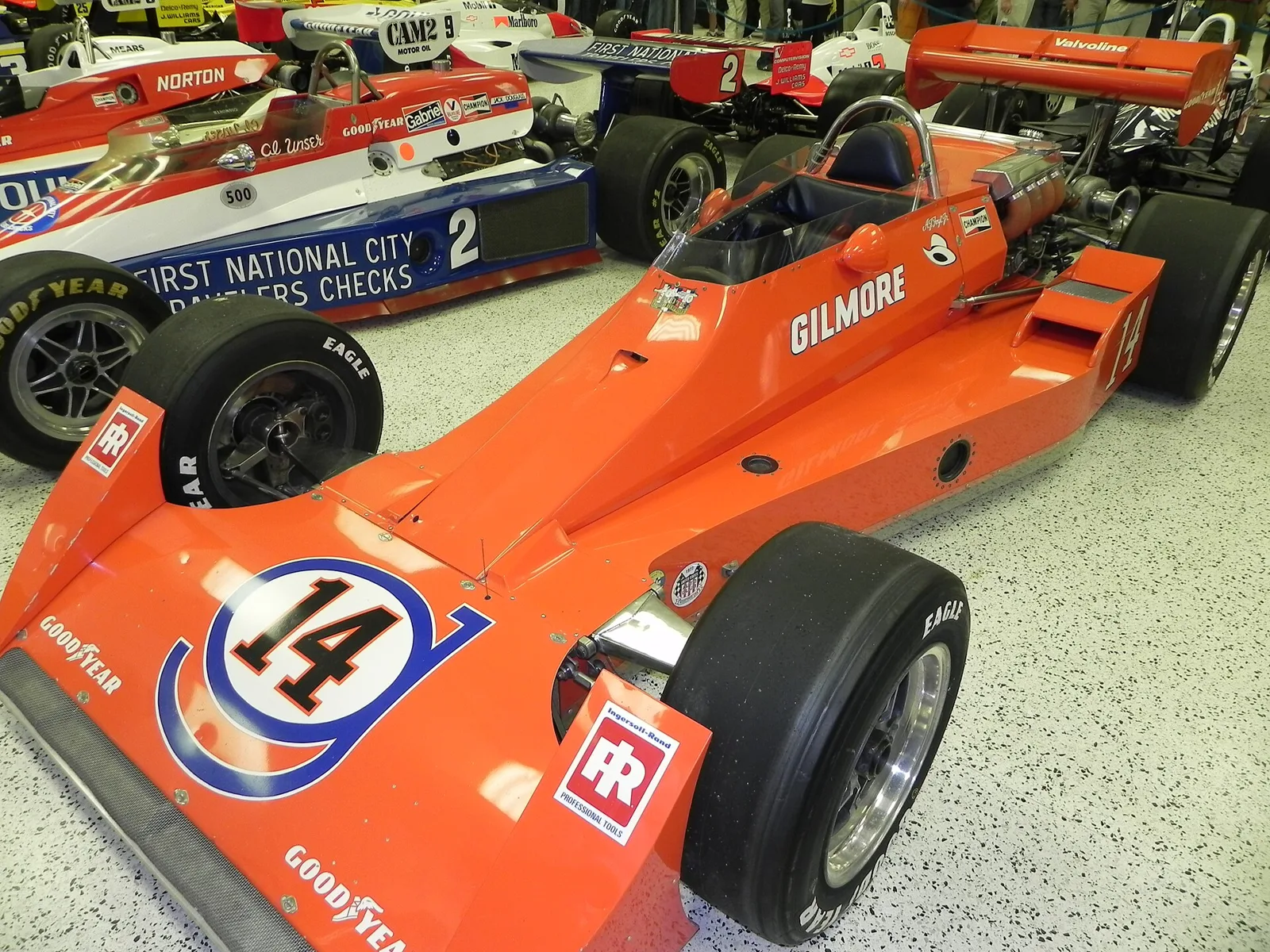
A. J. Foyt won the 1977 Indianapolis 500 for the fourth time, a record no other driver had reached. He co-owned his entry with Jim Gilmore, and the car was a Coyote chassis built in-house by his own team. Tom Sneva finished second, and Foyt's victory followed Johncock's late crankshaft failure.
The engine was a turbocharged V-8 of Foyt's own design, derived from the DOHC Ford Indy unit. The pairing is the most recent winning combination that was built entirely in the United States, both chassis and engine.
Foyt's four wins stood alone until later drivers matched them. Today the list also includes Al Unser Sr., Rick Mears and Helio Castroneves, though Foyt's record remains the reference point for the event.
A four-time winner, a qualifying first for a woman and a crankshaft failure that handed the race to a veteran.
Why was the 1977 pole qualifying historic?
Tom Sneva won the pole with a four-lap average that set a new track record, becoming the first to shatter the speed barrier that had stood at the Speedway. Janet Guthrie qualified on the final day of time trials, making her the first woman in the field.
Sneva's record-setting laps came in his four runs, and he was the only driver to post laps at that speed all afternoon. In a March tire test on the newly cured asphalt, Gordon Johncock had posted an unofficial record.
The Speedway had been repaved in asphalt over the summer of 1976, the first complete repaving since the original brick surface went down in 1909. The new surface had the winter to set before the teams arrived in May.
Sneva was rewarded in the traditional way, with 200 silver dollars poured into his helmet by Phil Hedback, whose firm was Bryant Heating and Cooling. The gesture copied an earlier tribute to Parnelli Jones, who had received 150 silver dollars after a record in 1962.
About an hour later, USAC retracted A. J. Foyt's qualifying time after officials found that his pop-off valve was fractured. Foyt was allowed to requalify, and he took fourth place on the grid. Bobby Unser slotted into the middle of the front row and pushed Al to the outside spot, while Johnny Rutherford, an early favourite, waved off his first run and stalled on his second.
| Finish | Driver | Note |
|---|---|---|
| First | A. J. Foyt | Fourth Indianapolis 500 win; took the lead when Johncock's car failed |
| Second | Tom Sneva | Pole sitter; better than his sixth place of the year before |
| Third | Al Unser | Ran out of fuel near the finish |
| Fourth | Wally Dallenbach | Could have taken third from Unser without the incursion |
| Tenth | Jerry Sneva | Rookie of the year |
| Retired | Gordon Johncock | Broken crankshaft on lap 184 |
| Retired | Janet Guthrie | Stopped after 27 laps on lap 149 |
How did bump day shape the field?
Bump Day on 22 May filled the last places in the 33-car field. Guthrie went out first, and her four-lap average was the fastest of the afternoon, which put her safely in the field. The 33-car line-up was complete by late afternoon, with Salt Walther on the bubble.
Phil Hedback poured 188 silver dollars into her helmet, matching the speed of her run in the same way he had for Sneva. It was also a closed-course speed record for a woman.
Clay Regazzoni finally made the field after a difficult trip from Monte Carlo, where rain had cancelled his chance at the Monaco Grand Prix. Cliff Hucul then bumped out Walther, Rasmussen then displaced Schuppan, and Mahler was the one who pushed out Saldana as time ran short.
Rick Mears could not get up to pace on either of his two attempts, and he missed the field. Jim Hurtubise rolled out his front-engined machine for one lap, then waved off, and no front-engined car has tried to qualify at Indianapolis since.
When the six o'clock gun sounded, James McElreath Jr. was the final car out, but he was too slow. He was killed in a sprint car accident later that year, without ever racing with his father at the Speedway.
Carburetion Day brought the usual mix of tests and incidents. Salt Walther bought Bill Puterbaugh's qualified car from owner Lee Elkins for a reported 60,000 dollars, but the move was reversed a day later and Puterbaugh was restored to his 28th starting position.
The first annual Miller Pit Stop Contest elimination rounds were held on 26 May. Carter and Foyt posted the quickest qualifying heat times, 14.83 and 14.84 seconds, and the final went to the Carillo team of Jim McElreath in 15.09 seconds.
How did the first half of the race unfold?
Al Unser swept into the lead from the outside of the front row, with Sneva second and Bobby Unser third. Rutherford over-revved and dropped out with gearbox failure, and Johncock moved into the lead on lap 18, his first time there. Foyt led laps 27 to 51 with his pit stops.
Janet Guthrie spent much of the day in the pits with engine trouble, making a long series of stops that cost her time. Lloyd Ruby crashed in turn two on lap 49, the final Indianapolis 500 of his career.
Eldon Rasmussen spun on lap 69 and brought out the second and final on-track incident of the race. By halfway, the heat had thinned the field to 17 cars.
Johncock dominated the second half of the race, retaking the lead on lap 97 and holding it through lap 179, while Foyt, Sneva and Al Unser stayed in the chase. Snider and Carter both stopped on lap 159, but the racing otherwise stayed green for a long time.
Guthrie finally dropped out on lap 149, having completed only 27 laps. During one of her many stops, fuel overflowed into the cockpit, and her crew had to take her back to the garage to clean up, since the garage area had no restroom for women at that time.
Before the race, the Speedway faced a dispute over its famous starting command, and management initially refused to change the words. Guthrie's crew answered by having Kay Bignotti, wife of George Bignotti, operate the starter at the back of the car. The Speedway then used a specially amended command for the year, which it had not announced in advance. On race morning an official noticed a leaking fuel hose on Guthrie's car, and the team wrapped a plastic bag around it to satisfy the officials.
How did Johncock's failure decide the finish?
With 20 laps to go Johncock led Foyt by ten seconds, but he was suffering from heat exhaustion. A broken crankshaft on lap 184 ended his race and gave Foyt the lead with 16 laps to run, and Foyt went on to finish close to 30 seconds clear of Sneva.
Johncock was dehydrated during the closing stint, and his crew soaked him with water during his stops. He made a fuel-only stop on lap 181 and rejoined with a lead of only seven seconds.
Foyt pitted on lap 183 for right-side tyres and fuel, a stop that took 12.9 seconds, and the gap began to close. On lap 184 smoke billowed from Johncock's car. He steered it to the inside and stopped in turn one with a broken crankshaft, and then he climbed out and cooled off in the infield creek.
Foyt inherited the lead and cruised over the final laps to become the first driver to win the race four times.
Why did the finish change the rules?
Fans poured onto the track during Foyt's cool-down lap. Officials red-flagged the race and flagged the remaining cars off, so the five minutes of extra time that had been announced for the others was never used. Chief steward Tom Binford had announced in advance that the usual five-minute allowance would apply, a rule dating to 1964.
Al Unser's car ran dry on the backstretch, and fans gathered around it. Wally Dallenbach, who was fourth, was estimated to have passed Unser for third without the incursion.
The incident led to changes in the rules in the following years. The race now ends once the winner crosses the line, and any car still on the track is allowed only to finish the lap it is on.
Foyt asked Hulman to join him in the pace car so they could salute the crowd. That ride with the winner was rare for Hulman, and it proved to be his last, as he died the next October.
What was happening at the Speedway that May?
Sid Collins, the Voice of the 500, died on 2 May 1977, five days before opening day. It was the first 500 he had missed since 1951, and Paul Page stepped up to anchor the broadcast as the new Voice of the 500.
Page had been groomed for the job by Collins, and despite the grief felt inside the crew, the broadcast ran smoothly. Jim Shelton reported Collins's death to the listening audience before introducing Page, while Palmer covered the scene from Victory Lane.
Agabashian, the driver expert, was in his twelfth and final season on the crew. Celebrities in the pits included Evel Knievel, a sponsor on Gary Bettenhausen's car, and 1957 winner Sam Hanks.
ABC Sports showed the race on a same-day tape delay, with Jim McKay in the anchor chair. The broadcast came during a labour dispute at the network, and ABC secured the first interview with the winner, as Bill Flemming spoke with Foyt before Palmer's interview.
Track owner Tony Hulman, who had run the Speedway for decades, was making his final appearance at the race, and he died in October of that year. Eight USAC officials were killed in a plane crash less than a year later.