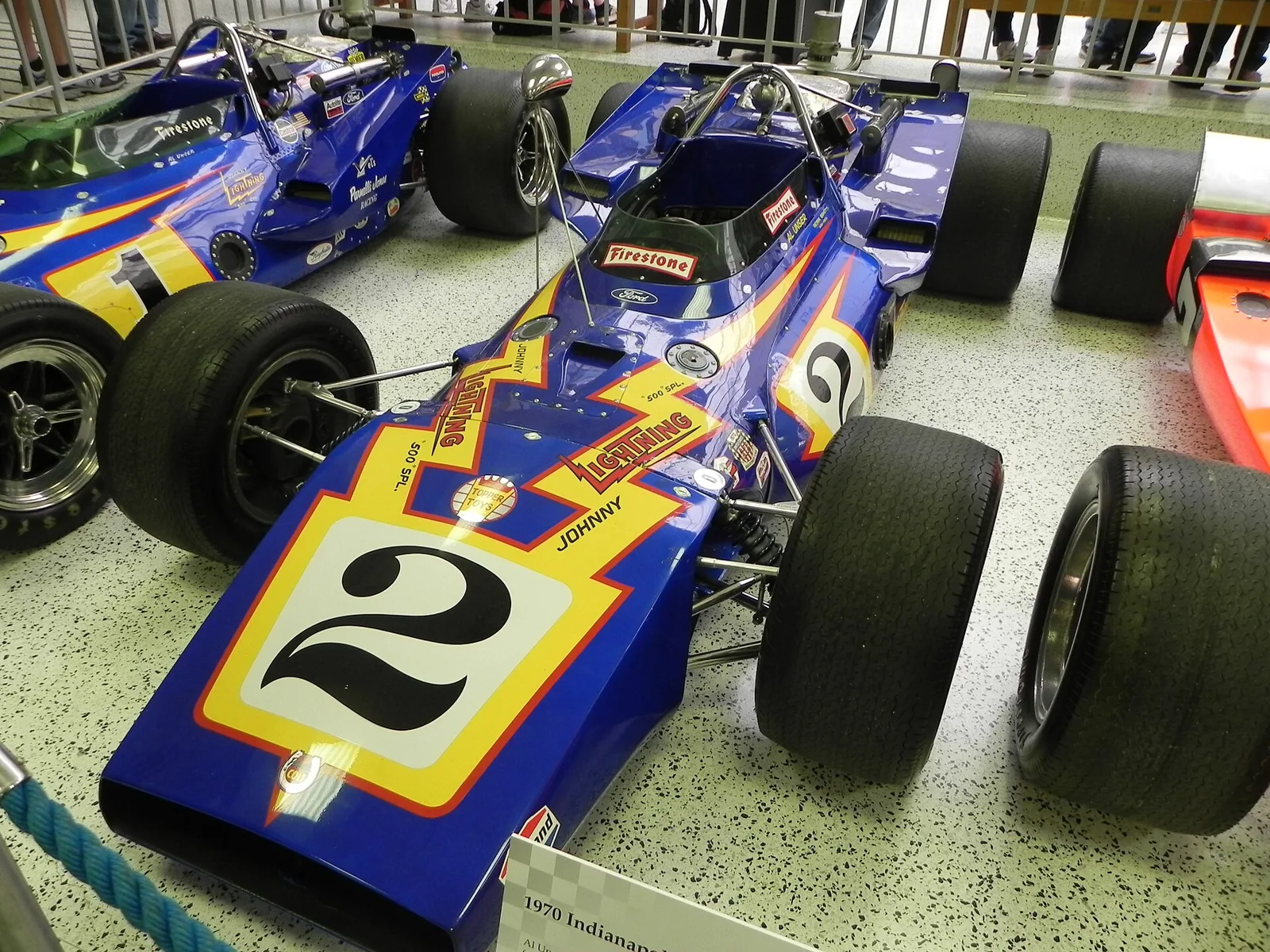
A California complex built in 1970 as a copy of Indianapolis, which hosted NASCAR, USAC and NHRA until it was bankrupted, sold to Chevron and bulldozed.
Ontario Motor Speedway was a 4.023 km (2.500 mi) oval in California that opened in 1970 as a copy of Indianapolis. It lost money for most of its life, was sold to Chevron in 1980 and was demolished to make way for a commercial centre.
Ontario Motor Speedway was a complex in Ontario, California, that opened in 1970 and shut its doors in 1980. Its main oval measured 4.023 km (2.500 mi), and a road course used parts of it to form a 5.140 km (3.194 mi) circuit with 20 turns.
The complex was built as a West Coast copy of the Indianapolis Motor Speedway, but its finances never recovered from the start. This article traces the failed earlier plans, the design, the opening years, the financial collapse, the Expo '81 scheme, the sale to Chevron and the redevelopment of the site.
When was Ontario Motor Speedway first proposed?
The first proposal came from Sam Hanks, a former Indianapolis 500 winner who was then director of racing at the Indianapolis Motor Speedway. On 27 May 1963 he announced the California Motor Speedway, a $17,000,000 project that would copy Indianapolis with a 2.500 mi oval and seating for 150,000.
The Hanks plan did not survive. Investors pulled their support in February 1964, judging that the track could not earn a profit in its first 12 years. Rayco Realty revived the idea later that year, but Ontario International Airport opposed it, and the project was withdrawn from the county Planning Commission on 28 January 1965.
A second attempt followed in 1965, when William Loorz, the head of the Oakland contractor Stolte, Inc., spent $1,000,000 on land options. Filmways joined the venture, and the two companies unveiled the Ontario Motor Speedway plan on 15 February 1966, with a budget of $20,800,000 and a planned opening on 1 December 1968.
The plan promised 250,000 seats and four major races a year. The city council approved the track on 15 March 1966 after the financial committee asked for more detail, and Filmways later sold its interest to Stolte, Inc. on 3 November 1966.
A West Coast copy of Indianapolis that lost money from its opening and was demolished to make way for a commercial centre.
Why did the early plans fail?
The first plan failed because it could not attract enough financial backing. Investors saw too little profit in the early years and worried about the high land costs, which the Daily Report put at close to $4 million for the site Hanks had chosen.
Opposition came from aviation interests. The Ontario airport director argued that the track would disrupt flights, and the dispute over the planning hearings dragged on for two years before the proposal was dropped.
The Filmways and Stolte plan ran into delays of its own. A slow bond market in 1966 stalled the financing, land options lapsed and, by the end of February 1967, the Los Angeles Times reported that the project had stalled, although Loorz insisted it had not been scrapped.
How was the track financed and built?
A revised plan in March 1968 reduced the cost, the building time and the planned seating, and the opening was pushed back to 1970. John Nuveen and Co. underwrote about $25 million of bonds, which were offered as tax-exempt revenue bonds at a yield of 7.5%.
Groundbreaking took place on 24 September 1968. Among the guests were Graham Hill, Rodger Ward, Mario Andretti, Jackie Stewart and Parnelli Jones, along with businessmen Tony Hulman and Wally Parks and the actor Kirk Douglas.
Leadership changed quickly. David B. MacTavish was elected president two months after groundbreaking, but he left in March 1969, and David B. Lockton took over. The first big event was announced in January 1969, a 500 mi (800 km) USAC race.
Construction was not smooth. Loorz reported that about 15% of the concrete had been poured by May 1969, and a heavy equipment strike in the summer delayed the work for a couple of weeks. Dan Gurney tested the road course in February 1970 and called it wide, fast and demanding.
What did the finished track look like?
The main oval was a rectangle measuring 4.023 km (2.500 mi), with banking of 9 degrees in each of its four turns. The complex had been conceived as a copy of the Indianapolis Motor Speedway, and its builders intended it to challenge that venue on the West Coast.
The road course was 5.140 km (3.194 mi) long, with 20 turns, and it borrowed sections of the oval, such as the start-finish straight. The permanent grandstands held 85,000 spectators, and temporary stands at the turns could lift capacity to 140,000.
The track also had modern amenities for its time. A computerised timing and scoring system cost $3,600,000, and there were stadium club suites and a restaurant. Two lakes and irrigation systems formed part of the landscaping, and infield tunnels were finished before the opening.
What were the opening years like?
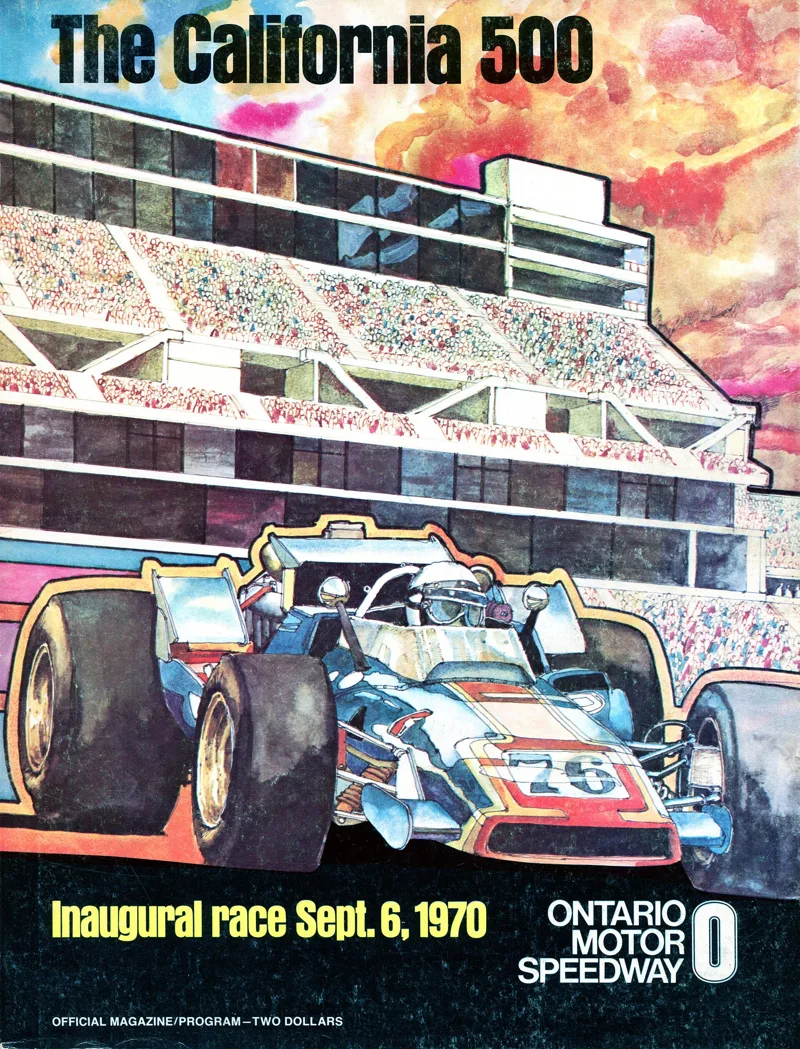
Opening races had been announced in July 1969, starting with the California 500 on 6 September 1970. A pro-am celebrity race on 9 August 1970 came first, and it was won by Mario Andretti and Dick Smothers. The track was opened to the public on 22 August 1970.
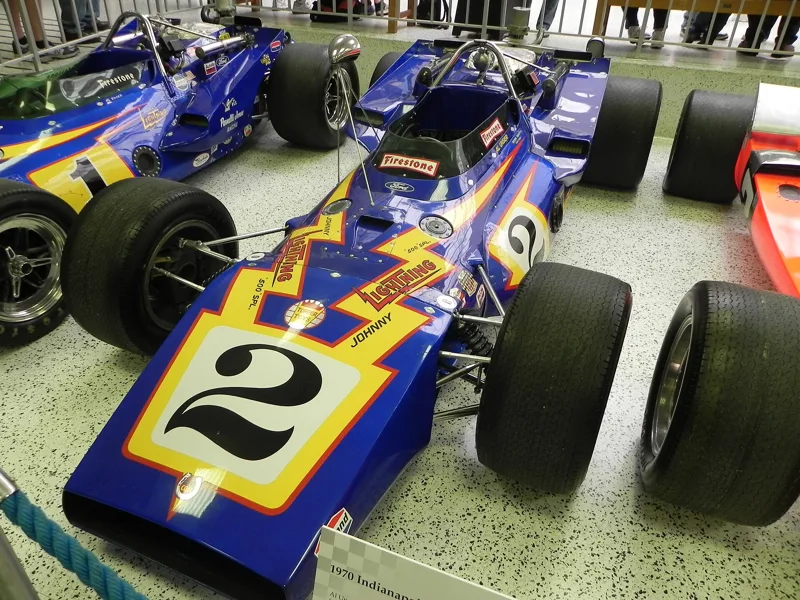
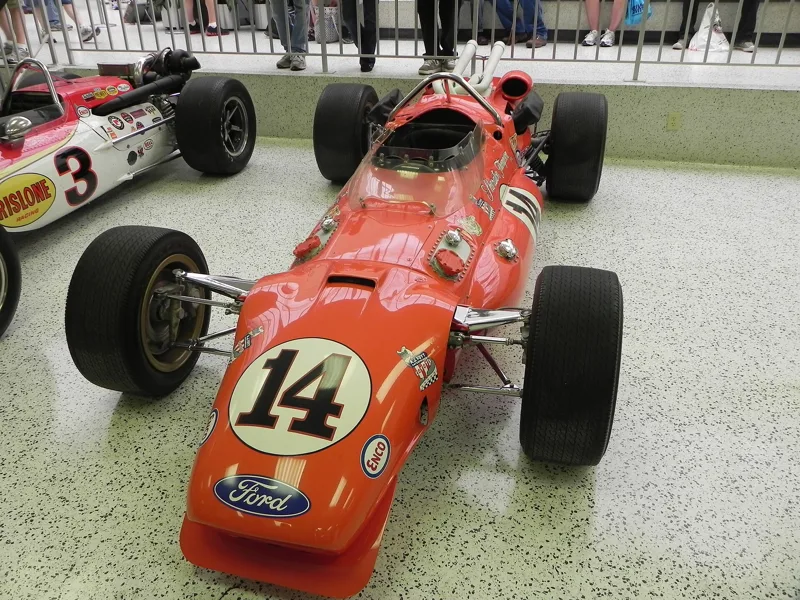
Jim McElreath won the 1970 California 500 before a reported crowd of 180,233. The NHRA came in November 1970, followed by the first NASCAR Cup race on 28 February 1971, which A. J. Foyt won. The first AMA event came on 17 October 1971, won by John Cooper.
The Questor Grand Prix, a 28 March 1971 exhibition race for Formula One and Formula A cars, was won by Mario Andretti. Its sanctioning body refused to recognise the Formula One application, which had missed a deadline, so the track had to settle for an invitation event.
The track had planned a United States Grand Prix West for 1972, but the Questor Corporation pulled its sponsorship in July 1971 and the event was scrapped. Both the track and the sponsor blamed high fees for the Formula One event.
Why did the track lose money?
Lockton resigned as president on 28 April 1971, and the track's losses were already visible. The complex had cost $30,000,000 to build, well over the original budget, and the television rights deal that the owners had expected never came through.
Lockton later blamed weak promotion after the first race, arguing that the owners had pulled back from the celebrity-led marketing that might have helped. Other executives resigned soon afterwards, and a San Francisco Chronicle writer described the company as heavily indebted.
Ray Smartis took over as general manager, but he resigned on 2 November 1971. John R. Cooper became president in December 1971 and admitted that he did not know whether the track could be profitable in 1972. A deficit of $2,375,000 in January 1972 led to a successful bid to reduce the property's assessed value.
An attempt to share the infield with a horse track was rejected. By October 1972 the operators could not pay their annual rent of $1,065,000. On 29 November 1972 they announced the closure, with losses of $9,700,000 and missed lease payments of about $2,000,000 among the problems.
How did the Jones and Hulman years end?
The owners found a new operator after the closure, although a radio station owner, Conrad Sprenger, backed out of a one-year lease in January 1973. A group fronted by Tony Hulman and Parnelli Jones took the lease in April 1973, paying no rent in the first year.
The group reopened the track on 29 July 1973 for a rock concert, and the first motorsports event under its control was held on 2 September 1973. The group's plans to cut costs were less effective than hoped, and by March 1975 it was behind on taxes and payments to the tune of almost $200,000.
The operating company gave up control on 1 April 1975, and Ray Smartis was reappointed to run the track with a plan of austerity and more focused advertising. Bank of America began recommending foreclosure and sale in June 1975 to pay off the bondholders.
The track's only fatal accident came on 22 June, when a motorcycle rider hit a concrete barrier while practising for a motorcycling event run by a federation of riders. He died of his injuries on 1 July.
What was Expo '81 and why did it fail?
Expo '81 was a planned world's fair, recognised by the Bureau International des Expositions, and its owners hoped it would make the track profitable and pay the bondholders. Federal and international bodies signed off on the plan in the 1970s, and President Gerald Ford gave final approval on 20 December.
The chances faded as the decade went on. By April 1978 the debt was close to $35,000,000, and the Bank of America was preparing to foreclose. The exposition was cancelled on 1 May 1978 because federal support failed to arrive, and Commerce Secretary Juanita M. Kreps had recommended that President Jimmy Carter reject it.
A former rose parade announcer later said the Expo might have kept the track alive. Without it, the owners had few options, and the bondholders' vote on any sale became the next battleground.
How was the track sold to Chevron?
A $12 million offer from the Security Management Company was revealed on 30 June 1978, but bondholders rejected it. Two other offers were made in 1979, and by November 1979 the trustee put the sum needed to cover every bond obligation at $42,000,000.
In March 1980 the Ontario Foothill Development Corporation offered about $42,000,000, and the bondholders approved the offer in April. The group could not close the deal by its deadline, and the Bank of America turned to the Chevron Land Company, a subsidiary of Chevron.
On 9 October 1980 the owners approved Chevron's offer of $42,000,000. Chevron agreed to pay $13,400,000 in overdue interest and obligations, and it formally agreed to the purchase on 22 October. The Ontario City Council approved the sale unanimously in November.
The price for the track itself was later put at about $10,000,000 by NASCAR executive Ken Clapp, who said the figure was not widely known to investors. He estimated that land values in 1980 were about $150,000 per acre.
What events did the track host?
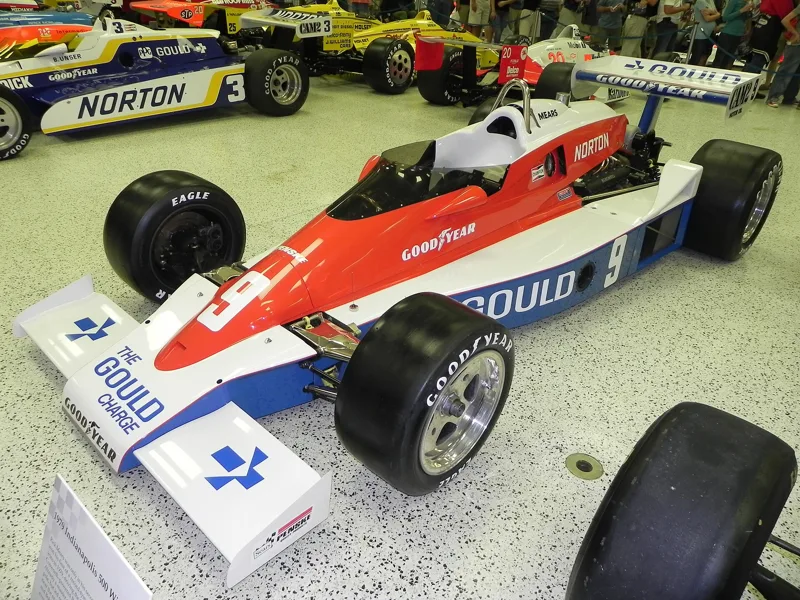
The California 500 was the track's marquee event, held every year from 1970 to 1980. USAC sanctioned it until 1978, and CART took over in 1979. After the closure the race moved to Riverside International Raceway.
NASCAR raced at the track from 1971, with the Cup race usually closing the season, and it held USAC stock car races from 1977 to 1979. The NHRA ran an annual event, and from 1974 to 1980 the track hosted the NHRA World Finals, the last race of the drag racing season.
Sports car racing was less frequent. The IMSA GT Championship visited on 19 May 1974 and again on 9 May 1976. The track also held a 1971 Questor Grand Prix exhibition and American Motorcyclist Association races, along with big rig racing.
The music events were large. The California Jam on 6 April 1974 drew about 200,000 people, and California Jam II on 18 March 1978 drew an estimated 250,000 to 350,000. A planned concert in 1974 with Crosby, Stills, Nash and Young was cancelled after poor ticket sales.
How was the site redeveloped?
Chevron closed the track in December 1980 and announced demolition at a cost of about $4,000,000. Dick Miescke, a Chevron vice president, said the track had proven totally uneconomic as a raceway. A closeout sale was held in January 1981, and a rally of about 300 people protested the demolition in March.
Demolition began in May 1981. Several amenities went to other tracks, including Daytona, Riverside and Michigan International Speedway, and the grandstands were removed in late 1981. Plans for hotels and office space were announced soon afterwards.
The Ontario Center, a mixed-use development, was reported to have a budget of $1,000,000,000. Its first office building, the First Financial Center, opened on 30 October 1985, and a Hilton hotel followed in January 1986. The Plaza Continental mall opened by February 1989, and the Ontario Center School opened in September 1990.
The Ontario Mills mall was completed in 1996 and opened on 14 November that year. The last remaining piece of the speedway, the sign that once promoted races was kept at the mall. The site now also includes a public park named after the track and the Toyota Arena.
What are the key figures for Ontario Motor Speedway?
| Measure | Figure |
|---|---|
| Opened | 1970 |
| Oval | 4.023 km (2.500 mi), 9 degrees of banking on each turn |
| Road course | 5.140 km (3.194 mi), 20 turns |
| Permanent seating | 85,000, with temporary stands to 140,000 |
| Cost to build | $30,000,000 |
| Timing system | $3,600,000 |
| Losses before the 1972 closure | $9,700,000, announced 29 November 1972 |
| Chevron purchase | $42,000,000, agreed in October 1980 |
| Final race | 15 November 1980, Benny Parsons |
| Demolition cost | About $4,000,000 |