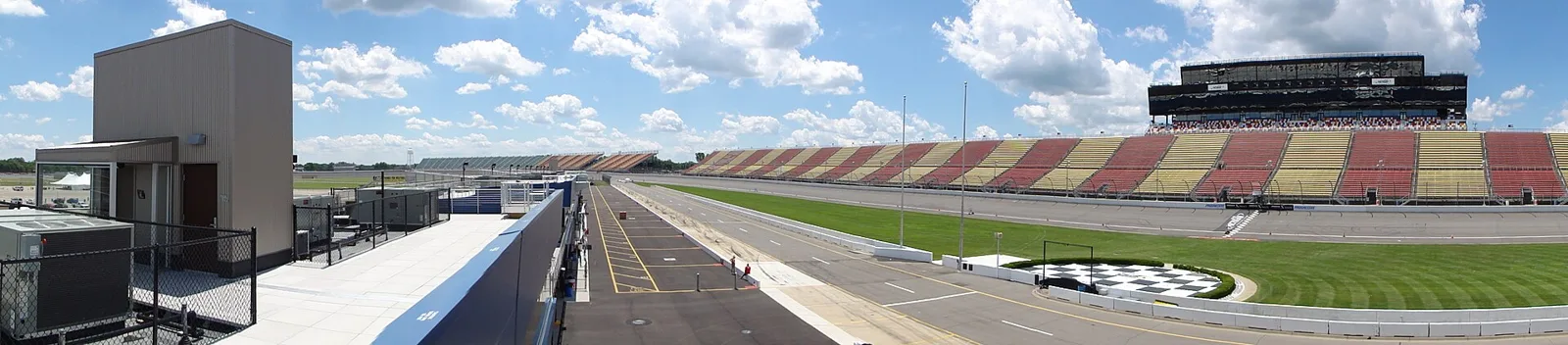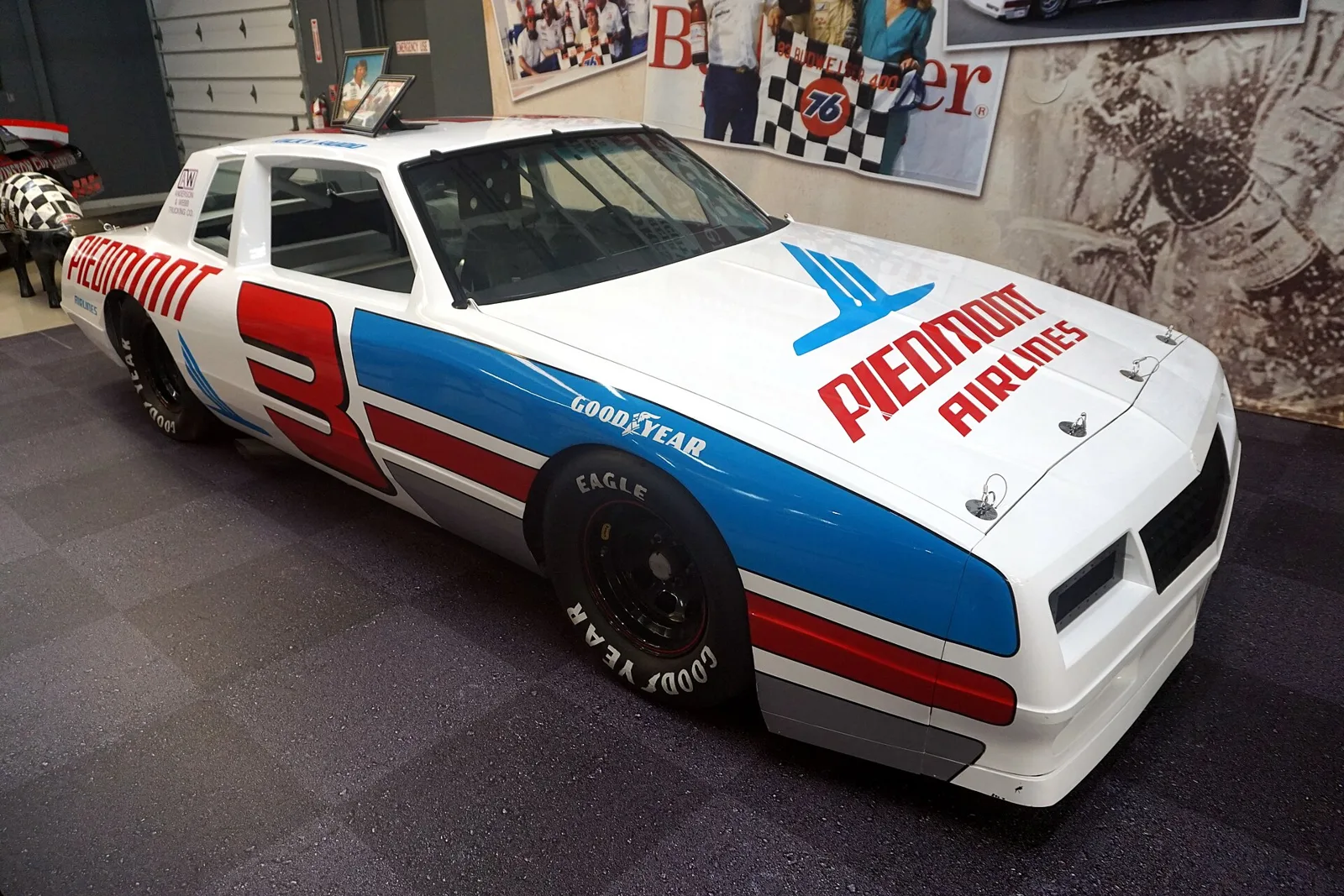
A Southern California complex that ran road, oval and drag racing from 1957 to 1989, hosted a single Formula One race and then gave way to housing and a shopping centre.
Riverside International Raceway was an auto racing complex in Moreno Valley, California, that opened on 21 September 1957 and closed in 1989. It hosted road course, oval and drag racing, including one Formula One race and many NASCAR and sports car events. Its site is now largely occupied by the Moreno Valley Mall.
Riverside International Raceway opened near March Air Force Base in Southern California and spent three decades as a home for road, oval and drag racing. Its final events were held in 1989, and the land is now largely a shopping district with housing. Along the way the track staged one Formula One race and a long run of NASCAR and sports car events.
Where did Riverside International Raceway come from?
The first plan was a San Bernardino County proposal, approved in January 1956 for a site near Ontario. That project was abandoned later the same year. A second scheme, led by restaurant owner Rudy Cleye, won approval from Riverside County in November 1956, and it became the raceway that opened in 1957.
The original San Bernardino proposal came from the United States Automotive Testing Company, which planned a 400-acre (160 ha) site and a 5.500 mi (8.851 km) road course. Its president later blamed high costs, unusual site problems and timing. The land itself was made up of sand and sandy loam, which was unsuitable for road paving.
Cleye favoured a leaner approach. He wanted no elaborate press conferences and no inflated promises, and he projected a cost of between $750,000 and $1,000,000. When his funding ran out, a regular customer at his restaurant, John Campbell Edgar, put in the initial $100,000 needed to keep the project alive.
Grading was finished at the end of January 1957, and paving began three months later. By June the master plan had grown to a capacity of 200,000, five road course layouts and three oval layouts. The construction cost is disputed: sources at the time listed $800,000, while Gus Vignolle of MotoRacing estimated $625,000.
A road course that ran for three decades, hosted one Formula One race and left a shopping centre in its place.
How did the first racing seasons unfold?
The track opened as scheduled on 21 September 1957, and Chuck Daigh, Richie Ginther and Ricardo Rodriguez won the first events on 21 and 22 September. A sixth-turn accident on the second day led to a redesign before the November events. A National Hot Rod Association drag event followed on 5-6 October, and a USAC stock car event came in December.
The first NASCAR race was held in 1958, when Eddie Gray won a Grand National event on 1 June. The United States Grand Prix label was first used at Riverside that year, with Daigh winning a sports car race. The track's only Formula One race came on 20 November 1960, when Stirling Moss won.
Why did the track struggle financially?
Promoters lost $50,000 on a highly advertised 1958 Memorial Day weekend of three 500 mi (800 km) races. The event drew a combined three-day attendance of 12,000, a figure blamed on ticket prices of $5 per day. Creditors were paid partly from that weekend's ticket sales.
The Los Angeles Times Grand Prix, first run in 1958, was a success with crowds from its first iteration. Racing historian Dick Wallen remarked that most of the track's races were unprofitable, and he said that a few good races could not balance the books. Even Edgar's funding, which reached between $200,000 and $250,000 by 1960, could not stop the red ink.
The Formula One race of 1960 was promoted by Alec Ulmann, who expected 100,000 spectators. The attendance was 25,000, and the race was considered a financial failure. It moved to Watkins Glen International for 1961.
Who owned Riverside International Raceway over time?
Ownership changed hands often. Dean Mears bought the facility in January 1960 for a price later put at about $300,000, and Roy G. Lewis was listed as owner by June. In September 1960 Fred Levy and Edwin Pauley invested about $1 million, and in 1962 Lewis gave up his stake to Pauley and Levy, who brought entertainer Bob Hope into the ownership group.
Les Richter, a former football player, was hired as assistant general manager in February 1961. He was promoted to executive director in 1962 and remained a central figure until his departure in 1983. Lawrence LoPatin, the owner of Michigan International Speedway, bought 47% of the track in February 1969 for $1,200,000.
American Raceways, Inc., which LoPatin had formed, merged with the STP Corporation in January 1970 after running up about $15,000,000 in debt. LoPatin was fired in July 1970, and in January 1971 Sunnymead Land Investors, led by Fritz Duda, bought an 80% controlling interest for about $400,000. Duda was a real estate investor, and Ken Clapp, a NASCAR executive, recalled that Duda liked racing, which raised hopes the track would hang on.
How did the layouts change over the years?
The main road course measured 3.250 mi (5.230 km) before the 1969 change to turn nine. The new turn added a left-turn kink and a sweeping right-hander, lifting the layout to 3.300 mi (5.311 km) with nine turns. A 2.620 mi (4.216 km) NASCAR layout bypassed the seventh turn with a straightaway, and a 0.250 mi (0.402 km) dragstrip also served the complex.
| Layout | Length | Notes |
|---|---|---|
| Main road course (before 1969) | 3.250 mi (5.230 km) | Used for the 1957 opening SCCA race |
| Main road course (final) | 3.300 mi (5.311 km) | Nine turns after the turn nine rebuild |
| NASCAR layout | 2.620 mi (4.216 km) | Bypasses the seventh turn |
| Dragstrip | 0.250 mi (0.402 km) | First NHRA event in October 1957 |
Permanent grandstand seats were built at turns six and seven near the start-finish line, and the architecture of the track was designed by William L. Duquette. The layouts themselves were designed by James E. Peterson.
How many people died at the track?
Riverside recorded numerous fatalities, most of them in the 1960s. The first was John Lawrence, a sports car racer who died after a crash at the sixth turn on 22 September 1957. Ken Miles died at the ninth turn on 17 August 1966, when his car reached around 175 mph (282 km/h) and he was thrown out in the accident.
Other deaths included Pedro Von Dory at the fifth turn in April 1960, Joe Weatherly at the sixth turn during the 1964 Motor Trend 500, and Billy Foster at the ninth turn in a practice session in January 1967. Weatherly was not wearing a harness belt, and his car had no window net. A spectator, Ronald Pickle, was killed in January 1965 when a forklift on which he was watching the race tumbled down a hill.
Deaths continued into the 1970s and 1980s, with several more racers and a crewman among the dead. Mark Verbofsky died on 2 July 1989, during the final event held at the track.
What changes were made to improve safety?
After the 1957 fatality, the sixth turn was redesigned in time for the November events. In May 1963 a $24,000 retaining steel wall was installed at turn nine after two deaths there in four months. The track also built a concrete wall from turn one to turn six in 1967.
The 1969 rebuild of turn nine was part of a wider renovation that also added permanent grandstands, smoothed hills and ditches that blocked spectators' views, and moved the control tower to the second turn. In 1977 concrete washboard curbs were fitted to seven turns, and about 300 ft (91 m) of concrete barrier was added at the exit of turn nine.
Which series raced at Riverside?
NASCAR raced at the track from 1963 until 1988, with at least one annual race. A second Cup race was added in June 1970, and a one-off Cup race in November 1981 followed the closure of the Ontario Motor Speedway the year before. The January race moved to November after 1981 and stayed there until 1987.
The Los Angeles Times Grand Prix ran annually until 1973 and was dropped the following year, after the newspaper pulled its sponsorship. It was sanctioned by Can-Am from 1966 to 1973 and returned in 1979 under the IMSA GT Championship, running until 1987. CART and USAC also raced open-wheel cars there, and SCORE International held off-road events from 1973 until the track closed.
Why did a replacement track never open?
Housing growth around the site led management to plan a replacement complex in 1984. In October that year the Prado Dam site near Corona was announced, but in June 1985 the plan came under heavy doubt, because the area was a migratory habitat for the least Bell's vireo, an endangered bird, and held an indigenous burial site. Negotiations stopped later that month.
The Glen Helen proposal was also scrapped in June 1988 in favour of a housing development. By then Duda said he had no prospects of building a replacement track in the near future.
How did the track close?
The final season was built around a doubleheader in June, with an International Race of Champions event and a NASCAR Cup race. Scott Pruett and Rusty Wallace won those races on 11 and 12 June. A SCORE International off-road event followed on 14 August, and Robby Gordon won the final off-road event of the weekend.
Construction of the mall, later named the TownGate Mall, was delayed by a recession and a lack of tenants. The Skip Barber Racing School and the California Sports Car Club moved into the southern part of the site. The club's event on 1-2 July 1989 was the last true final event held at the track.
What replaced the raceway?
Initial grading for the mall began in September 1989, and the Goodyear Tower, the track's observation tower, was toppled in August 1990. The Moreno Valley Mall formally opened on 14 October 1992, and the project grew to include housing, parks, schools and offices.
As of 2020 the former complex held the Moreno Valley Mall, plus a Lowe's and a Costco, hotels, restaurants and homes. The old circuit itself has largely disappeared under those uses.
Film and television history
Film crews found the track useful for productions such as Grand Prix (1966), Fireball 500 (1966) and Red Line 7000 (1965). Earlier, the track appeared in On the Beach (1959), and later in Winning (1969), Stacey (1973) and The Betsy (1978).
Television crews also worked there, with Route 66 and CHiPs among the series. Other shows that used the site included The Rockford Files, Knight Rider and Simon & Simon. In April 1978 the site hosted the Giant Country Spring Festival, a one-day country music event with an estimated crowd of 5,000.