The first race at Ontario Motor Speedway drew 180,223 spectators, and the win went to a driver who took the lead only in the closing laps.
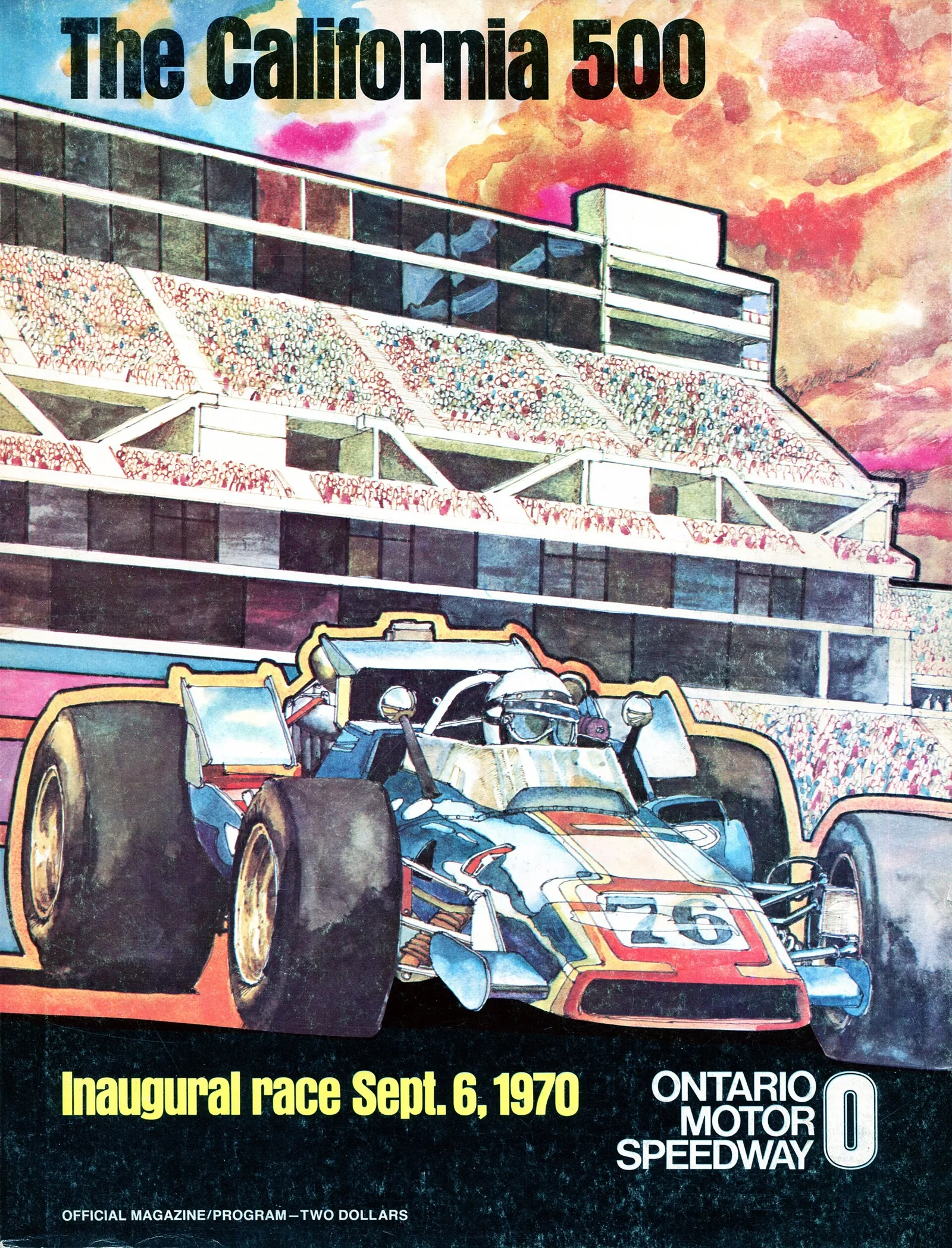
The inaugural California 500 took place at Ontario Motor Speedway in September 1970. Jim McElreath won it, and the race began an eleven-year history in the IndyCar Triple Crown. A crowd of 180,223 watched the 500-mile event, which was held on the Sunday of Labor Day weekend.
Ontario Motor Speedway opened its gates for a 500-mile championship race in September 1970, and the crowd it drew set a record for a California sports event. The winner, Jim McElreath, took the flag by two seconds after the leader's engine failed in the closing laps. This is how the first California 500 came together, from the planning years to the finish.
What was the 1970 California 500?
The 1970 California 500 was the inaugural 500-mile USAC Championship Car race at Ontario Motor Speedway, held on 6 September 1970. Jim McElreath won by two seconds from Art Pollard, and the event opened an eleven-year spell as part of the IndyCar Triple Crown.
USAC had fixed the race for the Sunday of Labor Day weekend back in 1969, with a commitment to ten years. It was race 12 of 18 in the 1970 season, and it was the first running of the event.
A brand-new oval, a record crowd and a win decided by two seconds after the leader's engine gave up.
Why did the track take so long to open?
Plans for Ontario Motor Speedway were announced on 16 February 1966, with Stolte Construction Company and Filmways Inc. as its main backers. A slowdown in the economy and bond market stalled funding in 1966, and Filmways later walked away to buy Sears Point Raceway, so the planned December 1968 opening slipped.
USAC kept its Indy cars racing at Riverside International Raceway from 1967 to 1969 while the new oval was built. Groundbreaking took place on 24 September 1968, with actor Kirk Douglas among the guests. Construction costs were expected to reach $25.5 million.
The track was billed as the Indianapolis of the West. It was a 2.5-mile oval with four turns. The infield held a 3.1-mile road course, and a quarter-mile drag strip ran along the front straight. Seating was planned for over 150,000 people, with standing room for another 100,000 and parking for 68,000 cars.
How did practice go?
Practice opened on Saturday 22 August 1970, when 27,852 spectators arrived for free admission. Only seven cars ran that first day, and Mark Donohue set the fastest speed at 165.14 mph. Dust storms cut two straight practice sessions short, and by Thursday Joe Leonard had pushed the top speed to 177.2 mph.
The track had held its opening ceremonies earlier, on Sunday 9 August 1970, with exhibitions of drag racing, stock car racing and Indy car racing before a Pro-Am celebrity race. Pros and celebrities took turns in new Porsches, three laps at a time, with the celebrities driving the final three laps.
Practice was not without trouble. Greg Weld spun in turn two and hit the wall, Mario Andretti lost a nose cone at speed, and Joe Leonard had a fire on Friday when a fuel coupling broke. Leonard got out with only singed hair on his legs. Al Unser was fastest on Friday at 176.8 mph.
Who took the pole and how fast was it?
Lloyd Ruby won the pole on Saturday 29 August with a four-lap average of 177.567 mph. That speed was seven mph quicker than Al Unser's Indianapolis pole four months earlier, and 29 cars posted times that day in front of 63,486 spectators.
Ruby's fastest single lap was 178.042 mph. Dan Gurney was second at 176.401 mph, and Johnny Rutherford completed the front row at 176.375 mph. The pole carried a $12,800 prize. Joe Leonard, who had been widely tipped, saw his engine blow in morning practice and qualified sixth-fastest at 174.740 mph.
Bump day on Sunday 30 August settled the last two rows. George Snider had posted 169.753 mph the day before, then went home to Bakersfield, and Greg Weld bumped him from the field. Snider's attempt to requalify in a backup car failed. Jim Hurtubise held the 33rd and final spot at 169.101 mph in his front-engined roadster.
How did the race unfold?
Tony Hulman gave the order to start engines before 180,223 spectators, the largest crowd ever to watch a sports event in California. Lloyd Ruby led the opening lap, and Al Unser moved into the lead on lap two, a position he held for most of the afternoon.
The race was the first to use electronic timing, with transponders on each car feeding antennas buried beneath the track. A. J. Foyt had objected that the signals would interfere with his car. When his car pitted early with mechanical trouble, he knocked the transponder off with a hammer, and officials scored him by hand for the rest of the race.
Jim Hurtubise blew an engine and crashed in turn three at the rear of the field. On the restart Unser took control and led 166 laps. Dan Gurney had led four laps before Unser's first stop on lap 47, and Peter Revson led eight laps before Unser pitted again on lap 139. Gurney later cut a tyre at the halfway point and spun.
Unser's car slowed to a stop with 14 laps remaining, and LeeRoy Yarbrough inherited the lead with a two-lap margin over the field behind him. With eight laps to go, Yarbrough broke a piston and coasted into the pits, pushing his car back to a cheer from the crowd. Art Pollard, who had started 32nd, took the lead.
Almost at the same moment, A. J. Foyt, the owner of Jim McElreath's car, crashed in turn four. He was unhurt and helped push his car clear so the race could finish under green. When the green flag waved with five laps to go, McElreath dived inside Pollard into turn one and took the lead.
McElreath bobbled in turn three with three laps remaining and let Pollard back in front. One corner later Pollard overdrove the turn and drifted wide, and McElreath retook the lead for good. He won by two seconds.
Key figures from the weekend
| Measure | Figure |
|---|---|
| Practice crowd on opening day | 27,852 spectators |
| Pole speed (Lloyd Ruby) | 177.567 mph |
| Fastest qualifying lap (Ruby) | 178.042 mph |
| Pole day crowd | 63,486 spectators |
| Last grid place (Jim Hurtubise, 33rd) | 169.101 mph |
| Race crowd | 180,223 spectators |
| Race distance | 500 miles |
| Winner's margin | 2 seconds |
| Winner's prize (Jim McElreath) | $146,850 |
Who won, and was there a protest?
Jim McElreath won $146,850 and the trophy from Governor Ronald Reagan in victory lane. Pollard's team protested, claiming they had been a lap ahead, but USAC scoring confirmed McElreath as the winner. It was McElreath's final Indy Car victory.
Tyre wear had worried teams before the race, but the concern proved unfounded. McElreath changed only one tyre during the race, while Pollard ran all 500 miles without changing tyres at all.
Why did President Nixon fly over the race?
President Richard Nixon flew over the track by helicopter during the race. He had spent 18 days at his California home, which was known as the Western White House, and the view from the air encouraged him to invite racing participants to the White House on 21 September 1971.
Nixon had also visited his 90-year-old aunt in a nursing home that afternoon, and he looked over two potential sites for his Presidential Library before returning to Washington.
How was the race broadcast?
The race was shown on closed-circuit television in theatres, as the Indianapolis 500 had been. Keith Jackson and Alan Courtney called the action, but critics said the coverage lacked replays, failed to notice spins and carried only two driver interviews. The commentary did not realise McElreath was in front until three laps remained.