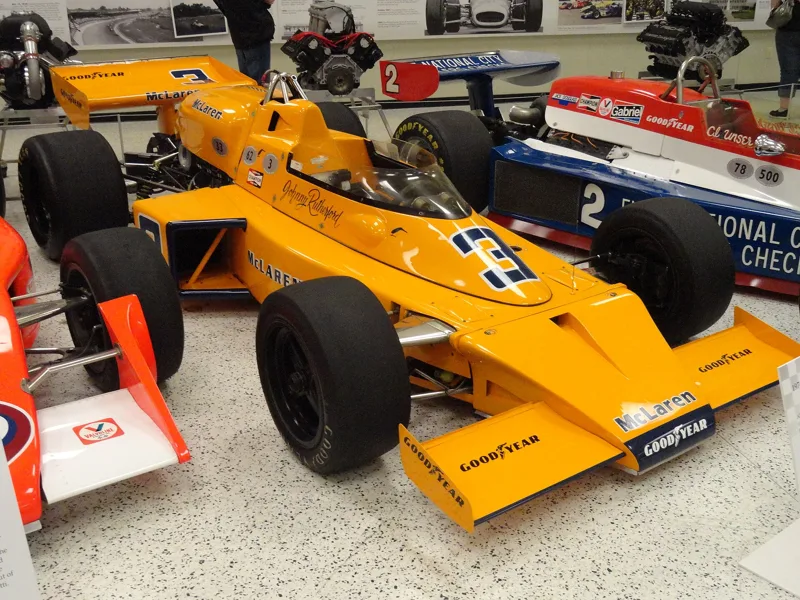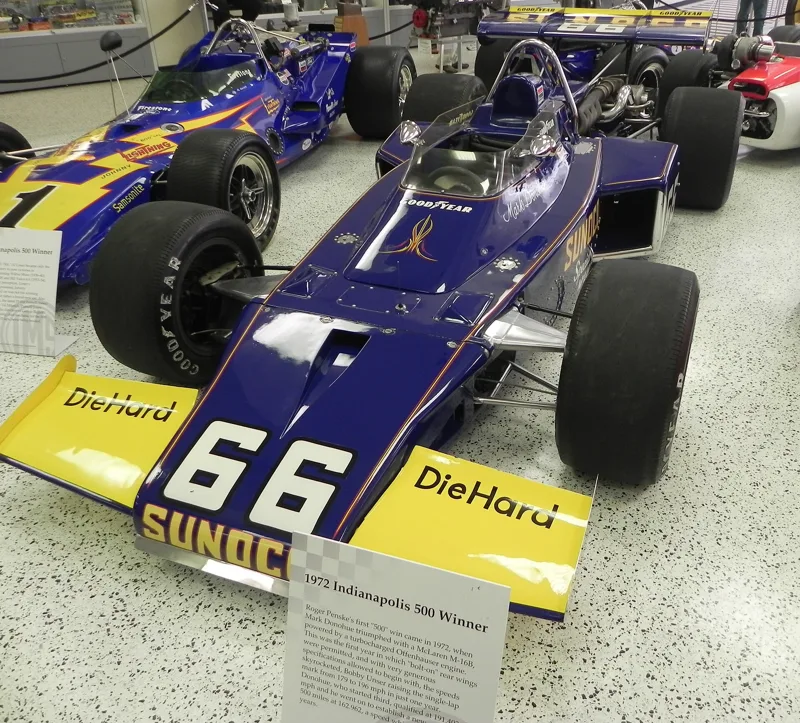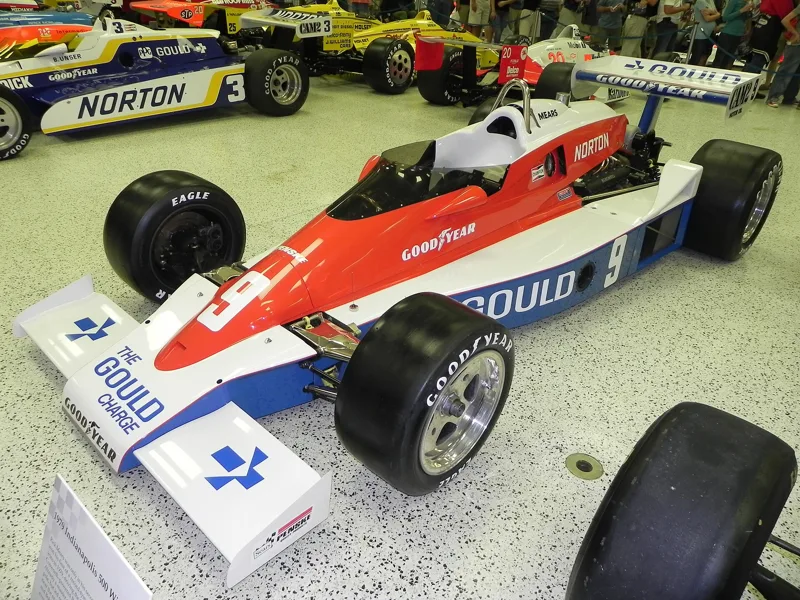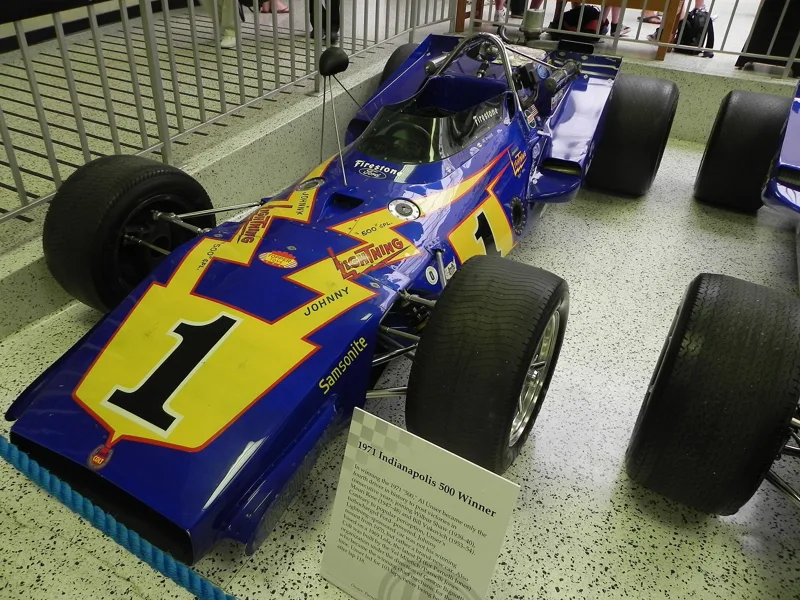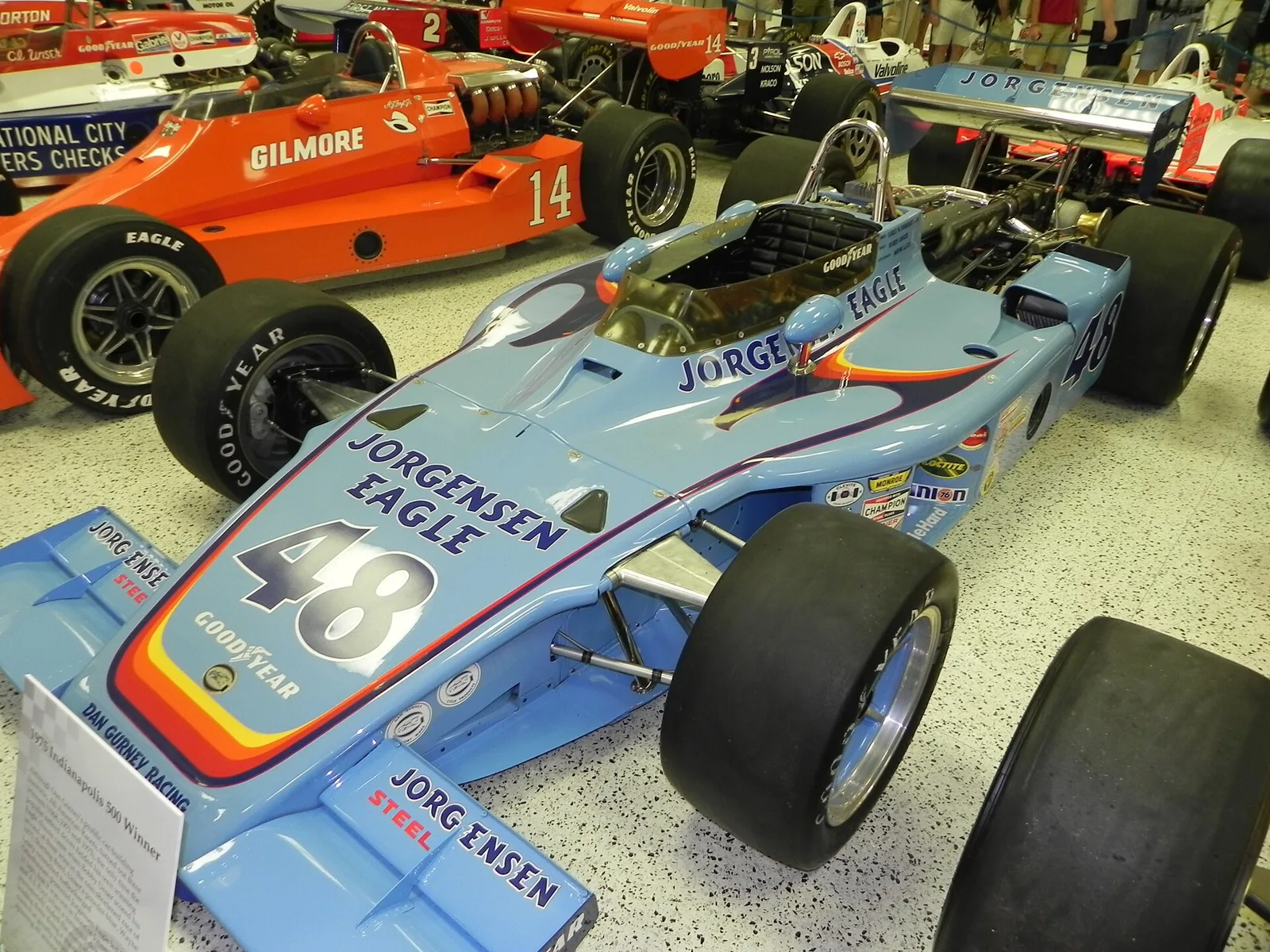
Bobby Unser won as rain stopped the race 26 laps short, while Dan Gurney's Eagle team took its third 500 win as car owner.
Bobby Unser took the 1975 Indianapolis 500 on Sunday 25 May 1975, and the race was ended early by weather after 174 laps. Dan Gurney, as car owner, saw his Eagle chassis score its third 500 victory, and Unser finished 26 laps short of the scheduled distance.
The 1975 Indianapolis 500 was the 59th running of the race, held at the Indianapolis Motor Speedway on Sunday 25 May 1975. Bobby Unser won his second Indianapolis 500 after rain halted the race on lap 174, 26 laps short of the scheduled distance. The result also gave Dan Gurney, as a car owner, his first and only Indy 500 win.
Who won the 1975 Indianapolis 500?
Bobby Unser won in an Eagle, the chassis built by All American Racers, the company co-founded by Dan Gurney. Gurney, who had come second twice as a driver in 1968 and 1969, took the win as the team owner. When the rain came, Unser was leading.
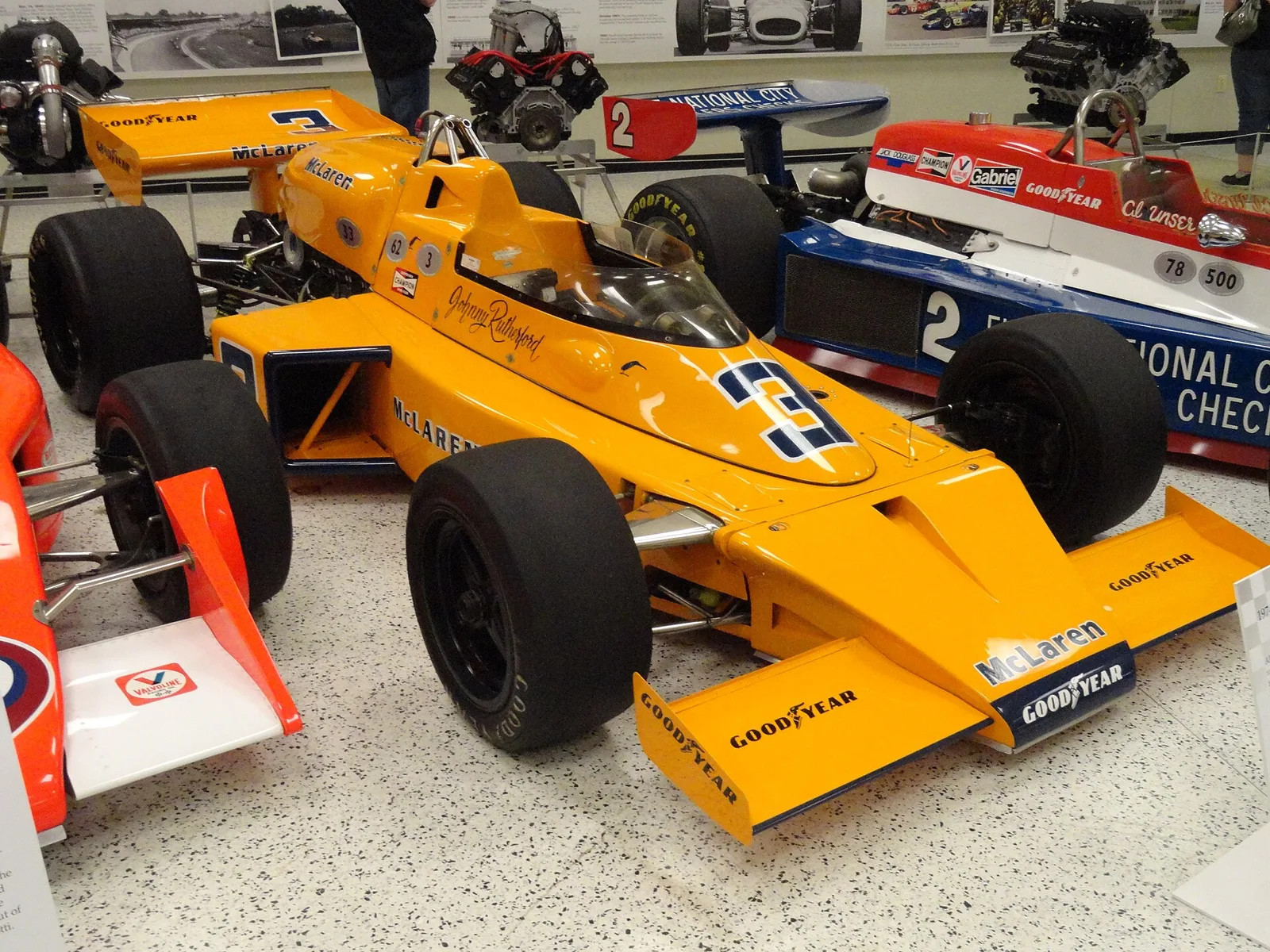
Defending champion Johnny Rutherford was second, and pole-sitter A. J. Foyt finished third, still looking for an elusive fourth Indianapolis win.
The race was called complete at the red flag. Officials gave the result on the basis of the distance run, which was 435 miles.
Rain stopped the 1975 Indianapolis 500 on lap 174, and Bobby Unser's second win came under the red and checkered flags.
How did the rain end the race?
The sky darkened under the yellow. Unser pitted for a second splash-and-go stop, topping off the tank in only six seconds, and that stop put Foyt back on the lead lap. Shortly afterwards the skies opened and the track flooded.
Cars began to hydroplane and spin, and visibility dropped to almost nothing as spray from the rooster tails filled the air.
The caution had begun on lap 171, and the red and checkered flags were shown on lap 174, when the rain made the track unsafe to continue.
Bill Vukovich II slid backwards into the fence in turn four, missing a photographer, and kept the car under control. Pat Vidan, the starter, then displayed the red and checkered flags, and the leaders coasted around to the finish under caution.
How did qualifying go in 1975?
A. J. Foyt took the pole on Saturday 10 May with a four-lap average of 193.975 mph, after a first lap of 195.313 mph. Gordon Johncock and Bobby Unser completed the first three places, the first time former winners had swept the front row.
Gordon Johncock had looked like the man to beat in practice. He turned 195.228 mph on 8 May and topped the timing sheets on four practice days, with Foyt close behind and first on the board twice.
The early part of the day was calm. Mike Mosley led the speeds at 187.833 mph, and Tom Sneva moved to 190.094 mph at 12:15 p.m. before Bobby Unser bumped him at 191.073 mph. Johncock took the provisional pole at 191.652 mph, and Foyt's run then took over.
Al Loquasto, a rookie, was the first to take a run. Bill Puterbaugh finally made the field after six years of trying, and his run was the 15th-fastest of the day, which he celebrated by pumping his fist on his return to the pits.
By the end of Pole Day the field stood at 22 cars. Wally Dallenbach had blown an engine the day before, but he returned on the second day to qualify at 190.646 mph, which was the fourth-fastest speed overall but left him 21st on the grid.
Six cars qualified on the second day, filling the field to 28. Third Day, on Saturday 17 May, saw Mario Andretti come back from Monaco and put his car in at 186.480 mph, the fastest of the day, after bumping Lee Kunzman.
Billy Scott had blown an engine on his first attempt that day, and the field was filled to 33 cars. Al Loquasto was left on the bubble.
What happened on Bump Day?
Loquasto stayed on the bubble for more than a day. Eldon Rasmussen finally bumped him with a speed of 181.910 mph, and at 5:51 p.m. Tom Bigelow bumped Rick Muther with 181.864 mph. Hiss was then the car on the bubble, with just over five minutes left.
Billy Scott hurried out of the pit lane, managed two laps above 180 mph, and then looped his car in turn four and crashed into the outside wall. He walked away, and the field was set.
Rick Muther was the first alternate and Al Loquasto the second, both bumped out on the final day of qualifying.
How did the race start?
From the green flag Johncock was in front, and he led the opening eight laps. He retired on lap 11 when the ignition failed, and Foyt took the lead on lap 9 and held it through lap 58. Salt Walther had also retired early with an engine problem.
On lap 18 he summoned his teammate Bob Harkey to the pits, climbed into Harkey's car and took over for the rest of the race. The switch drew criticism because it came under green rather than during a caution.
What happened in the first half?
Caution came first on lap 45, after Mike Hiss touched the turn three wall. Mario Andretti had trouble on his first pit stop, where the car kept stalling as it tried to pull out of the pit lane. On lap 68 Andretti spun on the backstretch and hit the inner wall close to the turn three entrance.
He had completed only 49 laps and was out of the race.
Wally Dallenbach took the lead on lap 59 and led 96 laps in total, giving it up only during pit stops. Bobby Allison led a lap during a pit stop shuffle, which proved to be his final start at Indianapolis.
Foyt also passed Cliff Bergere's total of 2,425 laps to top the all-time list of laps completed at the 500.
What happened to Foyt during the race?
During a run of green-flag pit stops, Foyt seemed to run dry entering turn one. Coasting down the backstretch with no power, he appeared to be adjusting something behind the cockpit, and within seconds he was back up to speed and headed for the pits for fuel.
Tom Sneva's crash
On lap 125 Tom Sneva came upon Eldon Rasmussen, a lap down, in turn one. Side by side in turn two, their wheels touched, and Sneva's car went airborne and flipped over the nose of Rasmussen's car.
The car came upright, struck the outside wall and catch fence, and fire spread through the wreck as the engine and rear section broke free. The cockpit kept moving and finally stopped right side up but facing backwards.
Sneva was conscious and began to unbuckle himself, but his legs were trapped in the cockpit. Rescue workers arrived quickly and pulled him out with help.
Before he was freed, his hand had been in a puddle of methanol that scorched his fingers, and the crews then put out the remaining fire.
He suffered burns to his face and hands and was listed in serious condition at first, but his condition was upgraded within days. A month later he was racing again.
What happened in the late race?
On lap 162 Dallenbach's piston failed after he had led 96 laps, and the lead passed to Johnny Rutherford with Bobby Unser second. Unser took the lead on lap 165 as the skies began to threaten. On lap 170 a hub failed on Gary Bettenhausen's car and the wheel came off on the main straight.
He kept the car mostly off the wall on three wheels and parked it in the infield at turn one, while the caution came out for the debris.
Under that caution Unser made a fuel-only stop, and the leaders restarted with Unser still in front.
Who else was part of the 1975 race?
It was the final race for Mary Catherine Unser, known as Mom, the mother of Jerry, Bobby and Al, who was a fixture in the garage area and known for a hot chili recipe. She passed away on 18 December 1975.
Jimmy Caruthers had been diagnosed with cancer in late 1974, went into remission and returned to race in 1975. He finished 14th and died on 26 October, five months after the race.
Why was the schedule back to normal?
The 1974 race had been squeezed by the energy crisis, and USAC cut a week of practice and trimmed time trials to two days. For 1975, time trials were restored to four days, and they stayed that way for later years.
The opening day of practice moved back 48 hours to a Saturday, although rain washed out that day and the cars did not take to the track until Sunday. The pattern would remain in place through 1997.
Pop-off valves were required again, and turbocharger boost was capped at 80 inHG. Top speeds were expected to fall in the low to mid-190 mph range.
Race morning designation
That morning the Speedway was placed on the National Register of Historic Places. The day also marked thirty years of Hulman ownership.
How was the race broadcast?
The IMS Radio Network carried the race live on about 1,200 affiliates, including shortwave transmissions to Europe, Asia and Thailand, and it was estimated to reach more than 100 million listeners. Sid Collins was chief announcer, and no celebrity guests joined him in the booth during the race.
Before the race Collins interviewed Senator Barry Goldwater, and DePaolo, whose 1925 win was now fifty years old, was another guest.
ABC Sports showed the race on a same-day tape delay. Jim McKay sat out to attend his daughter's graduation, and Keith Jackson took his place. Jackie Stewart returned as analyst after missing the 1974 race, and Sam Posey was moved to the pit area.
| Measure | Detail |
|---|---|
| Date | Sunday 25 May 1975 |
| Winner | Bobby Unser, his second Indy 500 win |
| Pole | A. J. Foyt, 193.975 mph four-lap average |
| Distance | 174 laps, 435 miles, 26 laps short |
| Car owner | Dan Gurney, All American Racers, Eagle chassis |
| Sneva crash | Lap 125, turn two |
| Dallenbach laps led | 96 |