A transport firm's racing venture rose through Formula Two, struggled with turbo cars in Formula One and was absorbed by Benetton, leaving a lineage that won titles.
Toleman was a small British Formula One team active from 1981 to 1985, known above all for launching Ayrton Senna's career. Across 70 Grands Prix it was rarely competitive, and after the team was sold its engineers went on to build title-winning Benetton cars.
Toleman Motorsport was a British Formula One constructor that raced from 1981 to 1985 and started 70 Grands Prix. Its lasting claim to fame is the debut of Ayrton Senna. The team was seldom competitive, and when Benetton bought it, the engineers who stayed went on to build title-winning cars.
The story starts with a transport firm, moves through a fast rise in Formula Two, includes a painful spell with turbo technology and ends in absorption. The lineage it left behind is still visible in the modern Enstone team, and this guide follows each stage.
Where did the Toleman family business come from?
In 1926 Edward Toleman created a firm that carried Ford vehicles from the factory to dealers nationwide. His son Albert later ran it, and when Albert retired in 1966 the business passed to his sons Ted and Bob. The brothers brought in Alex Hawkridge to extend the transport work into the European market.
The family were keen drivers as well as businesspeople. Albert Toleman won several club-level rally titles, and Ted raced in Formula Two, took part in the Dakar Rally and entered the 1976 Le Mans race. A racing crash in 1976 killed Bob Toleman.
Hawkridge pushed the company toward motor sport by sponsoring other drivers. In 1976 Toleman backed Rad Dougall in British Formula Ford, even though Dougall broke both legs in a crash on the very day the deal was agreed. The support continued the following year, when Dougall took the Formula Ford 2000 crown.
A transport family's motor racing venture that gave a future world champion his break and then handed its engineers to a rival.
How did Toleman rise through Formula Two?
Toleman raced in the European Formula Two Championship from 1978 to 1980, under the direction of Hawkridge and Roger Silman. To prepare for that level, the team hired Rory Byrne from Royale Racing, with an eye on building its own cars one day. Results improved steadily year on year.
In 1978 the team ran a single customer March-BMW. Dougall reached the podium in the opening race but scored little after that. Byrne grew frustrated with March's Robin Herd, whom he accused of working against Toleman to help March's own works team. His verdict was that a customer car always left a team one step behind.
In 1979 the team added a second car for Brian Henton, a customer Ralt-Hart. Henton ended the season second in the standings, two points behind Marc Surer. He could have won the title, but he was disqualified from the 1979 Mediterranean Grand Prix after taking the flag first on track.
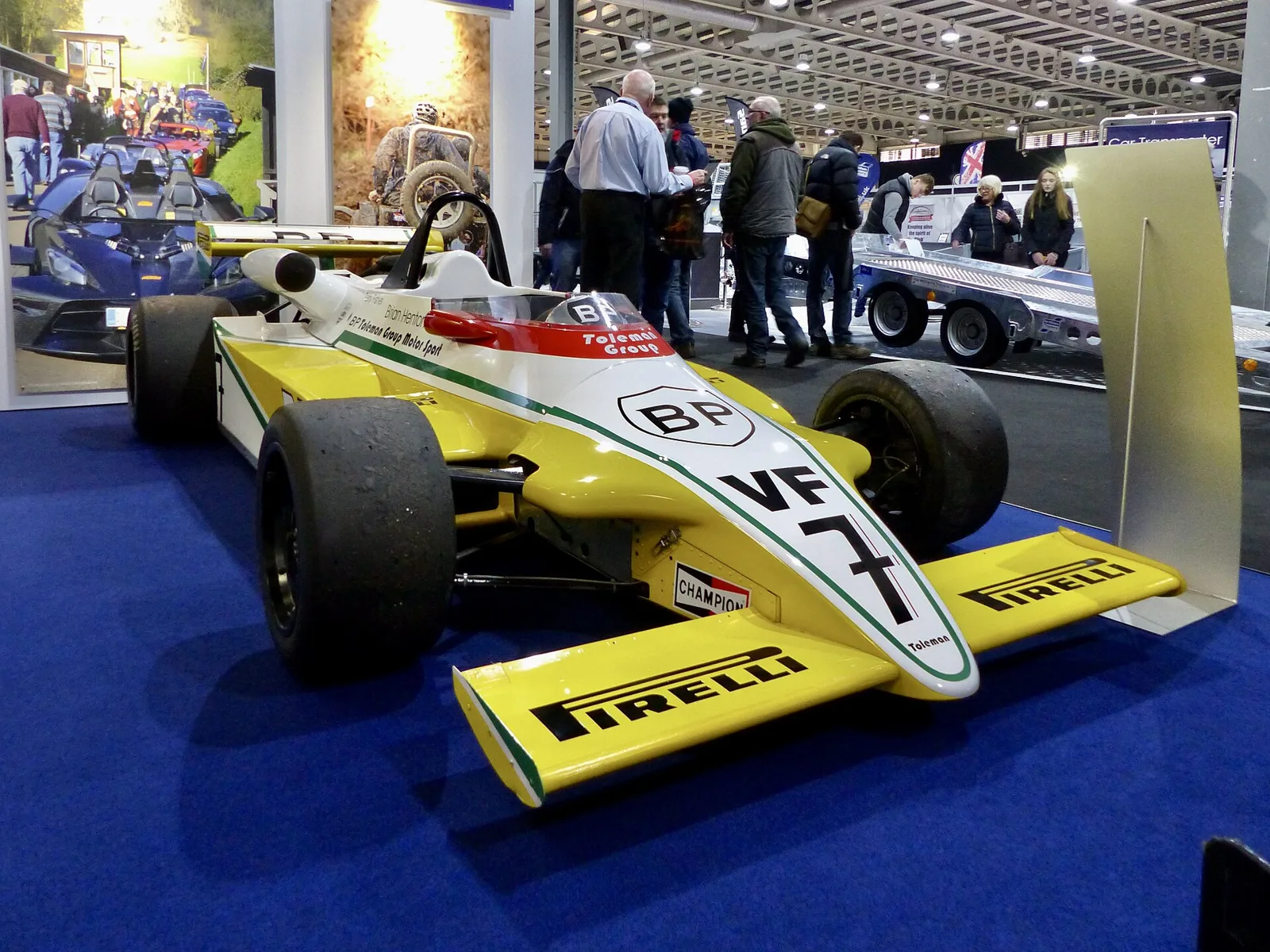
The 1980 season was the breakthrough. Regulations were revised to limit ground effect, and Byrne produced the first team-built chassis, the TG280, which exploited a loophole that let Toleman keep running a ground effect car. Derek Warwick replaced Dougall, bringing BP sponsorship, and the team moved from Goodyear to Pirelli tyres.
The Toleman-Hart combination dominated the Formula Two season. Henton and Warwick finished first and second, with a margin so large that the pair skipped the final race. Including customer drivers, Toleman filled three of the top four places and four of the top seven, and its cars won six of the twelve races.
Did Toleman build cars for other series?
Toleman also commissioned a Lola-built car for Formula Atlantic and Formula Pacific racing, the TA860. Only two were made. One went to Carl Haas's operation in the United States in June 1981, and the other was sold to Peter Williamson, an Australian, that September.
Williamson ran a Toyota dealership in Sydney and raced his car in the Australian Formula 1 championship, which was then run to Formula Pacific rules. Most of his rivals used the 1.6L Ford BDA, but he chose a Toyota engine. His second chassis was crashed in practice for the 1984 Australian Grand Prix, and that accident led him to retire from racing.
Why did Toleman enter Formula One in 1981?
The team's Formula One debut came in 1981, a season for which it was not fully prepared. Hawkridge explained that the FISA faction of the FISA-FOCA dispute wanted extra entrants to strengthen its hand against the established FOCA teams. The window was short, and the team seized it.
Toleman built its engineering around that choice. It lured Pat Symonds, a former Royale engineer and Byrne's lieutenant, by offering to double his salary. The team also introduced a fibre-optic engine management system, which Hawkridge credited with better reliability, and it commissioned Hart to build turbocharged engines.
The turbo decision was pivotal. Formula One was moving toward turbo cars, which outpaced the naturally aspirated engines that had long dominated. Symonds later argued that a Cosworth DFV would have made the team more successful in 1981, but that it would not have lasted until 1990 as just another customer.
What were Toleman's early struggles?
The early years were painful. The press mocked the cars as The Pig for their handling and as The Belgrano for their oil leaks. The TG181 was exceptionally poor in 1981, qualifying for just two races all season, and Warwick said it was impossible to drive and far off the back row.
Henton qualified for the Italian Grand Prix that year, while Warwick reached the season finale and collected a 25,000 pound bet for doing so. Henton then departed, and in 1982 Teo Fabi took his seat. The team qualified regularly but finished only two races, largely because of engine reliability.
The carbon-composite TG183 arrived late in the 1982 season and ran in only two Grands Prix. Warwick did set the team's first fastest lap that year, at the Dutch Grand Prix. A stunt at the British Grand Prix also made headlines: Warwick started on half a tank of fuel to gain speed, ran out after 40 laps, and the team falsely blamed a mechanical failure.
How did Toleman become a serious team?
The 1983 TG183B showed much better form after a major update. Warwick stayed on, Bruno Giacomelli replaced Fabi, and the budget grew as Candy was joined by Magirus and BP. The Hart turbos finally delivered real pace, and Warwick took fifth and sixth on the grid in the first two races.
The team's first points arrived when Warwick finished fourth at the Dutch Grand Prix, and it collected points in four straight races to close the year. Toleman finished ninth in the Constructors' Championship with ten points, ahead of backmarkers such as Arrows, Theodore, Ligier and RAM, none of which managed more than four points.
What made Ayrton Senna's time at Toleman special?
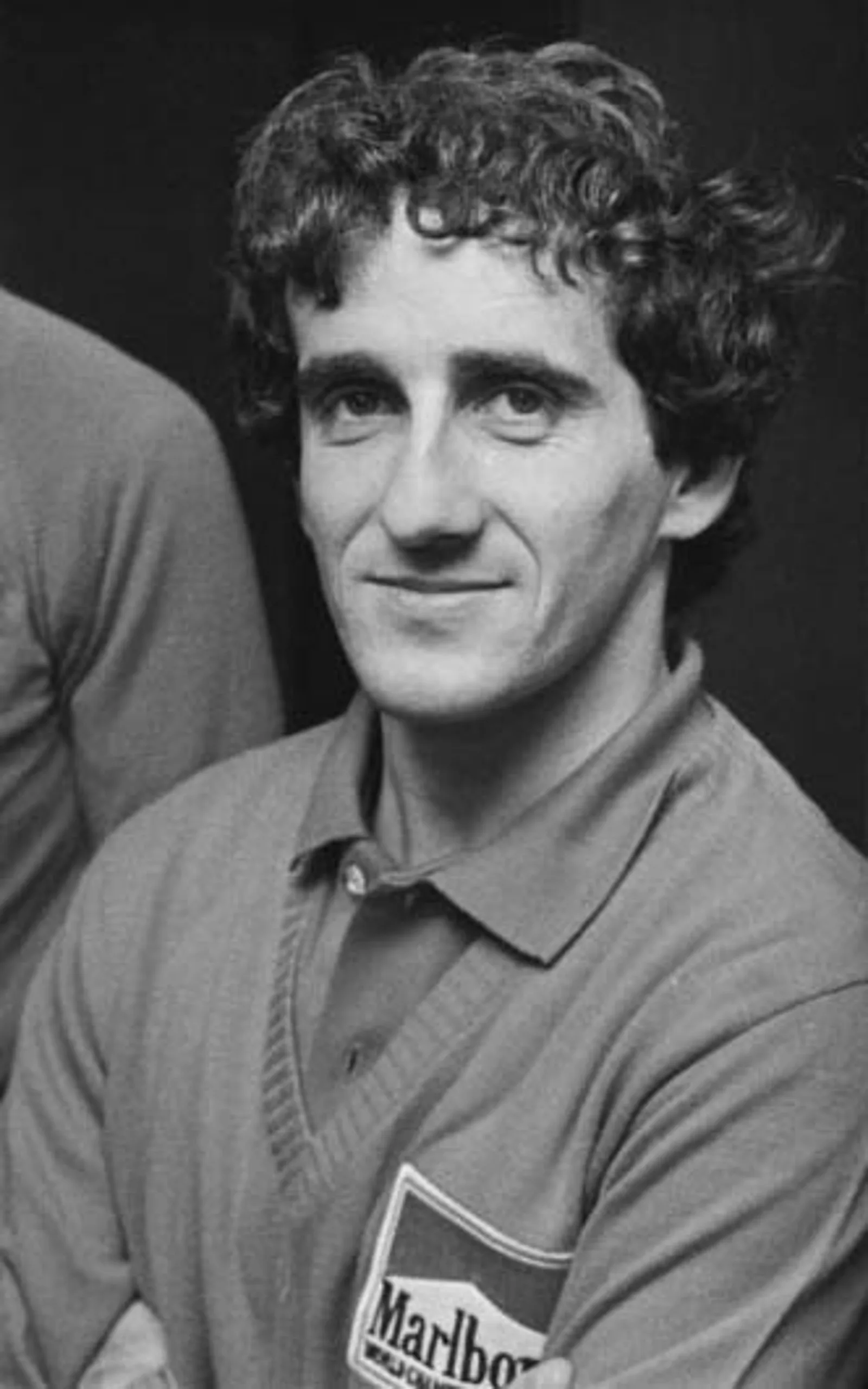
In 1984 Warwick left for the factory Renault team, and Giacomelli departed for CART. Toleman signed Ayrton Senna, the rising talent who had just taken the 1983 British Formula Three crown. His contract carried a release clause of 100,000 pounds, and he was paired with the Venezuelan Johnny Cecotto, a former motorcycle world champion.
Cecotto broke both legs in practice for the British Grand Prix, and his Formula One career ended there. Stefan Johansson was then signed to finish the season, and he later climbed from 17th on the grid to fourth in Italy on his debut for the team.
Senna made his debut at Jacarepagua, qualifying 17th. Both cars retired with engine failures, but he scored his first point at Kyalami and another at Spa. At Imola he failed to qualify, the only time he missed the grid in his career, after a dispute with Pirelli over tyres.
Senna then persuaded the team to leave Pirelli for Michelin. The change arrived at the French Grand Prix, and at Monaco, the next race, Senna finished second in torrential rain. Jacky Ickx stopped the race after 31 of the 77 laps, and Senna was closing on Alain Prost when it ended. The result announced his talent to the world.
Senna took three podiums during his Toleman years, and the team's best constructors' finish came in 1984, when it placed seventh with 16 points. Senna accounted for 13 of those points. He left for Team Lotus at the end of the season after triggering a release clause, and Toleman responded by suspending him for the Italian Grand Prix.
Why did Toleman nearly collapse in 1985?
After Senna's departure, Toleman signed John Watson and kept Johansson for 1985. Then the team nearly collapsed. Michelin left Formula One at the end of 1984, and Pirelli refused to supply the team again after that year's disputes. Goodyear was also unhappy about the earlier switch away from its tyres.
Without a tyre supplier, Toleman missed the first three races of 1985. Johansson left for Tyrrell and Watson parted ways with the team. Benetton bought the company mid-season and inherited a Pirelli supply deal from the collapsed Spirit outfit. Teo Fabi drove alone for the first six races, and Piercarlo Ghinzani joined him for the last seven. Fabi's pole at the German Grand Prix was the team's final highlight.
What became of Toleman's engineers?
Ted Toleman's sale to Benetton came with a promise from the Italian owners to retain the staff. Byrne and Symonds remained at the renamed Benetton Formula operation, which then hired Flavio Briatore and Ross Brawn. Under Michael Schumacher, Benetton won two drivers' titles and one constructors' title in the 1990s.
Later, Byrne and Brawn followed Schumacher to Ferrari, where the pair helped run the team's dominant early 2000s era. Symonds and Briatore stayed at Benetton, which later became Renault and moved to a new factory in Enstone, Oxfordshire. With Fernando Alonso, Renault won two drivers' titles and two constructors' titles in the 2000s, and the Enstone lineage traces back to Toleman.
Where are the original Toleman leaders now?
Hawkridge and the Toleman brothers never returned to Formula One. Ted left England in 1993 and for a time managed the Australian Mini Challenge one-make series. Hawkridge later chaired a firm that used racing simulators to coach young drivers. Their paths after Formula One stayed close to motor sport.
Key milestones at a glance
| Year | Milestone |
|---|---|
| 1926 | Edward Toleman founds the Ford delivery business |
| 1980 | Toleman-Hart finishes first and second in Formula Two |
| 1981 | Formula One debut; TG181 qualifies for two races |
| 1983 | First Formula One points, ninth in the Constructors' Championship |
| 1984 | Senna debuts in Brazil and finishes second at Monaco |
| 1985 | Team sold to Benetton mid-season |