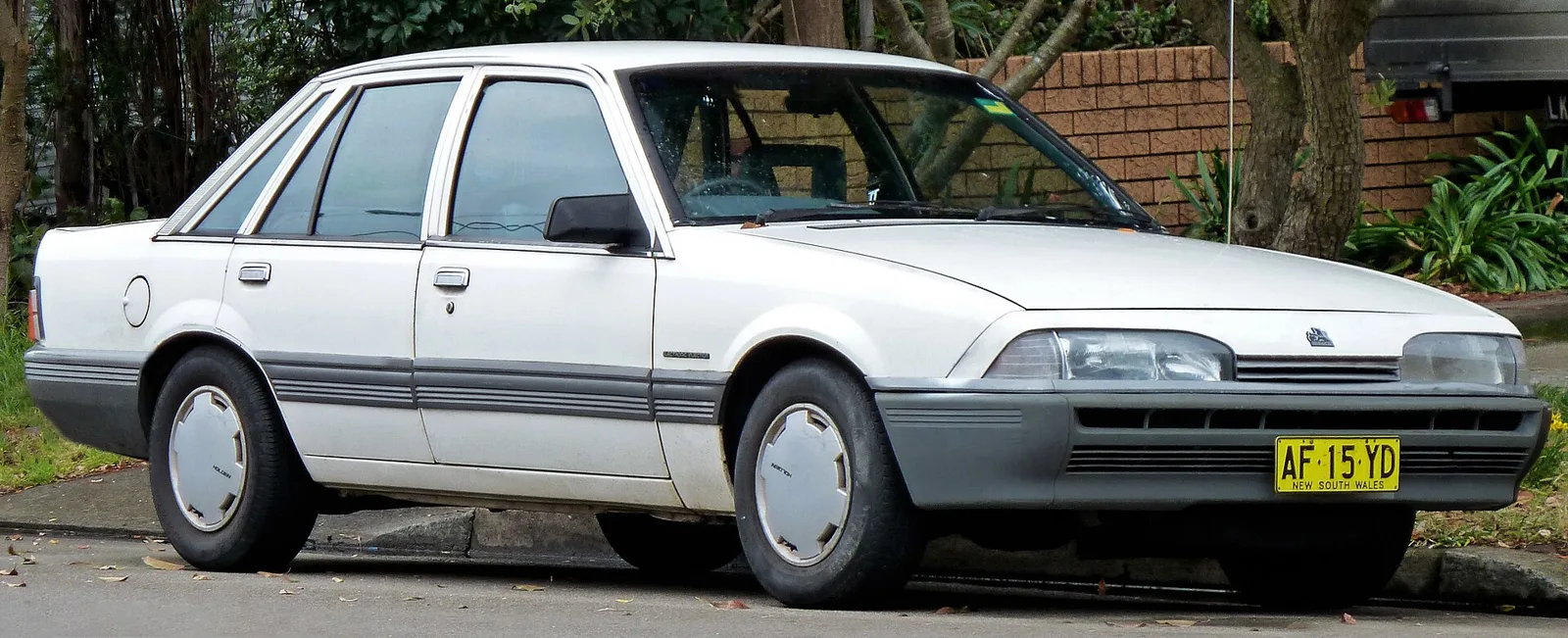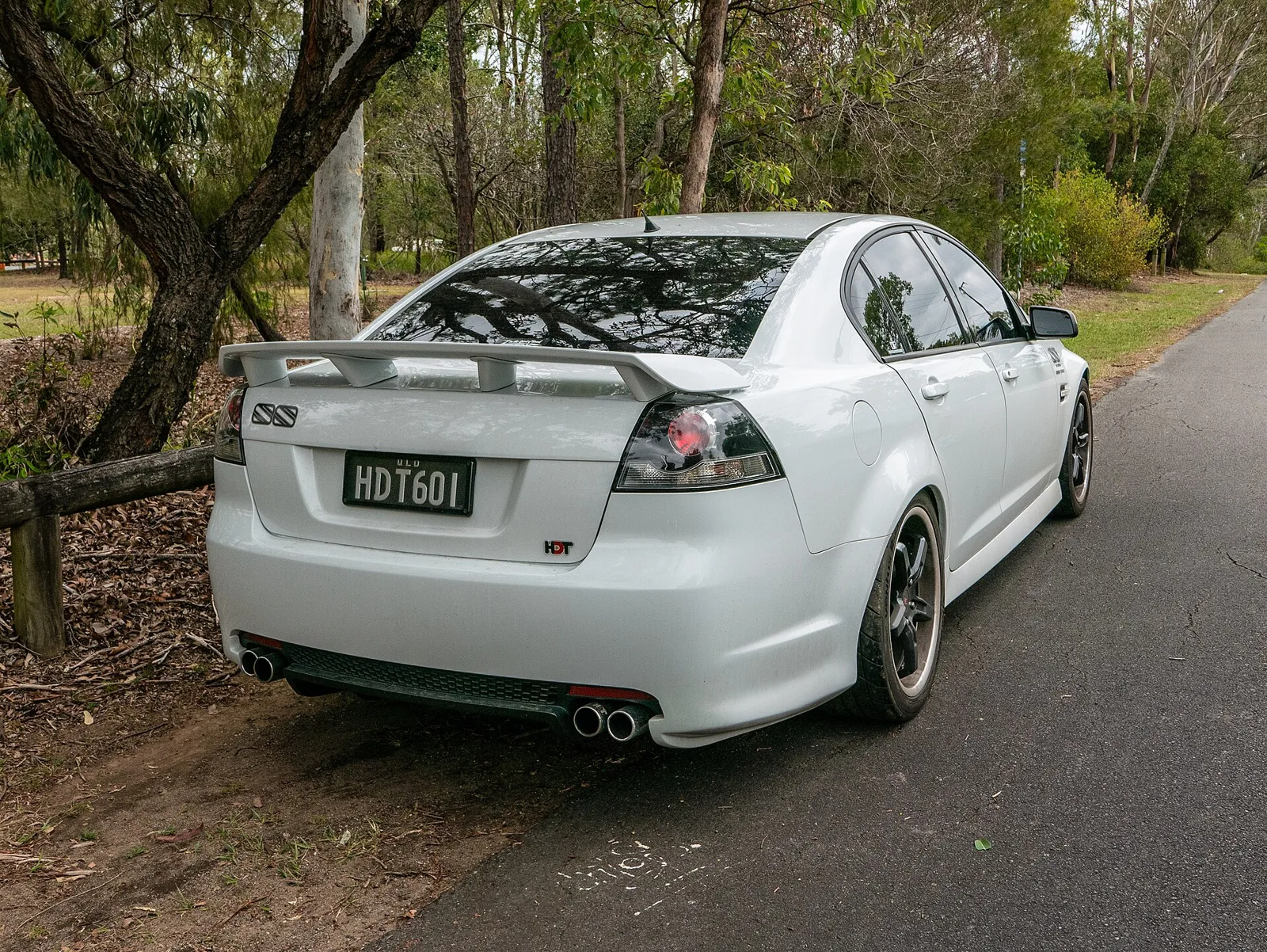
From the 1969 Sandown debut to Peter Brock's Bathurst dynasty, the Holden Dealer Team won at the mountain in an era of Toranas and Commodores, then split with Holden.
The Holden Dealer Team was Holden's semi-official racing team from 1969 to 1986. Peter Brock drove for it through its strongest years, winning at Bathurst nine times, and the team later built HDT road Commodores before a 1987 split with Holden.
The Holden Dealer Team, usually called HDT, was Holden's semi-official racing arm from 1969 to 1986. It contested touring car events, rallies and rallycross, and its cars carried Peter Brock to a string of Bathurst wins. After Holden severed ties in 1987, the name lived on in road cars that remain collectible today.
The team's story is a mix of factory muscle and dealer-network marketing. It began as a way around a General Motors rule, grew into one of the most successful names on the mountain, and finished as a privately run brand that still draws attention when its cars come to auction.
Where did the Holden Dealer Team come from?
Holden set up the team in 1969 so that it could compete in touring car and rally events. General Motors barred its manufacturers from officially entering circuit racing, so the team was branded as dealer-owned while Holden paid for everything. Harry Firth, a former Ford Works manager, ran it.
The debut came at the 1969 Sandown 3 Hour, where one Monaro GTS350 was shared by Kevin Bartlett and Spencer Martin. It retired after brake trouble, then a crash and a fire. For the 1969 Hardie-Ferodo 500 Firth signed six drivers, among them Colin Bond and Peter Brock, the pair who would anchor the squad for years. Bond and Tony Roberts won, and Brock, sharing with Des West, took third.
A team that began as a dealer front for a factory effort, then built a road car brand that outlived its racing roots.
How did the team's Bathurst success build in the 1970s?
Ford's Allan Moffat dominated Bathurst in 1970 and 1971, so Firth moved to a smaller six-cylinder Torana. That car was a match for the Falcon at most circuits, but the mountain suited the Ford. The wet 1972 Hardie-Ferodo 500 broke the pattern when Brock won alone.
Brock won again in 1975 on a dry track in a No. 05 Holden L34, and the HDT-developed L34 filled the first three places. The following year the car took the first seven places. Firth's philosophy of a quick, small-engined car carried straight into the Commodore years that followed.
Why was the V8 Torana XU-1 so contentious?
Firth built a V8 XU-1 in 1972 to counter Ford's planned XA GT-HO and Chrysler's Charger. It began with a 4.2-litre V8 and was upgraded to 5.0 litres, but production was cancelled after the mid-1972 Supercar scare, and the handling argument never ended.
Bond showed the car's potential by racing it disguised as a Sports Sedan at Bathurst's Easter meeting, where he won the five-lap support race with ease. Opinions split on the handling. Firth said the V8 handled better than the six, while rival Howard Marsden and later Brock argued that the chassis was never built for the extra torque. Of the four V8 prototypes, none survived, because Holden crashed them to recover costs.
What did the rally and rallycross programme achieve?
Harry Firth grouped rallying under the HDT in 1969. Colin Bond, paired with George Shepheard, took the Australian Rally Championship in 1971, 1972 and 1974, and Peter Lang and Warwick Smith added 1973, giving the team four straight titles. Brock also dominated rallycross.
His supercharged Torana GTR, nicknamed The Beast, proved almost unbeatable at Calder Park, Catalina Park and Mallala. Larry Perkins, then a young mechanic, also raced rallycross for the team with some success.
What did the L34 and A9X Toranas achieve?
The L34 was homologated for 1975 and solved the V8's engine troubles, leading Bond to the title that year. Holden also won the 1974 Australian Manufacturers' Championship. The A9X, introduced in 1977, followed the L34 with a rear-facing bonnet scoop.
In 1974 the LH SL/R 5000 arrived, and Brock dominated the championship before leaving HDT at season's end. Bond took round wins at Adelaide, Surfers Paradise and Phillip Island that year. Dick Johnson made a single start for the team at Surfers Paradise, finishing third.
The A9X faced teething troubles and struggled against Moffat's two-car Ford operation in 1977. Brock still won the Hang Ten 400 at Sandown that year in a privately entered A9X, a result that showed the car's potential in other hands.
Why did Harry Firth step back?
Firth retired at the end of 1977, aged 59, after eight years as team manager and a career that stretched close to three decades. He later complained that Holden ignored his advice on touring car success. Between 1978 and 1981 he took a CAMS role inspecting touring cars.
His career had begun with the BMW 328 that Frank Pratt raced to victory in the 1948 Australian Grand Prix, a car he had prepared himself.
How did the Sports Sedan Torana perform?
The 1976 Sports Sedan was a lightweight LH Torana that Bond built in Sydney with a Repco-Holden V8. Rules held it to 5.0 litres while rivals ran up to 6.0 litres, so its opponents had the power advantage. It was on pole at Sandown, but Bond finished equal sixth in the series.
The car ran in only two of the seven rounds. Bond took third in both heats at Sandown, and in the next round at Oran Park he finished third again.
How did the Brock era begin under Sheppard?
John Sheppard took over from Firth and quickly reunited the team with Brock. Brock dominated 1978 and was the first driver to take the triple crown: the championship, the Hang Ten 400 and the Hardie-Ferodo 1000. The new manager also had to rebuild the team's A9X cars, which Firth had refused to pass as scrutineer.
In 1979 Brock narrowly lost the title to privateer Bob Morris, then won the Hardie-Ferodo 1000 by six laps with Jim Richards. The pole lap of 2:20.500 was 1.966 seconds quicker than Morris's, and Brock's final-lap record stood until 1982. The same year the team ran three VB Commodores on the Repco Round Australia Trial, a 20,000 km route around the country, and all three finished first, second and third.
What happened when Holden quit in 1980?
Holden decided that without Ford in touring cars it had no reason to face privateers in its own cars, and it sold the team. Vin Kean, an Adelaide man, bought it and financed it, selling modified Commodores through 54 other dealers.
Brock claimed his second and last triple crown that season. He and Jim Richards won the 1980 Bathurst race for their third straight victory. In 1982 Brock and Larry Perkins won again, and in 1983 the win came after cross-entering: Brock's pole car retired early and both drivers moved into John Harvey's car. In 1984 Brock and Perkins took the race again, which made three straight wins for the pair.
What was the 1984 Le Mans effort?
In 1984 members of the team entered the 24 Hours of Le Mans in a Porsche 956B that ran as Team Australia. The car came from John Fitzpatrick and was sponsored by Bob Jane. Brock and Perkins had it running near the front early on before the race fell apart.
Perkins qualified the car 15th, and after Brock's stint the team had it up to fifth. A wheel loss then cost about 45 minutes in the pits. Later Perkins crashed in the Esses after a clash with another Porsche 956, which had also been involved in a practice incident with him. Back home, Brock's VK Commodore took three of its four starts in the endurance series, including a win at Surfers Paradise.
Why did the team split from Holden in 1987?
Brock began fitting an Energy Polarizer to HDT road cars, a device Holden regarded as pseudoscience. When Brock refused to submit the new Director model for testing, Holden ended the association in February 1987 and stopped honouring warranties on HDT cars.
The new Director carried the device and a rear suspension system developed without Holden's approval. Brock said the details were already public in a magazine article about the Director's 1986 overseas tour. Holden Special Vehicles was created in 1987 with Tom Walkinshaw Racing and has built factory-approved modified Commodores since.
How did the BMW and Ford years go?
In 1988 the team bought the JPS Team BMW assets and ran M3s as BMW's official team, but a naturally aspirated engine could not match Sierras with far more power. The only win of that year came in the Pepsi 250 at Oran Park, taken by Brock and Richards.
Brock turned to Ford in 1989, driving Sierra RS500s supplied by Andy Rouse. He won the final round at Oran Park and finished third in the championship behind Dick Johnson and John Bowe.
Budget pressure led to a 1990 merger with Miedecke Motorsport. Brock finished second to Jim Richards in the Nissan GT-R at Oran Park that year. At the end of 1990 he wound the team up and took his sponsor to Perkins Engineering, where he raced a VN Commodore.
What were the team's key results over time?
| Year | Result or milestone |
|---|---|
| 1969 | Race debut at Sandown; Hardie-Ferodo 500 Monaros finish first and third |
| 1972 | Brock wins the wet Hardie-Ferodo 500 for the first of his nine Bathurst wins |
| 1975 | Brock wins at Bathurst; the L34 takes first, second and third |
| 1977 | Brock wins the Hang Ten 400 in a privately entered A9X |
| 1979 | Brock and Richards win the Hardie-Ferodo 1000 by six laps |
| 1980 | Holden quits; Vin Kean buys the team and Brock wins Bathurst again |
| 1984 | Brock and Perkins win Bathurst a third time in a row; Le Mans effort |
| 1986 | Homologated VK Commodore; Spa 24 Hours King's Cup team prize |
| 1987 | Split with Holden; Bathurst win after the Sierras are disqualified |
| 1988 | BMW M3 era begins; Pepsi 250 win at Oran Park |
| 1990 | Team merges with Miedecke Motorsport, then closes at the end of the year |
What is the HDT road car legacy?
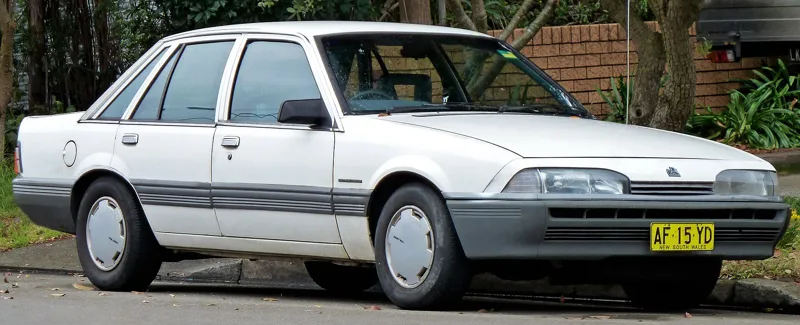
HDT Special Vehicles built modified Commodores and Statesmen with Holden approval until 1987, and only 4246 HDT cars were produced. Collectors now chase them. The Director was listed at A$87,000 in 1987, and a Polarizer-equipped example was expected to sell for more than A$300,000 at auction in 2010.
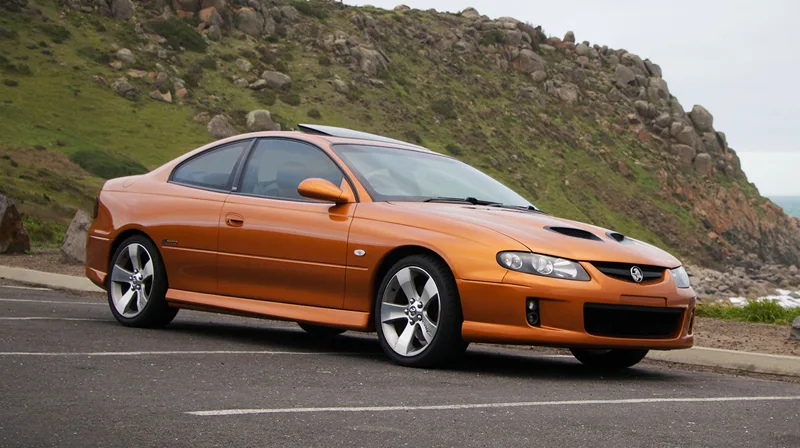
The Pennisi brothers bought HDT Special Vehicles in 1994, and Peter Champion, a close friend of Brock, bought the brand in 2007 and launched Heritage Series cars based on the VE Commodore. In 2026 racing driver Kenny Habul bought the brand, with a relaunch aimed at the 2026 Bathurst 1000.
The HDT Monza is the most unusual part of the range. Brock wanted to add a V8 coupe based on the Opel Monza, and a 5.0-litre example was displayed in 1985 but never reached production. Only one was built, and it reached the auction block in May 2016.