From an Austin 7 with no brakes to a six-lap Bathurst victory, how Brocky and a team that officially did not exist built Australia's best-known touring car record.
Peter Brock won the Bathurst 1000 nine times between 1972 and 1987, a feat nobody has equalled. His Holden Dealer Team, officially dealer-owned to satisfy General Motors, built the Toranas and Commodores that carried him to a record six-lap victory in 1979 and to the title King of the Mountain.
The 1979 Bathurst 1000 ended with Peter Brock and Jim Richards six laps clear of the field, a margin that late-1980s rule changes, the Safety Car above all, may now have made unbeatable. Brock won the race nine times.
Who was Peter Brock?
Peter Geoffrey Brock, born on 26 February 1945 and died on 8 September 2006, was an Australian driver known as Peter Perfect, Brocky and, above all, the King of the Mountain. His record: nine Bathurst 1000 wins, nine Sandown 500 wins, three Australian Touring Car Championships and one Bathurst 24 Hour. He entered the V8 Supercars Hall of Fame in 2001.
He was born at the Epworth Hospital in Richmond, Victoria, and spent his whole life in Hurstbridge, then a country town and now an outer Melbourne suburb. His first car was an Austin 7 bought for five pounds (A$10). It had no brakes and, after his father's axe had dealt with it, no body either. Brock later claimed that driving it improved his skills.
Drafted into the army in 1965, he spent two years of National Service at the Blamey Barracks near Wagga Wagga, serving in the Medical Corps and often driving ambulances. According to his brother Lewis, he and his mates raced them around the base. A young Dick Johnson, later one of his chief touring car rivals, was stationed there at the same time, though neither knew the other.
The turning point came on leave in 1966, when Brock visited Bathurst and saw the 500-mile production car race that later became the Bathurst 1000. Watching it, he decided he wanted to be a racing driver once he left the army. His brother Phil followed him into the sport and co-drove with him at Bathurst twice.
Nine Bathurst 1000 wins between 1972 and 1987, a feat that has not been equalled.
What was the Holden Dealer Team?
The Holden Dealer Team, or HDT, served as Holden's semi-official racing arm from 1969 to 1986. It contested Australian touring car events and also took on rallying, rallycross and Sports Sedan races in the 1970s. Under Brock's ownership from 1980 it also built modified road cars.
Its name was a workaround. General Motors, Holden's parent, forbade its manufacturers from officially entering circuit racing anywhere in the world. Holden got round the ban by calling the team the Holden Dealer Team, officially owned by its dealers, when in reality Holden paid for the whole operation. Executive John Bagshaw, the driving force behind it, created a financial framework that funded the team without Detroit knowing. Holden hired Harry Firth, a former manager of the Ford Works Team, to run it.
The first outing, at the 1969 Sandown 3 Hour, went badly: a Monaro GTS350 for Kevin Bartlett and Spencer Martin retired with brake problems, crashed and caught fire. The Hardie-Ferodo 500 that year went far better. Firth hired six drivers, among them two talented but largely untested youngsters, Colin Bond and Peter Brock, who became the backbone of the team. Bond and Tony Roberts won, and Brock, sharing with Des West, finished third.
Then came Ford. Worried about the V8 Falcon GT-HO, Firth ran a much smaller Torana GTR XU-1 in 1970. It matched the Ford at most circuits but struggled on the long straight and steep climb of Bathurst, and Allan Moffat dominated the race in 1970 and 1971. In 1972, in the wet, Brock broke through in the LJ Torana GTR XU-1.
Brock was no one-trick driver. In rallycross at Calder Park, Catalina Park and Mallala he drove a supercharged Torana GTR called The Beast, which proved virtually unbeatable in his hands. Colin Bond meanwhile won the Australian Rally Championship for the team in 1971, 1972 and 1974.
How did Brock win nine Bathurst 1000s?
He started with a third place on his 1969 debut, won for the first time in 1972, and kept winning until 1987. That span of nine victories has not been equalled. His wins came in two bursts: a hat trick from 1978 to 1980 with Jim Richards, and another from 1982 to 1984 with Larry Perkins and John Harvey.
The first win was a solo drive, in the last year the race ran over 500 miles and the last in which driving alone was allowed. Three years later he won in a dry race in the number 05 Holden L34, the car the HDT developed to take first, second and third that year. In 1976 the L34 filled the first seven places.
Speed over a single lap mattered too. In 32 starts at Bathurst, Brock took pole position a record six times, in 1974, 1977, 1978, 1979, 1983 and 1989. All but the last were in Holdens; the 1989 pole came in a Ford Sierra RS500. He was also on pole for the 1997 V8 Supercars race, although his co-driver Mark Skaife had set that time. The nickname King of the Mountain came from that record.
Bathurst did not always go his way. In 1974 the new L34 version of the Torana had engine problems, and Brock and his co-driver Sampson were six laps in front when the car stopped on lap 118. In 1978 he tried for the lap record on the last lap, but the Alfa Romeo of Ray Gulson baulked him through The Dipper.
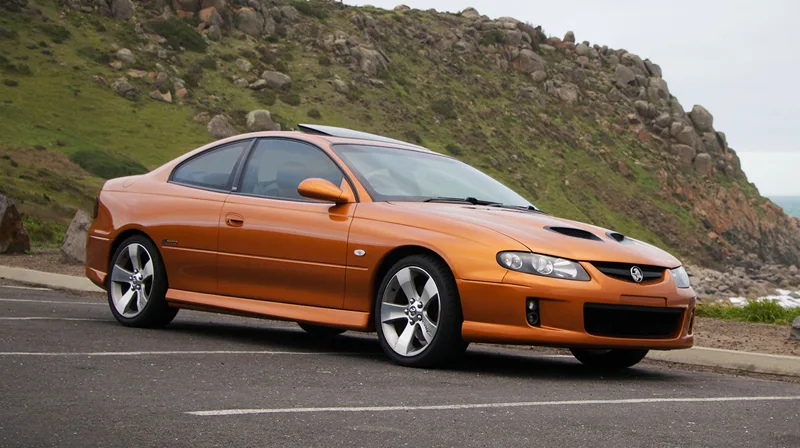
A different Bathurst prize arrived in 2003. Brock won the second and last Bathurst 24 Hour in a seven-litre V8 Holden Monaro 427C for Garry Rogers Motorsport, in a crew completed by Todd Kelly, Jason Bright and Greg Murphy. The margin over the previous year's winning Monaro was less than half a second, and the two cars finished 12 laps clear of the third-placed Porsche 996 GT3 RC. Brock regarded it as his tenth Bathurst win.
Elsewhere he was just as consistent. He won the Sandown 500, the traditional lead-in race to Bathurst, nine times, including seven in a row from 1975 to 1981. His 37 race wins in the Australian Touring Car and V8 Supercar championships stood as a record until Mark Skaife equalled it in 2006; it was beaten in 2007.
What happened in the 1979 race?
On 30 September 1979, the 20th running of the Bathurst 1000, Brock and Richards drove an A9X SS Hatchback Torana, run by the Holden Dealer Team, to a record victory by six laps. The previous best winning margin, set in 1975, was two laps. It was Brock's fourth win and Richards' second.
Brock's win put him level with Harry Firth, Bob Jane and Allan Moffat as the drivers with most wins in the race. On the last of 163 laps he set a lap record of 2:21.1 on the 6.172 km circuit, which stood until he broke it himself in 1982. Toranas took the top three places: Peter Janson and Larry Perkins were second, with Ralph Radburn and John Smith third. Class A cars filled the first eight places, all of them Toranas.
Qualifying had its own drama. Moffat qualified only 22nd after engine trouble, but organisers moved him into the Hardies Heroes top-ten shootout at the expense of the HDT's John Harvey, partly because the television broadcaster wanted him there. Brock still took pole with 2:20.500, nearly two seconds quicker than Bob Morris, even though he admitted a big mistake at the Cutting, where his foot slid off the brake and he almost came to a halt.
The race went into the record books for another reason. Peter Williamson's Toyota Celica carried a camera that sent live pictures to the television coverage, the first time that had been done anywhere in the world. The winners averaged 152 km/h over a race time of 6:38:15.8. It was the fifth and last Torana win in the race, and every one except 1976 belonged to Brock. From 1980, Holden's flagship was the Commodore, which was based on the European Opel Senator.
What did the Commodore years change?
From 1980 to 1987, Brock and the HDT worked with full factory approval and assistance on high-performance Commodore modifications under the CAMS Group C rules. Some were homologation specials, close cousins of the race cars. Once Group A rules arrived in Australian motorsport in 1985, the VK Commodore SS Group A became the car built to meet them.
FISA's Group A rules required a minimum of 5,000 base models, or 1,000 in Australia because of the smaller market, and 500 evolution models, before a car could race. The VK SS Group A was the evolution model. Part supply problems meant the HDT missed the 1 August 1985 deadline, so the car was available for racing only from 1 January 1986. Just 502 were built, sold through HDT-affiliated Holden dealers. Blue in colour, to match the team's principal sponsor Mobil, it earned the nickname Blue Meanie.
The 4.9-litre V8 produced 196 kW (263 hp) at 5200 rpm, and the top speed was 215 km/h (134 mph). A four-speed M21 manual was standard, with a five-speed Getrag T5 optional. The cars were assembled at Holden's Dandenong plant and modified by the HDT at Bertie Street in Port Melbourne.
| Measure | 1984 Group C race car | 1985 Group A race car |
|---|---|---|
| Power | Over 410 bhp (310 kW) | Around 300 bhp (220 kW) |
| Top speed on Conrod Straight | 275 km/h (171 mph) | 252 km/h (157 mph) |
| Wheels and aerodynamics | Much larger wheels, big front and rear spoilers | Near standard |
| Brock's best qualifying time | Faster | 8.811 seconds slower than in 1984 |
The new rules made the race cars slower than the ones they replaced. After the 1985 race, John Harvey remarked that the road-going SS Group A cars he and Brock drove were quicker and more dependable than the 1985 race cars. In early 1986 the HDT still won at once, with upgraded 1985 Bathurst Commodores: Brock and Moffat won the Nissan Mobil 500 around the Wellington Street Circuit, and Harvey and Neal Lowe won the Pukekohe 500 a week later.
The partnership with Holden ended in February 1987, when the company terminated its association with Brock's businesses. He raced a BMW M3 in 1988, with his only win in it at the Pepsi 250 at Oran Park, then a Ford Sierra RS500 in 1989 and 1990. In 1988 he sold off the HDT Special Vehicles road car business.
Where else did Brock race?
Brock stayed in Australia for most of his career, but he travelled. His first international race, the touring car race known as the Guia, held with the 1971 Macau Grand Prix, saw him finish second in an old Torana GTR XU-1 behind Dieter Glemser's works Ford Capri. In 1977 he and Gerry Marshall took a surprise second place at the Spa 24 Hours in a Vauxhall Magnum.
Le Mans was harder. In 1976 his privateer BMW 3.0CSL, bought in South Africa and rebuilt in Melbourne, lasted 17 hours before a head gasket failed. In 1981 he was only a reserve. In 1984 he returned with Larry Perkins in a rented Porsche 956B, qualified 15th, and ran as high as fifth before Perkins crashed on lap 145 after a lost wheel and a broken rear bolt. In Europe the press knew Perkins from his Formula One days, and Brock was treated as a saloon car driver. Perkins said Brock struggled with the European media because no one knew who he was.
Away from the circuit, he won the 1979 Repco Round Australia Trial in a Holden VB Commodore, to the surprise of the motoring press, who saw him as a circuit racer. The trial ran clockwise around Australia, with dirt sections. He took third when it was revived in 1995. In 1973 he finished eighth in the Australian Formula 2 Championship in a Birrana 273.
In 1994 he drove a Volvo 850 in the single running of the Eastern Creek 12-Hour and finished sixth in the 1996 Australian Super Touring Championship. After joining the factory Holden Racing Team in 1994 he retired from full-time driving after the 1997 touring car season. In 1998 he drove a showroom-condition Holden Jackaroo in the 22-day PlayStation Rally, more than 18,000 kilometres around Australia.
Why does Brock's record still stand out?
Peter Perfect, Brocky and the King of the Mountain all describe a driver who was most often associated with one marque for over 35 years yet raced BMW, Ford, Volvo, Porsche and Peugeot cars as well.