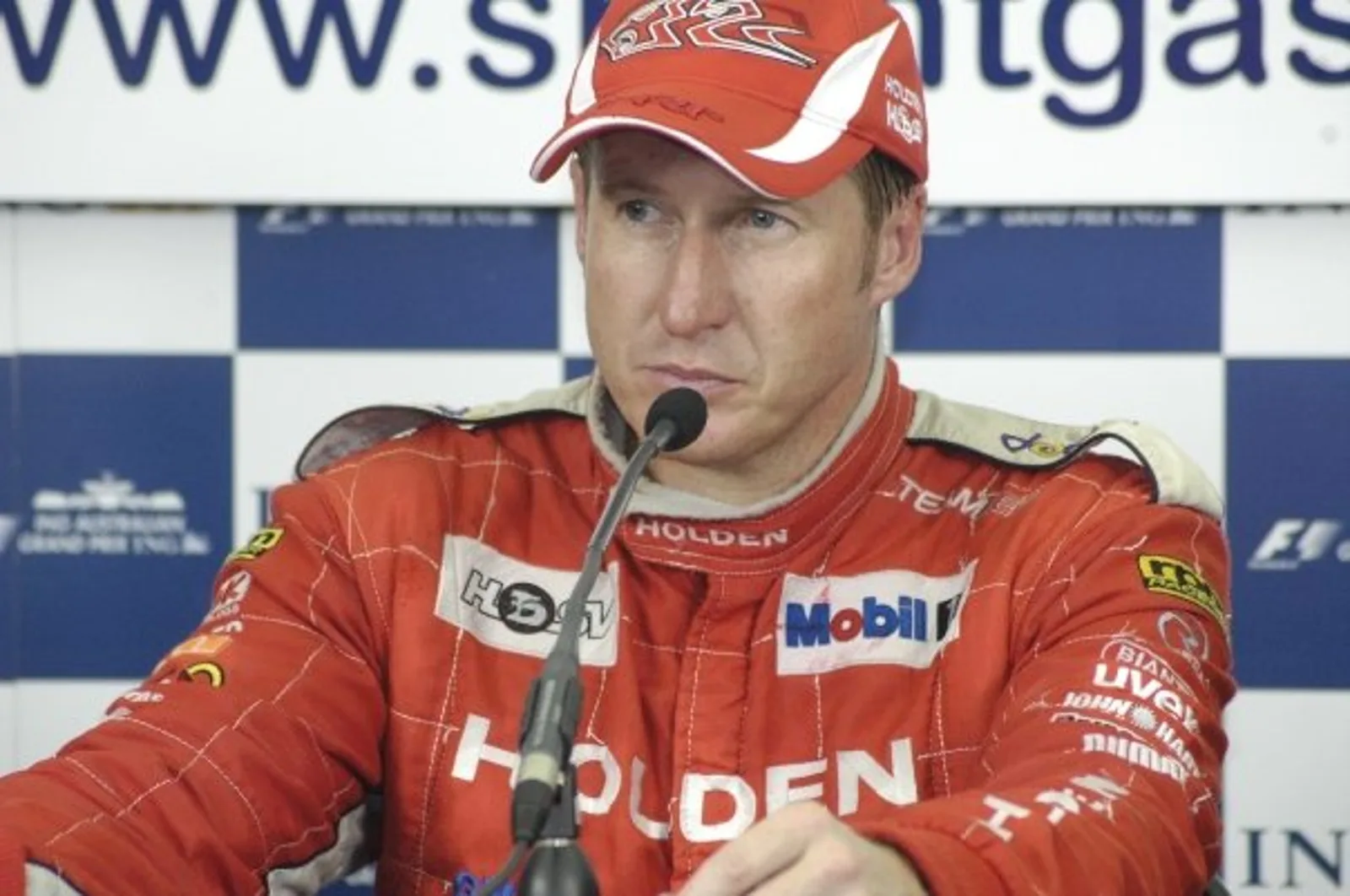
Five titles, a string of Bathurst 1000 wins and a second career behind the microphone after he stopped full-time driving in 2008.
Mark Skaife won five touring car titles and six Bathurst 1000 races, the last in 2010. He stopped full-time driving in 2008, then built a second career as a television commentator and presenter, and he now works as director of motorsport for IEDM.
Mark Skaife is one of the best-known names in Australian touring car history, with five championship titles and six Bathurst 1000 wins to his name. He retired from full-time driving in 2008 and built a second career as a commentator and presenter. He now works in motorsport consultancy.
Who was Mark Skaife?
Mark Skaife is a former Australian racing driver born on 3 April 1967 in Gosford, New South Wales. He won five championships in the Australian Touring Car Championship and its successor series, the V8 Supercars Championship Series, and six Bathurst 1000 races. He announced his full-time retirement on 29 October 2008.
He was born to a racing family: his father, Russell Skaife, raced touring cars. Skaife attended Wyong High School before his own racing career took off. In 2004 he was recognised with an Order of Australia medal for his work in motor racing and charity.
In 2006 he set a Guinness World Record for the fastest production ute, reaching 277.16 km/h (172.21 mph) in an HSV Maloo in the Wimmera region of western Victoria. In 2024 the Sport Australia Hall of Fame added his name.
Five titles, a string of Bathurst 1000 wins and a second career behind the microphone, built on a stubborn streak as a driver.
How did Skaife start racing?
Skaife began on karts in New South Wales, then relocated to Melbourne to serve his apprenticeship under Fred Gibson. His earliest car race took place at Amaroo Park in 1984. He finished second in the NSW Ford Laser Series in 1985 and again in 1986, when he also won the Victorian Series.
That first car was a Holden Torana XU-1, partly built by his father, Russell. Skaife was due to make his Bathurst debut in 1986, but the entry was withdrawn. Peter Williamson, who was both co-driver and team owner, put the team's Toyota Celica Supra into a heavy crash during practice at about 260 km/h (162 mph). Williamson broke his jaw when the onboard fire extinguisher came loose from its mountings and struck him, and the car needed major repairs.
That same year the 2.0 Litre title went to Skaife, who won it in a Gibson-prepared Nissan Gazelle. He then finished 19th on his Bathurst 1000 debut in the same car, co-driven by Grant Jarret, but the result came with an unresolved question. The car had struggled to meet the qualifying limits until Jarret suddenly found the pace, and Skaife was alleged to have set that time while wearing Jarret's race suit and helmet. Fred Gibson later admitted the substitution. Jarret's fastest lap of the race, at 2:38.71, was quicker than the 2:38.94 that Skaife had recorded while impersonating him.
In 1988 Skaife made selected appearances for Gibson's factory Nissan squad, driving a Skyline HR31 built to Group A rules. Neither event ended in a finish. At Sandown a differential failure stopped him while he was leading, and at Bathurst George Fury's car lost its fan belt on lap 17 and the turbocharged engine overheated almost at once.
In 1989 Skaife made four ATCC starts for the Gibson Nissan squad, finishing fifth at Winton in the wet. He paired with Jim Richards for the endurance races, won the Sandown 500 with him and then took his first Bathurst 1000 podium, finishing third in a Nissan Skyline HR31.
How many titles did Skaife win?
Skaife won five touring car championships: the Australian Touring Car Championship in 1992 and 1994, the Shell Championship Series in 2000 and 2001, and the V8 Supercars Championship Series in 2002. From 1991 to 1993 he also won three consecutive Australian Drivers Championships.
His 1991 season was a breakout. He won three ATCC rounds, and his first career win came at Wanneroo in Western Australia. He also scored more points than any other driver. The title nonetheless went to Jim Richards under the drop-worst-round rules. Skaife and Richards then took the Bathurst 1000 in a Nissan GT-R R32 in record total time, the first Japanese car ever to win the race.
In 1992 he won four ATCC rounds on the way to the championship and claimed a second Bathurst 1000 in the same GT-R, in a race stopped by a red flag because of wet conditions. He had also taken the Australian Drivers Championship in 1991, 1992 and 1993, earning three CAMS Gold Stars along the way.
The late 1990s set up his title years. In 1999 he won six Shell Championship Series rounds, more than any other driver, yet he still finished third in points. In 2000 he won four rounds, including the Clipsal 500 Adelaide and the Queensland 500, and he sealed the championship with a sixth-place finish alongside Craig Lowndes in the Bathurst finale.
Why does Bathurst matter so much in Skaife's record?
Mount Panorama gave Skaife some of his biggest moments. He won in 1991 and 1992 in the Nissan GT-R R32, then returned to the top step in 2002 with Richards, in 2005 with Todd Kelly, and finally in 2010 with Craig Lowndes. The 2010 win was his final Bathurst victory.
Not every Bathurst result was a win. In 1993 he finished second with Richards after a race-long duel with the eventual winners, Larry Perkins and Gregg Hansford. Earlier, in 1990, he had finished 18th at Bathurst alongside Richards after mechanical problems. In 1995 he led comfortably until mechanical trouble struck near the halfway mark.
Career summary by season
| Season | Highlights |
|---|---|
| 1987 | 2.0 Litre title in a Nissan Gazelle; 19th at Bathurst on debut |
| 1990 | Full-time Nissan driver; 14th in the ATCC; 18th at Bathurst |
| 1991 | Three ATCC round wins; Bathurst win with Richards; Drivers Championship |
| 1992 | ATCC title with four round wins; second Bathurst win |
| 1993 | Holden Commodore VP; sixth in the ATCC; second at Bathurst |
| 1994 | Second ATCC title with four round wins |
| 1997 | Le Mans 24 Hours in a Lister Storm, did not finish; Bathurst pole |
| 1998 | First full season with Holden Racing Team; third in the ATCC |
| 1999 | Six round wins; third in points; third at Bathurst |
| 2000 | Four round wins; Shell Championship Series title |
| 2001 | Four round wins; Bathurst win with Tony Longhurst; Shell title |
| 2002 | Seven of 13 V8 Supercars rounds won; championship; Bathurst win with Richards |
| 2005 | Fifth Bathurst win with Todd Kelly; fifth in the championship |
| 2008 | L&H 500 win at Phillip Island with Garth Tander; 14th in points |
| 2010 | Phillip Island 500 and Bathurst 1000 wins with Craig Lowndes |
| 2011 | Second Phillip Island 500 win in a row; second at Bathurst |
What made the 2002 title season stand out?
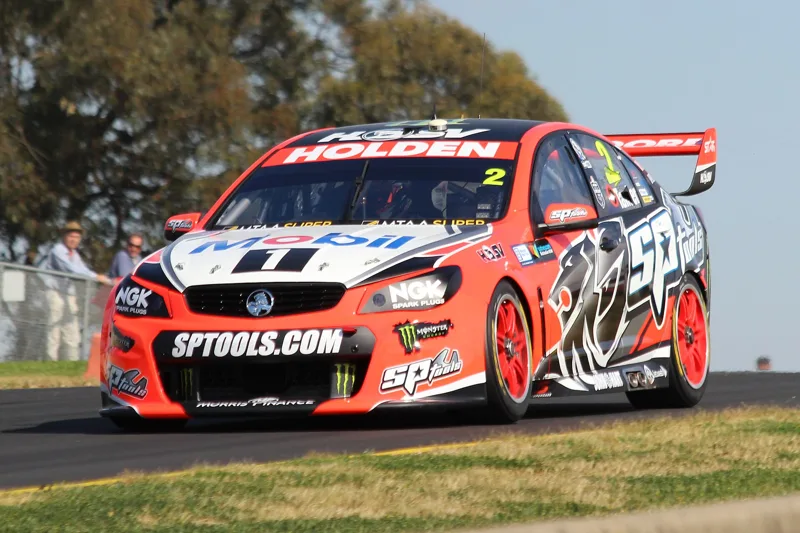
Skaife won seven of the 13 V8 Supercars rounds in 2002, including the first five in succession, and he took the title in a Holden Commodore VX. The season also brought a second Clipsal 500 trophy and a Bathurst 1000 win with Jim Richards.
The opening run of five successive round victories set the pace for the rest of the year, and the championship was a dominant one.
The following year was more mixed. In 2003 he won the Clipsal 500 and, with Todd Kelly, the Sandown 500, finishing third in the standings in a Holden Commodore VY. At Bathurst that year a late-race black flag for loose bodywork ended a run that had him second. At the season finale at Eastern Creek, a clash with Russell Ingall brought fines for both drivers and lost points, which left Skaife sixth in the championship.
What did the Holden Racing Team years involve?
From 1998 Skaife drove his first full season with Holden Racing Team, replacing Peter Brock. He finished third in the ATCC that year without winning a round, though he and Craig Lowndes came second at Sandown. In 2003 he became the new owner of the team mid-season, after the collapse of the founding owner, Tom Walkinshaw Racing.
Ownership was not a clean break from driving. In 2007 he transferred partial ownership of the team back to Tom Walkinshaw, and in 2008 he announced the sale of the remainder. By the end of 2007 he had completed 200 championship round starts.
His last full-time seasons showed a driver still capable of winning. In 2007 he finished eighth in the championship with one round win in a Holden VE. In 2008 he was joined at the team by the then reigning champion, Garth Tander, and the pair won the L&H 500 at Phillip Island before Skaife confirmed the Gold Coast event would be his final full-time season.
The middle years were harder. In 2004 he went without a round victory for the first time in six years. He finished 12th in points, and his best round result was a second place at Oran Park. In 2006 he finished 16th in the championship, and at Bathurst he crashed out on the opening lap from pole position, partnered by Garth Tander.
What did Skaife do in endurance racing?
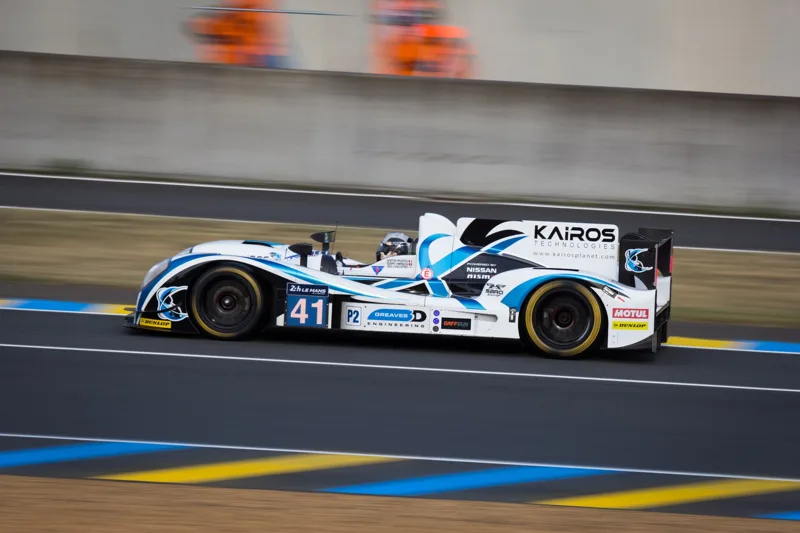
From 2009 to 2011 Skaife raced only in V8 Supercars endurance events. He finished fourth at Bathurst in 2009 with Greg Murphy, then teamed with Craig Lowndes to win the Phillip Island 500 and the Bathurst 1000 in 2010. Phillip Island went to them again in 2011, and they placed second at Bathurst that year.
These seasons were highly successful for him. Those seasons brought more Phillip Island wins and, in 2010, his last Bathurst triumph. On 17 October 2011 he announced he would stop endurance racing to become chair of the new V8 Supercars Commission.
What has Skaife done since retiring?
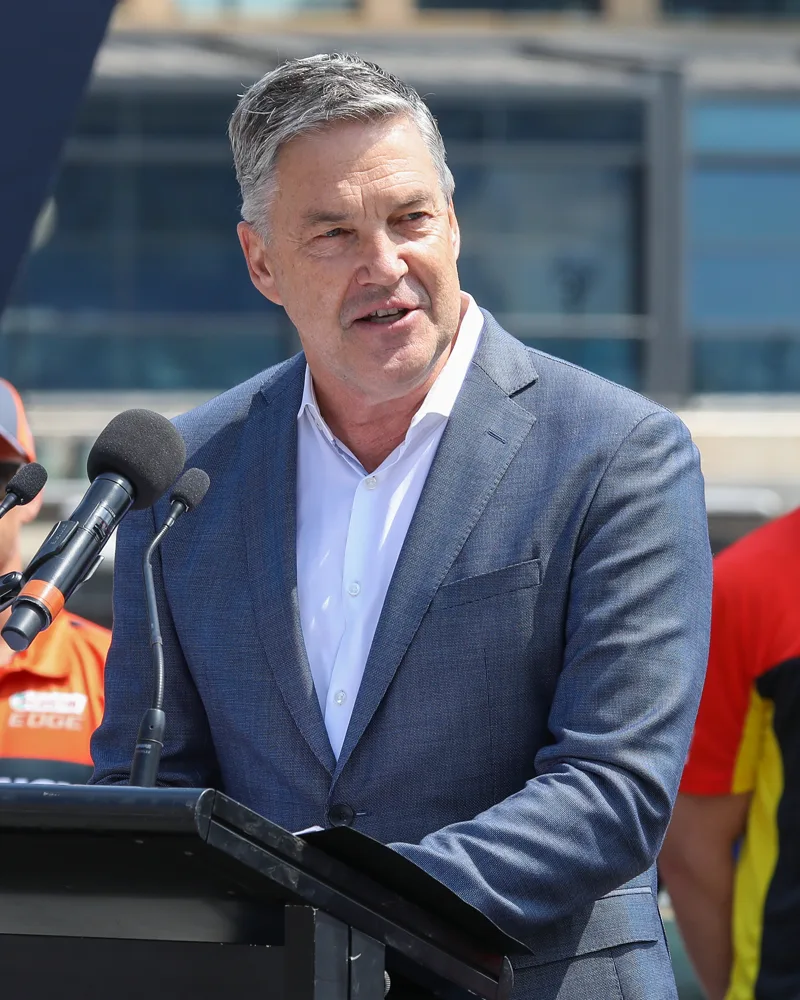
Skaife joined the Seven Network as a co-commentator after his full-time retirement. He later moved to Fox Sports in 2015 as a presenter, returning to the commentary box from 2016 while keeping his presenting roles. He has also written several books and works as director of motorsport for the consultancy IEDM.
Among his books are Diary of a Champion from 2002, a 2009 volume on his racing years written with Andrew Clarke, the 2010 title Life In The Fastlane, also with Clarke, and Mark Skaife: The Complete Illustrated Autobiography from 2020. Four books had been published by 2020.
IEDM oversaw the reconfiguration of Albert Park Circuit, and Skaife has been working for the firm since he retired from racing.