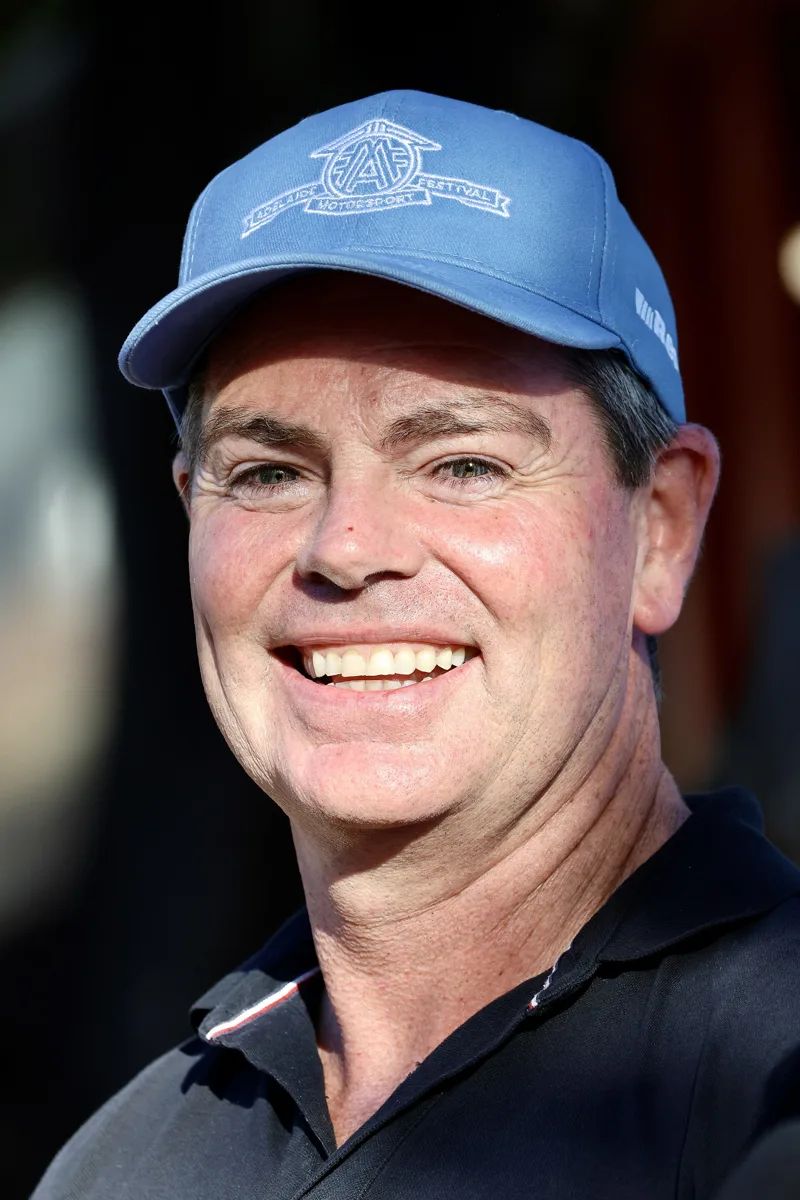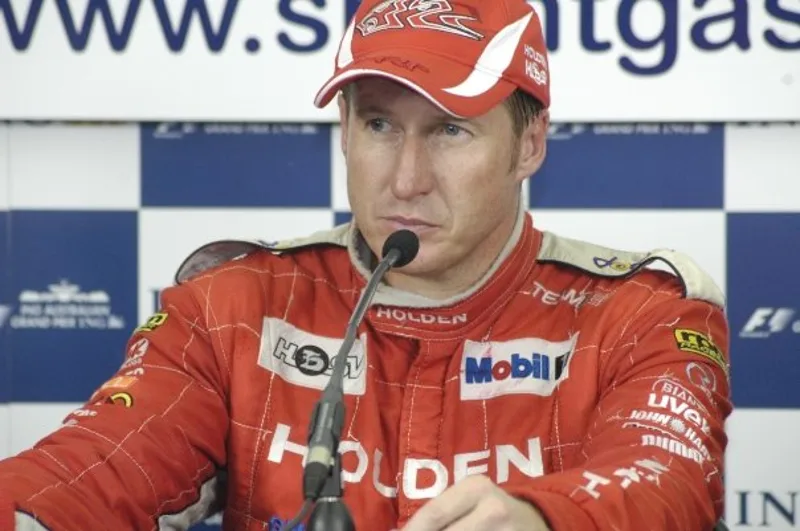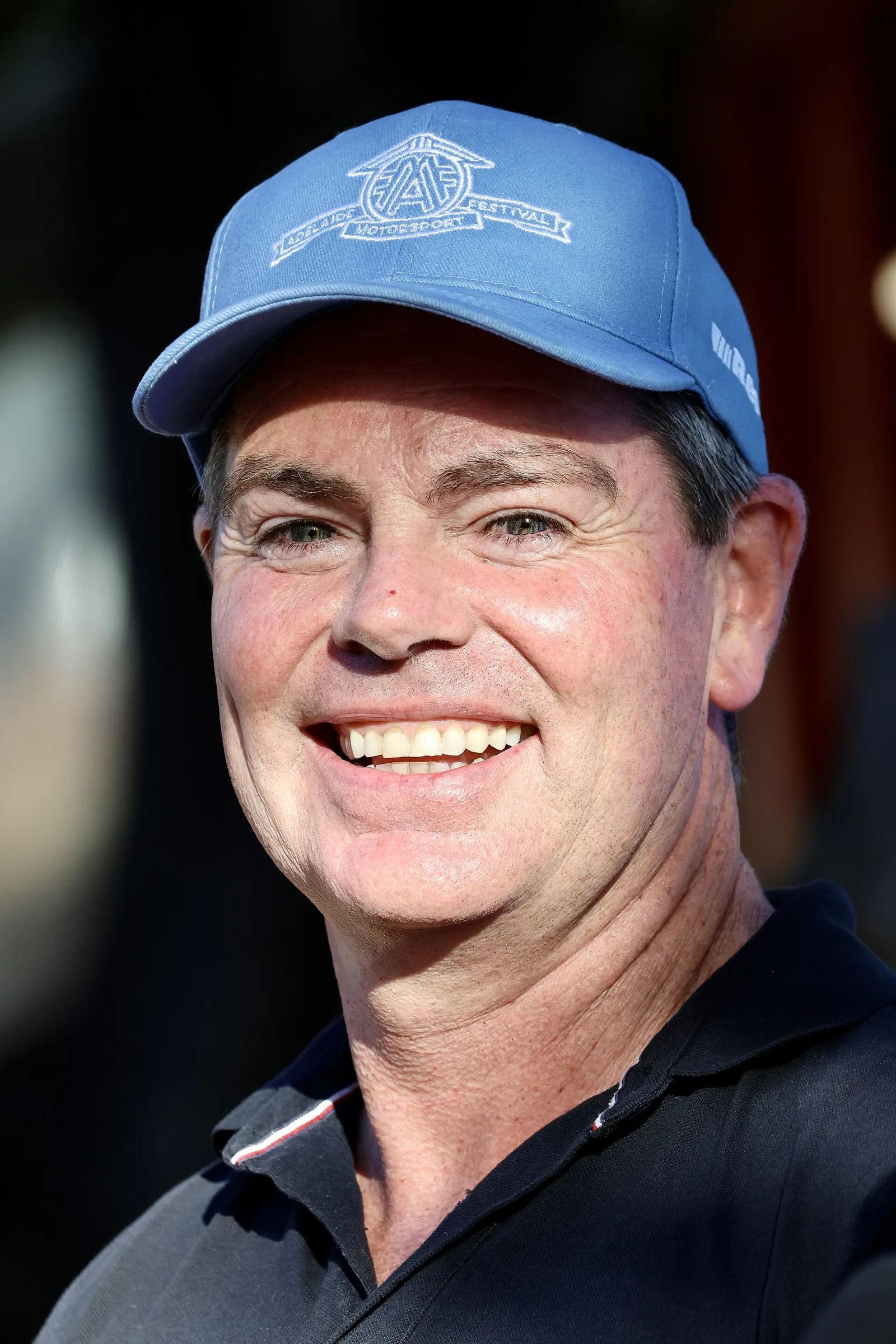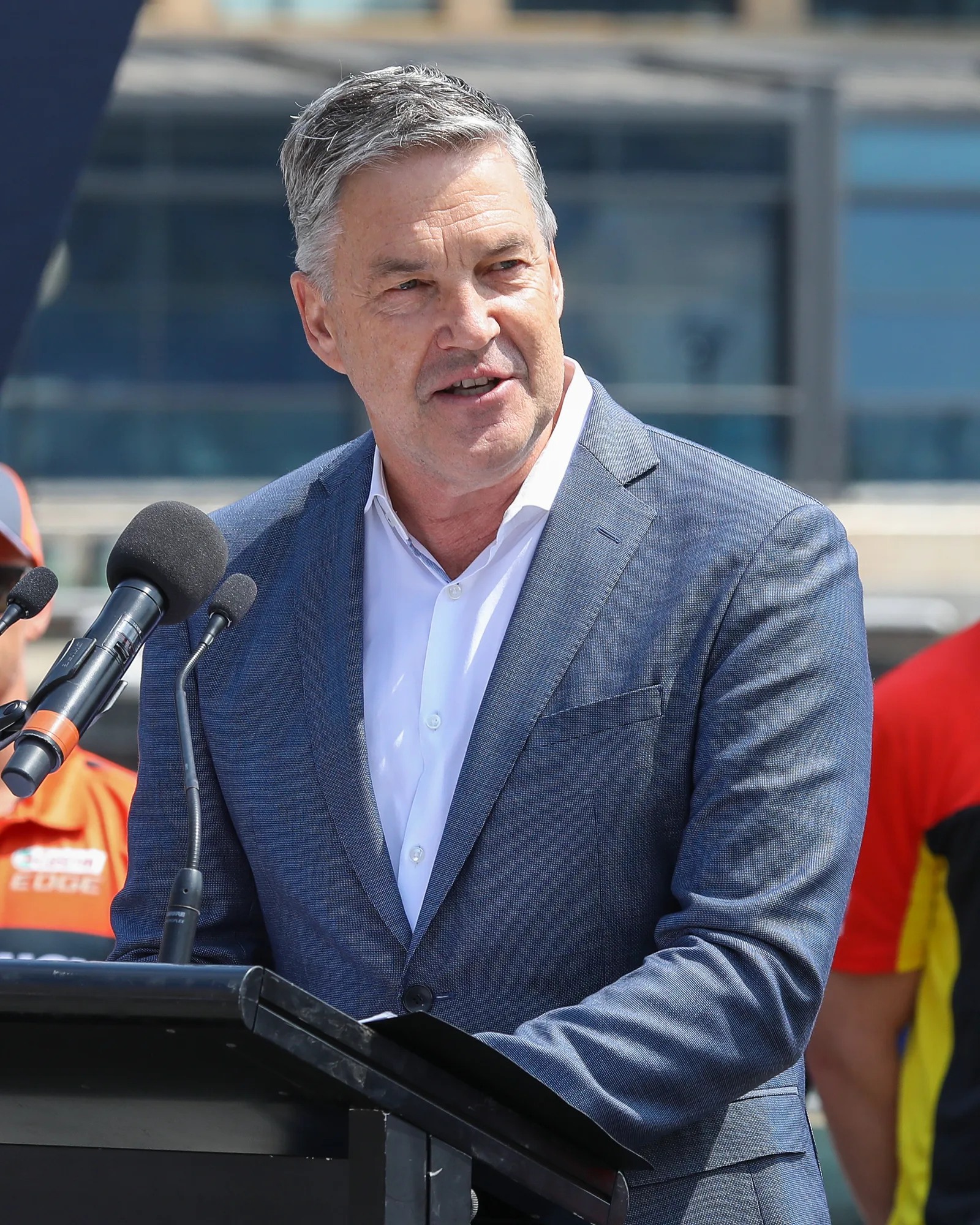
From Honda minibikes and Holden touring cars to Bathurst podiums and a long spell as a V8 Supercars commentator.
Neil Crompton is an Australian former racing driver who became a leading Supercars commentator. He started racing in 1972, has competed in 357 events, and won the 1994 Bathurst 12 Hour, with third-place Bathurst 1000 finishes in 1992 and 1995.
Neil Crompton began racing in 1972 on a Honda minibike and went on to finish on the Bathurst podium twice, as well as winning the 1994 Bathurst 12 Hour. According to the official V8 Supercars website he has competed in 357 events and finished in the top three on 58 of them. He later turned those years in the cockpit into a long career describing the sport on television.
How did Neil Crompton's racing career begin?
Crompton started racing in 1972, aged eleven, on a Honda minibike and had some success in motocross. In 1985 he moved into cars, starting in a Series Production Mitsubishi Cordia, and over the following years he drove sedan-based categories and open-wheel formulae.
His first real break came in 1987, when Peter Brock picked him to drive the second of the Holden Dealer Team's Group A VL Commodores in the long-distance races. He and Formula 2 driver Jon Crooke finished fourth at the Sandown 500. A Bathurst 1000 debut was on the cards that year, but he was one race short of the FIA licence he needed, and the chance slipped away. The Commodore he would have driven went on to win that race in the hands of Brock, David Parsons and Peter McLeod.
Brock's team had switched to BMW M3s by 1988, and Crompton stayed on board. He made his Australian Touring Car Championship debut that year, finishing eighth at Amaroo Park and ninth in the final round at Oran Park. He also took fourth in the Pepsi 250 at Oran Park with David Parsons. The endurance results looked promising, but he failed to finish at both Sandown and Bathurst.
He raced at Mount Panorama more than 20 times, then spent years describing the action from the commentary box.
Formula Holden and the Holden Racing Team
From 1989 until the end of 1991 Crompton was part of the Holden Racing Team. He co-drove the team's second Commodore across those three years without the results he wanted, but single-seaters gave him more to celebrate. In 1989 he finished third in the Australian Drivers' Championship, won his first Formula Holden race at Amaroo Park in Round 7 and took the final round at Sandown.
His pole at Amaroo Park that year, set at 44.04 seconds, was quicker than the lap record of 44.36 that John Bowe had set. Crompton hoped to break that mark in the race, but the Gold Star race ran late in the programme and earlier races had left a lot of oil on the circuit, so he never got the chance.
Late in 1989 he qualified fifth and finished sixth in the Tea Tree Trophy, a Formula Holden event run as a support race at the Australian Grand Prix in Adelaide. The following season he raced Peter Boylan's former Satoru Nakajima Ralt RT20 in the Australian Drivers' Championship. His best result was second in Round 5 at Oran Park, behind touring car rival Mark Skaife, and he ended the series fourth. He closed the season strongly, qualifying the Ralt on the front row and winning the Thalgo Trophy race at the 1990 Australian Grand Prix.
In 1991 he shared a six-cylinder Holden VN Commodore S with Peter Brock and the motoring journalist Peter McKay. The three of them took Class C and came fourth overall at the first Bathurst 12 Hour. Formula Holden was less kind that year. He leased Simon Kane's car and still finished third in the Formula Holden event at the 1991 Australian Grand Prix.
Brock's team took him back for the opening rounds of the 1992 ATCC, where his best was seventh at Symmons Plains. Funds did not stretch to two Holden VNs, so he left mid-season and went back to the Seven commentary booth. He still raced in the 1992 Australian Drivers' Championship finale at Oran Park, finishing third behind Mark Skaife and Mark Larkham, both of whom later became television co-commentators.
What did Crompton achieve at Mount Panorama?
Crompton's best results at Mount Panorama were two third-place finishes, in 1992 and 1995, and a win in the 1994 Bathurst 12 Hour. He has started there more than 20 times, beginning with his 1988 debut in Peter Brock's Mobil BMW team.
The 1992 race was one of the hardest. Heavy rain, accidents and the death of Denny Hulme, the 1967 Formula One world champion, from a heart attack made for a chaotic race. Crompton and his Swedish co-driver Anders Olofsson brought their Gibson Motorsport Nissan GT-R home third in the crash-shortened event. From the podium he gave the unruly crowd a rude gesture in front of national television.
Bathurst in 1993 was less kind. Crompton spun on oil during his Top 10 run and qualified 10th, then complained on camera that there had been no warning before The Chase, the fastest corner on any Australian circuit, taken at about 280 km/h (174 mph). It later emerged that his own car had dropped the oil, and other drivers had spotted it across the whole 6.213 km (3.861 mi) lap.
In 1994 he joined Wayne Gardner in the newly established Wayne Gardner Racing, and the pair later finished third at Bathurst in 1995 in a Holden Commodore VR.
What happened in North America in 1997?
Crompton drove for Tasman Motorsports in a Honda Accord in 1997, competing in the new North American Touring Car Championship. He won several races and was in contention for the title until a disqualification, which he still disputes, cost him the championship.
He also tested one of Tasman's Champ Cars at Gingerman Raceway before returning to Australia.
Which teams did Crompton drive for after 1998?
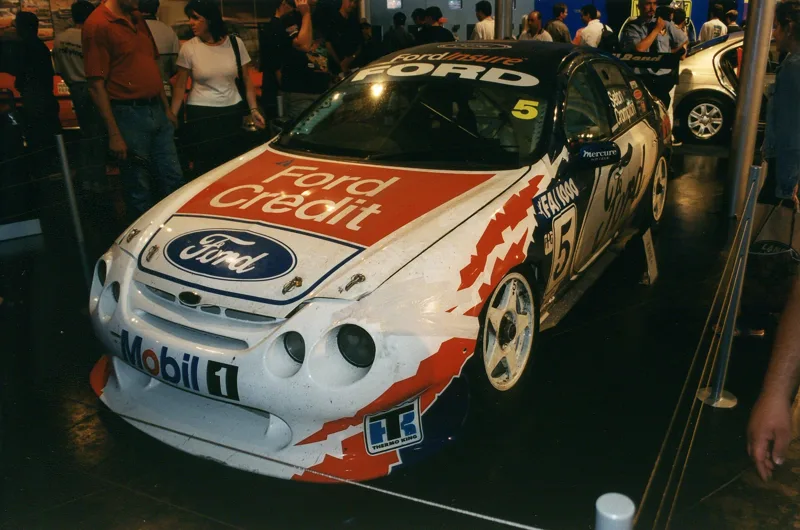
After finishing second in the 1998 Century Batteries Three Hour Bathurst Showroom Showdown, Crompton joined Glenn Seton Racing, which became Ford Tickford Racing in 1999. In 2001 he moved to Gibson Motorsport, later renamed 00 Motorsport, and was paired with Craig Lowndes until the end of 2002.
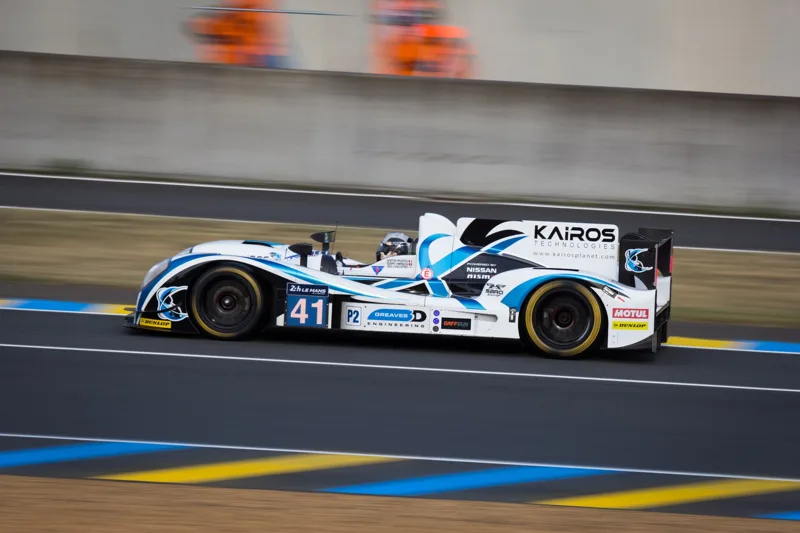
Endurance racing stayed on his list. In 2003 he drove a 5.0 L V8 BMW M3 GTR in the Bathurst 24 Hour for Prancing Horse Racing, a car that had come over from America only a week before the race. It qualified third but did not finish. By 2009 he was back at Mount Panorama, finishing 17th in the Bathurst 12 Hour after 222 laps (1,379 km / 857 miles) in a Mitsubishi Lancer Evolution X with Glenn Seton.
He has also raced in the Aussie Racing Cars series and competed in the Australian Rally Championship. Those outings were occasional, however, and most of his later profile came from the commentary box.
How did Crompton end up in the commentary box?
Crompton began commentating motocross events for Network Ten, then spent the early 1980s at the ABC, leaving at the end of 1984. In 1985 he joined Channel Seven, replacing Evan Green in the commentary box, and stayed there until the end of 1995 as his racing commitments allowed.
Being the junior member of the Seven crew and by far the fittest, he was often given pit duties on race day, when he sprinted up and down the pit lane. From 1987 the network also brought in the motoring journalist Peter McKay as a commentator and pit reporter, as Crompton's own racing took more of his time.
In 1996 he returned to Network Ten as its motorsport expert, covering the CART Series and the Australian Super Touring Championship, a package that eventually included Formula One. He was a regular presenter of the magazine programme RPM. Once his racing wound down at the end of 2002, he became Ten's expert commentator on V8 Supercars until the end of 2006, having led the coverage through 2001, the year he drove only endurance races.
When the Seven Network won the V8 Supercars television rights for 2007, Crompton moved across with most of the production team. Earlier, he had co-hosted The Panelbeaters, a web show made with his friend Brad Jones. It began as a radio programme on Victorian station SEN 1116 in 2003, was taken on by Telstra Bigpond as a video web show, and was axed after the 2008 season.
Skaife, once an Australian V8 Supercar champion, co-hosted The Stick Shift with him on Triple M, a motoring program that aired on Saturday mornings. In 2014 Crompton hosted Shannons Legends of Motorsport on 7mate, interviewing major figures from Australian touring car history, and he was also its executive producer. He stepped back to an off-camera role for the second season in 2015.
From 2015 the V8 Supercars rights were divided between Foxtel and Network Ten, and Crompton followed the new arrangement as a commentator rather than a host.
Career highlights by year
| Year | Team or series | Car | Result |
|---|---|---|---|
| 1987 | Holden Dealer Team | Group A VL Commodore | 4th at the Sandown 500 with Jon Crooke |
| 1988 | Peter Brock's Mobil BMW team | BMW M3 | 9th in the final ATCC round at Oran Park |
| 1991 | Brock team, Bathurst 12 Hour | Holden VN Commodore S | Class C winner, 4th outright |
| 1992 | Gibson Motorsport | Nissan GT-R | 3rd in the crash-shortened Bathurst 1000 |
| 1993 | Bob Forbes Racing | Holden VP Commodore | 13th in the ATCC standings |
| 1994 | Factory supported Mazda programme | Mazda RX-7 | Won the Bathurst 12 Hour with Gregg Hansford |
| 1995 | Wayne Gardner Racing | Holden Commodore VR | 3rd at Bathurst with Wayne Gardner |
| 1997 | Tasman Motorsports | Honda Accord | Several wins, title lost to a disqualification |
| 2003 | Prancing Horse Racing | BMW M3 GTR | Did not finish, Bathurst 24 Hour |
| 2009 | With Glenn Seton | Mitsubishi Lancer Evolution X | 17th in the Bathurst 12 Hour, 222 laps |
Crompton also works on the organisational side of V8 Supercars. He contributes to the TEGA Parity Board, which works to keep any one marque from gaining a significant advantage over the others.