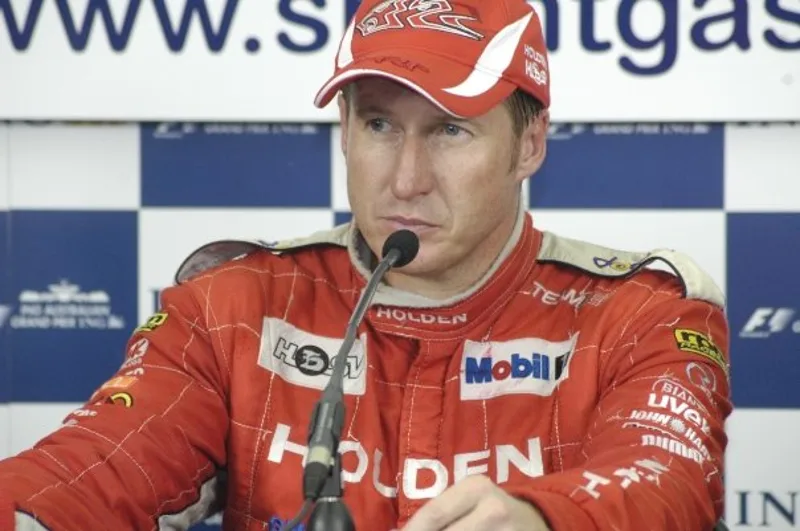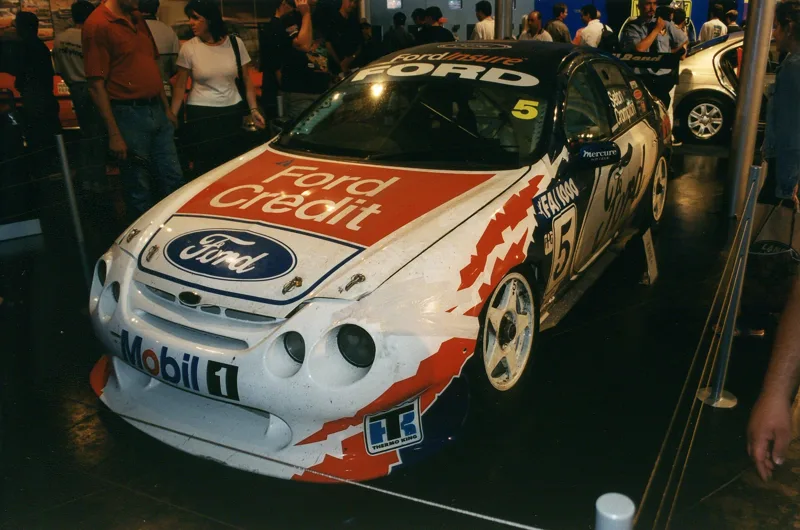
From Nissan Bluebirds and Skylines to Holden Commodores and Ford Falcons, Fred Gibson's team raced from 1981 to 2003 and gave Mark Skaife two Australian touring car titles.
Gibson Motorsport was a Sydney-rooted team that raced in the Australian Touring Car Championship from 1985 until 2003. It began with Nissan Bluebirds and Skylines, ran Holden Commodores from 1993 and Ford Falcons at the end, and gave Mark Skaife two ATCC titles before it closed after round 6 of 2003.
Gibson Motorsport was an Australian touring car team that raced from 1985 to 2003 in the Australian Touring Car Championship. Its roots lay in a Sydney business run by Fred Gibson, and its early cars were Nissans, with the Bluebird and Skyline names carrying the team to pole positions and race wins. It later ran Holden Commodores and Ford Falcons before closing mid-season in 2003.
Few small teams left as large a mark on the Bathurst grid as this one. It gave Mark Skaife two Australian touring car titles, produced the record-setting Group A lap at Mount Panorama, and gave a string of drivers their first big breaks.
Where did Gibson Motorsport come from?
The team traces its beginnings to a Series Production effort in the late 1960s and early 1970s, when Gibson's Road and Track outfit ran Ford Falcon GTHOs. Because Gibson drove for the Ford Works team, his squad often acted as a semi-works operation whenever Ford stayed away.
Gibson hung up his helmet after 1983 and became owner and manager of the Nissan operation in 1985. The move meant relocating the family and the team to Melbourne, where the squad had been based, and he inherited very few staff. Those who stayed included a young apprentice mechanic named Glenn Seton, who would later become one of the team's key figures.
A Sydney-born family name that spent two decades on the Nissan, Holden and Ford grids and left a workshop that now houses another famous team.
How did the Nissan programme start?
Howard Marsden set up the Nissan Motorsport Team in 1981 as a factory operation after Nissan decided to move from rallying into touring car racing. Its debut came at the 1981 James Hardie 1000 at Bathurst, and the team then ran a limited touring car campaign in 1982 before a fuller effort in the endurance series.
The Bluebird Turbo was quick but fragile. George Fury finished second in the 1983 touring car championship without winning a round, and he took pole for the 1984 James Hardie 1000 with a lap time that remained a record until 1990. Marsden's team had also been running a 1.8-litre engine, but a Calder test showed the Bluebird fitted with a 2.0 litre turbo, which led to a heated argument over the specification.
Fred Gibson had scored the Bluebird Turbo's first victory in the national touring car ranks at Amaroo Park, in an AMSCAR round of 1983. In 1984 Glenn Seton joined the Nissan team and shared the Pulsar EXA turbo with Christine Gibson at Sandown and Bathurst. His father, Barry Seton, known as Bo, was a Sydney engine builder and the 1965 Armstrong 500 winner, and he joined Nissan as the team's chief engine builder.
How did the Group A Skylines perform in 1986 and 1987?
Two Nissan Skyline RS DR30s returned for 1986. George Fury drove one car all year, while Gary Scott and Glenn Seton shared the other. Scott took pole for the 1986 James Hardie 1000, where Fury, who had qualified third, shared his car with Seton.
Fury collected four round wins in the 1986 championship and finished runner-up to Robbie Francevic in a Volvo 240T. The Peter Jackson sponsored team then scored a 1-2 at the Castrol 500 at Sandown, with Fury and Seton ahead of Scott and Terry Shiel. Fury and Shiel went on to win the 1987 Sandown 500 together.
In 1987 Seton finished second in the championship and at the James Hardie 1000, which also counted toward the inaugural World Touring Car Championship. John Bowe, a two-time Australian Drivers' Champion, co-drove his Skyline at Bathurst. The same year the team also fielded a Nissan Gazelle for a 20-year-old named Mark Skaife in the 2.0 Litre series.
Skaife had finished second in the Ford Laser series in 1985 and 1986 at Amaroo Park, then joined the team as a mechanic before winning the 2.0 Litre title with three wins from four rounds. At Bathurst the Gazelle was pushed into a higher class, and co-driver Grant Jarrett scraped into the field late on Friday. Mechanical problems hit the pair within their first 10 laps, and they finished 19th. Years later, in a magazine interview, Fred Gibson admitted that Skaife had actually done the qualifying run, wearing Jarrett's suit and helmet.
What changed with the Skyline HR31 in 1988?
The HR31 GTS-R arrived for 1988 with a 2.0 litre turbocharged straight-six that produced about 410 bhp (306 kW; 416 PS), roughly 70 bhp (52 kW; 71 PS) above the DR30. Front and rear spoilers were added for stability on the fast Conrod Straight.
Parts were slow to arrive because Nissan was also supplying teams in Japan and Europe, so the new car did not debut until Round 5 in Adelaide with Seton at the wheel. The second car followed at Round 8 at Amaroo Park. The homologated turbo was small and kept power in check, and by 1990 the engine was making roughly 470 bhp (350 kW; 477 PS).
The season was tough. At the 1988 Sandown 500 Skaife led with a 30-second cushion over Larry Perkins and Denny Hulme, before a differential failure ended his race on lap 94. At the Tooheys 1000 both Skylines were out by lap 17, and Fury's car overheated after its fan belt came off at about 250 km/h (155 mph) along Conrod Straight.
Why was 1991 such a dominant year?
In 1991 the team won almost every race it entered. Jim Richards and Skaife claimed pole, fastest lap and the win in race record time at Bathurst, and the 2:12.630 pole lap set by Skaife still ranks as the quickest Group A time on the Mountain. The record outlasted the category itself, which ended after 1992.
The Japanese manufacturer NISMO asked the team not to take the winning GT-R to the Fuji 500, fearing that the Australian car would outpace the factory cars. Next stop was New Zealand, where the Nissan Mobil series opened with a Wellington street race. Suspension trouble on the bumpy circuit left the pair third, five laps down. At Pukekohe Skaife took pole and then led Richards to a 43-second win ahead of the Schnitzer BMW M3 of Emanuele Pirro and Joachim Winkelhock.
How did the Winfield years and the 1992 title unfold?
Cigarette brand Winfield became title sponsor for 1992. The GT-Rs were handicapped during the season, rising from 1360 kg to 1500 kg in weight, and pop-off valves were fitted to limit power. Despite that, Skaife won the 1992 championship and, with Richards, the crash-shortened Tooheys 1000.
Richards closed the turbo era by sweeping both races of the Clarke Shoes Group A Finale in Adelaide, held during the 1992 Grand Prix weekend.
Why did the team switch to Holden in 1993?
The 1993 rules opened the five-litre V8 formula to Ford and Holden only. Fred Gibson had a history with Ford, but a weaker offer from Ford and a stronger one from Holden led the team to race VP Commodores. It started with two cars built from Holden Racing Team and Perkins Engineering components.
Early on the Commodores struggled with an aero package from Tom Walkinshaw Racing, but a revised package in mid-season made them much more competitive. At Bathurst Skaife and Richards finished second behind Larry Perkins and Gregg Hansford, and the second car of Anders Olofsson and David Brabham came fourth, two laps down. Glenn Seton, a former Gibson driver, won the 1993 championship in a Ford.
Skaife won his second ATCC title in 1994, the team's fourth overall. The Bathurst race was less kind. Skaife was third on the grid but retired on lap 39 after accident damage, while Olofsson and Colin Bond, in what was Bond's final Bathurst drive, finished sixth outright on the lead lap.
What did the team's funding crisis look like after 1995?
A practice crash at Eastern Creek in January 1995 kept Skaife out of the opening round, and the tobacco advertising ban from 1 January 1996 forced a sponsor rebuild. Skaife still won the Eastern Creek round, and at Bathurst the Richards and Skaife car led for 65 laps before a broken tailshaft ended it.
Once 1995 ended, the team lost its tobacco money altogether, and it ran a single plain white car for Skaife in early 1996. Money came from Sega and the Network Q second hand division of Holden, but it was far below earlier levels, and Jim Richards was released. Skaife dropped to ninth in the championship, and at Bathurst he and John Cleland finished seventh outright.
The funding problems continued into 1997, when the team missed some rounds. Skaife left at the end of the season to partner at Sandown and Bathurst, then to replace the retiring Peter Brock at Holden Racing Team. A lifeline came from Garry Dumbrell, who hired Gibson to prepare his former car for the 1997 endurance races, and Darren Hossack and Steven Ellery finished sixth at Bathurst.
How did the Dumbrell, Forbes and Lowndes years end?
In 1998 the team ran three cars: a Wynns-backed pair driven by Darren Hossack and Darren Pate, plus a Holden Young Lions car for Steven Ellery. For 1999 two new VT Commodores were built, and Steven Richards and Greg Murphy drove the Wynns cars. Murphy won at Symmons Plains, and the pair went on to win at Bathurst.
Fred Gibson sold the team in December 1999, but it later emerged that Forbes, rather than Gibson, took the operation from Dumbrell, and Gibson's only purchase had been the Racing Entitlement Contract. In 2001 the team bought an ex-Stone Brothers Ford AU Falcon for Craig Lowndes, who was expected to leave Holden Racing Team and whom Ford was keen to sign. A falling-out between Forbes and Gibson followed, and Gibson sold his contract to Briggs Motor Sport after Bathurst.
The team became 00 Motorsport in 2002 with Neil Crompton in a second car. Ford withdrew its support at the end of the year, and Lowndes and Crompton left. The 2003 line-up used a pair of freshly built BA Falcons, driven by Rodney Forbes and Greg Ritter, but the operation was wound up after six rounds. The Racing Entitlement Contract went to Team Brock, and the equipment went to WPS Racing in 2004.
What were the team's main results by season?
| Year | Result or milestone |
|---|---|
| 1983 | George Fury second in the touring car championship with the Bluebird Turbo |
| 1984 | Fury takes pole for the James Hardie 1000, a record until 1990 |
| 1986 | Fury wins four rounds; 1-2 at the Castrol 500 with Seton |
| 1987 | Seton second in the championship; Fury and Shiel win the Sandown 500 |
| 1989 | Richards and Skaife win the Sandown 500; Fury wins at Winton |
| 1990 | Richards wins at Oran Park, the first ATCC win for Nissan and Gibson |
| 1991 | Richards and Skaife win the Bathurst 1000 in race record time |
| 1992 | Skaife wins the championship; Richards and Skaife win the crash-shortened Tooheys 1000 |
| 1993 | Switch to Holden VP Commodores; Skaife and Richards finish second at Bathurst |
| 1994 | Skaife wins his second championship, the team's fourth overall |
| 1995 | Skaife wins at Eastern Creek; Bathurst car leads 65 laps before a tailshaft failure |
| 1999 | Richards and Murphy win at Bathurst in Wynns colours |
| 2003 | Team closes after round 6 of the series |
Did Gibson Motorsport race open wheelers?
Yes. The team's first open-wheel venture was the 1988 Gold Star season, the Formula 2 class of the national drivers' title. At Round 4 in Adelaide, Glenn Seton scored an easy victory in a Ralt RT4 with a Nissan engine, entered under the name Dave Thompson. Seton was leading at Sandown later that year before he retired.
In 1990 Skaife drove a Spa FB001 run by the team in the Formula Holden class. Skaife finished third in the championship after winning Round 4 at Mallala and Round 5 at Oran Park. Between 1991 and 1993 he won the Gold Star for the team, and in 1992 he became the only driver to win the Gold Star and the touring car title in the same year.
What happened to the team after it closed?
After the closure the Dandenong workshop, still owned by Fred Gibson, was rented out to Paul Weel Racing for a time. That site is now the base of Garry Rogers Motorsport. The business itself came back in 2013, when Gibson re-formed it as a preparer for cars in the Heritage Touring Cars series.
Many former Gibson Nissans are now in historic competition, and some former team personnel work on them. Two of the team's former stars, Jim Richards and Mark Skaife, have since raced their old HR31 cars in historic events, and George Fury has been reunited with the Bluebird Turbo that gave him the 1984 pole.