A career that began in a Formula Vee in 1971 and reached a Bathurst 12 Hour win in 2014, with two Bathurst 1000 victories and an Australian Touring Car title in between.
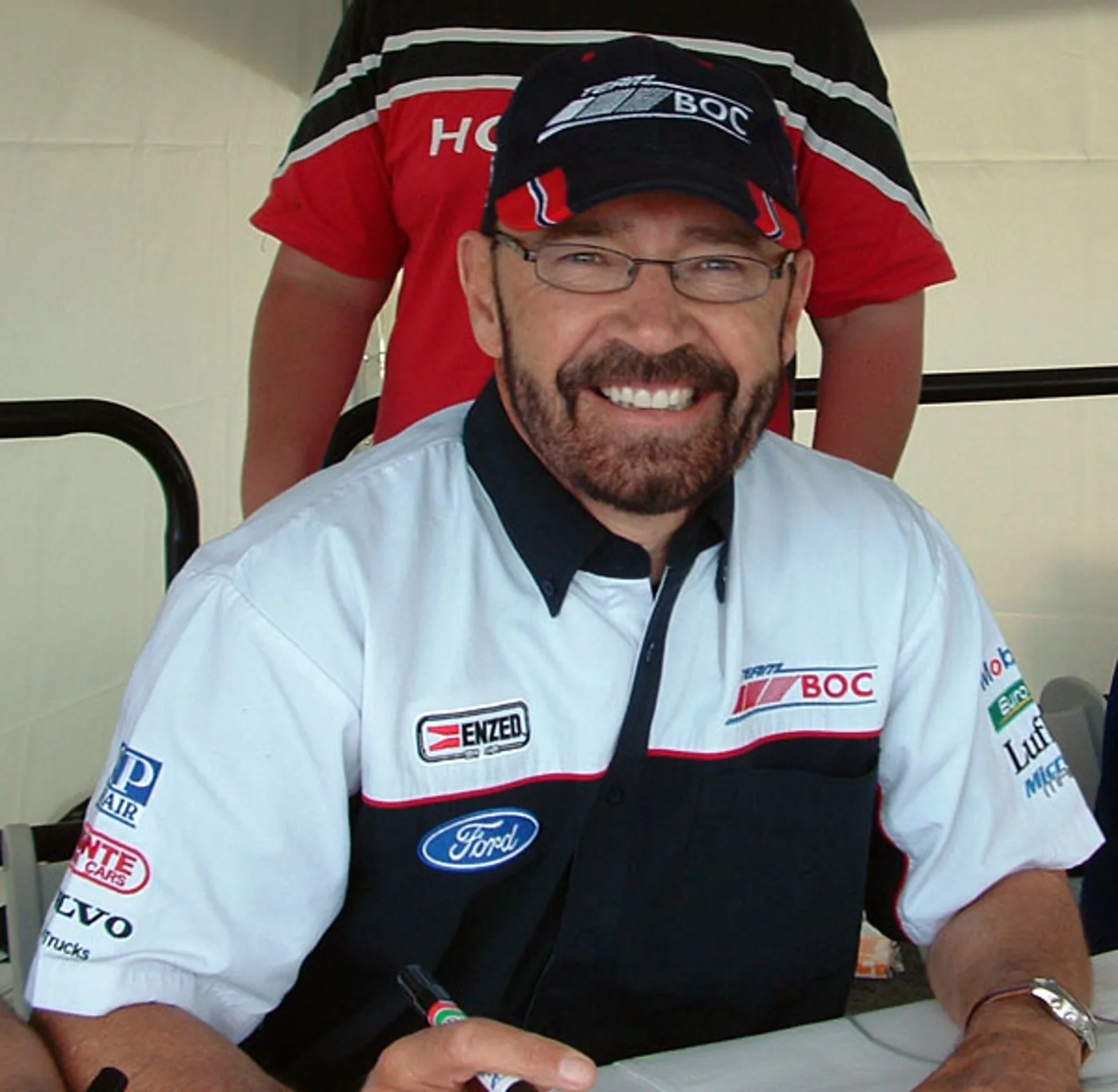
John Bowe is an Australian racing driver, born on 16 April 1954, who raced open-wheel, sports, touring and GT cars. He won the Australian Drivers Championship in 1984 and 1985, the Bathurst 1000 in 1989 and 1994, and the Australian Touring Car Championship in 1995.
John Philip Bowe, born 16 April 1954, spent decades in Australian motorsport across several formulas and categories. He won the Bathurst 1000 twice, took the Australian Touring Car Championship in 1995, and was appointed a Member of the Order of Australia in 2021.
Who is John Bowe?
John Bowe is an Australian driver and a multiple Australian champion. He is also a two-time Bathurst 1000 winner. His competitive career ran from Formula Vee to touring cars and, from 2008, to historic and GT racing. Those results span four kinds of racing and include championship titles in several of them.
Bowe came up through the Tasmanian categories before reaching the national open-wheel scene. Over the following decades he moved between formulas and categories, and his results across those fields make up a long record in Australian motorsport.
Two Bathurst 1000 wins, an Australian touring car title and a 2014 Bathurst 12 Hour victory, from a start in Formula Vee.
How did John Bowe start racing?
Bowe began racing at sixteen in an Elfin 500 Formula Vee in 1971 and won the Tasmanian state title on his debut. He added the Tasmanian Formula Ford title the following year. After that, he moved up into the Australian Drivers Championship in the late 1970s, racing Elfin Formula 5000 cars for Ansett Team Elfin.
Ansett Team Elfin was the factory operation of Elfin Sports Cars, whose founder and chief designer Garrie Cooper built the cars. Running under that banner gave Bowe access to competitive cars, and it became his route into the top level of Australian open-wheel racing.
What did John Bowe achieve in open-wheel racing?
Bowe's open-wheel highlights include runner-up in the 1979 Australian Grand Prix, Australian Drivers Championship titles in 1984 and 1985, and a lap record equal at Adelaide in 1986. He also finished fourth in the 1981 championship in the Elfin MR9, the only ground effects Formula 5000 car ever built.
In 1979 he drove one of Cooper's Chevrolet V8 powered Elfin MR8 cars to second place in the Australian Grand Prix, and the same year he finished second in the Australian Formula 2 Championship. In 1980 he took third in the Drivers Championship in the MR8 and fourth in the Formula 2 title.
Breakthrough came in 1984. Bowe had spent several seasons behind Alfredo Costanzo before winning that year's title under Formula Mondial regulations, then backed it up in 1985 with a Ford-powered Ralt RT4 run for Chris Leach.
The 1984 Australian Grand Prix at Calder Park showed both his pace and the fragility of the machinery. Bowe qualified on the front row and led the first 18 laps. A loose spark plug lead then caused the four-cylinder Ford engine to misfire, and he stopped on lap 33 and rejoined in 13th. He fought back to sixth, two laps down, with the third-fastest race lap, behind winner Roberto Moreno of Brazil.
His last open-wheel race was a support event at the 1986 Australian Grand Prix in Adelaide. Driving a Ralt RT4 again, he equalled the category lap record of 1:33.20 on the 3.780 km (2.362 mi) Adelaide Street Circuit, a mark Ross Cheever had set in 1985. Nelson Piquet's fastest Formula One lap that year was 1:20.78 in a Williams-Honda with 1,000 bhp (746 kW; 1,014 PS).
Which sports cars did John Bowe race?
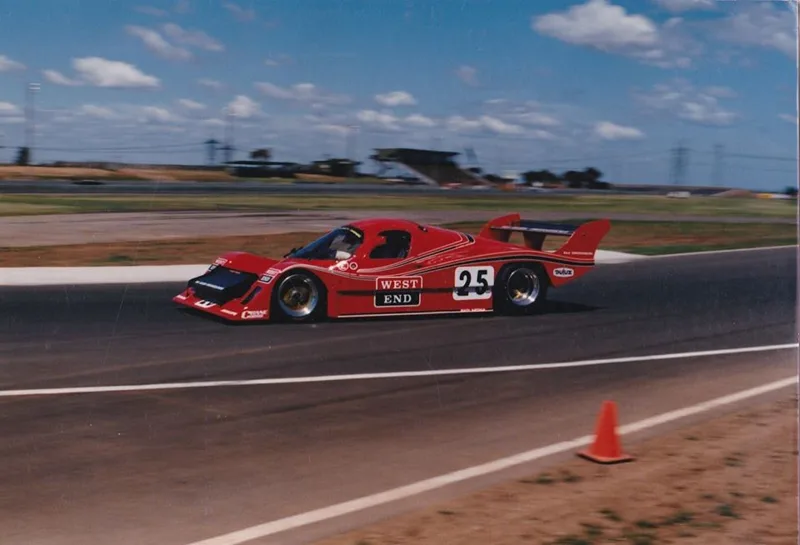
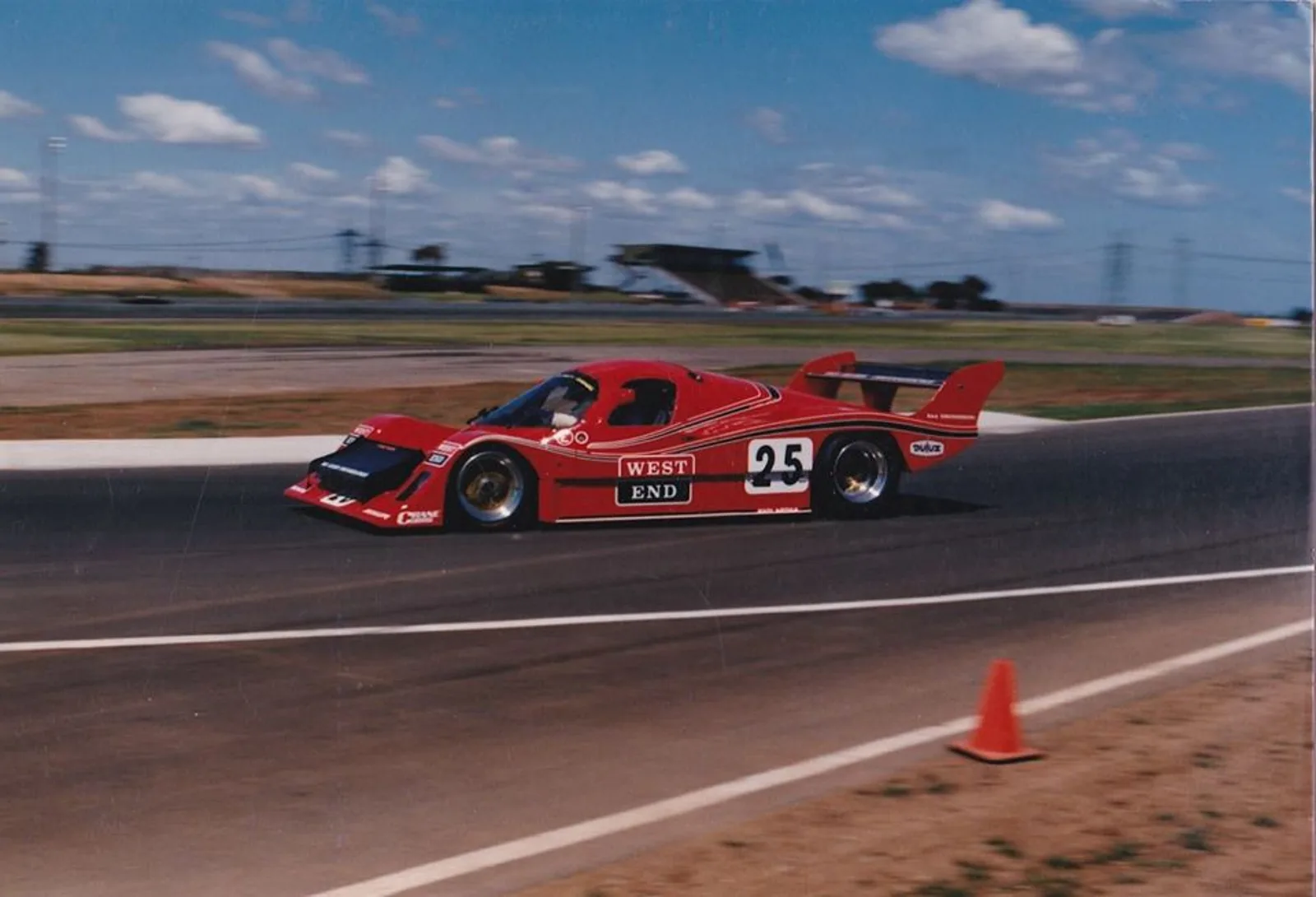
Bowe raced sports cars alongside his open-wheel and touring car work, most notably the Veskanda C1 he used to win the 1986 Australian Sports Car Championship. He also drove Bryan Thompson's Mercedes-Benz 450 SLC-Chevrolet in Sports Sedan and GT events in the early 1980s, when Thompson was in retirement.
The Veskanda was built by K&A Engineering in Adelaide for Bernie Van Elsen, an Adelaide-based photographer and sports car racer who approached Bowe in 1985. The car started with a 5.0-litre Chevrolet V8 taken from Formula 5000, and moved to a 5.8-litre unit in 1986 when CAMS lifted the Group A sports car limit from 5000 cc to 6000 cc.
Bowe set outright lap records at circuits around the country, several of them faster than the open-wheel cars. The Surfers Paradise International Raceway record, set in 1986, stood until the track closed in late 1987, and the Amaroo Park mark from 1987 stood until that track closed in 1998.
The 1987 championship went less smoothly. Engine reliability ended his first race at a wet Calder Park, and he won the final two rounds at Amaroo and Sandown Park. That was not enough to beat Andy Roberts, who took the title in his self-designed Roberts SR3 by nineteen points.
In 1988 Van Elsen entered the Veskanda at Sandown 360, a round of the World Sports-Prototype Championship, with Bowe and Dick Johnson sharing the car. They qualified eighth at 1:35.510, while Jean Louis Schlesser's Sauber C9 was on pole at 1:28.620. The pair completed 87 laps, but the Veskanda was disqualified for using more fuel than the rules allowed.
How did John Bowe become a touring car driver?
Bowe's touring car career started in 1985 with Mark Petch Motorsport, co-driving a turbocharged Volvo 240 Turbo at the Sandown 500 and the Bathurst 1000. He joined the factory-supported Volvo Dealer Team full-time in 1986 and finished eighth in the championship, before the team closed and he spent 1987 in a Nissan Skyline with Glenn Seton.
At Sandown the Volvo was out early after its differential locked on lap 60, and the car had to be pushed into the pits. At Bathurst that year it was a contender for the top ten until it ran out of fuel on lap 122, after losing many laps to an alternator change.
The 1987 Nissan years were less rewarding in Bowe's own view. The turbocharged Skyline RS DR30 had no aerodynamic aids and was unstable at speed, and Bowe later said it was the worst touring car he had raced. The team finished fourth at Bathurst before being promoted to second after a disqualification.
His first major touring car win came in the 1987 Yokohama/Bob Jane T-Marts 300 at Calder Park. Driving the team's spare Nissan with Sydney driver Terry Shiel, he won on the combined road course and Thunderdome oval, a race that used the combined layout rarely.
How did John Bowe win the Bathurst 1000 twice?
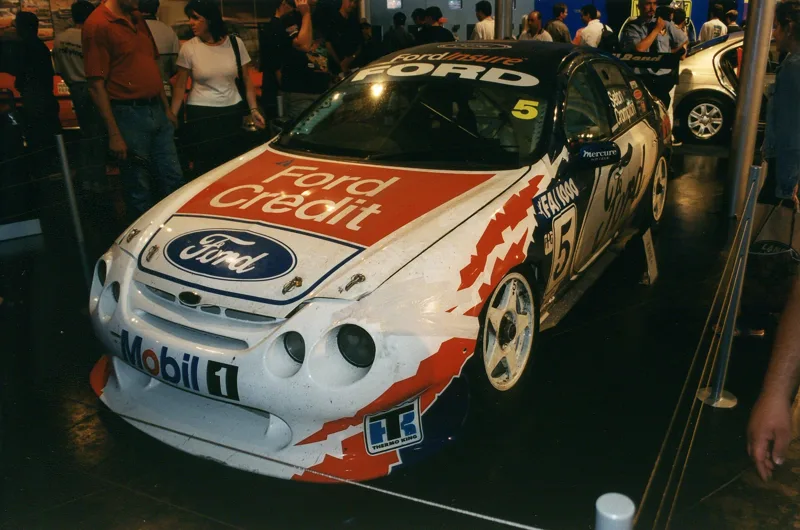
John Bowe won the Bathurst 1000 twice, in 1989 and 1994, both times as co-driver with Dick Johnson for Dick Johnson Racing. In 1989 the Shell-backed Sierra won despite failing turbo boost, and in 1994 the pair held off a pack of five Holdens in the closing laps.
Johnson and Bowe joined forces at Dick Johnson Racing in 1988, when Bowe replaced Gregg Hansford as the team's number two driver. Team manager Neal Lowe had re-engineered the Sierra RS500s after a poor 1987 endurance season, and the cars proved to be the class of the field.
The 1989 win came with a dramatic finish. The Sierra was limping home on failing turbo boost, and Bowe drove it over the line while on the Channel 7 coverage. The team had also beaten the Eggenberger-built Allan Moffat Sierras and Peter Brock's Rouse-built car, which Brock had put on pole.
In 1994 the team also took the Sandown 500, its first win there in over 15 years. Four weeks later, at Bathurst, Bowe fought Craig Lowndes for the lead in the closing laps, and the pair held off a chasing pack of five Holdens to win.
What happened to John Bowe in the V8 Supercar years?
When V8 regulations arrived in 1993, Bowe won the first round under them at Amaroo Park. He then won the 1995 Australian Touring Car Championship with Dick Johnson Racing, taking victories at Symmons Plains, Winton and Oran Park, and he finished runner-up in 1996.
The 1995 title came despite serious disruption. Dunlop's tyre factory had been hit by the Kobe earthquake, but Bowe still won the championship, and the team went on to win back-to-back Sandown 500s. The Bathurst 1000 that year ended early after an accident with Glenn Seton while leading.
Bowe stayed with the team for three more seasons, adding sprint wins at Bathurst in 1996, Lakeside in 1997 and Winton in 1998. The Winton win was the last of his 15 Touring Car round victories.
In 1996 Bowe finished runner-up to Craig Lowndes in both the Australian Touring Car Championship and the Bathurst 1000, a result that reflected how quickly Lowndes had risen.
How did John Bowe's touring car career wind down?
Bowe left Dick Johnson Racing in 1999 for PAE Motorsport, a West Australian team backed by Caterpillar. The team was sold to Queensland dealer John Briggs before the season ended, and Bowe's time there produced a single race win, at Queensland Raceway in 1999. He was released after Bathurst in 2001.
From 2002 to 2006 Bowe raced alongside Brad Jones, with early promise that faded as the team struggled for resources. Bowe and Jones were a constant threat at Bathurst, finishing third there in 2004, and they won the second race of the 2005 Australian Grand Prix non-championship event.
Did John Bowe retire from racing, and what came next?
Bowe announced his retirement and raced a final season in 2007 for Paul Cruickshank Racing. In March 2007 he set a record for championship starts when he began round 2 at Barbagallo, his 213th start, and he then turned to sports cars and historic racing.
In 2008 he returned to sports car racing in a Lamborghini Gallardo in the Australian GT Championship. The following year he took a full-time drive in the Touring Car Masters series, driving a Chevrolet Camaro for historic touring cars.
In 2010 he returned to the category in 'Sally', his 1969 Ford Mustang with a 351 Windsor V8, backed by WesTrac and Wilson Security. He ran the number 18 on the car, the same number he used at Dick Johnson Racing.
What did John Bowe win in GT and historic racing?
In 2014 Bowe won the Bathurst 12 Hour on 9 February in a Ferrari 458 GT3 for Maranello Motorsport, sharing the car with Craig Lowndes, Peter Edwards and former Formula One driver Mika Salo. It was his third win in the race, after Eastern Creek in 1995 and Bathurst in 2010.
Bowe continued in Touring Car Masters through the 2010s and into the early 2020s, winning five championships and a race in his last full season in the category, 2023. In 2024 he raced in GT4 Australia, finishing second in the amateur cup behind co-driver Jacob Lawrence, having been classed as an amateur because of his age.
Honours and legacy
The 2021 Queen's Birthday Honours made him a Member of the Order of Australia, recognising his service to motorsport in touring cars. His name also lives on in the John Bowe Trophy, which goes to the winner of the Formula 3 Tasmanian Super Prix.
| Year | Milestone |
|---|---|
| 1971 | Won the Tasmanian state title on debut in a Formula Vee |
| 1984 | Australian Drivers Championship title |
| 1985 | Second Australian Drivers Championship title, in a Ralt RT4 |
| 1986 | Australian Sports Car Championship in the Veskanda C1 |
| 1989 | Bathurst 1000 win with Dick Johnson |
| 1994 | Bathurst 1000 win with Dick Johnson |
| 1995 | Australian Touring Car Championship title |
| 2014 | Bathurst 12 Hour win on 9 February, Ferrari 458 GT3 |
| 2021 | Member of the Order of Australia |