Five AUSCAR titles, a 1994-95 NASCAR title, Audi Super Touring success and a long run at Bathurst before the team took over his life.
Born in Albury in 1960, Brad Jones built a career across AUSCAR, NASCAR and Super Touring before stepping back from full-time driving after 2007. He now runs Brad Jones Racing as co-principal with his brother Kim, and he continues to work in media.
Brad Jones is an Australian former racing driver from Albury who is now better known as a V8 Supercars team owner. He won five consecutive AUSCAR championships and the 1994-95 Australian NASCAR title. He stands alone as a double champion, having won both the AUSCAR and NASCAR titles in Australia.
He raced for a wide range of manufacturers across the country and abroad, from Ford and Holden to Audi and Mitsubishi. Circuits in Japan, Macau and Belgium were part of his record, alongside the Australian and New Zealand tracks.
How did Brad Jones start in motorsport?
Jones began in motocross at 14 and moved into Formula Ford by 1980. He then spent several years driving a twin-turbo Chevrolet V8 Mercedes-Benz 450 SLC for the Shepparton racer Bryan Thompson, and he ended the 1985 Australian GT Championship seventh.
Series Production racing was his proving ground in the early 1980s. He drove a Mitsubishi Starion Turbo through a long run of battles with the production car specialist Peter Fitzgerald, and he also raced against former Bathurst winners Brian Sampson and Colin Bond.
From motocross in Albury to running a Supercars team with his brother, Jones has covered a long road.
How did his first Bathurst 1000 go?
Jones made his first Bathurst 1000 start in 1985, driving a Group A Mitsubishi Starion for the Ralliart team. The race ended for him just past the first turn of the first lap, after a mid-field collision with John French's Holden VK Commodore.
The Ralliart link lasted, on and off, until late 1988, and much of his time went into racing in Japan. Even so, he put the Starion inside the top 10 in qualifying for the 1986 Bathurst race and came home 10th overall in 1988.
What did the 1989 Mobil 1 seat offer him?
In 1989 Jones moved into the top level of Australian touring cars, partnering Peter Brock at Mobil 1 Racing. The car was an ex-Andy Rouse Ford Sierra RS500, and it gave him a shot at the big time that he had been chasing.
His season was cut short in testing at Winton, where Barry Sheene crashed Jones's car. He bounced back to qualify inside the top 10 for the 1989 Tooheys 1000, and with Paul Radisich he finished ninth.
Running the European-built Sierras proved too costly, so Brock joined forces with Andrew Miedecke and Jones was left without a drive for 1990. The factory Holden team gave him endurance work from 1990 to 1994.
Those factory years brought podiums at Sandown and Bathurst, with co-drivers Neil Crompton, Tomas Mezera, Wayne Gardner and Craig Lowndes.
How successful was Jones in AUSCAR?
Jones made his AUSCAR debut in 1988 at Calder Park Thunderdome, in a Holden VL Commodore nicknamed the Green Meanie for its colour. He went on to win five consecutive championships with his own Coopertools Racing team, which his brother Kim helped run.
The Thunderdome became his track. He was a regular winner there, and he also won on the half-mile flat Super Bowl at Adelaide International Raceway, which was the country's other paved oval.
His road-racing background paid off as well. He won at the Surfers Paradise Street Circuit and at the short course at Oran Park, which showed his range across very different tracks.
Did Jones win an Australian NASCAR title?
He did. After dominating AUSCAR, Jones turned to the Australian NASCAR series and claimed the 1994-95 championship in a Chevrolet Lumina. Winning two national titles in two different series gave him a rare place in Australian motorsport history.
The Lumina was a Chevrolet, so the title came in a different brand from his AUSCAR Holdens.
What did the Lotus and Audi results add?
The 1994 Super Production title came in a Lotus Esprit. Through the mid-1990s he ran an Audi Super Touring operation that won the Australian championship in 1996 and again in 1998.
At Bathurst the Audi cars did well too. The 1997 race ended with Jones and Frank Biela in second place in an A4 Quattro, while in 1998 he and Cameron McConville took third.
Between those seasons he drove for the Coca-Cola Team run by Wayne Gardner, in a Holden VR Commodore at Sandown and Bathurst in 1995 and 1996.
How did Brad Jones Racing start in V8 Supercars?
In 2000 the brothers chose to run their own V8 Supercars team full time, under the OzEmail Racing Team name. By its second season Jones and John Cleland had taken second in the 2001 Bathurst race, having battled Mark Skaife to the closing laps.
That Bathurst result came with a gap of only just over two seconds at the finish.
He also had an American sportscar link. Late in 2000 Audi Sport North America named him standby for the Race of a Thousand Years at Adelaide, run on the full Grand Prix version of the street circuit. He was standby for Allan McNish, who had hurt his back after a pre-event photo shoot, and McNish recovered in time to drive and win the race.
What were the Bathurst years like for the team?
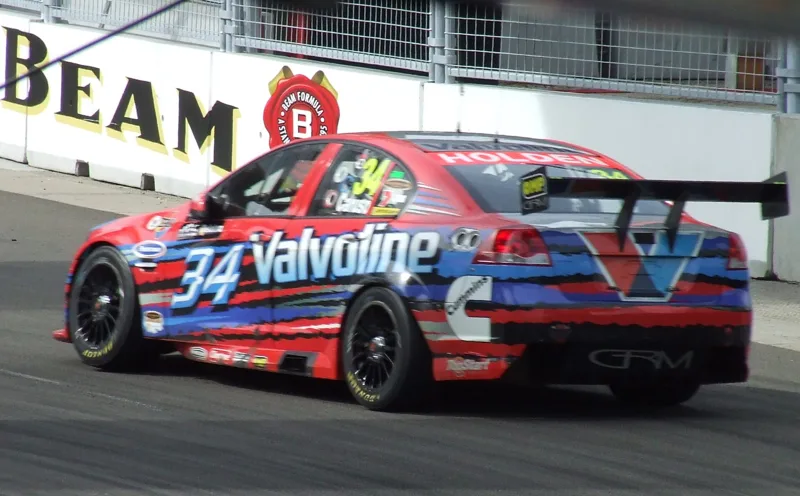
Brad Jones Racing returned to Mount Panorama in 2002 with two cars. Jones and John Bowe spent the first 59 laps at the front, and their fastest lap stood as the event's record at that time.
The 2003 season went badly, but the team took third at the mountain in 2004. In 2005 the sponsor changed and the squad became Team BOC. The start was promising, with Jones and Bowe finishing first and second in the V8 support races at the Australian Grand Prix after choosing dry slicks while others ran wets.
Bathurst that year went wrong quickly. The team could only manage 26th in qualifying, and on race day the car was caught up in trouble while charging through the field in the first 10 laps.
Why did the 2006 season turn sour?
The 2006 campaign opened with Stone Brothers Racing supplying the engines, and the staff changed too. The engine lacked reliability and power, and the team struggled to find results. A co-driver, Mark Porter, died in a crash at a Bathurst event that year.
John Bowe left at the end of the season for Paul Cruickshank Racing. Jones's nephew, Andrew Jones, joined the team after time with Garry Rogers Motorsport and Tasman Motorsport.
How did Jones leave full-time driving?
Jones stepped back from full-time driving after the 2007 New Zealand round, and Simon Wills took over the car for the rest of that season. He kept racing in an endurance co-driver role, and in the 2008 Bathurst 1000 he finished fifth.
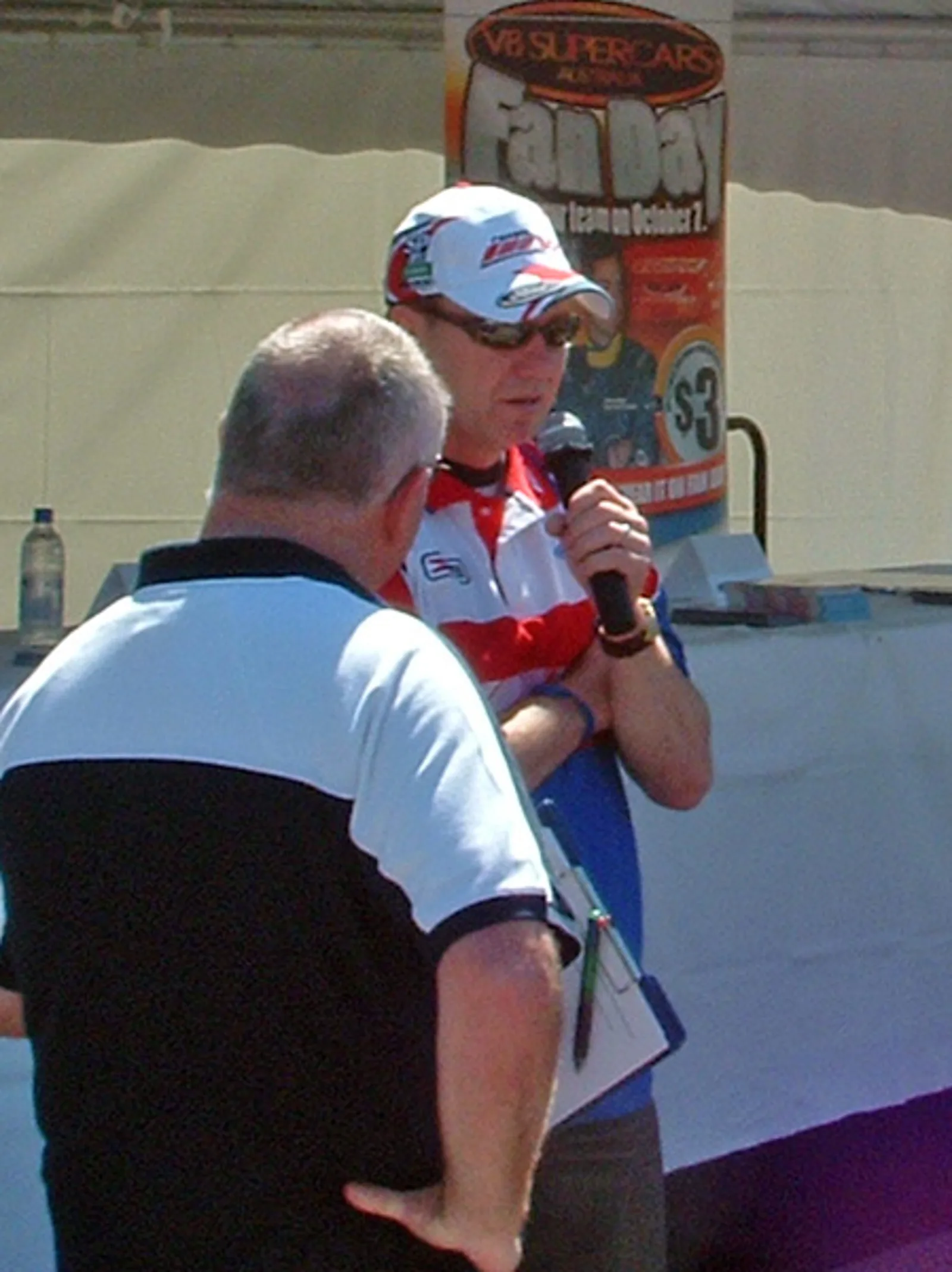
He also moved into media work. He took guest commentary roles on television and co-hosted a broadcast with Neil Crompton, a show that formed part of an internet provider's V8 Supercar package until it was dropped at the end of 2008.
In 2009 he ran as high as third at Bathurst. Across 24 seasons he had 109 starts in ATCC and V8 races, and after that season he retired from competitive racing.
Career highlights at a glance
| Year | Series or event | Result |
|---|---|---|
| 1985 | Australian GT Championship | Seventh |
| 1985 | Bathurst 1000 | Out just past the first turn |
| 1988 | Bathurst 1000 | 10th overall |
| 1988 onward | AUSCAR | Five consecutive championships |
| 1989 | Tooheys 1000 | Ninth, with Paul Radisich |
| 1994 | Australian Super Production Car Series | Champion in a Lotus Esprit |
| 1994-95 | Australian NASCAR | Champion in a Chevrolet Lumina |
| 1996 and 1998 | Australian Super Touring Championship | Champion with the Audi team |
| 1997 | Bathurst 1000 | Second with Frank Biela |
| 1998 | Bathurst 1000 | Third with Cameron McConville |
| 2001 | V8 Supercar 1000, Bathurst | Second with John Cleland |
| 2004 | Bathurst 1000 | Team finished third |
| 2008 | Bathurst 1000 | Fifth as an endurance co-driver |
| 2009 | Bathurst 1000 | Ran as high as third |
What does Brad Jones do now?
Jones is team co-principal of Brad Jones Racing, which he runs with his brother Kim. He also continues to appear regularly in media roles.