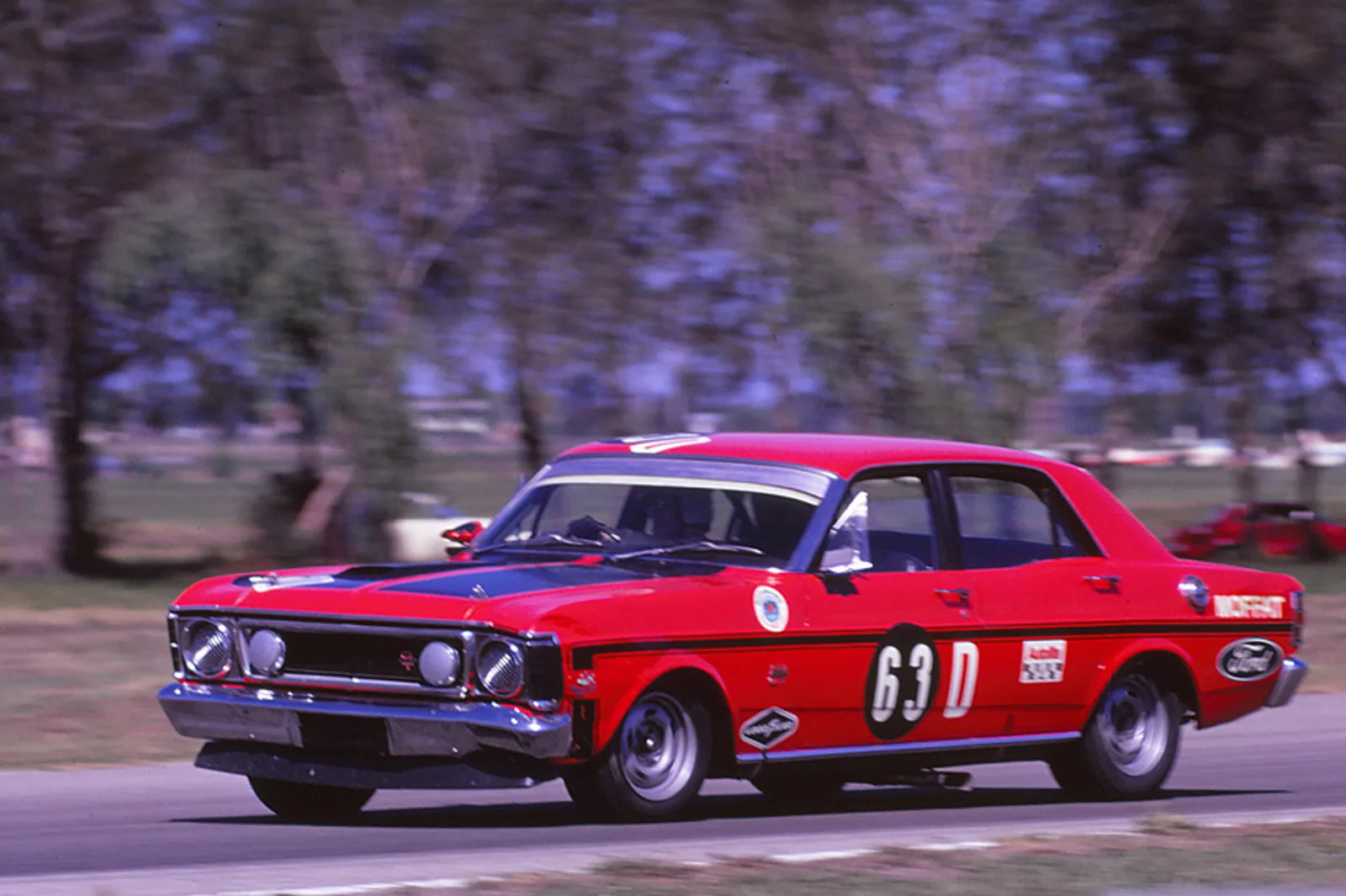
A 1972 South Australian circuit with a speedway bowl, a drag strip and a full circuit lap record set in a Formula 5000 car.
Adelaide International Raceway is a South Australian motor racing circuit that opened in 1972 at Virginia, north of Adelaide. Its full road course, short course, Speedway Super Bowl and drag strip share one site, and the full circuit lap record of 49.5 seconds was set in 1977.
Adelaide International Raceway is a permanent motor sport circuit 26 km (16 mi) north of Adelaide, South Australia, in use since 1972. The one site holds a full road course, a short course, a half-mile banked oval called the Speedway Super Bowl and a drag strip, so its history reads like several venues rolled into one.
Where is Adelaide International Raceway and who built it?
The raceway sits on Port Wakefield Road at Virginia, about 26 km (16 mi) north of Adelaide. Keith Williams, a Surfers Paradise businessman, built it in 1972, and the Bob Jane Corporation bought it in 1982. Australian Motorsport Club Limited runs the venue under that group.
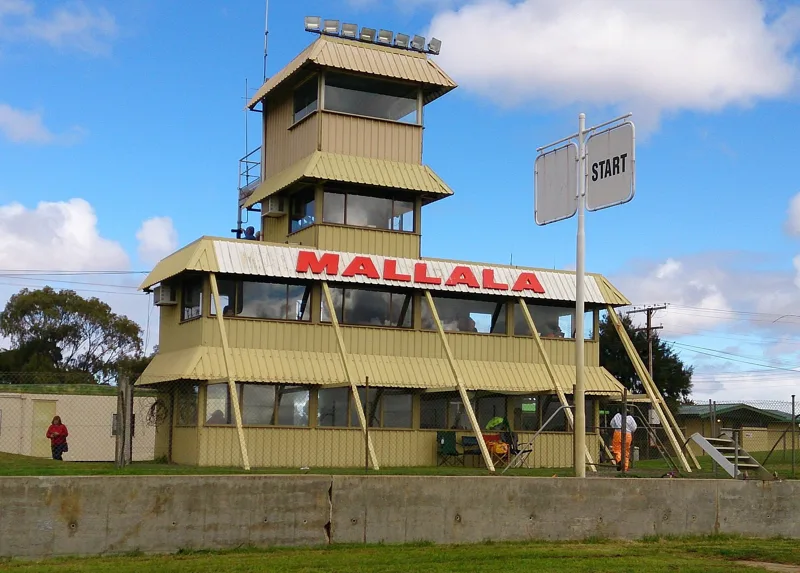
Williams kept the site in an almost raw state until 1982. Speedway City, Adelaide's dirt track venue, sits alongside the raceway. Williams's other interests included the Mallala Race Circuit and the Surfers Paradise International Raceway.
From the start, the layout was meant to host drag racing as well as road racing. The long front straight was always intended to carry top-level drag events.A 2012 magazine report recorded Williams's death at the age of 82.
One site, four configurations, and a full circuit record set in 1977 that is still standing.
Who owns the raceway today?
The Bob Jane Corporation has owned the site since 1982, and Australian Motorsport Club Limited runs it under that group. The corporation also owns Calder Park Thunderdome, the other paved oval in the country where race cars run, and NASCAR cars have run on both.
Bob Jane also shares an outright track record at the raceway. He co-holds the Sports Sedan lap record with John Briggs, and both set their times in the same race in 1981, each driving a Chevrolet Monza.
What layouts does the circuit offer?
The site offers four configurations: a 2.410 km (1.498 mi) full circuit, a 1.770 km (1.100 mi) short course, the half-mile Speedway Super Bowl and a drag strip 0.40 km (0.25 mi) long. The 920 m (1,010 yd) main straight serves the road course and the drag strip, and it doubles as the Super Bowl's front straight.
| Configuration | Length | Notes |
|---|---|---|
| Full circuit | 2.410 km (1.498 mi) | Nine turns, six of them right-handers, run clockwise |
| Short circuit | 1.770 km (1.100 mi) | Seven turns |
| Speedway Super Bowl | 0.805 km (0.500 mi) | Banked asphalt oval, anticlockwise for championship races |
| Drag strip | 0.40 km (0.25 mi) | Runs along the 920 m (1,010 yd) main straight |
The full course runs clockwise, like most Australian circuits of its period. The Super Bowl is the only part that runs anticlockwise, and it does so for state and national championship races. Turn 1 is the hardest braking point on the track, coming straight off the long straight, and turns 2 and 3 are sweeping right-handers.
Outside tyres took most of the punishment through turns 1, 2 and 3 and on the turn 9 bowl section. Cars spent long periods cornering with their weight loaded to the outside, so tyre choice and suspension settings often decided longer national races.
During practice for the 1988 ATCC round, Dick Johnson observed that even the lighter, slower Geminis would be struggling with worn tyres by the end of a 60-lap race.
How are the pits and spectator areas laid out?
Pit lane runs on the inside of the track, but cars reach the circuit through a gate at the end of turn 9 that forms part of the outside wall during races. Spectators see most of the layout from mounds and stands, although binoculars help at the far end.
The main paddock lies beyond the main straight, backing onto the officials tower and the spectator mounds. A sizeable unused area lies inside the Super Bowl behind pit lane, and it was left open so the pit straight stands and mounds could keep the whole circuit in view.
Viewing areas run from the final turn of the Bowl all the way down the main straight, with mounds from turn 3 round to turn 6 and along the back straight. The Bowl's final turn sits close to Port Wakefield Road, so no mounds can be placed there, and the far end of the circuit is almost 1 km (0.62 mi) from the start and finish line.
Which championships ran at the track?
From 1972 to 1988 the circuit was South Australia's main motor racing venue. It hosted Australian Touring Car Championship rounds, the Tasman Series and the Rothmans International Series, along with national Formula 2, sports car, sports sedan and drivers' championship rounds.
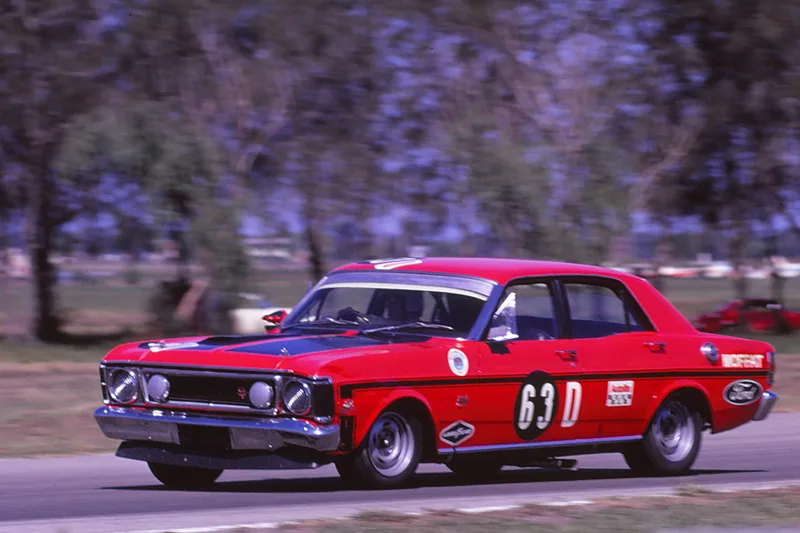
The Tasman Series visited four times between 1972 and 1975, and the Rothmans International Series came four times between 1976 and 1979. The last Group C touring car round was won by Allan Grice on 1 July 1984, driving a VH Commodore SS, and Peter Brock was runner-up that day after recording the quickest touring car lap at the circuit.
The last ATCC race was won by Dick Johnson on 1 May 1988, in a turbocharged Ford Sierra RS500. He started from pole, set the fastest lap and beat his teammate John Bowe.
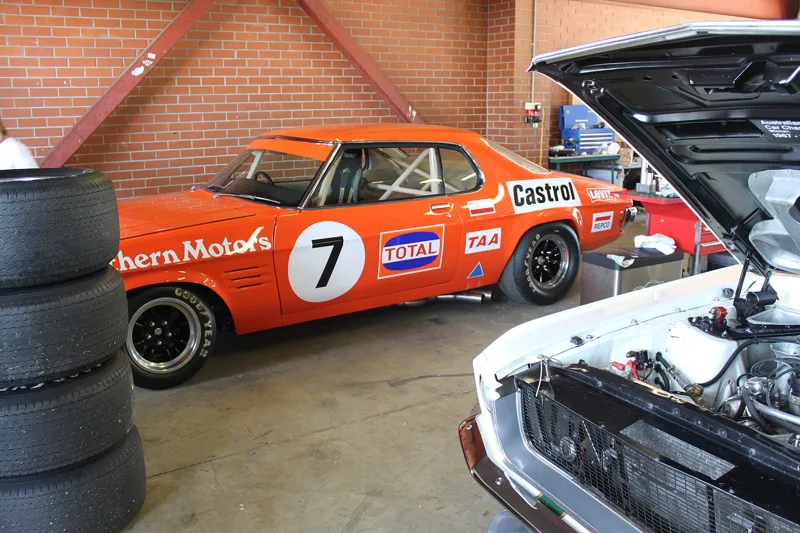
The endurance race began in 1972 as the Chesterfield 250, won by Colin Bond in an HDT LJ Torana GTR XU-1 on 27 August 1972. The race came down to 300 km (187.5 mi) by 1978, and the last edition, the Humes Guardrail 300, went to Peter Brock on 20 November 1983.
Speeds on the long straight were high. Formula 5000 cars reached over 270 km/h (170 mph), and by 1988 the turbocharged Sierras were reaching 258 km/h (160 mph) on the same stretch.
When did championship racing move away from the circuit?
Adelaide International staged seven rounds of the Australian Drivers' Championship from 1972 through 1988. From 1989 that championship, called the CAMS Gold Star, moved to Mallala, which had been blocked from motor sport by a covenant until that covenant was lifted by 1982.
How did the Speedway Super Bowl develop?
The Super Bowl is a half-mile banked asphalt oval that first ran on 16 June 1974, before a crowd of about 10,000. Speedway meetings ended after 1976 as crowds fell, but NASCAR-style racing returned from 1990 and drew crowds of up to 15,000.
The Super Bowl held winter race meetings, and competitors came from Rowley Park, a dirt speedway, to race on the new asphalt.
Cars built for dirt struggled on asphalt, and understeer was the biggest complaint of most drivers. Sprintcars were running about 170 km/h (110 mph) on asphalt straights, a huge jump from the roughly 80 km/h (50 mph) they were used to on dirt.
Banking at the Bowl made the entry to turn 7 awkward, and several leading drivers, among them Graham McRae and Allan Moffat, spun there over the years. Turn 1 for clockwise running stayed flat, because the front straight also served as the drag strip.
Rowley Park closed in April 1979, and Speedway Park opened at Speedway City that October. Crowds came back there even though the trip took just as long.
John Hughes, who later founded World Series Sprintcars, set the fastest speedway laps in 1976 in a V8 HJ Holden One Tonner ute chassis clad in HJ Monaro bodywork, with a qualifying time of 23.8 seconds and a race lap of 23.2 seconds. His qualifying time would have placed him eighth on the NASCAR starting grid 22 years later.
How did Super Bowl speeds compare with Calder Park?
Calder Park Thunderdome is the only other paved oval in Australia where race cars run, and its NASCAR laps exceeded 140 mph (230 km/h). Top laps on the Super Bowl were around 78 mph (126 km/h), and NASCAR cars reached a terminal speed of about 117 mph (188 km/h) on the AIR straights.
On Calder's high banks the same cars were running around 5 mph (8.0 km/h) faster than on the AIR straights.
The Super Bowl lap record of 22.7012 belongs to Terry Whyhoon, who drove a NASCAR Ford Thunderbird in the 1997/98 season of the Goodyear Australian SuperSpeedway Series.
Did drag racing and drifting continue at the track?
Drag racing has run on the front straight through the years, but there was none from the late 1990s until November 2011. Top-line racing returned with the ANDRA Pro Series 1000 in April 2012, which brought 1,000 ft (300 m) drag racing to Australia for the first time.
The raceway also staged regular off-street racing for road cars, alongside numerous national drag racing championships.
Drifting now uses the circuit through the G1 Drift Competition and the Drift Supercup. In 2021 the Australian National Drag Racing Association announced an annual championship, with the track as one of five host venues.
The whole track was resurfaced in early 2008. Top Bike and Pro Stock Motorcycle are also regular classes at drag events, so two-wheeled racing continues on the site alongside the cars.
What are the outright lap records?
The full circuit record is 49.5 seconds, set by Alan Jones in a Chevrolet-powered Lola T332 Formula 5000 during the 1977 Rothmans International Series. The short circuit record of 43.9 seconds is held jointly by Mark Trengrove and Mick Monterosso.
Jones also holds the GT record at 51.7 seconds, set in 1982 in a Porsche 935. The Sports Sedan record of 54.1 seconds was set in 1981 by Bob Jane and John Briggs.
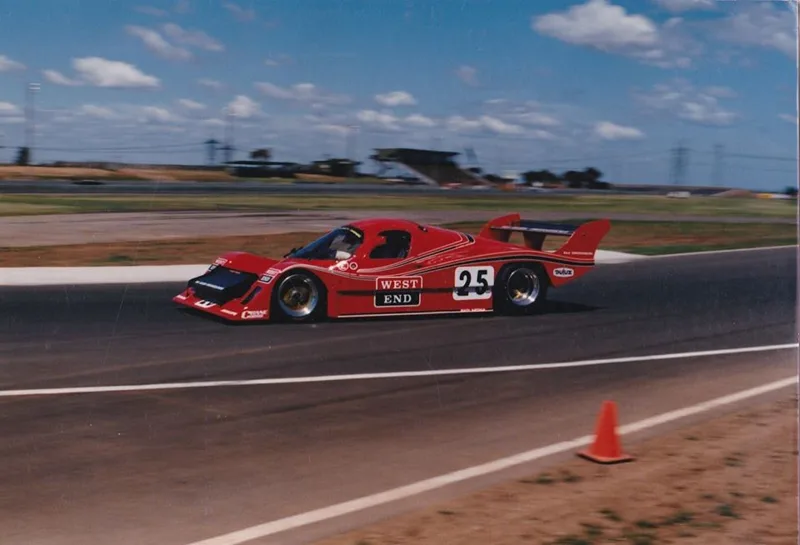
Monterosso set his short course time in the Veskanda Chevrolet, built by K&A Engineering in Adelaide. John Bowe drove the same car to a dominant 1986 season in the Australian Sports Car Championship, and it is widely considered the fastest race car Australia has produced.
Test track and police training
Holden Dealer Team and Holden have used the circuit for testing since 1972. The South Australian Police run driver training and vehicle compliance testing there, partly because the site is closer to Adelaide than Mallala is.
Celebrity Race drivers trained at the track during the Adelaide Grand Prix years of 1985 to 1995, when the Formula One event was held on the Adelaide Street Circuit. Some Formula One teams used the raceway as a shakedown circuit until 1986.
Motorbike racing and the runoff question
Top-level motorcycle racing was once a regular feature. Riders such as Graeme Crosby, the 1980 series winner, raced in the Swann International Series, and an annual 3-hour race was televised nationally on the ABC until the mid-1980s.
Safety concerns changed that. The outside of the Super Bowl had about 1.3 km (0.81 mi) of concrete wall with no runoff, so bike racing moved to Mallala instead.