Two Bathurst 1000 wins, the first 100 mph laps in Group C and Group A cars, and a career that ran from Holden privateer to Queensland MP.
Allan Grice (born 1942) was an Australian driver and politician who won the Bathurst 1000 in 1986 and 1990. Much of his racing was done in private Holden entries against factory teams, and he later sat in the Queensland Parliament for Broadwater from 1992 to 2001.
Allan Maxwell Grice, nicknamed Gricey, was an Australian driver who later became a politician. He won the Bathurst 1000 twice, in 1986 and 1990, and for much of his career he competed as a private entrant in Holden cars against the factory teams. He then represented Broadwater in the Queensland Parliament.
Who was Allan Grice?
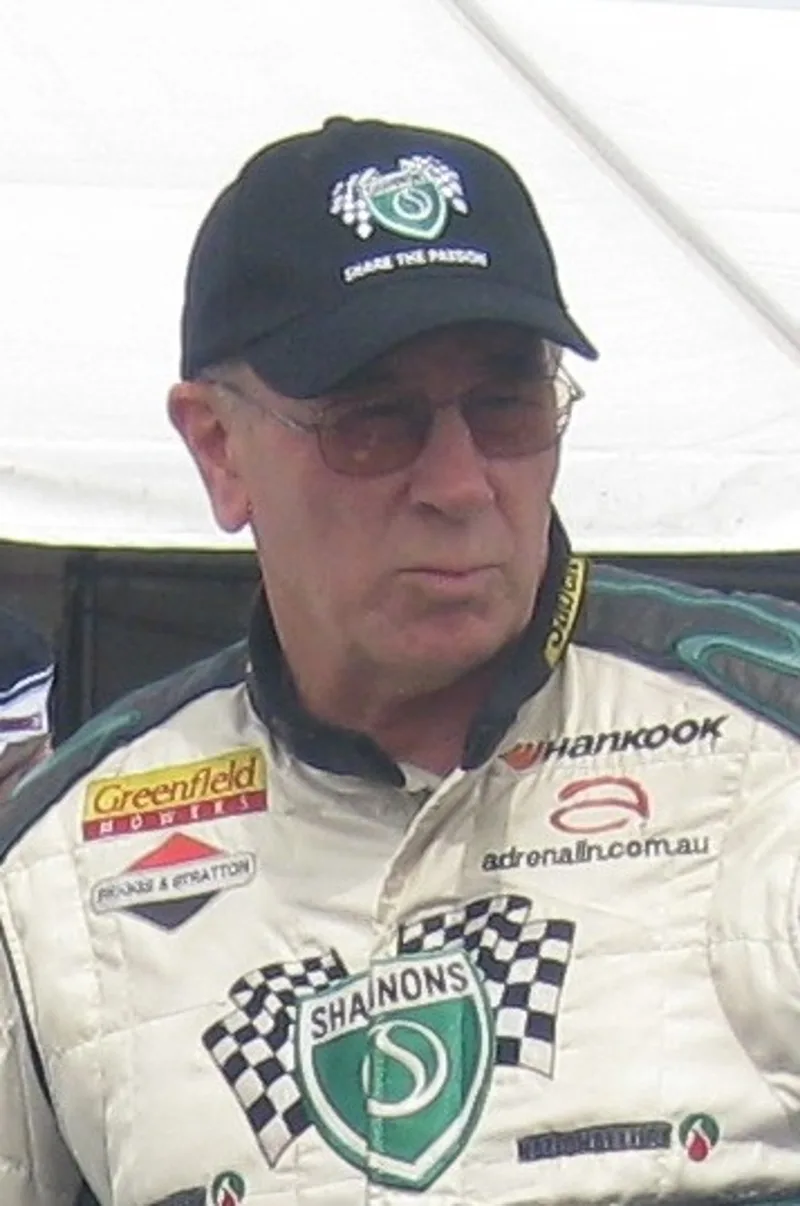
Allan Maxwell Grice was born on 21 October 1942 and became known as Gricey in the paddock. He attended The Armidale School, in the north of New South Wales. He raced touring and sports cars for decades before serving as Member for Broadwater from 1992 to 2001.
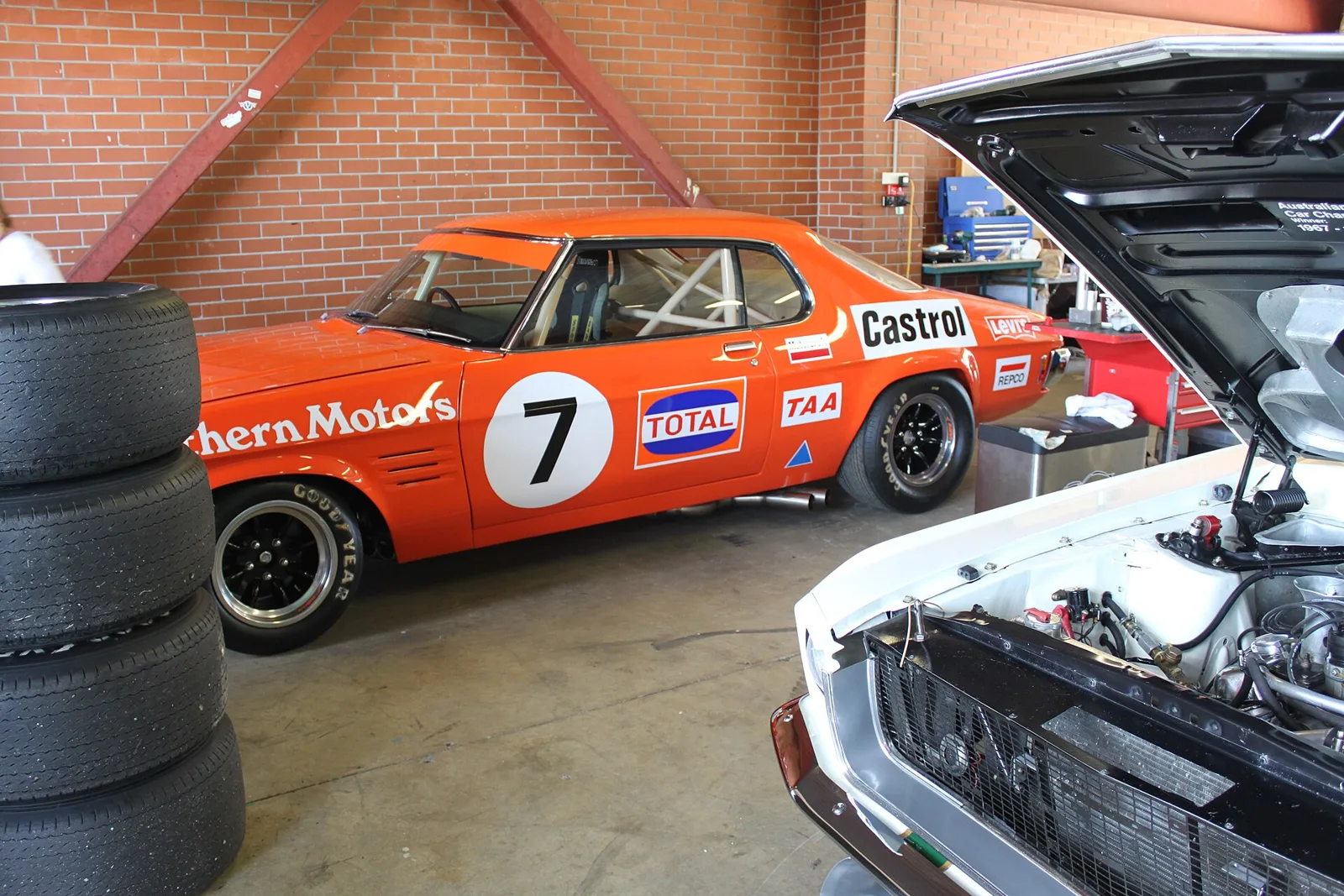
Grice raced for several decades and remains one of the best-known names in Australian touring car history. Early on, he became the first racing driver to race the Holden Torana LH SLR/5000 V8, although he used the road version, L31, rather than the race-bred machine that won at Bathurst.
He later built a successful second career as a politician, alongside a racing reputation that was already well established.
A privateer in a Holden who won Bathurst twice and later sat in Queensland Parliament.
How did Grice's Bathurst record build up?
Grice made 26 starts at Bathurst between 1968 and 2002, with seven podium finishes including two wins. He recorded thirteen top-ten finishes, and he holds the record for the most drives, sixteen, before his first win among winners in the race's history.
Seven podiums is a strong return for a privateer. Grice finished second in 1978, 1982, 1991 and 1995, third in 1983, and won in 1986 and 1990. Those results placed him fifth among drivers with the most Bathurst podiums.
Other good finishes followed, among them a fourth place in 1979, two seventh places in 1980 and 1981, a tenth in 1989, a fifth in 1992 and a seventh in 1994. Taken together, they show a driver who finished in the top ten far more often than he stood on the podium.
Bathurst results at a glance
| Year | Bathurst 1000 result |
|---|---|
| 1978 | Second, behind Peter Brock |
| 1979 | Fourth |
| 1980 | Seventh |
| 1981 | Seventh |
| 1982 | Second |
| 1983 | Third |
| 1986 | Winner |
| 1989 | Tenth |
| 1990 | Winner |
| 1991 | Second |
| 1992 | Fifth |
| 1994 | Seventh |
| 1995 | Second |
Read down the table, the two wins sit among a run of second places, which shows how often Grice came close to victory.
Bathurst 1986: the 100 mph lap and the win
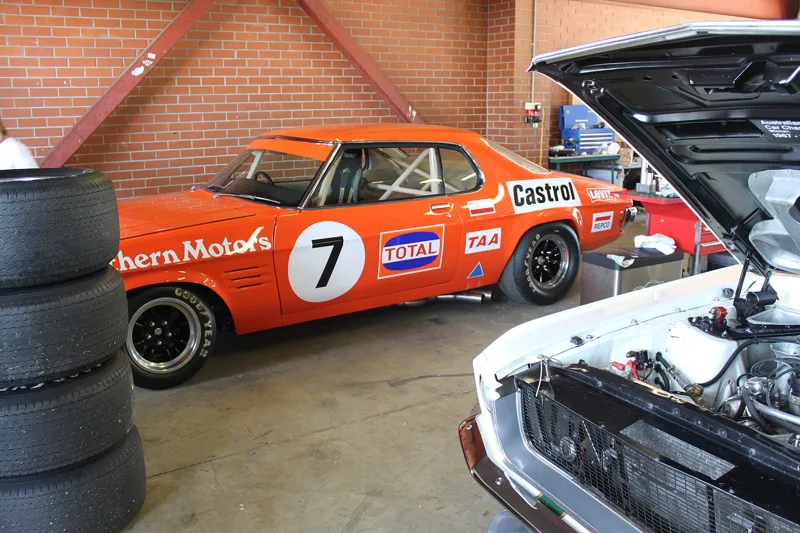
The 1986 race car was a Holden VK Commodore SS Group A. Graeme Bailey was his co-driver and the car's owner, and the Roadways Racing team, Grice's long-standing outfit, had built it.
Grice became the first to average 100 mph for a lap in a Group A car. He had set the equivalent mark in a Group C Holden VH Commodore four years earlier, in 1982, which made him the first driver to manage it in both classes.
His 1986 lap time on the 6.172 km circuit was 2:16.16, compared with 2:17.8 in 1982. He had taken pole in 1982, but not in 1986.
Grice and Bailey were in front for every lap but twelve, and Grice covered 137 of the 163 laps. Track alterations made at the request of the FIA then reduced the race to 161 laps.
What was the story behind the 1990 Bathurst win?
Grice won the 1990 Bathurst 1000 with Win Percy, in a Group A SV Holden VL Commodore. Percy carried a shoulder injury, so Grice did most of the testing and race driving. They beat a field that included several turbocharged Ford Sierras.
Holden needed a revival in the Australian Touring Car Championship, and Tom Walkinshaw gave Win Percy, a British Touring Car legend, the task of delivering it. Percy then picked Grice as his co-driver, even though Walkinshaw preferred another choice.
That 1990 victory was the second of his two Bathurst wins, and both came in Holden machinery. By then he had been racing at Bathurst for more than two decades, since his first start in 1968.
Why was Grice disqualified in 1975?
Grice won round five of the 1975 Australian Touring Car Championship at Surfers Paradise, but he was disqualified after a protest from Holden manager Harry Firth. The protest centred on a thermostat found in the glovebox of his Torana. Colin Bond went on to take the 1975 title.
Grice led the points table at that stage, and the disqualifications were a heavy blow. He appealed, and when the appeal was upheld he lost points from the remaining rounds.
Speculation followed that the part had been moved deliberately to hurt his season. Grice might otherwise have won the championship, since his disqualifications covered rounds five, seven and eight.
Privateer years and the Holden rivalry
Grice raced for Holden factory teams at times, most famously at Bathurst in 1990. His usual rival was the Holden works team, typically driven by Peter Brock, and that contest shaped much of his racing through the middle years of his career. Most of his career, however, was spent as a privateer in a Holden against the works teams, typically driven by Peter Brock.
The 1974 move to Craven Mild Racing marked the start of his team years. In 1975 he produced his strongest title challenge, and in 1978 he finished second behind Peter Brock at Bathurst in a Craven Mild Holden Torana.
He also took two sports sedan titles, in 1978 and 1979, driving Frank Gardner's Chevrolet Corvair. In 1980 the Craven Mild team switched to a BMW 318i Turbo, but Grice had little success with it.
He was let go by the JPS team after the 1981 season. That dismissal opened a long rift with Gardner, who reportedly disliked Grice's aggressive driving style, and the animosity lasted until Gardner's death in 2009.
Alan Browne of Re-Car gave Grice another drive in 1982. He qualified fastest and finished second at Bathurst after a duel with Peter Brock in the early laps. In 1983 he took third at Bathurst, sharing an STP-backed Roadways Commodore with Colin Bond.
The 1984 Group C finale and the Monza
In 1984 Grice won the final ATCC race held under the CAMS Group C rules, at Adelaide International Raceway. He finished less than one second ahead of Peter Brock's HDT Commodore, with Dick Johnson third.
Later that year he won the last competitive Group C race in Australia, at Baskerville in Tasmania, in a Roadways Holden VK Commodore.
He also won the 1984 Australian GT Championship in the ex-Bob Jane Chevrolet Monza, which Re-Car boss Alan Browne had acquired. The Monza sat on pole for every round and won all but one race, and that single defeat came when it lost fuel pressure while holding an eight-second lead at Calder Park.
How did Grice race outside Australia?
Grice raced overseas in endurance events, including the 1984 24 Hours of Le Mans and a 1988 NASCAR race at Calder Park. In 1987 he became the first Australian driver to qualify for the Coca-Cola 600 at Charlotte. His Le Mans effort ended with engine failure after 274 laps.
At Le Mans in 1984 Grice shared a Charles Ivey Racing Porsche 956 with Alain de Cadenet and Chris Craft. The car qualified 32nd, and Grice, the fastest of the three despite never having raced at Le Mans, criticised the team's preparation. The Porsche had a habit of losing wheels at speed, and Grice said his own cars never shed wheels.
At Sandown that year, the Sandown 1000 counted as the first world championship road race held in Australia. Grice shared the Monza with Johnson and driver-engineer Ron Harrop, qualified 18th, and finished second in class, 1.9 seconds behind the class winner. Johnson felt the car had more grunt than its handling deserved, but Grice thought it handled well. The 600 bhp Chevrolet kept pace with the Porsches on the straights and lost out in the corners to the ground-effect sports cars. The Monza was later disqualified for receiving outside assistance.
The 1988 Goodyear NASCAR 500 at Calder Park Thunderdome was the first NASCAR race held outside North America. The Thunderdome cost A$54 million and was owned by Bob Jane, a former racer and businessman. Grice qualified his Oldsmobile Delta 88 third, but a crash on lap 80 ended his race after his brakes failed. He suffered a broken collar bone, and Neil Bonnett won the race, 0.86 seconds ahead of Bobby Allison.
In 1990 Grice and the Roadways team built a left-hand-drive Holden VN Commodore with a 358 cubic inch Chevrolet V8 for the Australian NASCAR series. He won races at Thunderdome and at the Speedway Super Bowl in Adelaide with that car.
In Europe, Grice drove a Nissan Skyline in the 1988 Spa 24 Hours and finished sixth outright. The Nissan Europe team was managed by Howard Marsden, a former Ford works team boss, and Win Percy and Anders Olofsson shared the car with him. He won the inaugural Bathurst 12 Hour in 1991 in a Toyota Supra Turbo.
What did Grice do in politics?
Grice had a second career in public life as Member for Broadwater in the Queensland Parliament from 1992 to 2001. That role came after a racing career that had already made him one of the best-known touring car drivers in Australia.
The seat was in Queensland, a long way from the New South Wales circuits where he made his name. Those parliamentary years form the second half of his public record, alongside the racing results that remain his best-known achievements.
What is Grice's legacy today?
Grice is remembered for his two Bathurst 1000 wins, his first 100 mph laps in Group C and Group A cars, and ten ATCC round victories. He still appears at historic racing events, and he supports the racing career of his son, Benjamin Grice.
After a gap of five years, Grice returned at the 2002 Bathurst 1000 in a Ford AU Falcon for Nilsson Motorsport. He then formed his own team in the V8 Utes series, winning races and reaching a championship position as high as sixth.
His final ATCC race came at Oran Park in 1995, in a Ford EF Falcon for Glenn Seton Racing. That career gave him ten round wins, which places him equal 12th on the all-time list of round winners. His final season was cut short when his deal with Pinnacle Motorsport was severed mid-year.