Porsche's works team stayed away, Jaguar returned with a pair of XJR-5s, and a Joest 956 won after a race that saw a marshal killed.
Henri Pescarolo and Klaus Ludwig won the 1984 Le Mans 24 Hours in a Joest Porsche 956, a race held without Porsche's works team. Neither Jaguar finished, and Wollek's Lancia was the first non-Porsche car home in eighth.
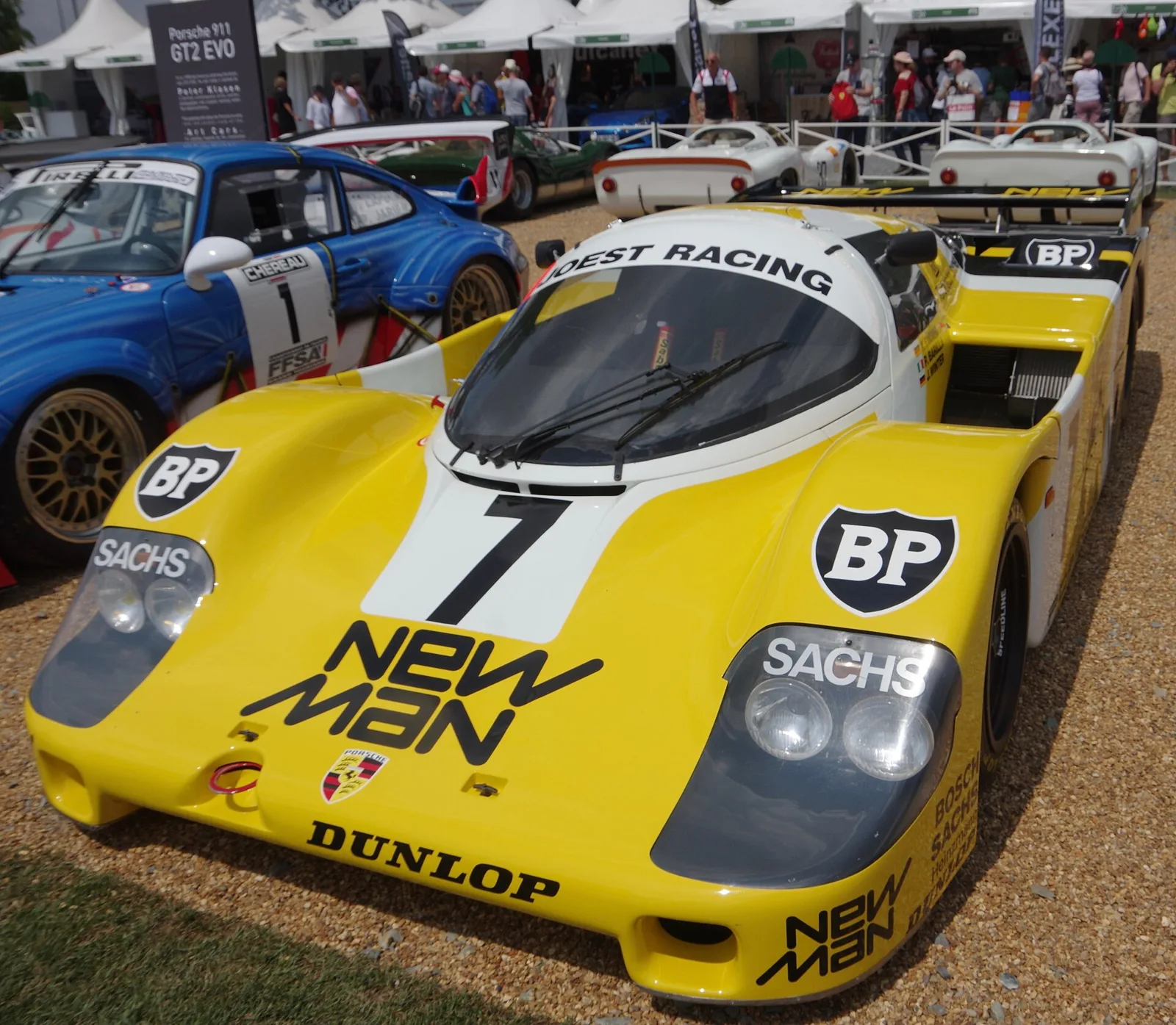
Henri Pescarolo and Klaus Ludwig won the 1984 24 Hours of Le Mans in a Joest Porsche 956, after the race had been wide open for most of the weekend. The 52nd running took place on 16 and 17 June 1984, and Porsche's works team was absent for the first time since its debut in 1951. Jaguar returned after more than twenty years, but neither of its cars finished.
Why did Porsche's works team stay away in 1984?
In March 1984 FISA announced that IMSA classes would be eligible for the World Championship, and it said the Group C fuel formula would be scrapped in 1985 in favour of a sliding weight scale. Porsche and Lancia objected strongly, having put a great deal of money into fuel-efficient engines and engine-management systems.
The Rothmans Porsche team responded by boycotting Le Mans. Few IMSA teams took up the invitation, with only eleven entries submitted, so the race was built around customer Porsches, Lancias and a return from Jaguar.
FISA agreed to review its decision, but the new minimum weight of 850 kg, which rose 50 kg, was in place for the race. The works teams had invested heavily in the rules that were now being changed.
A Porsche without the works team still won, after Jaguar's return ended in retirement.
What rule changes shaped the 1984 race?
The IMSA classes were brought in under rules that were close to Group C. The GTP class had a minimum weight of 900 kg for its biggest engines and allowed only one turbo, while its steel roll-cage and pedals set behind the front suspension set it apart.
For Le Mans the GTP cars had to swap their usual 120-litre fuel tanks for the 100-litre tanks used in Group C. The fuel-counter system let teams track their consumption, which removed the need for a set number of stops, but each car still had a total of 2600 litres for the race.
The ACO also renamed its junior class Group C2, leaving the senior class as Group C1. The C2 cars were fitted with the same 100-litre tanks but kept a reduced fuel allowance, and the rule on pedal placement was tightened to match the IMSA requirement.
The 25-lap limit on oil replenishment stayed in place, and the race was started at 3pm in good weather that lasted throughout the event.
Who filled the entry list?
Group C filled over half the field, and about 25 works entries were listed. Sixteen Porsches made up the C1 and GTP group, most of them run by customer teams that had bought the 956B from the works programme.
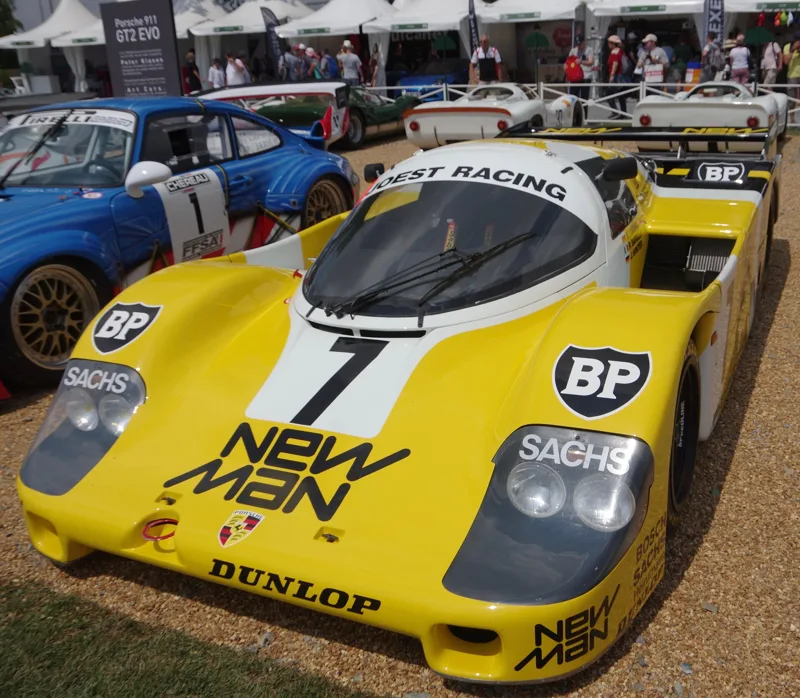
Joest entered two cars, with Pescarolo and Ludwig in the 956B and Stefan Johansson, Jean-Louis Schlesser and Mauricio de Narvaez in the older 956. Joest, Kremer, JFR and Brun each picked up a 956B, and Dieter Schornstein's car ran Volkert Merl and Louis Krages.
Richard Lloyd's GTi Engineering ran Jonathon Palmer and Jan Lammers in its lead car. The second car was a camera car with Rene Metge and the Pink Floyd drummer Nick Mason. Preston Henn's American Porsche was also in the field.
Lancia's team was led by Bob Wollek with the young F2 driver Alessandro Nannini, and Mauro Baldi drove with Hans Heyer and Paolo Barilla. A third Lancia ran in the yellow of the Jolly Club, with Pierluigi Martini, Beppe Gabbiani and Xavier Lapeyre.
How did the Lancia and Jaguar challengers compare?
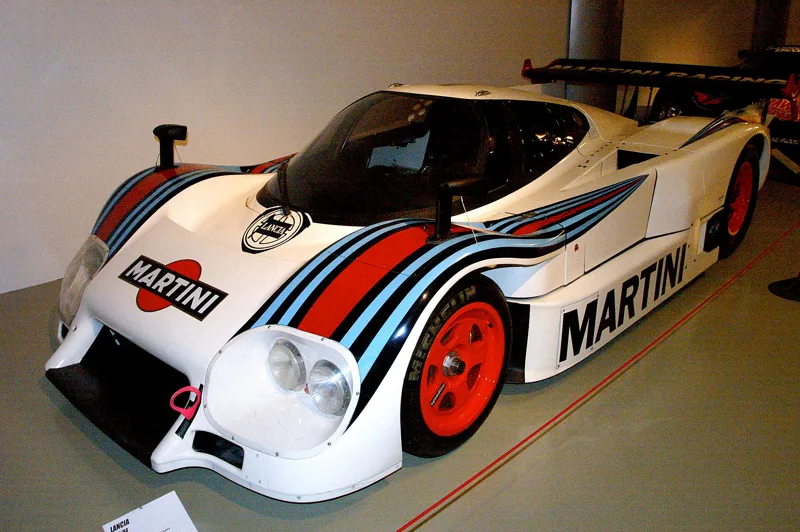
Lancia's LC2 was fast but had proved fragile. The Ferrari V8 had been bored out from 2.6 to 3.0-litres and fitted with electronic engine management from Magneti Marelli, and it could reach over 350 km/h (220 mph) on the straights.
Jaguar was not a works entry. The XJR-5 came from Bob Tullius's Group 44 team, which had finished second in the 1983 IMSA championship. Designed by Lee Dykstra, it had a 5.3-litre V12, and the two Le Mans cars were fitted with 6.0-litre fuel-injected engines producing 650 bhp.
Tullius raced with Doc Bundy and Brian Redman, while John Watson, Claude Ballot-Lena and Tony Adamowicz shared the second car. The team kept the engines off full revs, but the cars could still reach 340 km/h (210 mph).
The other GTP entry was March North America's car, with a turbo Buick V6 producing 700 bhp. It was prepared by McLaren Engines, and it reached 355 km/h (220 mph) on the straights.
How did qualifying set the grid?
Bob Wollek took pole with a 3:17.1 lap, more than three seconds ahead of his team-mate. Lancia locked out the front row, and Wollek never found a clear lap to beat Ickx's time from the previous year. Lancia had been out early in qualifying, with its engines wound up for fast times. Martini's car then hit Walter Brun's Porsche square in the midsection after Brun had spun at the Porsche Curves, and both cars needed a night of repairs.
Tullius's Jaguar was the best of the GTP cars, qualifying 14th at 3:35.3. The March was 35th at 3:50.5, while the new 962s qualified 16th and 26th.
The Courage was the fastest Cosworth-powered car, 20th on the grid. The best Alba started 22nd at 3:41.48, and the Almeras Porsche was the quickest GTO car at 4:02.8, placed 45th.
The Winther BMW, the Group B car, was placed 46th with a 4:09.9 lap. The Group B and GTO entries were well off the pace of the Group C leaders.
How did the race start?
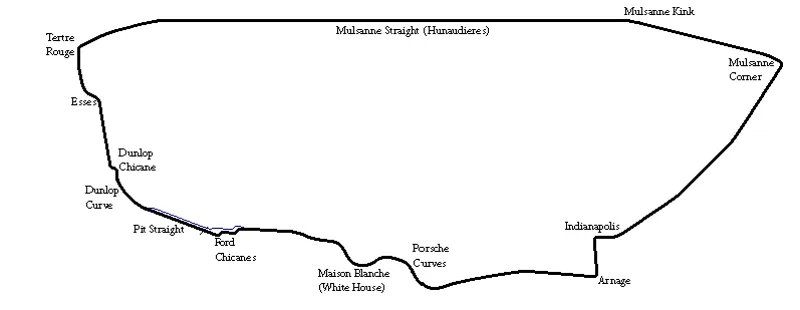
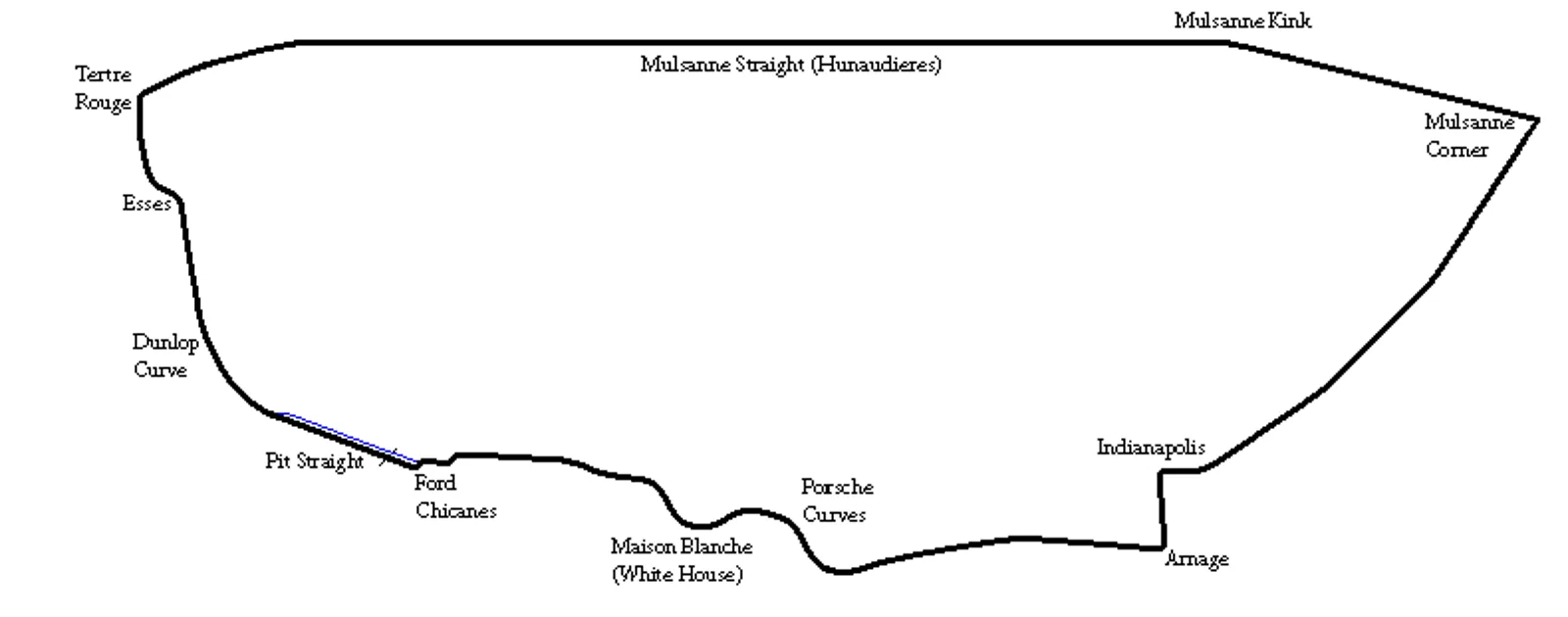
Wollek took the lead into the Dunlop curve from the start, but Dorchy's WM blasted past the field down the Hunaudieres straight. It was the first time WM had led Le Mans in the team's history, and Wollek took the lead back on the second lap.
Dorchy then snatched the lead back on lap three, and the Mulsanne braking zone caught him out and sent him back to the pits. For the next half-hour Wollek was pressed hard by Porsches, with the lead changing often.
Palmer's RLR Porsche broke a rear wishbone and dropped to the back of the field. Another wishbone then failed on the same car, and the repairs kept it in the pits for longer than the team wanted.
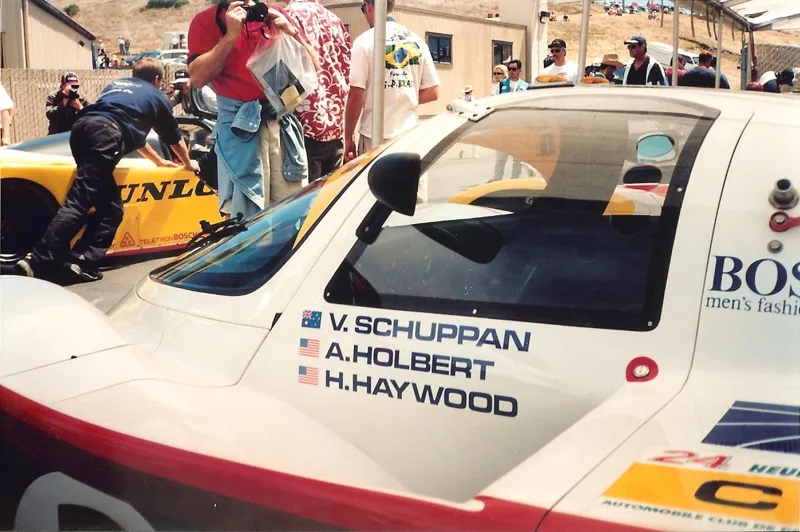
Early pit visits were a mix of problems. Richard Lloyd's Porsche came in for brakes and Pescarolo's Joest car for fuel pressure, while the Team Australia car, which had briefly been running eighth, lost a wheel at the Porsche Curves.
What happened in the first half of the race?
The leading group ran barely fifteen seconds apart for much of the early running, and there were fifteen lead changes in the first 50 laps. After the first fuel stops it was Schuppan who held a narrow lead.
Tullius led the race for Jaguar when the cars came back from the pits. The Jaguars had a longer tank range, and the team exploited it for a short time before the close racing returned.
Dorchy then spun in front of Schuppan, and the WM rebounded off the barrier into his path. Schuppan lost eight minutes getting a wheel rim and nose repaired, and at one stage his Kremer ran a short nose until the original was fixed.
After the first hour only four cars were left on the lead lap, and Ludwig and Pescarolo were down near the back of the field after their early problems. Keegan's JFR 962 went straight on at Indianapolis when its steering jammed, and it was retired.
After four hours the leaders were still locked together. Johansson's Joest Porsche then spun on dropped oil at Indianapolis, and the repair took more than an hour, with parts borrowed from the JFR team.
What happened at 9:15pm on the Hunaudieres straight?
At 9:15pm, as dusk fell, the most serious accident of the race happened on the Hunaudieres straight. John Sheldon's Nimrod-Aston Martin left the road at the kink approaching the Mulsanne hairpin, struck the barrier and burst into flames.
The second Nimrod, driven by Drake Olson, was following closely and was forced into the barrier too. Sheldon was airlifted to hospital with serious burns, but Olson was unhurt.
Marshal Jacky Loiseau was killed by flying debris, and another marshal was seriously injured. The field was held behind pace cars for about an hour while the barrier and the track were repaired.
How did the leaders fight through the night?
The Lancias ran 1-2 after the restart, with Wollek and Nannini at the front and the Baldi and Heyer car second. The Porsches behind them had their own problems, and the Lancia challenge faded as the mechanical problems piled up.
Heyer's Lancia was in the pits for 62 minutes after it stripped its top gear. Wollek and Nannini had a long stop to fix a gearbox at breakfast, and the Lancia was eighth at the finish.
At 2am Palmer had just brought the RLR Porsche back into the top ten when he pitted, worried about the gearbox. The crew did not secure the engine cover properly, and it blew off two laps later, costing the team 40 minutes and six places.
The Joest Porsche of Ludwig and Pescarolo had charged back through the field after an early fuel-pressure problem, and by breakfast it was in front. The Preston Henn Porsche was second, one of the few cars that had a clean run through the race.
Who won the 1984 Le Mans 24 Hours?
Henri Pescarolo and Klaus Ludwig won in the Joest Porsche 956, Pescarolo's fourth outright Le Mans victory and Ludwig's second. The win came after the Lancias had led much of the race and the Jaguars had run in the top ten for most of it.
The JFR Porsche held on for third, having run on five cylinders at one stage. Wollek's Lancia finished eighth, the first car that was not a Porsche to finish.
Race results at a glance
| Position | Entry | Result |
|---|---|---|
| 1 | Joest Porsche 956, Pescarolo and Ludwig | Pescarolo's fourth and Ludwig's second outright win |
| 2 | Preston Henn Porsche | Second, after a smooth run |
| 3 | JFR Porsche | Third, running on five cylinders |
| 8 | Lancia LC2, Wollek and Nannini | First non-Porsche finisher |
| C2 | Lola-Mazda | Won the C2 class, 11 laps fewer than the 1983 winner |
Why does 1984 still matter at Le Mans?
The race was the first without a Porsche works team since the factory's debut in 1951. It also showed the strength of the customer Porsche teams, which took the top three places, and the Jaguar return was a story that ended early for the XJR-5s.
The death of marshal Jacky Loiseau was the most serious incident of the race, and it was a reminder of the risks faced by the people who worked the course. Fifteen lead changes in the first 50 laps made the racing close, and the crowd saw a lot of drama before the finish.
The fuel formula used that year was already on its way out, and the teams were preparing for what came next.