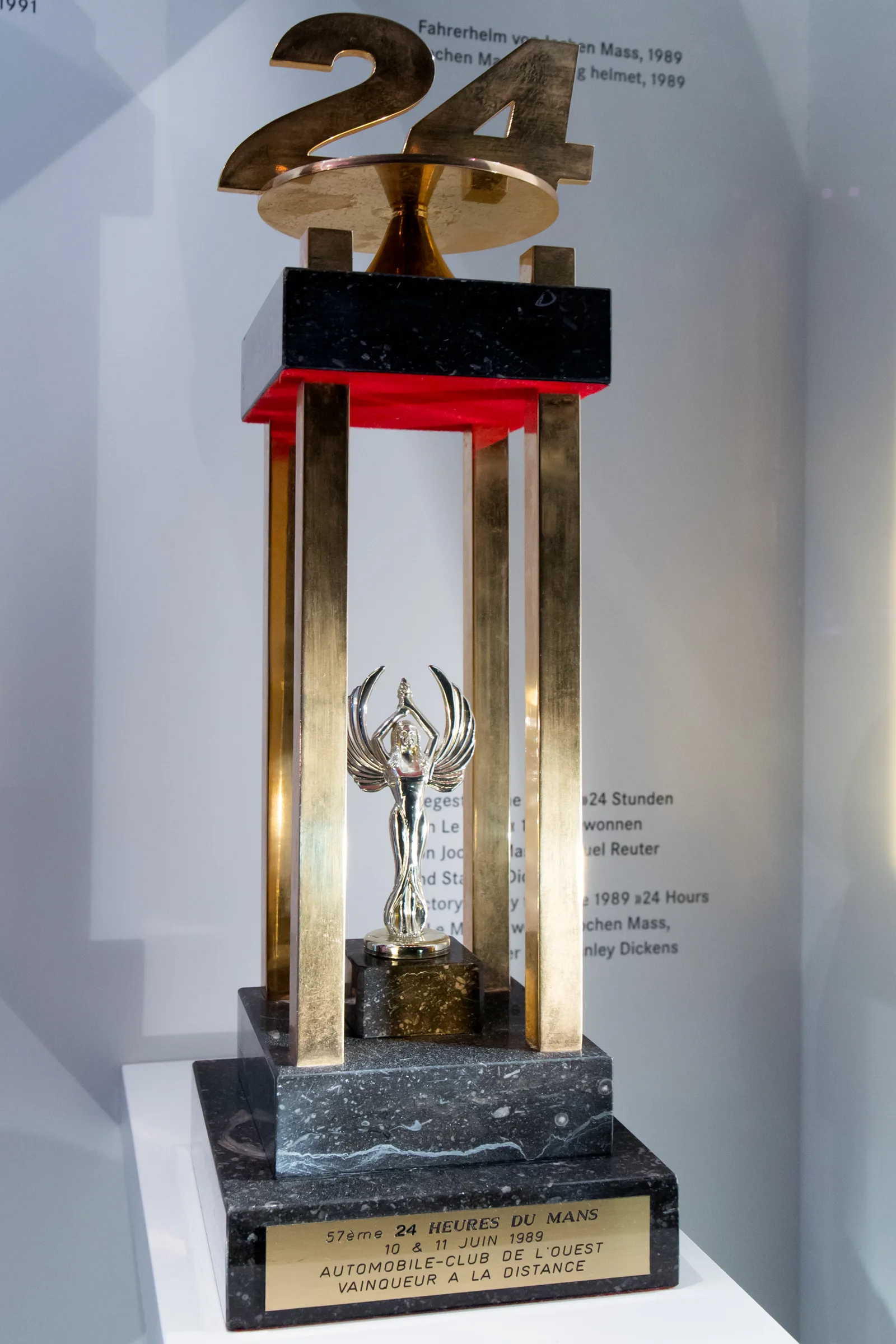
Five Jaguars against the works Porsches, a Porsche pole time five seconds quicker than the year before, and a finish so close that the Jaguar's gearbox held only in fourth gear.
The Jaguar XJR-9 of Lammers, Dumfries and Wallace took the 1988 Le Mans 24 Hours by less than half a lap. The Joest Porsche finished third, nine laps behind.
Jan Lammers, Johnny Dumfries and Andy Wallace won the 1988 24 Hours of Le Mans in a Jaguar XJR-9 by less than half a lap. The 56th running took place on 11 and 12 June 1988, as the fifth round of the World Sports-Prototype Championship. It was Jaguar's third attempt at the race, and it arrived with five cars against a Porsche works team that was racing only at Le Mans that year.
Why did Jaguar come to Le Mans with five cars?
Jaguar arrived with five cars for its third attempt, and the team was run by Tom Walkinshaw Racing, which bought five cars and fourteen drivers for the race. Tony Southgate designed the XJR-9, which used a Zytek engine management system and produced 730 bhp. Covers over the rear wheels contributed an estimated ten per cent more downforce, and the car's top speed was fifteen km/h higher than the year before.
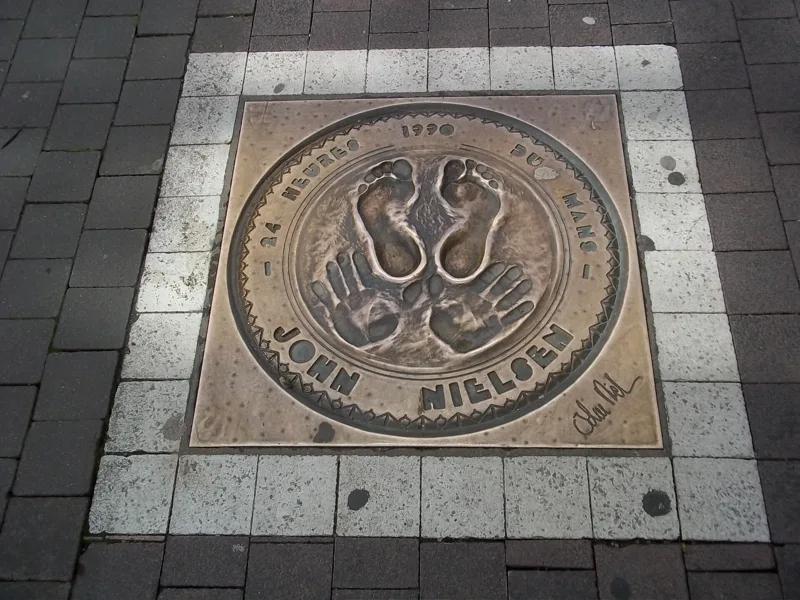
Jan Lammers drove the second Jaguar with the new team members Johnny Dumfries and Andy Wallace. Martin Brundle and John Nielsen drove the first car, while Raul Boesel, Henri Pescarolo and John Watson shared the third.
The IMSA-entered Jaguars had their own drivers, with Price Cobb, Davy Jones and Danny Sullivan in one car, and Derek Daly, Larry Perkins and Kevin Cogan in the other. The team had prepared a full programme in both series.
Less than half a lap, a gearbox held in fourth gear, and a Jaguar that crossed the line first.
Which rivals did the Jaguars have to beat?
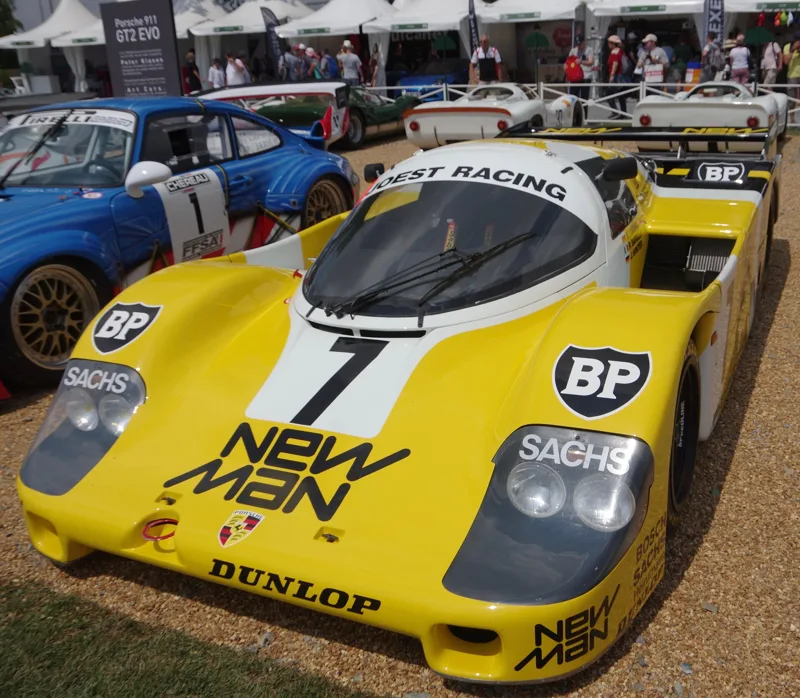
Porsche's works team lined up three cars: Bell, Stuck and Ludwig; Wollek, Schuppan and van der Merwe; and the Andretti car, with Mario, Michael and John Andretti. The works team had come to Le Mans as its only round of the Championship that year. Its cars wore the red and yellow of its long-time sponsor Shell, and the new Bosch Motronic engine management gave fifty more horsepower than before. Porsche's attention was also on its Formula One TAG-engine programme with McLaren and a move into the US IndyCar series.
Sauber-Mercedes was not in the race. Its team had withdrawn after two high-speed tyre blowouts in testing at Monza, and then another blowout during practice at the Mulsanne kink left Niedzwiedz fishtailing down the road.
Sauber's C9 had been the other main challenger, after Mercedes-Benz formally returned to motor racing in partnership with the team at the start of the year. Its 5.0-litre twin-turbo V8 could put out well over 700 bhp, and Leo Ress's design had been developed for the new rules.
Spice Engineering arrived with a new customer-car design, and Chamberlain ran a customer Spice for Jean-Louis Ricci, with Claude Ballot-Lena and Jean-Claude Andruet as co-drivers. Chamberlain's own older car kept its 1.9-litre turbo Hart engine.
Lancia's LC2 had been sold on to the Swiss Dollop Racing team of Jean-Pierre Frey after an unsuccessful year, and Pierluigi Corbari, a former Alfa Romeo F1 engineer, reworked its suspension, brakes and aerodynamics.
Cosmik GP Motorsport bought an ex-works Spice for the Anglo-Greek owner Costas Los and the South African Wayne Taylor. The last Spice was the Graff Racing car that had won the class the previous year, which Jean-Philippe Grand had recently bought from Hugh Chamberlain.
The dominance of Spice came at the expense of Tiga Race Cars. Six Tigas were entered, but only two arrived. Charles Ivey returned with a Porsche twin-turbo Tiga, with John Sheldon, Tim Harvey and Chris Hodgetts on the driving, and Roy Baker brought a Cosworth-powered Tiga nicknamed the Pink Panther.
The JM19 design had enjoyed good results in IMSA racing, with Mazda rotaries in many of the cars. Three of the cars entered in C2 were JM19C versions with a Cosworth DFL engine, including Jean Massaoudi's car, which was prepared by a former Rondeau engineer.
Toyota ran the 88C, which Dome had built around an older 2.1-litre turbo engine. Nissan's R88C had a new VRH30 engine with smaller turbos, and WM's P88 had a 2.9-litre engine with twin Garrett turbos producing 910 bhp.
Courage's C22 was built around a 2.8-litre Porsche engine, and Lancia's LC2 used a 3-litre Ferrari V8 that could reach 340 km/h (210 mph). In the IMSA GTP class, Mazdaspeed's 767, designed by Nigel Stroud, used a quad-rotor 13J-M engine producing around 600 bhp, and it was the only car in that class.
What changed on the Hunaudieres straight?
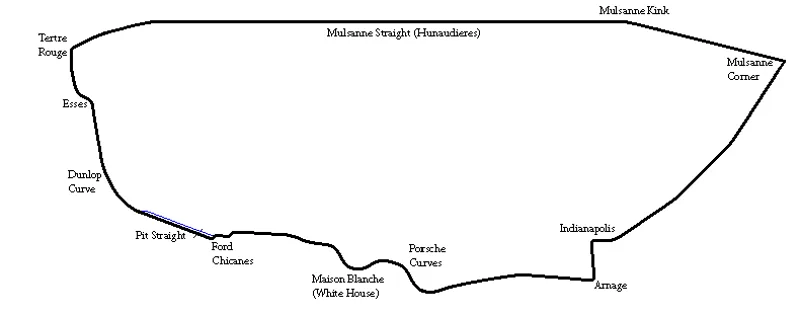
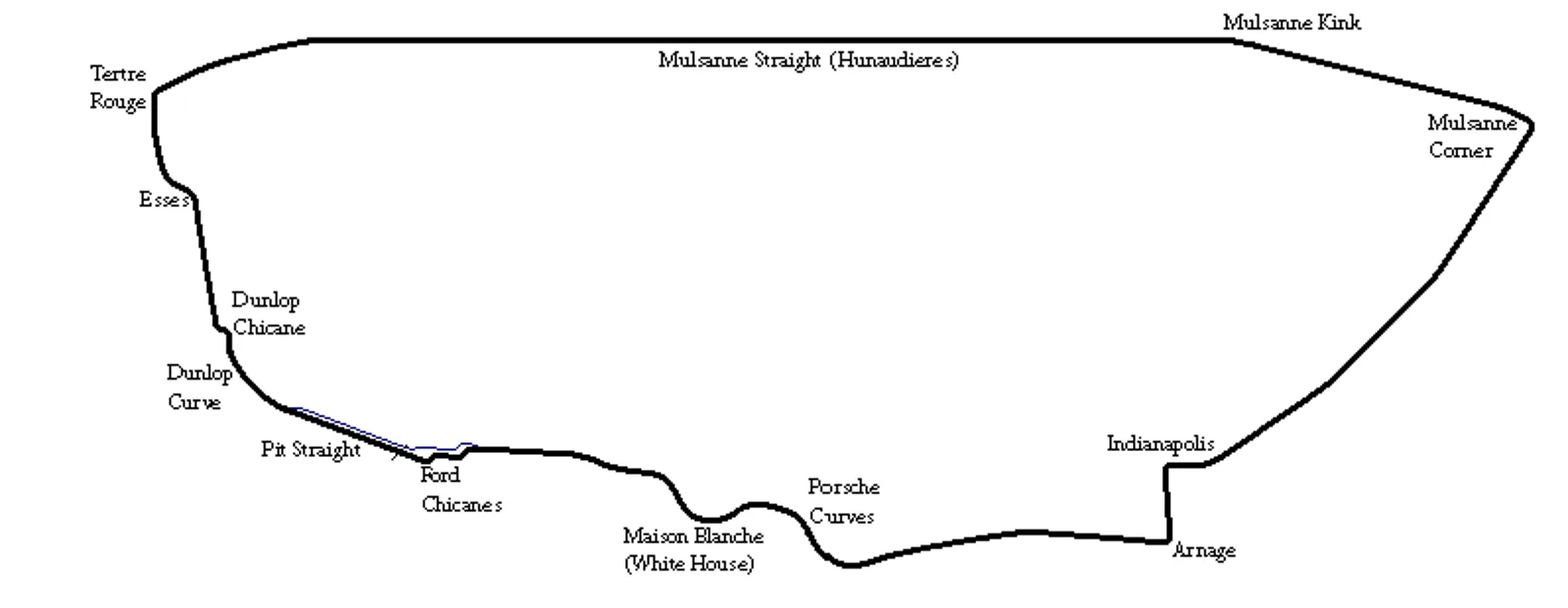
The French government and the local authorities had upgraded the Hunaudieres straight. Laser-guided work laid a high-grip surface at a gradient of 2 percent, and more than 12,500 tonnes of material was taken out of the roadway.
A reduction of the hump approaching the Mulsanne corner increased the maximum speed of the cars. Following recent alarming accidents on the straight, high three-tier Armco fencing was fitted along its length.
Stuck described the new surface as a limousine ride down the Champs Elysees, which gave a sense of how much smoother the straight had become. The FIA also set maximum dimensions for the underbody ground-effect tunnels.
The C2 class fuel allowance was raised to 1815 litres, and the ACO cancelled the test day because of low interest. The race start was moved to 3pm so that local spectators could vote in the French elections over the same weekend.
The international racing bodies had changed after the Concorde Agreement was re-signed in 1987. Max Mosley, the new FIA president, persuaded Jean-Marie Balestre to bring Bernie Ecclestone into the FIA as a vice-president for promotion, a move with far-reaching consequences for sports-car racing.
How did qualifying set the grid?
Stuck took pole with a 3:15.6 lap, a time that beat Wollek's previous year's pole by a wide margin. The Porsche works team lined up 1-2-3 on the grid for the first time, with Wollek second.
Mario Andretti's Porsche was by the narrowest of margins ahead of Brundle's Jaguar. The Jaguars filled the top dozen, and Geoff Lees was the best Toyota in eighth at 3:25.4.
Chamberlain's Spice qualified 16th at 3:30.3, and Gordon Spice was 26th at 3:37.8. The two Mazdas qualified 28th and 29th at 3:39, six seconds faster than the year before.
Practice had its accidents. Raphanel's Cougar lost its engine cover at the kink and crashed, while both WM cars blew their turbos. The Chamberlain Spice driven by American stuntman Bobby Orr spun on his first flying lap and set off its inboard extinguishers, so Richard Jones took over the car. Dorchy claimed 407 km/h in practice, but the ACO's speed camera was not working.
What happened at the start and in the first hour?
Over 50,000 British fans came to the race, and the crowd swelled to 260,000 spectators. The race started at 3pm on a hot afternoon, with Stuck leaping from the pole into the lead.
Lammers muscled past the other works cars into second by the end of the first lap, and he took the lead on lap six. Nielsen's Jaguar planted itself in the gravel at Indianapolis early on, losing two laps.
Ludwig lost minutes near 5.30pm when a blocked fuel filter cut his fuel supply.
What happened to Katayama and Dorchy?
At 8.15pm Ukyo Katayama's Cougar went out of control at the Porsche Curves, flipping over the guard barrier. He was unhurt but in shock, and he was unable to speak for two days.
Dorchy's WM was officially clocked at 405 km/h on the back straight at 9.30pm. Every vent had been taped over to cut drag, and the P88 was the first car to break 400 km/h at Le Mans, even though its engine blew soon afterwards.
How did the lead change through the night?
The lead changed 22 times in the first half of the race. For nine hours Wollek and Lammers swapped the lead, never more than half a lap apart, and the crowd watched a close contest between the works cars.
As night fell, at 11pm after seven hours, the Wollek, Schuppan and van der Merwe Porsche led the Lammers, Dumfries and Wallace Jaguar. The Andretti Porsche was the only other car on the lead lap, in third, and the works Porsche of Bell, Stuck and Ludwig and the Brundle and Nielsen Jaguar were fourth and fifth as they climbed back. Replacing the fuel pump finally solved the Porsche's fuel problems.
Boesel's Jaguar retired after 11pm, unable to find any gears at Arnage. An American Jaguar lost three hours to a gearbox and clutch rebuild, while Andretti lost three laps to a water pump at midnight and dropped to sixth.
In C2, Ricci's car was delayed early on when a short circuit set off its internal fire extinguishers, but Ballot-Lena drove back up through the field. The Spice of Gordon Spice, with Ray Bellm and Pierre de Thoisy, had been delayed by a faulty fuel pump and a puncture, yet by the early evening it had moved to the top of the class.
At 2.45am Wollek retired from a potential winning position, when a severed fuel line starved his engine. It was his 18th Le Mans. The loss burnt three valves in the flat-six, and the works Porsche was out of the battle.
What decided the finish?
The Jaguar gearbox broke in the last hour. Lammers selected fourth gear and kept it there for the rest of the race, and his crew pushed the car out of the final pit stop to restart it.
Lammers had been mindful of what Boesel had said about his own car's failure, which was why he kept the gear. A light shower late in the morning raised the stakes, and Stuck, the wet-weather specialist, kept closing in.
Ludwig's Porsche, with its driver unaware of the Jaguar's problems, had little fuel left and could not put pressure on the leader to force a mistake. The Jaguar finished less than half a lap ahead.
Race at a glance
| Item | Detail |
|---|---|
| Winners | Lammers, Dumfries and Wallace, Jaguar XJR-9 |
| Margin | Less than half a lap |
| Third place | Joest Porsche, nine laps behind |
| Pole | Stuck, 3:15.6 |
| Crowd | 260,000 |
Who won the 1988 Le Mans 24 Hours?
The Jaguar XJR-9 crew of Lammers, Dumfries and Wallace took the chequered flag. Lammers led the finish with his team-mates in a formation, as the track was invaded by delirious British fans.
The Joest Porsche finished third, nine laps behind the winners, and the race became one of the tightest finishes in the history of the event.
Why does the 1988 finish still matter?
The finish is remembered for its closeness. A margin of less than half a lap after twenty-four hours is a rare result, and it came after the Jaguar's gearbox was held in fourth gear for the final stint.
The result also showed the cost of the fuel and gearbox pressures on the race. Wollek's retirement, Katayama's crash and the Dorchy record run all added to the story, but the Jaguar's win is the one that stays in the record books.