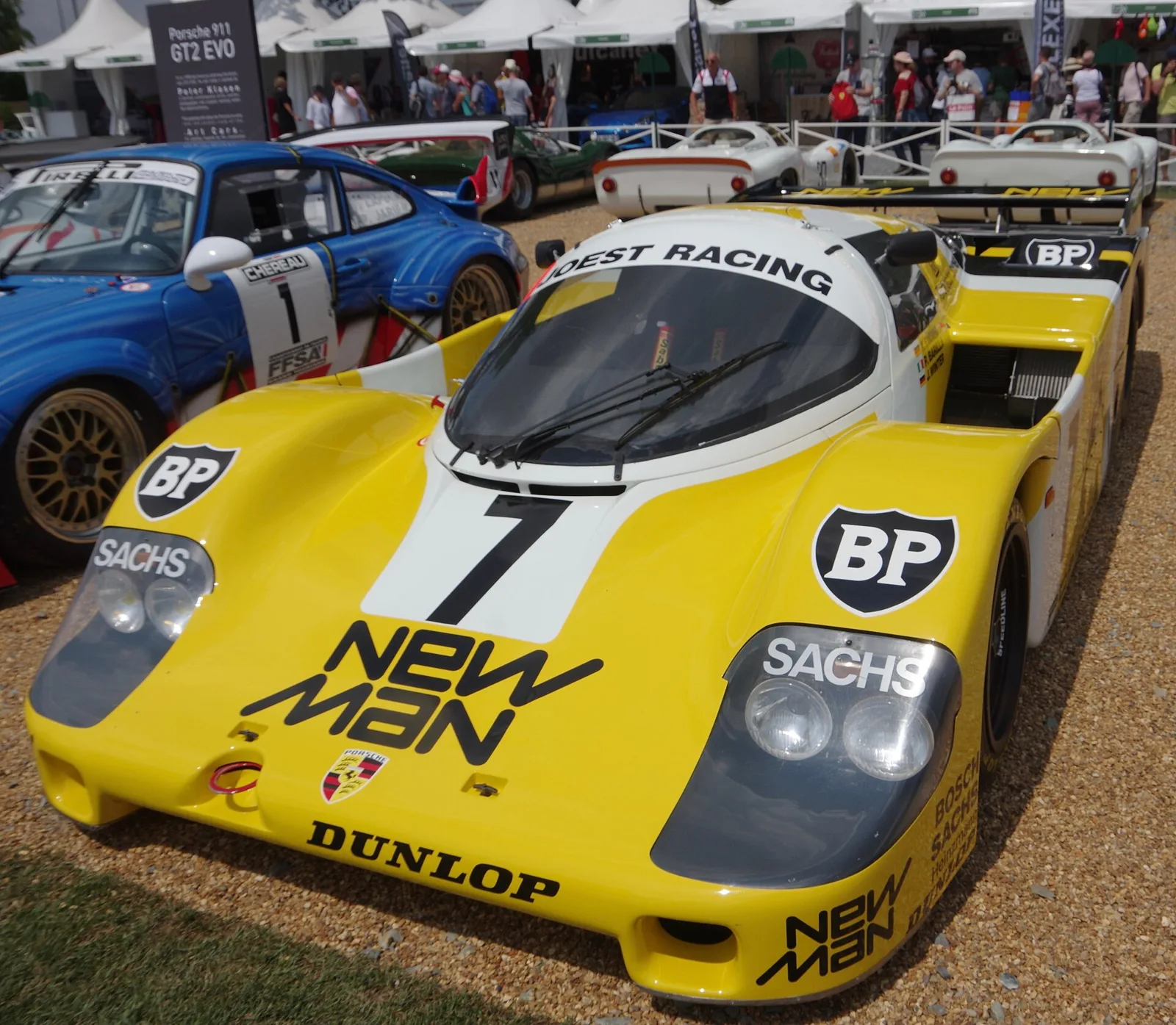
A low-profile 956 from a private team, run on a fuel budget that was cut 15 per cent, beat the works Porsches and the RLR car to take Klaus Ludwig's third Le Mans win.
Klaus Ludwig and Paolo Barilla won the 1985 Le Mans 24 Hours in a Joest Porsche 956 on a fuel allowance cut by 15 per cent, with the RLR Porsche second and the works Porsche third.
Klaus Ludwig and Paolo Barilla won the 1985 24 Hours of Le Mans in a Joest Porsche 956, a result built on fuel economy as much as on speed. The 53rd running took place on 15 and 16 June 1985, and the winning chassis was the same one that had won the year before, something that had happened only once before, for Ford in 1968-69.
Why did fuel decide the 1985 race?
The fuel allowance for the 24 hours was cut by 15% to 2210 litres, while the C2 class kept its reduced allowance of 1430 litres and its minimum weight of 700 kg. Every car had to use the standard 105-octane fuel supplied centrally, which removed the option of a specialist blend.
FISA had dropped its abrupt changes to the World Championship, which calmed the works teams at Porsche and Lancia. A clash between the Formula 1 calendar and the endurance dates still angered several teams, who threatened to boycott two races over it.
The race itself was now run by a cooperative of local civic bodies, backed by national government and the Sarthe department. Spectator numbers were growing, particularly among foreign fans, and the World Championship's Makes title had become a Teams championship.
A fuel allowance cut by 15 per cent, and a privateer 956 that still beat the works cars.
Who was in the 1985 entry list?
Porsche had 13 of the 29 Group C1 entries. The works team returned with the Group C version of the 962, fitted with langheck tails for top speed, and it brought a 956 as a test car.
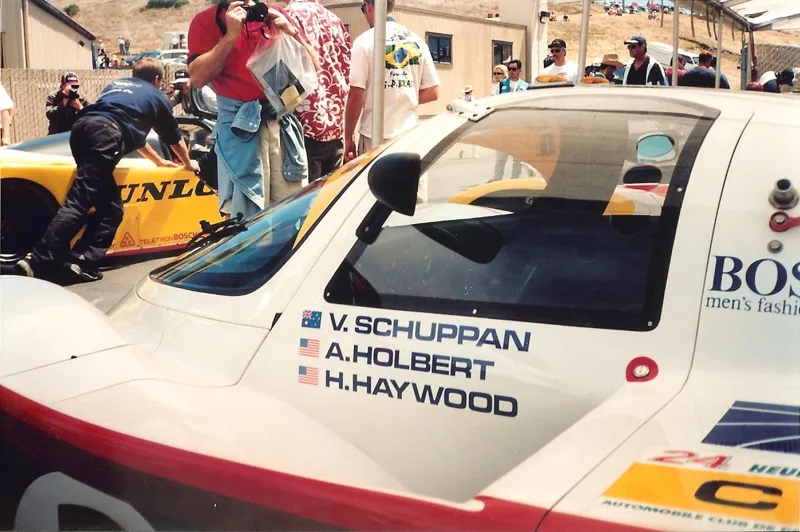
The Bell and Stuck crew was one works car, while John Watson joined the 1983 winners Vern Schuppan and Al Holbert in the other. Kremer, Brun and JFR were the first customers to buy the 962C, and each ran a second car to round out its squad.
Richard Lloyd's team had lost Jan Lammers to IndyCar, and James Weaver had been drafted in with barely a week's notice. Lancia's LC2/85 had been widened by 200mm, with Bob Wollek and Alessandro Nannini in the lead car.
Mercedes returned after 30 years as the engine supplier to Sauber. Its C8 produced 650 bhp and could reach 355 km/h (220 mph), but the car crashed in practice.
The Group 44 Jaguar XJR-5 produced 670 bhp and weighed around 1000 kg, and it kept its top speed close to 340 km/h (210 mph). The XJR-6 that had been prepared for the race was withdrawn.
Tullius shared the first Jaguar with the debutant Chip Robinson and Claude Ballot-Lena, who was making his record 20th Le Mans start. The second car had Brian Redman, Hurley Haywood and Jim Adams.
The Sauber team of Dieter Quester, Max Welti and John Nielsen was built around the new C8, designed by Leo Ress. The team estimated that the bigger engine would run at lower revs and use about 15% less fuel.
Toyota's Dome team ran its 2.1-litre turbo, which produced 560 bhp, with Lees and Elgh alongside Toshio Suzuki. The TOM'S car was driven by the all-Japanese crew of Satoru Nakajima, Kaoru Hoshino and Masanori Sekiya.
Steve O'Rourke's EMKA team had taken a year away before returning with a Tickford-prepared 5.3-litre V8, which used Lucas-Micos fuel injection to produce 585 bhp. Tiff Needell and Nick Faure were its co-drivers.
Mazdaspeed brought two new cars for the C2 class. The Japanese works car was driven by Yojiro Terada, Takashi Yorino and Yoshimi Katayama, and David Kennedy raced with the Belgian Martin brothers. Ecurie Ecosse ran a new car with David Leslie, Ray Mallock and Mike Wilds, and Gebhardt entered a car for Frank Jelinski and Nick Adams.
How did Joest prepare the car for fuel economy?
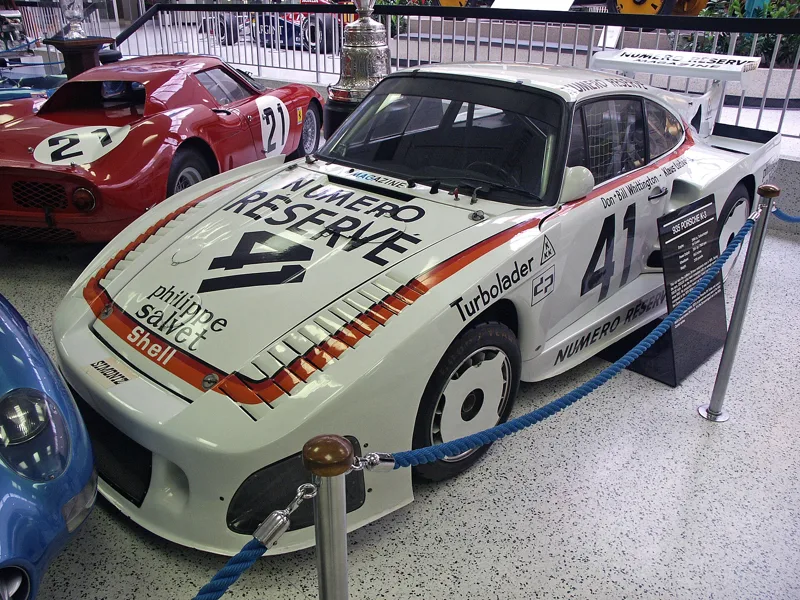
Joest's team had worked out that fuel economy would decide the race. The 956B carried a specially designed low-profile bodyshell with minimal wing surface, and it was fitted with an engine built at the team's own workshop.
The drivers could adjust the turbo boost from inside the car, which let them manage the fuel load through each stint. Team manager Domingos Piedade calculated the race tactics and fitted the gearboxes with the highest ratio settings.
The other Joest car was the older 956, which Mauricio de Narvaez drove with Paul Belmondo and the American Kenper Miller.
How did qualifying set the grid?
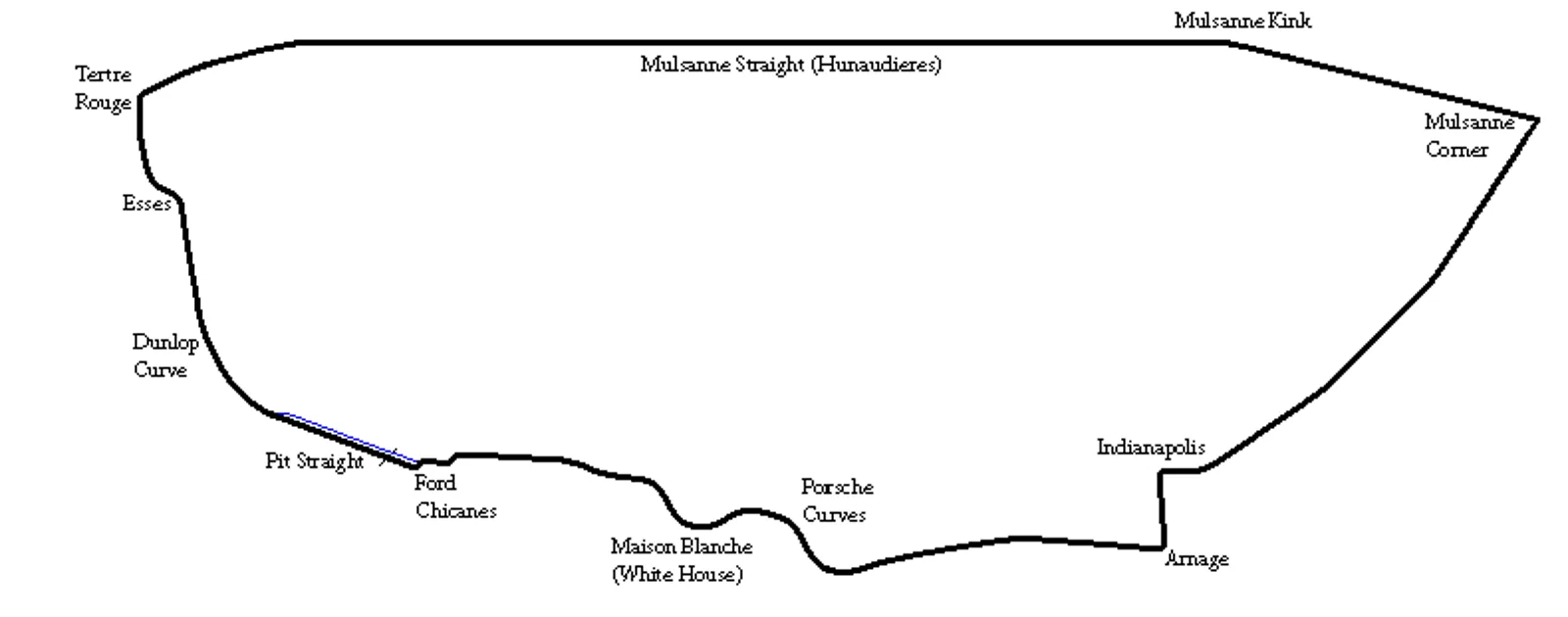
Hans-Joachim Stuck took pole with 3:14.8, set at twilight on the opening day of practice. It was a new lap record, and it beat Ickx's pole time from 1983 by almost two seconds. It was also the first lap at Le Mans to average more than 250 km/h (155 mph).
Nannini qualified third at 3:16.0, more than a second behind Stuck, and Ludwig was fourth at 3:20.0. Kremer's 956 was seventh at 3:24.1, and the best of the Jaguars was Tullius in 16th at 3:35.3.
The EMKA Aston Martin was the quickest non-turbo car, 13th at 3:33.1. Sauber qualified 14th, 12 seconds faster than its C7 had been two years earlier, and Dorchy's WM was 19th at 3:38.4.
Practice was marred by accidents, and Chip Robinson's Jaguar had a rude introduction to Le Mans when a tyre blew at speed and both engines burnt out pistons, probably because of the change in fuel. John Nielsen's Sauber got airborne after the Mulsanne kink and crashed, and on the Hunaudieres straight Dudley Wood's RLR Porsche collided with the Alba of Jean-Pierre Frey. Wood suffered a broken leg, and both cars were written off.
What happened at the start?
The race began at 3pm on a sunny Saturday afternoon, with only 49 starters after the practice accidents. One WM, with a flat battery, began the race a lap down.
From the second row Wollek quickly led the field, ahead of the works Porsches. The works Porsches were running to a prescribed lap time and skipped the traditional sprint to save fuel. Wollek settled back to race pace and dropped to fourth on lap four.
Ludwig and Palmer worked out that they could slipstream each other. They alternated the lead without really racing each other, which kept their fuel use down and put the pair in front of the field.
How did the first hours unfold?
After 25 laps all three works Porsches were outside the top ten, and the front of the field was held by the Joest and RLR cars. EMKA was fourth on lap 13 after an early stop, with Needell taking the car in for a strategic pit stop.
The C2 class was less fortunate. The two Albas failed early, the Gebhardt and both Baker Tigas were delayed by engine problems, and the Mazda lost nearly three hours to an oil pump failure. The Ecosse dominated the class at first, until its own oil pump broke in the third hour.
Mass pitted on lap 36 with a string of problems, including a Motronic box, a gearbox, an oil pipe and spark plugs, which together cost him several laps. The Cougar was nudged off the track by a Porsche and needed 40 minutes of repairs.
What went wrong for the works Porsches?
After four hours Barilla and Weaver had put a lap on the field, having covered 63 laps. The race was still tight, and the Brun trio were third and fifth at that point. Holbert was the leading works Porsche, in sixth, with the JFR car just ahead of the Bell and Stuck car. The second Lancia was ninth, and the EMKA was running well in tenth.
Ickx's gearbox overheated during the race, and the replacement took an hour and dropped the car to 30th. Ickx then set the fastest lap of the race in the sixth hour, and it was one of his best comeback drives.
Bell and Stuck's car needed two wheel-bearing changes, which cost the team any chance of a fourth win for Bell. The works cars had lost ground by the time the night arrived.
How did the night change the order?
At 9am Jean-Claude Andruet's WM blew a tyre at the Mulsanne kink and crashed heavily into the barrier, bringing out the pace cars for 30 minutes. Joest put the pay-driver Louis Krages in for a single 75-minute stint, and then left the rest of the driving to its professional team-mates.
Weaver's RLR Porsche pitted with an engine misfire, and the fault was traced to a faulty sensor. The car returned to the race seventh, two laps down, after the crew had replaced the Motronic unit.
An official accidentally turned off the valve to the central fuel supply, which affected several teams, including the RLR, Lancia and Brun cars. The race director, Michael Martin, instructed the timekeepers to give those cars credit for the distance they would have covered while waiting.
The Kreepy Krauly March had a nightmare run. Coppelli went off at the Porsche Curves, and the car then suffered several punctures, a pair of broken wishbones, a Motronic fault and a fuel leak.
At the 12-hour mark Ludwig and Barilla had covered 185 laps, a lap ahead of the works Porsche of Bell and Stuck on 181. The Brun car was on 182, and a cracked turbo on one Lancia gave it too much boost and too much fuel use.
Who won the 1985 Le Mans 24 Hours?
Klaus Ludwig and Paolo Barilla won in the Joest Porsche 956, with Louis Krages doing the single night-time stint. Krages raced under the name 'John Winter', as a pay-driver rather than a works regular. It was Ludwig's third overall Le Mans win, and the car covered 190 km (115 miles) more than the previous year's winner.
The RLR Porsche of Jonathon Palmer and James Weaver finished second. The works Porsche of Bell and Stuck came third, seven laps behind the winners, while Ickx finished 10th as the lowest-placed Porsche in his last Le Mans.
Results at a glance
| Position | Entry | Result |
|---|---|---|
| 1 | Joest Porsche 956, Ludwig and Barilla | Ludwig's third overall win; Index prize |
| 2 | RLR Porsche, Palmer and Weaver | Second place |
| 3 | Works Porsche, Bell and Stuck | Seven laps behind the winners |
| Sixth and seventh | Lancia LC2s | Both Lancias finished |
| Tenth | Works Porsche, Ickx | Lowest-placed Porsche |
| Eleventh | EMKA Aston Martin | First non-turbo car home |
Why does the 1985 race still matter?
The win was a rare repeat. The same chassis had won the previous year, which had only happened once before at Le Mans, for Ford in 1968-69. It shows how much a well-prepared privateer car could still do under fuel limits.
The race also had the second-fastest average race speed in Le Mans history, behind only the 1971 race, even though the fuel allowance had been cut. The winning car also took the Index prize for efficiency.
For Ickx the race was an anticlimax, as he finished 10th after a race of constant delays. For Joest the win came from its own engine work and race tactics.