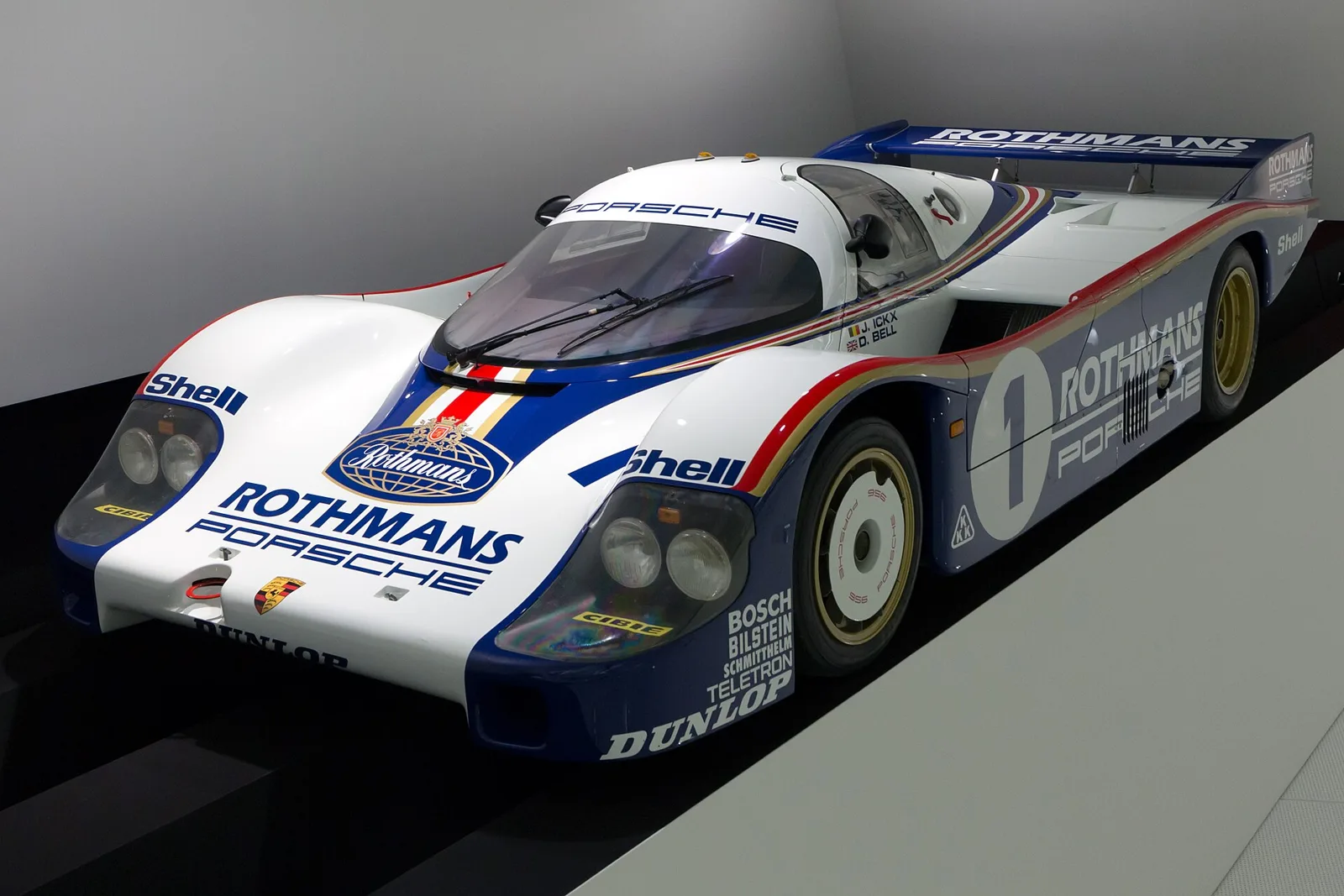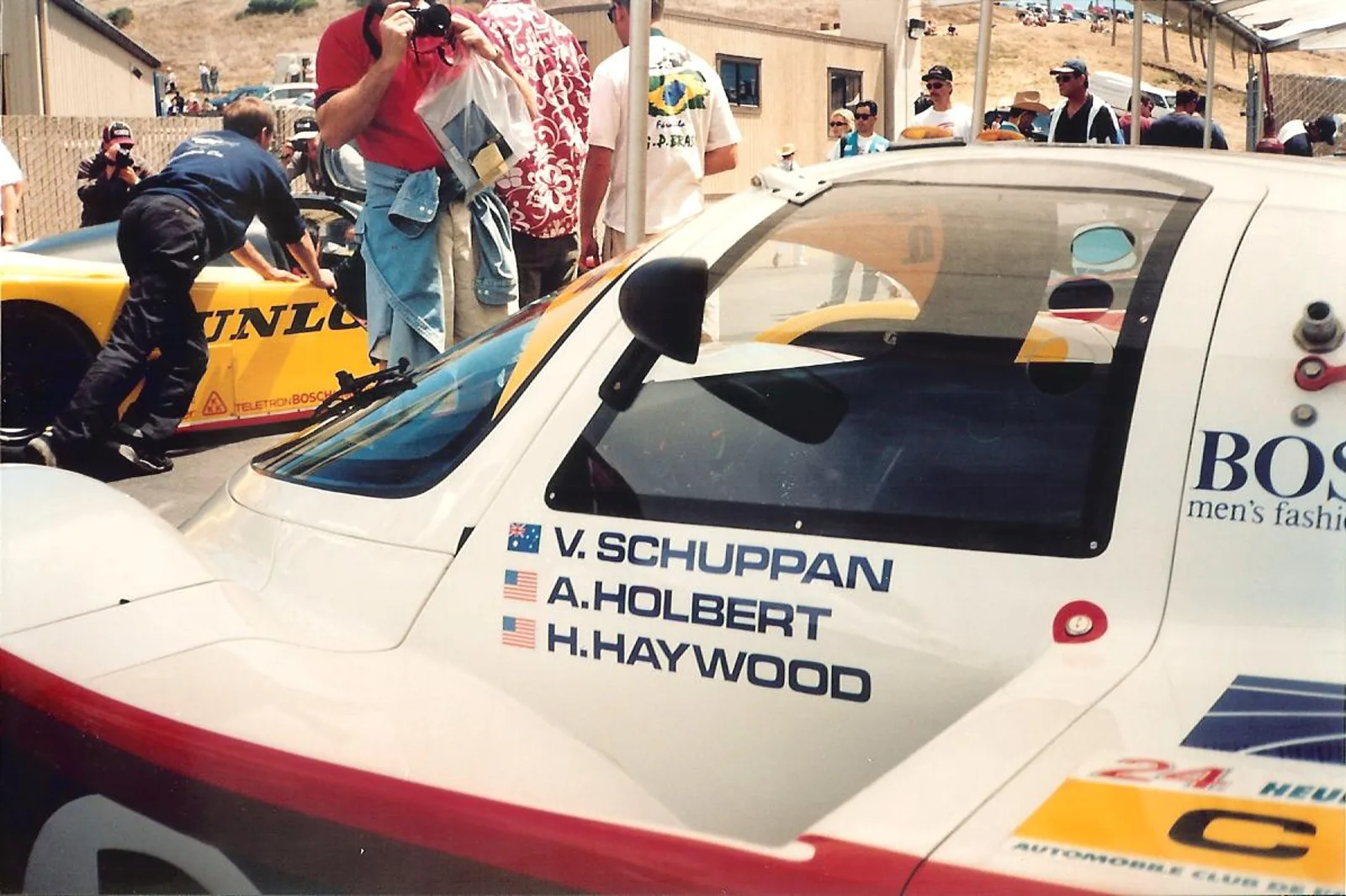
A third works Porsche 956 crossed the line first with its engine nearly seized, and a Mazda Junior car took its class in the 51st running of the race.
The third works Porsche 956 of Haywood, Holbert and Schuppan finished first at the 1983 Le Mans 24 Hours, just over a minute ahead of Ickx and Bell. Nine Porsches were in the top ten, and Porsche also took the Index Prize and the Group B class.
The third works Porsche 956, shared by Haywood, Holbert and Schuppan, took the 1983 24 Hours of Le Mans by just over a minute from the sister car of Jacky Ickx and Derek Bell. The 51st running took place on 18 and 19 June 1983, eight days before the 60th anniversary of the first race in 1923. Nine Porsches were in the top ten at the finish.
How did the Group C rules shape the 1983 race?
The 1983 race was only the second year of the Group C regulations, and no changes were made to them. Minimum weight was 800 kg, tanks were limited to 100 litres, and no more than 25 fuel stops were allowed, which capped each car at 2600 litres from the start.
The formula attracted real interest from manufacturers, but the costs were too high for smaller teams. The FIA therefore set up Group C Junior, with a minimum weight of 700 kg and 55-litre tanks, giving a maximum of 1430 litres.
IMSA still used its own sliding weight scale to balance engine capacity, which kept Daytona and Sebring, the two big American endurance races, outside the World Championship. The Le Mans rules, by contrast, were built around fuel rather than engine size.
The organisers also kept the practice system simple. Qualifying had two four-hour sessions, each with a one-hour break that let teams recover stranded cars or make significant repairs.
Eight days short of the 60th anniversary, Porsche's third car crossed the line first.
Which teams made up the 1983 entry?
The field was headed by factory teams from Porsche, Lancia and Mazda, with more than a dozen specialist builders filling out the list. In total there were 34 cars that could be classed as works entries, and Porsche alone had eleven Group C entries and eight Group B entries.
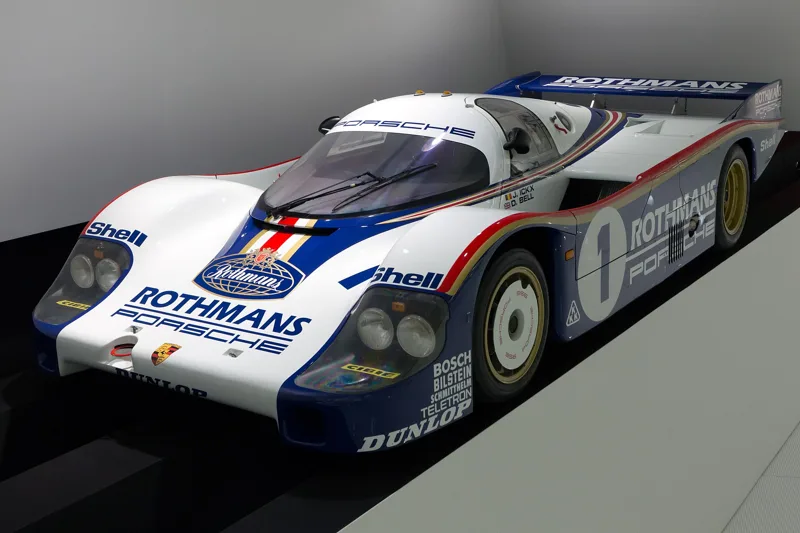
The Porsche works team ran three race cars and a test car. Ickx and Bell were the lead pairing, Mass was partnered with Stefan Bellof, and the third car had Hurley Haywood and Al Holbert with Vern Schuppan. The 956 was 20 kg lighter than the year before and had new Bosch Motronic engine management.
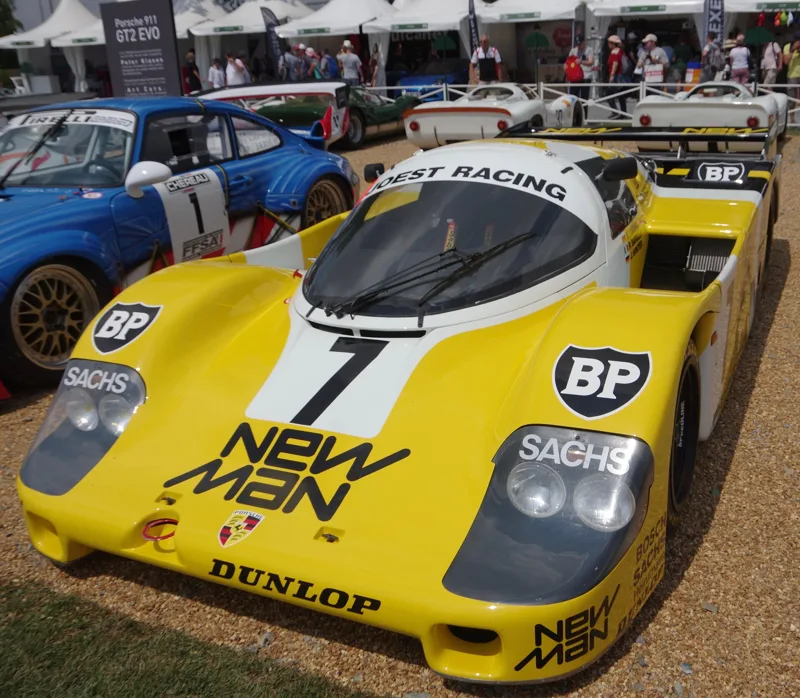
Porsche released twelve chassis to customers, each costing 160,000 pounds. Eight of them were at Le Mans. Joest, which had bought two, had already scored a surprise victory over the works team at Monza.
Kremer ran a 956 for father and son Mario and Michael Andretti with Philippe Alliot, and its C-K5 for Derek Warwick, Frank Jelinski and Patrick Gaillard. Richard Lloyd's team ran Jonathon Palmer and Jan Lammers, and Obermeier Racing ran Jurgen Lassig with Axel Plankenhorn and Desire Wilson.
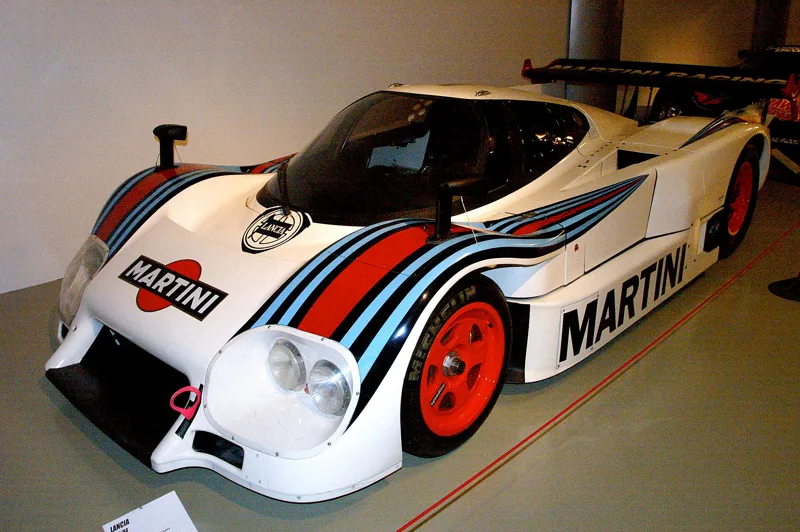
Lancia's three LC2s were built around a 2.6-litre Ferrari V8 with twin KKK turbos. Each produced 650 bhp at 1.2-bar boost, and the team drivers were Michele Alboreto with Teo Fabi, Piercarlo Ghinzani with Hans Heyer, and Alessandro Nannini with Paolo Barilla and Jean-Claude Andruet. The team had switched from Pirelli tyres to Dunlops after early problems.
Who else was on the grid?
Ford's C100 programme was cancelled before the race, but Martin Birrane bought one of the C100 cars for his Peer Racing team. The Rondeau M482 was backed by a consortium of Ford France dealers, with Henri Pescarolo and Thierry Boutsen, Jean Rondeau himself with Alain and Michel Ferte, and Jean-Pierre Jaussaud with Philippe Streiff.
Jean Rondeau also brought in Vic Elford, who was 48 and had been out of racing for nine years. Christian Bussi and Pierre Yver ran older Rondeau cars as well.
Sivama bought three of the Group 6 Lancia LC1 chassis and rebuilt them to Group C specification with new bodies, enlarging the turbo engine to 1522cc. That was not enough for speed, and the cars could only reach 280 km/h (175 mph).
Nick Mason bought an older Dome and had Colin Bennett Racing upgrade it with bigger brakes, a longer tail and improved cooling. Chris Craft and Eliseo Salazar were his co-drivers.
WM skipped the championship and concentrated on its home race with the P83. The 3.1-litre turbo V6 produced 650 bhp, and the Yves Courage team ran a Cougar C01B with a Cosworth DFL, with Alain de Cadenet and Michel Dubois.
The Nimrod at Le Mans was Viscount Downe's car, with a more compact V8 developed by Tickford. It reached 340 km/h (210 mph) but weighed 990 kg, still the heaviest of the Group C cars. Steve O'Rourke's EMKA was built by Len Bailey around a 5.3-litre Aston Martin V8 that produced 570 bhp.
Peter Sauber's small company had to design a new car after its earlier collaboration ended. The C7 used a BMW straight-six engine, which had proven reliable but was underpowered, and Max Welti crashed it while testing at Monza. It reached Le Mans repaired but under-prepared, with Garcia, Montoya and Naon as the pay-drivers.
Walter Brun wrote off the BMW-powered Sehcar in a big accident at the Nurburgring round that broke his arm. The Sehcar-Porsche was still being finished during qualifying week, and Brun raced it with Hans-Joachim Stuck and Harold Grohs, while the remaining Sehcar-Cosworth was driven by three Canadians.
Mazda was the only other factory team in the field, and it ran two Junior cars, the 717C with its 1308cc twin-rotary engine. The 13B produced 320 bhp and could reach 305 km/h (190 mph), and the team included James Weaver and Jeff Allam with Japanese drivers Yojiro Terada, Yoshimi Katayama and Takashi Yorino.
How did qualifying set the grid?
Ickx took pole with a 3:16.6 lap in the first session, and Mass was second fastest after the first day. Alboreto's Lancia took second on the grid with a 3:20.8, and Ludwig's Joest Porsche was fifth on the grid.
The fastest speed of practice belonged to Volkert Merl, who recorded 370 km/h (230 mph) on the Hunaudieres straight. Porsche's advantage came from qualifying engines with larger turbos that could be wound up to much higher boost than the race engines.
The normally aspirated cars could not match the turbos. The Nimrod was the highest-placed non-turbo car, qualifying 15th at 3:35.8, and that was 10 seconds faster than its time from the previous year. Pescarolo was 17th at 3:36.1, which was the best time for a Rondeau.
In the Junior class the Alba was fastest, with the best Mazda in 41st at 4:05.9. The Group B BMW was three seconds faster than the Porsches at 4:10.4.
One early drama was Dorchy's WM, which needed moving off the grid for an oil-leak repair. The repair cost him almost half an hour.
How did the race start?
Mass took the lead on the first lap, passing Ickx for the front. On the second lap the rookie Lammers made an opportunistic lunge for second at Mulsanne, and the two cars collided. Both pitted for new noses, and the stop cost them about two minutes and nearly a lap.
That mistake moved Schuppan's Porsche up to restore the works 1-2, with Alboreto's Lancia chasing hard. Ghinzani, Ludwig, Palmer and Nannini were in the top ten. The first hour was messy, with Jaussaud's Rondeau retiring from an oil leak and Richard Cleare's Kremer losing a turbo.
Alboreto's Lancia was in the pits with gearbox trouble, and the gearbox finally seized at Arnage at 5.30pm. Nick Mason's Dome stopped on the Mulsanne straight at 6pm, and Eliseo Salazar lost 50 minutes after a gearbox was damaged.
By 8pm Bellof and Holbert had pulled clear of the chasing pack. The Marlboro Porsche had lost five laps with faulty plugs, and Bell's car ran out of fuel as it coasted down the pit lane.
What broke up the leading Porsches?
The Mass and Bellof car stopped at midnight with a sick engine, and it ran on five cylinders until a late-morning pit stop, where the engine gave up. The JFR Porsche retired with a broken fuel-metering system, and the team switched its driving to the team's other car.
Ghinzani and Heyer's Lancia lost fuel pressure just before 2am, and the car was out soon afterwards. By 3am, Ickx and Bell were back on the lead lap, after a long fight to recover from their early problems.
Among the smaller cars, a BMW M1 held the Group B lead for the first six hours, and the Mazda Junior car swapped the lead with the Alba through the evening. The Cooke Lola was the leading non-German car in 11th at one point, but its run did not last.
How did the race turn into a Porsche fight at dawn?
At 6.30am Bell took the lead, but he held it for only fifteen minutes before a Motronic wire came adrift at Mulsanne. The repair cost 12 minutes and five laps, and the Andretti Kremer moved into second.
Ickx set a new lap record of 3:29.1 in the process, and the pair later retook second place, three laps behind the leading team-mates.
Earlier, Ludwig's Joest Porsche had spun at Tertre Rouge in the afternoon and lost ten laps while the damage was repaired. The team had no spare long-tail bodywork, so the undertray was altered to suit a standard tail.
Dawn came with no Lancias left in the race, and the Porsche challenge was in the hands of the works cars.
Keegan's Fitzpatrick Porsche completed a 17th lap on 100 litres of fuel, an economy of 36 L/100 km. It was a reminder of how much the fuel rules shaped every decision in the car.
Race at a glance
| Position | Entry | Result |
|---|---|---|
| 1 | Porsche 956, Haywood, Holbert and Schuppan | Won by just over a minute, with Holbert's engine seized as he passed the pits |
| 2 | Porsche 956, Ickx and Bell | Second, on reserve fuel |
| 3 | Kremer Porsche | Third, six laps down |
| Top ten | Porsche | Nine of the ten cars |
| Junior class | Mazda 717C | Trouble-free run to win the Group C Junior class |
Who won the 1983 Le Mans 24 Hours?
Haywood, Holbert and Schuppan crossed the line first in the third works Porsche. Holbert took the car over for the final stint and crossed the line with the engine nearly seized, after it had run out of water and overheated as he passed the pits.
Bell finished just over a minute back, on reserve fuel. Neither car was likely to have done another lap, and the Kremer Porsche finished third, six laps down.
What did the 1983 race mean for Porsche?
The race confirmed Porsche's dominance under the Group C rules. Nine Porsches were in the top ten, the Index Prize went to the works team, and Porsche also took the Group B class.
Lancia was quick in practice but too unreliable in the race. The Ghinzani and Heyer car lost fuel pressure before 2am, and the last team car had pitted earlier with its turbos disintegrating. Lancia's challenge had faded by morning, and the Mazda Junior car provided the other trouble-free story of the race. The result kept the Porsche name at the centre of the event, and the Mazda Junior win added a second story to the year.