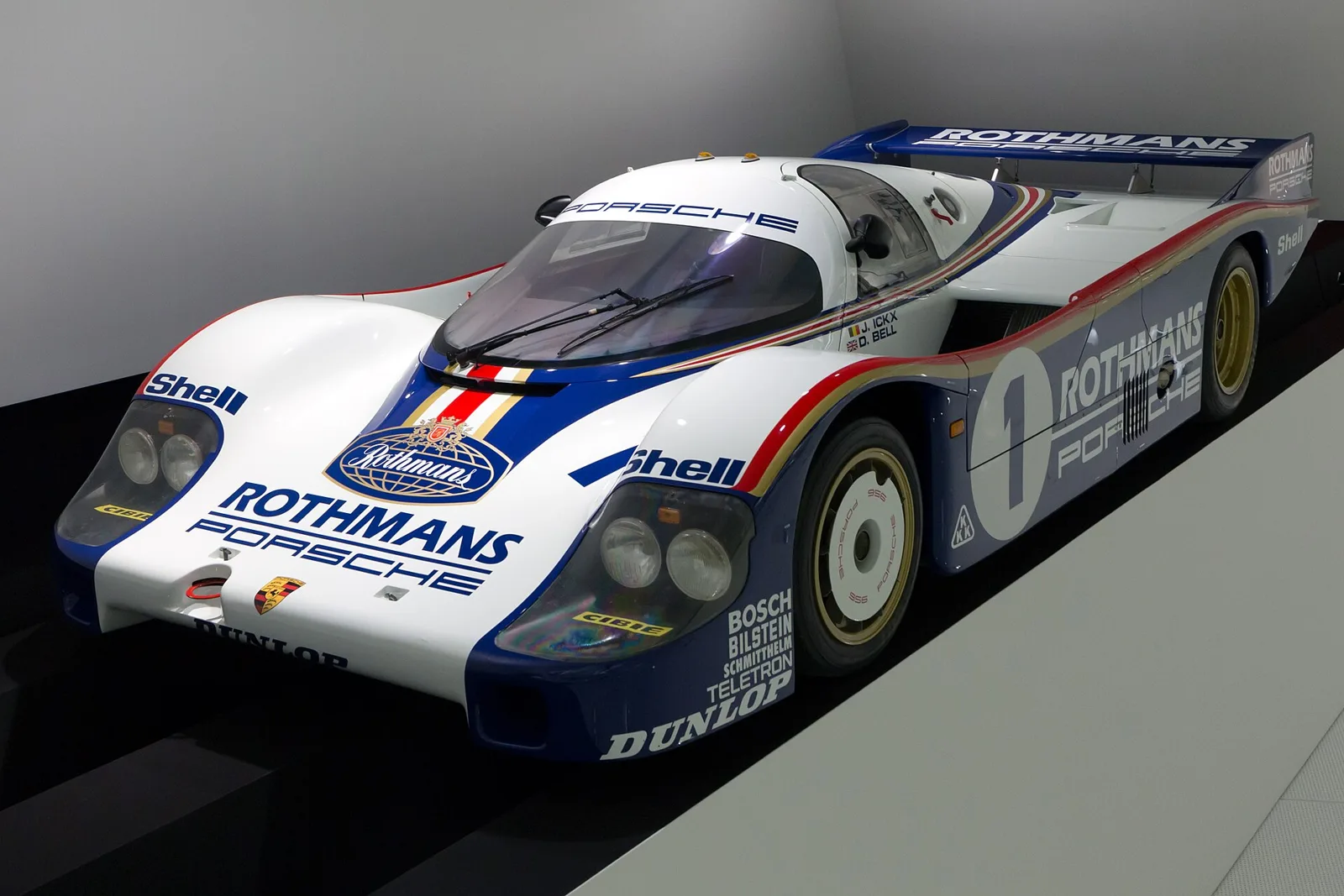
Porsche's new 956 swept the top five places in the first race run under Group C, a formula built around a fuel allowance rather than engine size.
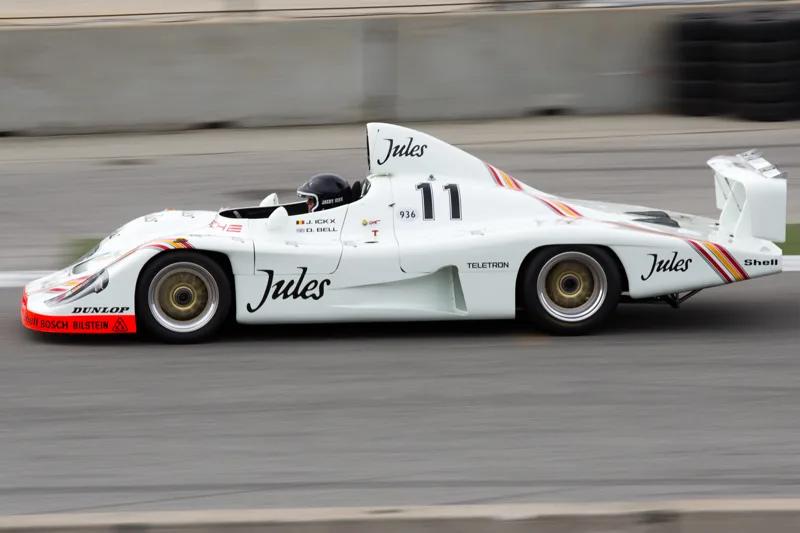
Ickx and Derek Bell won the 1982 Le Mans 24 Hours in a Porsche 956 by three laps. It was the first race under Group C, and Porsche took the top five places, with only 18 cars classified from 55 starters.
Jacky Ickx and Derek Bell won the 1982 24 Hours of Le Mans by three laps, and Porsche took the top five places in the first race run under Group C. The 50th running took place on 19 and 20 June 1982 at the Circuit de la Sarthe, in front of a crowd of 250,000. The new formula limited cars by fuel and weight rather than by engine size.
What were the Group C rules for 1982?
Group C replaced the older Group 6 and GTP rules with an open engine formula, controlled instead by minimum weight and fuel. Cars had to weigh at least 800 kg, and each car could use no more than 2600 litres from the start, over 25 fuel stops with 100-litre tanks.
The idea had been trialled at Le Mans in 1975. Paul Frere, a 1960 Le Mans winner, had proposed the fuel-limited approach, and the press at first derided it as the fuel-economy race. The formula tried to blunt the advantage of the turbo engines, despite a modifier applied to engine capacity.
Dimensions were set as well. Cars had to be at least 100 cm high, no more than 200 cm wide and 480 cm long, and a 100x80 cm flat floor was required between the axles to limit ground-effect gains.
Fuel was the real test. The previous year's winning distance of 4825 km (just under 3000 miles) would have needed a fuel economy of 54 litres per 100 km on the 2600 litres allowed. IMSA kept its own sliding weight scale, which kept Daytona and Sebring out of the World Championship.
The new class also made the Group 6 and Le Mans GTP classes redundant, while Group B was due to take over from the Group 4 and Group 5 GT classes.
A fuel-limited formula, a 50th anniversary and a Porsche sweep of the top five places.
Why was the 1982 entry list so strong?
The Le Mans list had 33 Group C entries from factory teams at Porsche, Ford, Lancia and Mazda, plus works cars from Lola, March and Rondeau. That made 30 works entries, the most seen at the event for many years, and the ACO accepted IMSA GTX and GTO cars to complete the field.
Ford's C100 used a 3.96-litre Cosworth DFL producing 540 bhp, with Zakspeed updates that dropped 40 kg from the car. Two were entered, with Manfred Winkelhock and Klaus Niedzwiedz in one De Cadenet chassis, and Marc Surer and Klaus Ludwig in a new Zakspeed chassis.
Rondeau came with a three-car team of M382s fitted with the 3.3-litre DFL, and the team was managed by Pierre Dieudonne. Francois Migault, Gordon Spice and Xavier Lapeyre drove the chassis that had won the race, while Henri Pescarolo and Jean-Pierre Jaussaud shared another car.
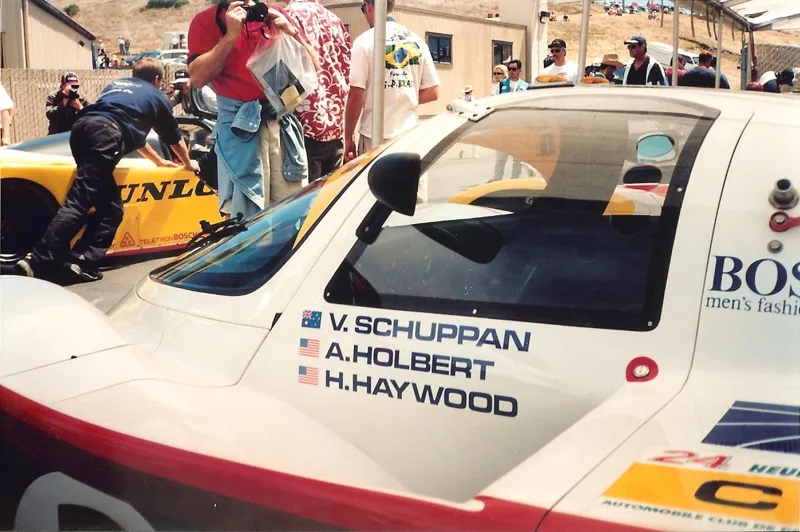
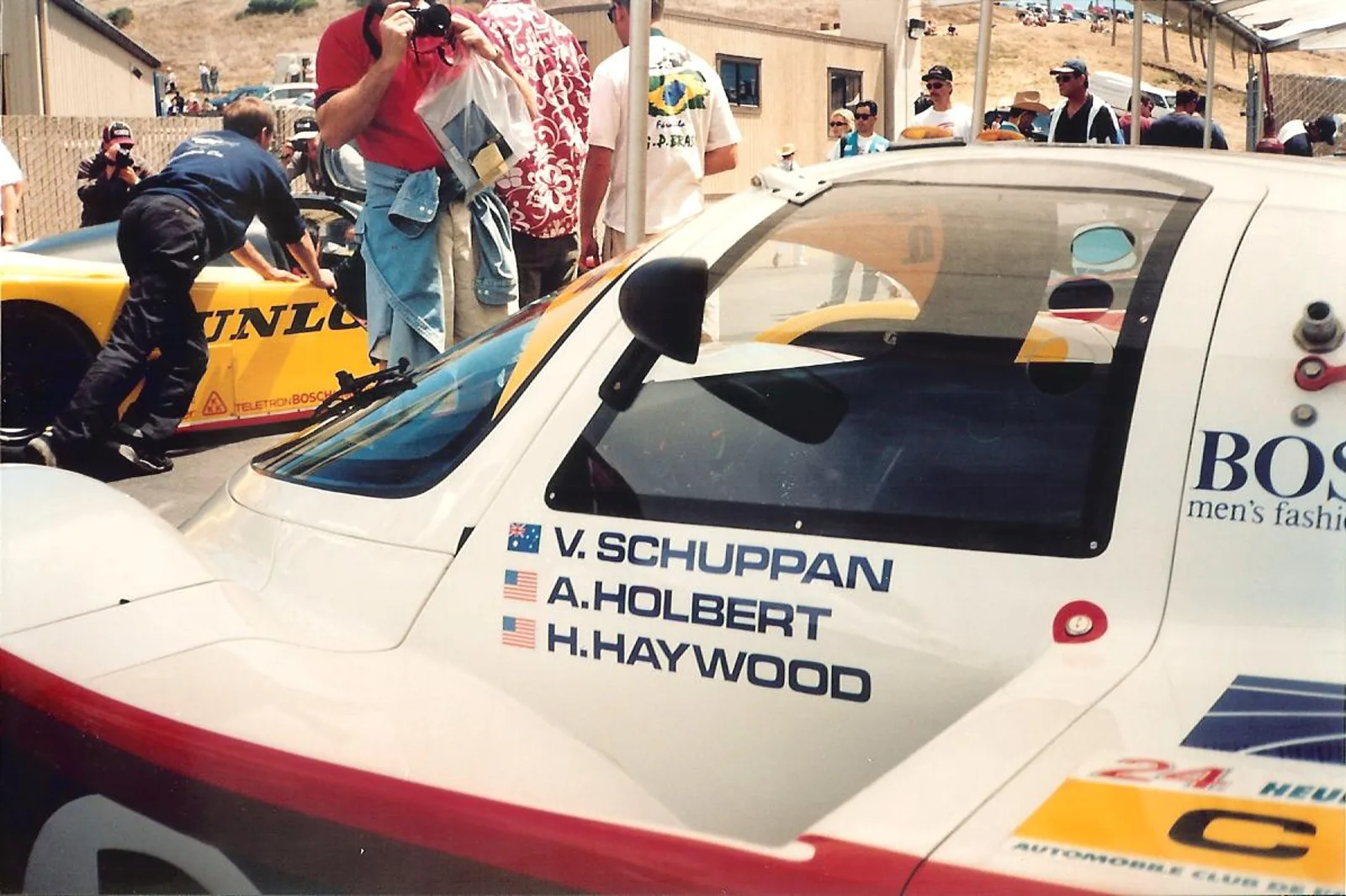
Porsche's own works team entered three 956s: Ickx and Bell, Jochen Mass with Vern Schuppan, and a third car for Jurgen Barth, Hurley Haywood and Al Holbert. Porsche released twelve chassis for customers, and eight of them came to Le Mans.
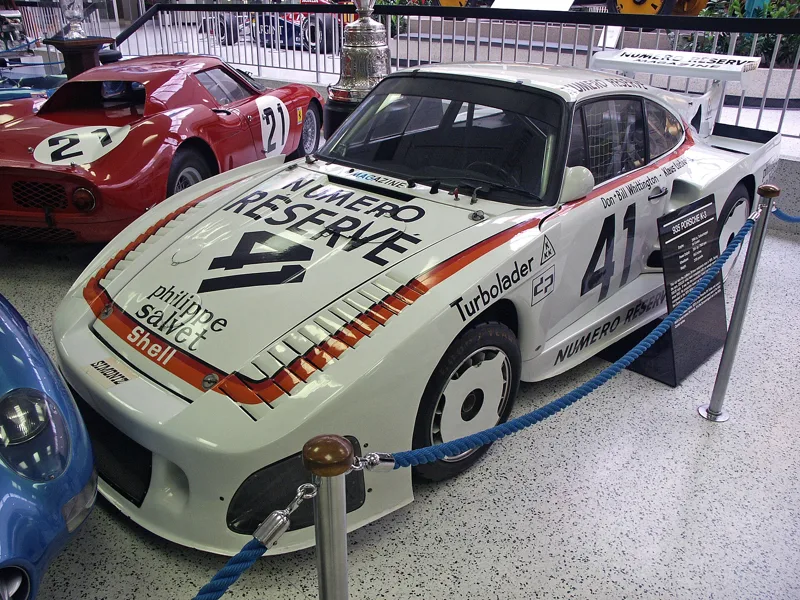
Joest and Kremer built their own Porsche-based cars. Reinhold Joest fitted a 2.5-litre turbo engine to his 936CJ, and the Kremer brothers' C-K5 used a 2.3-litre twin-turbo flat-six, with Danny Ongais and Bill Whittington driving for the Interscope team.
Lola's T610 used a Cosworth DFL, and its factory entry was crewed by Guy Edwards, Rupert Keegan and Nick Faure. The Mirage M12 used a 3.9-litre Cosworth that could reach 340 km/h (210 mph), and Mario Andretti shared it with his 19-year-old son Michael.
March's Group C car was reworked by Adrian Newey and fitted with a 5.8-litre Chevrolet small-block V8 producing 550 bhp. Bobby Rahal and Jim Trueman had finished second at Sebring with a car of this type, and a fourth chassis was entered by the works team for Eje Elgh, Patrick Neve and Jeff Wood.
How did qualifying set the grid?
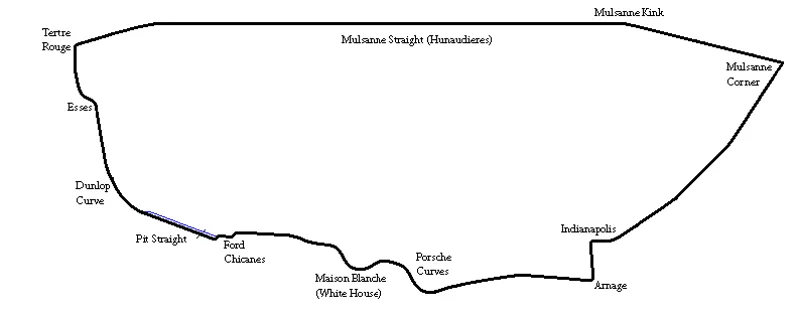
Ickx set the pace in the first session with a 3:28.4 lap, and his car also posted the highest speed down the Hunaudieres straight, at 355 km/h (221 mph). Mass finished almost a second behind, and Wollek was another second back in third.
The Lancias came in quickly. Riccardo Patrese reached the circuit late, with one hour left in the second session after a flight delay from Venice. He needed just two laps to qualify inside the 125% limit before rain halted the session.
Klaus Ludwig was the fastest Ford, qualifying sixth at 3:32.5, and Stuck's Sauber was seventh on the grid. The Andretti Mirage started ninth, and the best Lola was tenth at 3:38.0, almost ten seconds behind Ickx.
Some cars struggled badly. Rondeau's best was 3:40.7 for fifteenth on the grid, the Nimrod started 25th at 3:48.2 and the Dome was 19th. Richard Lloyd's Porsche 924 failed to qualify after broken pistons in two engines.
Harald Grohs had a frightening moment in the Vegla 935. A tyre blew just after the Mulsanne kink at 300 km/h, and the car skated off the road, hit barriers on both sides and rolled before it caught fire. Grohs was shaken but uninjured.
Engine changes were common. The Porsche team was down to its seventh spare engine, and the Rondeau of Pescarolo and Jaussaud needed a five-hour engine change that finished ten minutes before the deadline.
Which classes filled the rest of the grid?
Group 5 was almost a Porsche class, with four 935s on the entry list. Dieter Schornstein's Vegla team ran a 935J with the support of Reinhold Joest's workshop, and Kremer-kit cars were entered by Edgar Doren and Charles Ivey Engineering. Claude Haldi ran a four-year-old 934/5.
The only BMW in Group 5 came from Hugues de Chaunac's ORECA team. Scuderia Sivama bought a pair of Lancia Montecarlos from the factory, and French regulars Thierry Perrier and Jean-Marie Lemerle shared the driving with the Vesuvio team.
In the IMSA GTX class Joest's workshop built two replicas of the 935/78, known as Moby Dick. One went to Gianpiero Moretti's Momo team, and the other to John Fitzpatrick with David Hobbs. Bob Akin's team ran its own 935 variant with an alloy monocoque, rated at 630 bhp in 2670cc form and at 1150 kg the heaviest car in the race.
Four Ferraris lined up against the Porsches. Two NART cars were led by Alain Cudini and Preston Henn, Ron Spangler's Prancing Horse Farm team ran a car for Pierre Dieudonne, and Charles Pozzi entered the fourth.
Mazdaspeed was still developing its Group C project, so it worked with Mooncraft on the RX-7. The RX-7 254i produced 320 bhp and reached 275 km/h (170 mph), and Tom Walkinshaw Racing prepared the European cars. Steve O'Rourke's EMKA team switched its BMW from Group 5 to GTX, and drummer Nick Mason joined him as a co-driver.
What about the Group 4, GTO and Group B entries?
The Brumos team ran two Porsche 924 Turbos with 2008cc engines, arranged through a deal with the BFGoodrich tyre company, while Richard Lloyd's 924 with a 1984cc engine was shared with Andy Rouse.
Billy Hagan's Stratagraph team returned with two Chevrolet Camaros. Dick Brooks and Hershel McGriff drove the older car with a larger V8, while Hagan's own car ran a V8 detuned to 570 bhp.
Group B and the GT class each had a single Porsche entry. Alain Gadal ran a 3.3-litre turbo 930, and Richard Cleare ran a 3-litre Porsche 934 in the GT class.
How did the race start and what happened in the first hours?
From the green flag, Ickx and Mass pushed to the head of the field. Mass led first, pursued by the WM of Pignard, and Ickx dropped back to let the sprinters go before picking them off and taking the lead on lap nine.
The race was not kind to the works Lancias. Both cars had faulty fuel pumps in the first laps and took about an hour each to return to the pits after running repairs on the track. Richard Lloyd, the first reserve, had been given fifteen minutes' notice to take the grid after the Andretti Mirage was disqualified over the position of its gearbox oil cooler, which sat 10 cm behind the gearbox.
Pescarolo came in on lap seven and spent 40 minutes tracking down an electrical fault. The first car out was the Grid-Plaza, its piston failing in the opening half-hour. The Cougar broke its suspension and lost an hour in the pits.
What caused the early fuel problems?
The fuel limit caught teams out early. Bob Akin's high-powered Porsche 935 was the first victim, and Ralph Kent-Cooke's Lola ran dry from overconsumption after a storming run through the field from a poor start.
Jean Rondeau recorded the quickest lap of the race in the early evening, matching the Porsches' pace while pressing their turbo engines on fuel. Migault was credited with the lead at the end of the first hour, although Keegan's Ultramar Lola had been running a strong sixth.
What happened at 7:35pm on the Mulsanne Straight?
At 7:35pm Tiff Needell's works Nimrod suffered a slow puncture while running ninth at top speed. The car fishtailed, then spun and crashed backwards into the barriers at Mulsanne corner at 320 km/h (200 mph). Needell was not injured.
The pit officials took a course car sent to the accident for a pace car and held cars in the pits. Muller's Sauber, Stommelen's Lancia, Hobbs's 935 and the Cougar each lost two laps as they waited to be released.
Who led the race at the four-hour mark?
After four hours Winkelhock led in a Ford, with the Holbert, Haywood and Barth Porsche second on 61 laps. Bell was another lap back, followed by Spice in the Rondeau, Surer in the other Ford and the WM of Raulet.
Soon after 8pm the Ford pitted for fuel, handing the lead to the Porsches, with the Rondeau in hot pursuit. The race then went into the night with the Porsches out in front.
What went wrong in the night?
The severe vibration of the long-stroke Cosworth DFL engine caused a string of problems. Schlesser's clutch needed repair, and the Sauber then refused to restart. Its team-mate was also out before midnight after breaking a third starter motor.
The Ultramar Lola dropped back with a shaken starter motor and retired after 9pm with head-gasket failure. Winkelhock lost his clutch and then his engine, and within ten minutes Surer had also stopped on the track with his electrics in pieces.
Race at a glance
| Item | Detail |
|---|---|
| Date | 19 and 20 June 1982 |
| Edition | 50th Grand Prix of Endurance |
| Starters and finishers | 55 starters, eighteen classified |
| Pole | Jacky Ickx, 3:28.4 |
| Winning margin | Three laps over Mass and Schuppan |
| Crowd | 250,000 |
Who won the 1982 Le Mans 24 Hours?
Jacky Ickx and Derek Bell won in a Porsche 956, moving into the lead soon after midnight and holding it to the finish. They finished three laps ahead of Jochen Mass and Vern Schuppan, and it was Ickx's sixth outright Le Mans victory.
Porsche's sweep was the headline. The works team took a 1-2-3, and the top five places all went to Porsche. Joest's Porsche had been third until its engine failed ninety minutes from the end, leaving Wollek stranded on the track.
Why does 1982 still matter for Le Mans?
The race opened the Group C era, and the first race under the new fuel-limited formula produced a Porsche result that the rest of the field could not match.
The attrition was severe. Only eighteen cars were classified from the 55 starters, and even the strongest teams suffered serious failures during the race.
The 50th anniversary gave the event extra weight. The honorary starter was Luigi Chinetti, three-time winner and founder of the North American Racing Team, and the parade of classic cars included the Chenard-Walcker that had won the inaugural race in 1923.