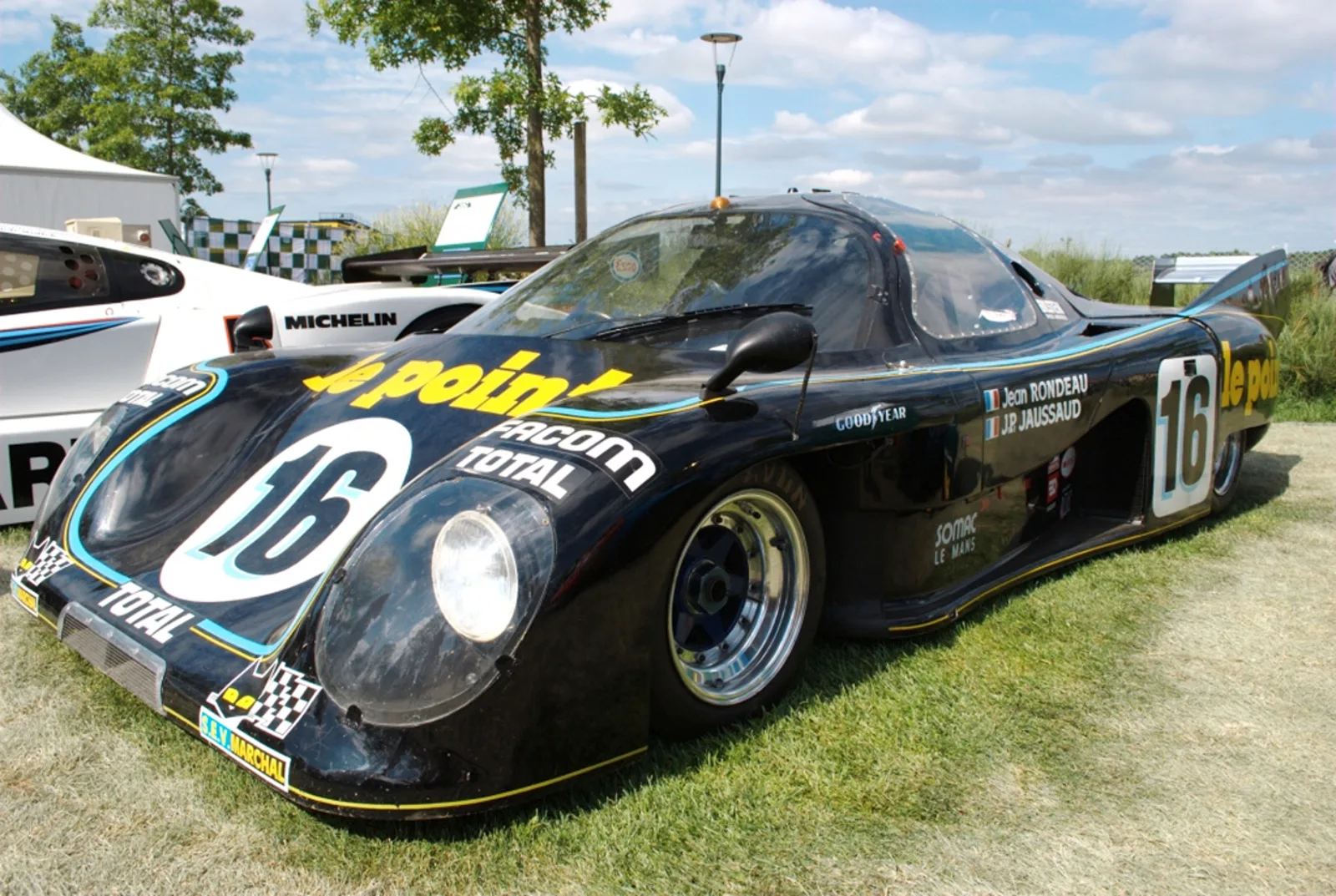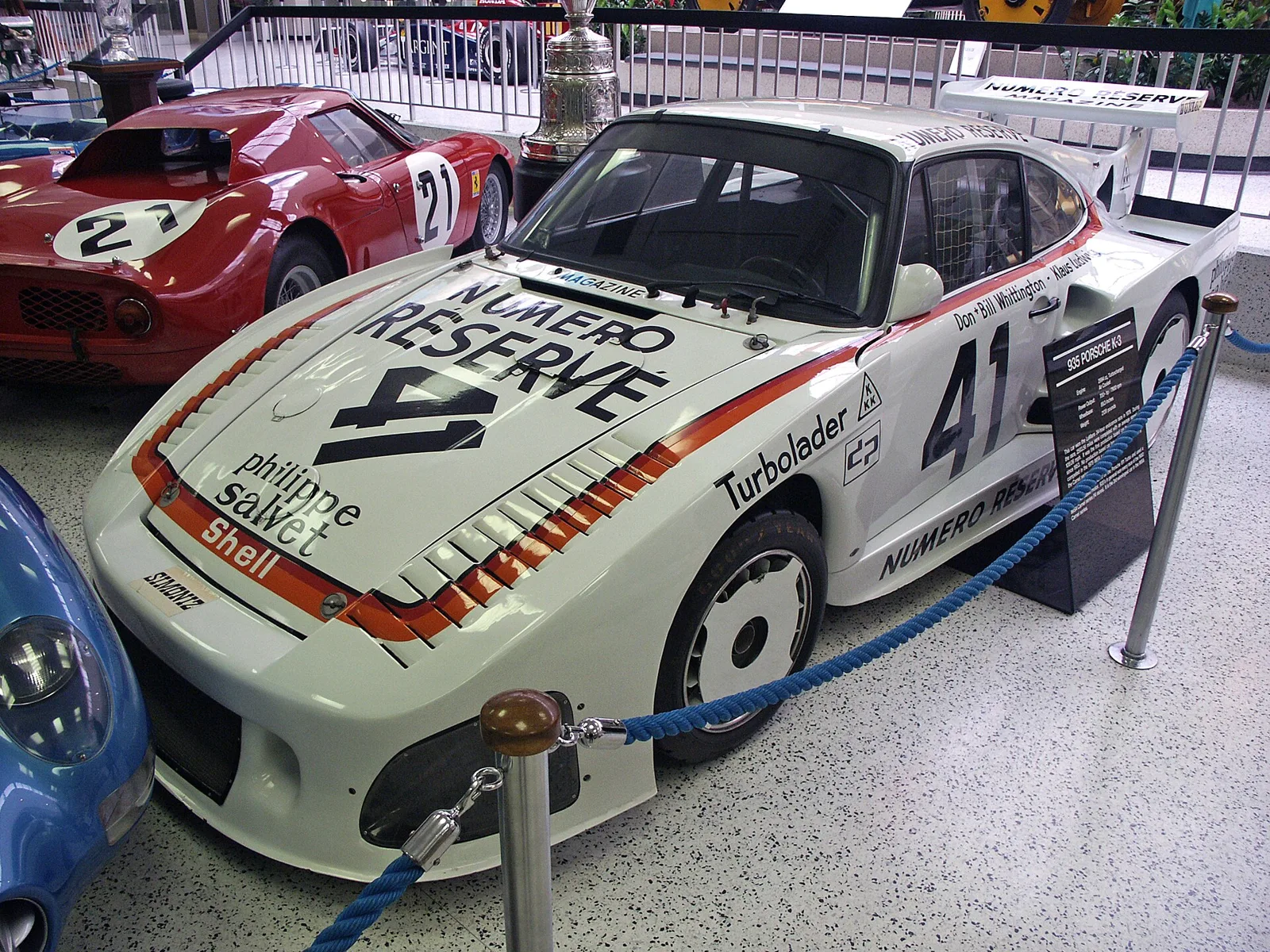
A wet, slow 1979 race gave Klaus Ludwig and the Whittington brothers a win for a privateer Porsche, after the works 936s and Mirages fell away.
The 1979 race was held on 9 and 10 June in heavy rain and won by a Kremer 935-K3 driven by Klaus Ludwig and the Whittington brothers. Porsche cars filled the top four places, and the winning Kremer was the first rear-engined car to take the race.
A privateer Kremer Porsche 935-K3 won the 1979 race, which the rain turned into the slowest edition since 1958. Klaus Ludwig and the Whittington brothers took the flag after the works Porsche 936s and the Mirages had fallen away, and their win was the first at Le Mans by a rear-engined car.
What had changed in the rules for 1979?
Regulations were overhauled in April 1978, when FISA replaced the CSI. World Championship sports car racing was revised so that Group 5 and Group 6 cars competed in two classes, over and under 2 litres. The Automobile Club de l'Ouest stayed independent, although FISA president Jean-Marie Balestre wanted Le Mans back in the championship.
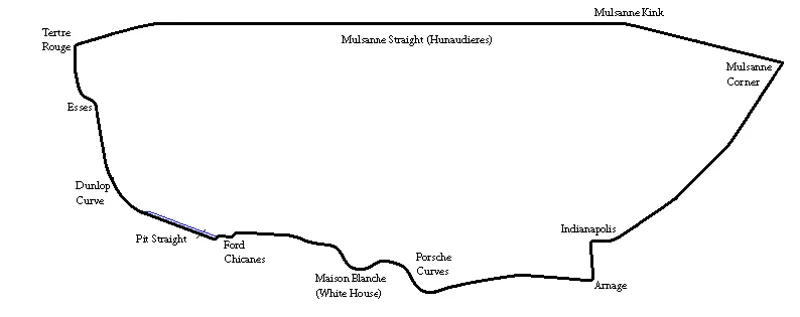
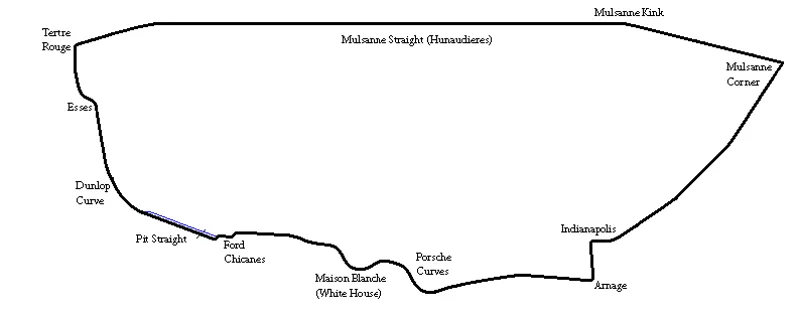
Track changes were the most visible. The second Dunlop Bridge at Tertre Rouge had to be demolished for the city's ring road, so the right-hand corner leading onto the Hunaudieres straight became a faster double-apex bend. The lap was cut by 14 metres (46 feet), leaving 13.63 km in total, and the start moved two hours forward to 2pm on Saturday.
Fuel counting changed too. The new Index of Fuel Consumption took the total fuel used at the final pit stop and set it against the distance covered, in litres per 100 kilometres. It ignored whatever fuel was left in the tanks after the race, so the figure was approximate by design.
A privateer Porsche won Le Mans in the rain after the favourites had broken, and it was the first win by a rear-engined car.
How big was the entry for 1979?
From 87 applications, 60 cars were accepted to qualify, and 55 started. Porsche was the only maker with works teams, and its cars filled 19 of the 55 places. Mirage, De Cadenet, Rondeau and WM returned as regular specialists, while March and the Japanese makers Mazda and Dome arrived as exploratory entries.
Which cars were expected to win?
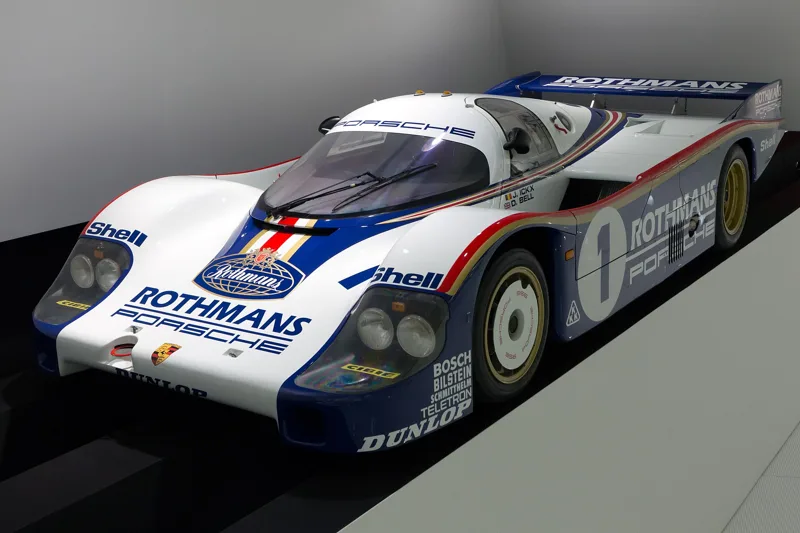
Porsche's works 936s were the strong favourites, because the Renault Alpine team that had won the previous year was absent. Both cars had been rebuilt on two chassis after crashes by Jochen Mass. Jacky Ickx and Brian Redman shared one, while Hurley Haywood and Bob Wollek drove the other.
Mirage returned with Cosworth DFV engines after losing its Renault engine deal, and the team was backed by 250 Ford dealers in France. Its new M10 had long-tail spyder bodywork with a frontal area 20% smaller than before. Rondeau entered three cars tuned by Heini Mader, with Pescarolo and Beltoise sharing one of them.
Dome made its European debut at the 1978 Geneva show with a road prototype. Its racing Dome Zero used a low, wedge-shaped body designed by Masao Ono and was developed in England by Keith Greene. Chris Craft and Gordon Spice drove one car, while Bob Evans and Tony Trimmer took the other.
How did Kremer and Gelo shape the Group 5 battle?
Georg Loos's Gelo team had won three of the five rounds of the season with its 935s. Kremer Racing answered with the K3, which took 30 kg (66 lb) out of the car and used twin turbos rated at up to 740 bhp. The K3 became the car to beat in Group 5.
The Kremer brothers had made more than 100 modifications to the standard 935-77. They used composite panels and a Kevlar-heavy body shell, along with their own aerodynamic work. The 3-litre engine had an air-to-air intercooler, and maximum boost lifted output to 800 bhp.
Kremer ran three cars. Klaus Ludwig shared one K3 with the Whittington brothers, Don and Bill, who were wealthy former motocross riders from Florida. Axel Plankenhorn and the driver known as John Winter shared a second K3 with Philippe Gurdjian, while a standard 935 carried Laurent Ferrier, Francois Servanin and Francois Trisconi. Gelo kept two cars: Schurti and Heyer shared one, and Fitzpatrick, Grohs and Lafosse the other.
Why was Paul Newman such a draw?
Dick Barbour returned with four 935s set up to IMSA specification, and he signed Rolf Stommelen and the 54-year-old actor Paul Newman as drivers. Newman had been nicknamed Cool Hand Luke after his 1967 film, and he had learned his driving under Bob Bondurant for the 1969 film Winning.
Barbour's second car carried Bob Akin, Rob McFarlin and Roy Woods. Ted Field's Interscope team had two 935s in the IMSA class, and one of them had won the Daytona 24 Hours earlier that year with Danny Ongais and Hurley Haywood. Jean-Pierre Jarier ran a privateer 935 in the same class.
Five Ferraris were entered, all 512 BBs with Pininfarina bodywork that produced 480 bhp. Charles Pozzi ran two, Luigi Chinetti's North American Racing Team ran one, and Ecurie Francorchamps prepared one for Jean Blaton, who raced under the name Beurlys. The Ferrari was 200 bhp down on the Porsche 935, and the Porsche was also lighter.
Herve Poulain's BMW M1 art car, painted by Andy Warhol, raced in the IMSA class with a 3.5-litre engine producing 470 bhp. Mazda entered an RX-7 for Terada, Buchet and Ikuzawa. The Group 4 class had six entries, all Porsche 934 turbos run by privateers.
How did practice settle the grid?
Porsche's 936s took the first two places. Bob Wollek set the fastest time of 3:30.1 on the Wednesday, but his next lap ended when a tyre burst at full speed on the Hunaudieres Straight. Jacky Ickx recorded 3:31.4 on the Thursday.
Klaus Ludwig was third in the Kremer K3 at 3:34.6, which beat the 3:39.3 that Stommelen had managed in the Moby Dick 935 the year before. Schurti's Gelo Porsche was two seconds slower than Ludwig after a full engine change. Stommelen recorded the fastest IMSA lap, 3:49.8, to qualify 16th.
The fastest Ferrari was the Pozzi car of Ballot-Lena, Gregg and Leclere, which started 28th at 4:00.8. The leading two-litre Group 6 car was a ROC Chevron at 4:01.3. The March-BMW failed the 110% rule with a best lap of 3:59.4, and the Aston Martin was the last car on the grid at 4:24.5.
How did the race open in the heat?
At 2pm the race started in heat and sunshine. Pescarolo did not complete the formation lap and started from the pit lane with low fuel pressure. The Porsches led from the flag, and Ickx had built a ten-second gap over Ludwig by the end of the first lap.
Problems hit the British cars early. De Cadenet pitted after six laps because the mechanics had not drilled an oil hole in the pinion, and the gearbox seized. Craft's Dome was running seventh when it caught fire from a loose distributor lead, and it later lost seven laps and ran out of petrol at Mulsanne after a faulty fuel pump. The second Dome was stopped by a blown head gasket.
Redman picked up a puncture at the Dunlop Curve and crawled round on the rim, which cost almost an hour and left the car 17 laps down. Jaussaud's Mirage then had a gearbox full of neutrals. A mechanic shouted instructions from the trackside, and the rebuild took four hours. The Mirage missed the minimum distance by three laps and was disqualified.
Who led through the middle hours?
After two hours Wollek led Ickx by 80 seconds, with Bell a further 50 seconds back. Wollek and Haywood's car then developed a bad misfire, needing four stops and eight laps to fix a fuel-injection pump. The Bell and Hobbs Mirage took over and led for three hours before exhaust problems cost it half an hour.
At the 8pm stops spilt fuel ignited on the Kremer car and blew its engine cover off. A fire marshal prevented a worse fire, and the car rejoined after repairs. The ROC Chevron of Marc Sourd crashed at the new Tertre Rouge corner, and a flag marshal was taken to hospital, though Sourd was unhurt.
Why did the night become a battle of attrition?
Torrential rain began soon after midnight and lasted most of the night. The pace fell away, and the fast 936s that had dropped back were slow to recover. The two Gelo Porsches stopped within minutes of each other soon after 4am, and the Kremer and Barbour cars pulled clear at the front.
Ickx, running seventh with Redman, came to a halt when his drivebelt broke. A mechanic was sent out with a spare, but officials saw him throw the belt across the track, and the car was disqualified for outside assistance. Fitzpatrick's Gelo car suffered a turbo fire, and Schurti's car had an engine failure within the quarter-hour.
By 6am the Kremer Porsche had a clear lead over the Barbour car, with the Haldi and Sekurit 935s behind. Wollek's Porsche stopped with engine trouble at 7am, and the Leclere Ferrari collided with a ROC Chevron braking for the Mulsanne corner at 7.50am. Debris later wrecked the second Pozzi Ferrari's radiators and gearbox.
How did the Kremer win come together?
At 10.40am Don Whittington stopped on the Hunaudieres straight with the drivebelt off. He carried a spare but could not fit it, so he improvised with a spare alternator belt and crawled back to the pits. The stop took 80 minutes and the repairs 15 more, which left the lead at four laps.
The Barbour car had its own problem when a wheel-nut seized. The hub had to be replaced, which took 23 minutes and cost six laps. Stommelen then had a holed piston and crawled round with a misfire. He held back until the Kremer car had crossed the line, then finished second.
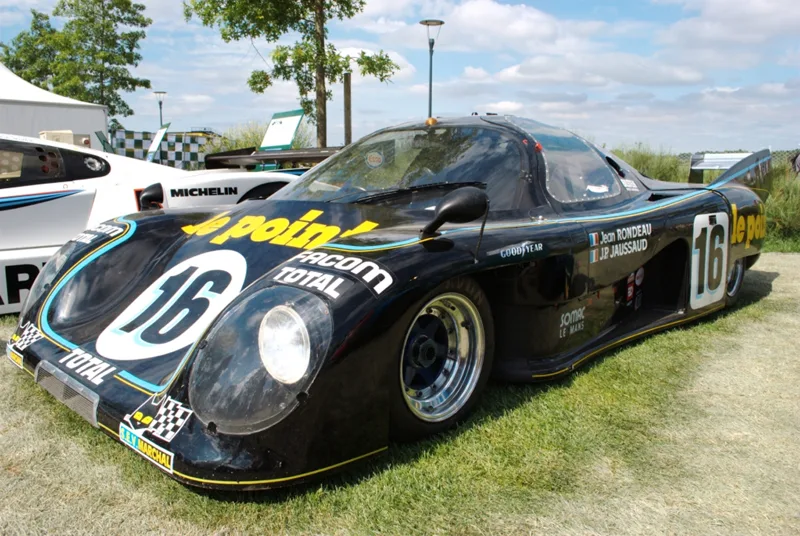
Ferrier, Servanin and Trisconi's standard Kremer finished third, and the Lubrifilm Porsche of Herbie Muller was fourth, winning Group 4 by 31 laps. The second K3 lost a driveshaft late in the race and finished 13th. The Mirage restart failed at its last stop, and the car retired.
The leading finishers
| Position | Car and drivers | Note |
|---|---|---|
| 1 | Kremer 935-K3: Klaus Ludwig, Don and Bill Whittington | Winner, first rear-engined Le Mans winner |
| 2 | Dick Barbour 935: Rolf Stommelen, Dick Barbour, Paul Newman | Second, after waiting for the Kremer car to take the flag |
| 3 | Kremer 935: Laurent Ferrier, Francois Servanin, Francois Trisconi | Standard 935, reliable run |
| 4 | Lubrifilm Porsche: Herbie Muller | Group 4 class win by 31 laps |
| 5 | Rondeau: Jean Ragnotti, Bernard Darniche | Group 6 win, 13 laps ahead of the sister car |
Around 150,000 spectators watched the race. Wollek's 3:30.1 was the fastest practice time, while Ickx set the fastest race lap. The winning distance was 4,173.93 km (2,593.56 miles), an average of 173.92 km/h (108.07 mph).
Why was the 1979 race significant?
The result gave a rear-engined car its first Le Mans victory, and Porsche finished 1-2-3-4. The rain slowed the race to its slowest pace since 1958, and the total distance fell 17% on the year before. Motor magazine's headline pointed at Newman, who had nearly won and drew the biggest ovation on the podium.
A month later the championship moved to Watkins Glen, where Ludwig and the Whittington brothers again beat the Barbour car. Ludwig won 11 of the 12 races the Kremer Porsche entered that season.