With the Porsche and Renault works teams out of the outright fight and the rain coming down, a constructor drove his own car to victory on a day that favoured patience.
This 1980 24 Hours of Le Mans was held on 14 and 15 June 1980 in heavy rain. Porsche and Renault works teams were absent from the outright fight, and Jean Rondeau won in a car of his own make. New fuel economy rules shaped the race.
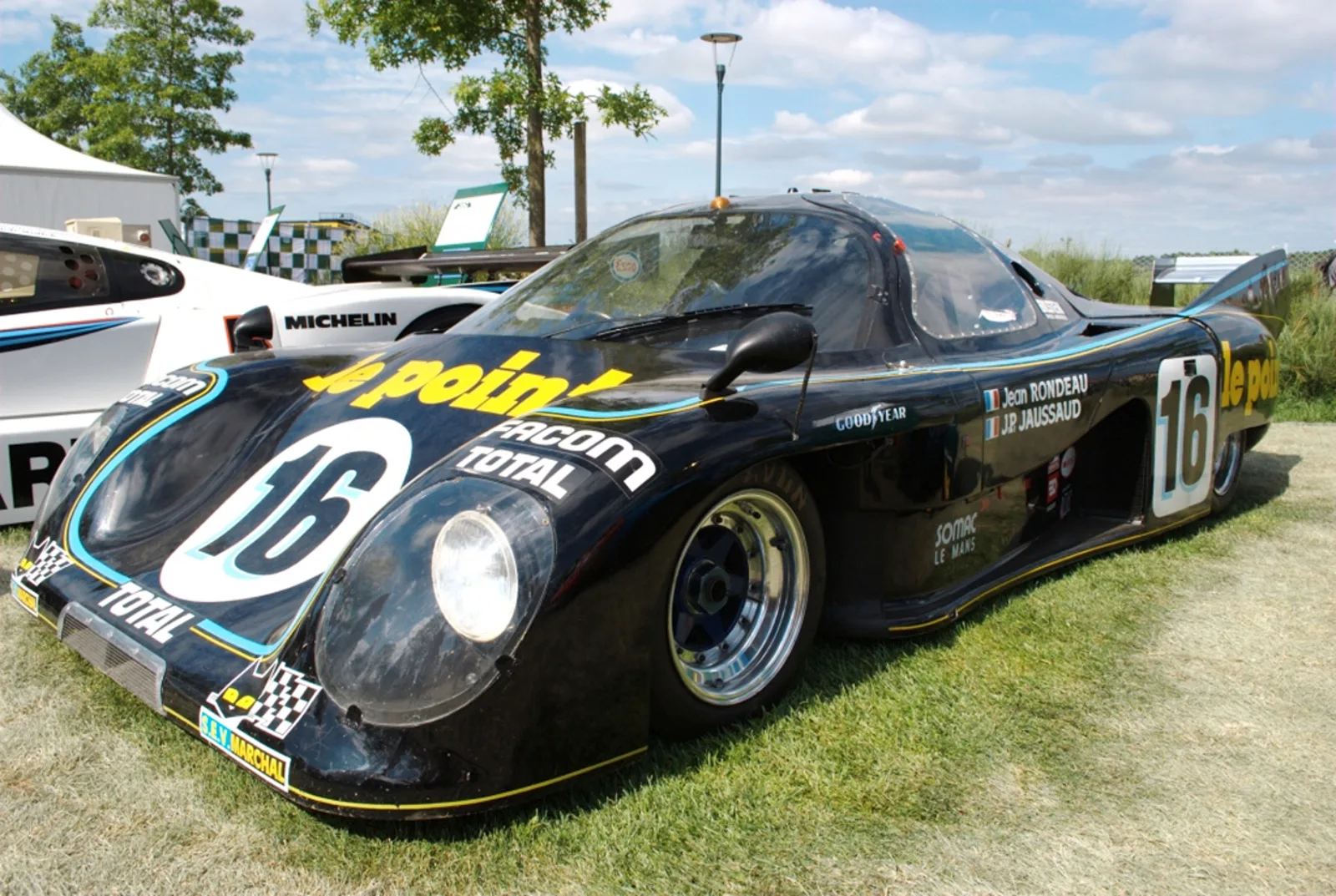
Held on 14 and 15 June, the 48th running of the 24 Hours of Le Mans went to a privateer driving a car built by his own company. With the Porsche and Renault works teams out of the outright fight, the rain that fell through much of the race levelled the field. Jean Rondeau and Jean-Pierre Jaussaud took the flag, with the other Rondeau car third.
What did the 1980 rules change?
Fuel economy and reliability, not raw speed, drove the 1980 rules. Each car was limited to a 120-litre fuel tank, refuelling ran at a fixed 50 litres per minute, and a car had to complete at least 25 laps between fuel and oil stops. That turned a 30 to 40 second pitstop into one of over two minutes.
The ACO had returned to the World Championship after five years on its own, and it wanted the race to test endurance and technical innovation. The fuel economy figure worked out at about 29 litres per 100 km, or 8mpg. The Index of Energy Efficiency also returned, comparing the fuel a car used against a calculated target.
Each team was allowed no more than four crew working on a car at one time. Drivers were limited to four hours at a stretch, with a one-hour rest required between stints, and their total time at the wheel capped at 14 hours. Entries had to name two or three drivers each.
A privateer built his own car, drove it through a wet Le Mans and beat a field with no Porsche works team in the outright fight.
Why did qualifying cause so much trouble?
The ACO ran qualifying as a single five-hour session on the Thursday, and only that session counted. Cars were judged on the average time of their drivers and had to be within 130% of pole and 110% of their class leader. Heavy rain left only a short twilight window.
A second change compounded the problem. Major components could not be replaced once qualifying had started, so engines and gearboxes had to last until the race itself. Only a single turbo replacement was allowed. The aim was to stop teams using fragile qualifying engines, but the rule also punished cars that had problems in practice.
Who entered the 1980 race?
From 87 applications the ACO admitted 70 cars to qualifying, aiming at 50 starting spots. It later accepted 65 cars for scrutineering but kept 55 places on the grid. The IMSA class was the largest category, with 22 applications, many of them North American cars.
Without manufacturer cars in the top Group 6 class, the field was among the weakest in a decade. Only Porsche, Lancia and BMW had works teams, and Porsche had ended its Group 6 programme while Mirage did not enter. That left the class open to the gentleman constructors.
How did the Group 6 field line up?
Jean Rondeau bought three cars for the class, and Heini Mader detuned their Ford-Cosworth DFV engines to 460 bhp. Rondeau drove one of them with Jean-Pierre Jaussaud, who had won the 1978 race with Renault Alpine. Henri Pescarolo and Jean Ragnotti shared the second car.
Alain de Cadenet brought his own Lola-derived car, its Cosworth DFV tuned by John Nicholson to reach 335 km/h (210 mph). His co-drivers were Francois Migault and South African Desire Wilson. Dome returned after an underwhelming debut, and its RL80 was 18 inches shorter and 3 inches wider than before. With improved suspension and aerodynamics it reached 345 km/h (215 mph), and Craft and Evans completed an 18-hour test at Suzuka without a problem.
Porsche arrived with three 924 Carrera GTP cars, built as a preamble to Group 4 and customer sales. The 2-litre turbo produced 320 bhp, which gave a top speed of 280 km/h (175 mph), and the car could manage 22 laps on a tank against 12 for a 935. Reinhold Joest entered a replica that Porsche would not let him call a 936, so it ran as the 908/J80 with a 2.1-litre twin-turbo engine capable of 550 bhp on race boost. Jacky Ickx was tempted out of retirement to drive it with Michel Leclere.
Which Group 5 cars were the favourites?
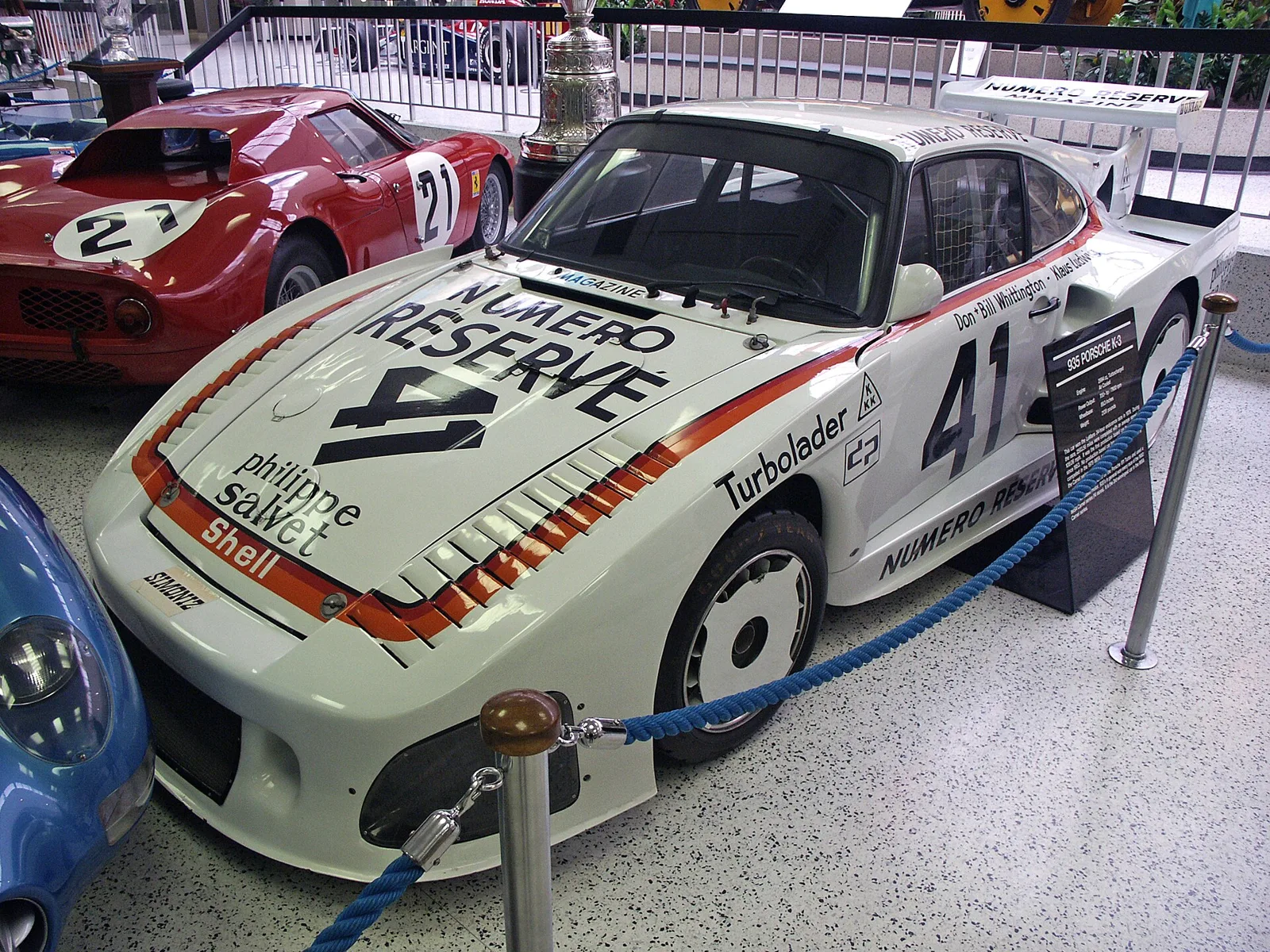
The Porsche 935 was the dominant Group 5 car, with 15 of them entered in the two classes. The Kremer brothers had sold 13 of their K3 modifications, and they ran three of the latest variants, rated at 660 bhp, for their own teams.
Georg Loos secured a final one-off 935 from the factory, the 935/80, with a 3160cc twin-turbo engine and a spaceframe chassis. The only challenge to the Porsches in Group 5 came from a modified Triumph TR8. The British Janspeed team fitted a 3.56-litre Rover V8 with two Rotomaster turbochargers and dry sump lubrication, plus 12-inch disc brakes. Lancia's works team brought Montecarlo cars built at Dallara, with aerodynamics by Pininfarina. Each had a mid-mounted 1425cc turbo four-cylinder producing 410 bhp, and the team came to Le Mans with six wins from six championship rounds.
What did the IMSA and GTX classes bring?
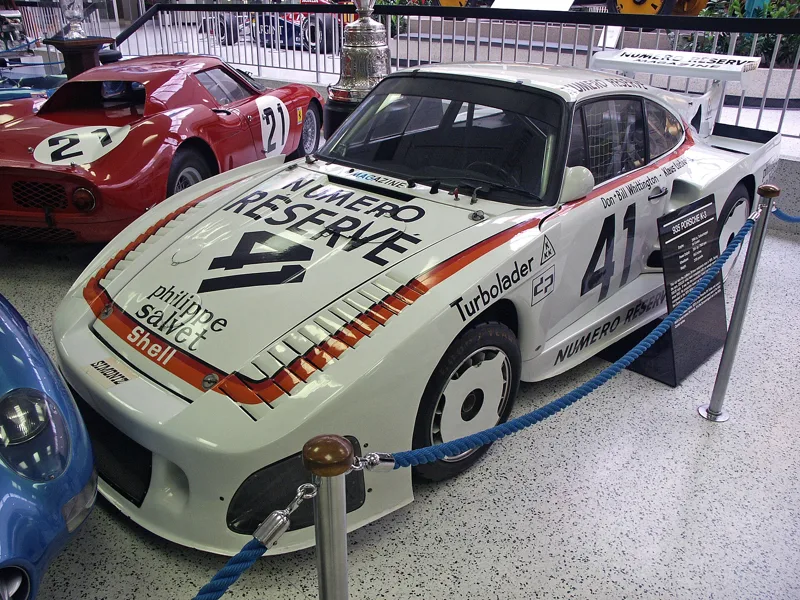
Dick Barbour returned with three Kremer-modified 935s, one a new K3/80 with an uprated 3.2-litre engine. The Whittington brothers, winners at their first attempt the year before, gave a K3/80 kit to their 935 and put 20-year-old Dale in the seat of the injured Bill.
Six Ferrari 512 BBs faced the nine Porsches in the class. Charles Pozzi ran three cars for JMS Racing, now 100 kg lighter, and they could reach 310 km/h (195 mph) on the Hunaudieres Straight. BMW's Procar series brought six M1s to the race, and a March silhouette version, about 15% lighter than the production cars, was also entered. A Mazda RX-7 entered by a New Jersey dealer carried a 1146cc 12A rotary, rated at 2.3-litres and producing 260 bhp. A TOM'S Toyota Celica ran a 2.8-litre turbo rated at 600 bhp.
The two Canadian Chevrolets carried 640 bhp, 7-litre engines but were so thirsty that they needed refuelling about every 30 minutes. Neither qualified, and nor did the Celica.
How did practice and qualifying set the grid?
John Fitzpatrick's quickest time in his Dick Barbour Porsche was 3:40.0, but the team's average was pulled down to 3:48.4 by the owner-driver. The pole went to the Rondeau of Pescarolo and Ragnotti at 3:47.9 on the qualifying average.
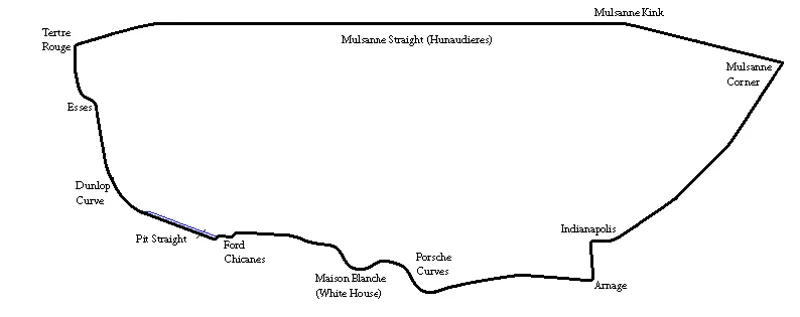
The new single-session rule caused problems for several teams. On the Wednesday night De Cadenet's mechanics had swapped the engine and gearbox. On the Thursday Desire Wilson crashed heavily at the Ford chicane and rolled the car, and because the ACO lost the time for her single dry lap, she could not be listed as qualified. Porsche's works squad suffered too: Gunther Steckkonig was rushed to hospital, and Peter Gregg was unable to race after an accident while travelling to the circuit.
Derek Bell replaced Gregg alongside Al Holbert, and the Bell and Holbert car started 34th at 4:10.8. Timekeeping was also disputed. Faure's De Cadenet lost fourth gear in the last hour, and the IBEC team found Trimmer's times credited to Bracey, who had not driven. Bracey accused the ACO of cheating, and Faure called in French lawyers.
How did the race start in the rain?
Storm clouds, with lightning, were overhead as the cars lined up, and the rain had only eased a little by the formation lap. Amid heavy spray John Fitzpatrick swept past Rondeau into the Dunlop Curve, while the crowd was split between hopes for Ickx's fifth win and support for Rondeau.
Visibility was terrible in the opening hours. John Paul ran his 935 onto the grass at 290 km/h (180 mph), believing he was on the centreline. Ballot-Lena pitted after a single lap with wet ignition, and the reserve Chevron-ROC lost 40 minutes after three laps when its rear suspension broke. Fitzpatrick pitted from the lead after 50 minutes, having covered 11 laps.
After one hour, with the rain easing, Bob Wollek led in the Gelo Porsche. Hans-Joachim Stuck was second in the IMSA BMW M1, which had started 23rd on the grid and was benefiting from its fuel economy. Wollek's car control in the conditions kept the team at the front for more than three hours.
The race also brought its share of incidents. Alain de Cadenet was 37th after an hour with electrical trouble and was able to arrange help by radio from the signalling pits at Mulsanne. Chris Craft lost second and third gears early on, leaving the Dome running at the back for much of the race. Both works Lancias retired within two hours with engine problems. On the seventh lap Mike Sherwin's Barbour 935 struck Yves Courage's Chevron, which was spinning at Tertre Rouge, and Sherwin's car was thrown over it before it came to rest against the guardrail.
How did the race turn in the afternoon?
By 7pm the circuit was drying out. Wollek's Gelo Porsche led Stuck and Redman, all on 39 laps. Jacky Ickx was on the lead lap in fourth at that stage, driving within himself and keeping out of trouble with the Porsche.
At 10am the Joest Porsche, which had built a two-lap lead over the Rondeau car at dawn, pitted having lost top gear. A half-hour stop cost them four laps and handed the lead to the Rondeau car. Hard driving by Ickx brought him back onto the lead lap. A squall at 1pm caused both cars to lose their grip at the fast Dunlop Curve, though neither suffered major damage.
In the last hour another shower arrived. Ickx pitted for wet tyres, while Jaussaud, who was in the Rondeau car, bravely stayed out on slicks. Ickx could not recover the lost time, and the French car took the win.
Who won the 1980 24 Hours of Le Mans?
Jean Rondeau and Jean-Pierre Jaussaud won the race in a car of Rondeau's own manufacture, a unique achievement at Le Mans. The other Rondeau team car, driven by Henri Pescarolo and Jean Ragnotti, finished third. Porsche's absence from the outright fight meant the result was decided between privateers, and it gave the French team a significant victory.
The 1980 rules at a glance
| Rule | 1980 requirement |
|---|---|
| Fuel tank | Maximum 120 litres |
| Refuelling rate | 50 litres per minute |
| Minimum laps between fuel stops | 25 laps |
| Fuel economy | About 29 litres per 100 km (8mpg) |
| Driving time | Four hours at a time; 14 hours maximum |
| Break between stints | One hour minimum |
| Qualifying limits | Within 130% of pole and 110% of class leader |
| Finishing time | Last lap before 4.15pm |
| Classification | At least 70% of the winner's distance |
| Index of Energy Efficiency prize | 5000FF to the winner |
Why did the 1980 race matter?
It was Charles Deutsch's final race as director, a role he had filled from 1969 after building cars for a living. Deutsch died six months after the race. The ACO's rules made the event a test of efficiency as much as speed, and the race rewarded patience on a wet track.
The win showed what a privateer could achieve when the works teams stayed away. Rondeau's victory in a car of his own manufacture remains a unique achievement at Le Mans.