Matra took a French one-two in the 40th running, the new Porsche Curves changed the lap for good, and the race was overshadowed by the death of Jo Bonnier.
The 40th running took place on 10 and 11 June 1972, and Matra took a French one-two, with Pescarolo and Hill winning eleven laps clear. The new Porsche Curves were opened on the circuit that year, and the race was overshadowed by the death of Jo Bonnier.
The 1972 race was the 40th running and the ninth round of the World Championship for Makes. Matra took a French one-two, with Henri Pescarolo and Graham Hill winning eleven laps clear of Francois Cevert and Howden Ganley. The race was also marred by the death of the veteran Jo Bonnier, who was killed on the Sunday morning.
What new rules shaped the 1972 race?
Group 6 prototypes and Group 5 sports cars were merged into a new third-generation Group 5, with a 3-litre limit, or 2142cc for turbocharged engines under the x1.4 equivalency, and a minimum weight of 650 kg. Group 2 touring cars were admitted by the ACO, joining Group 4 GT entries.
Qualifying changed as well. Instead of a set lap time, every car had to be within 140% of the average of its three best practice laps, and to be classified a car had to complete at least 70% of the class winner's distance. The Index of Performance was dropped, and the Index of Thermal Efficiency applied only to Groups 2 and 4.
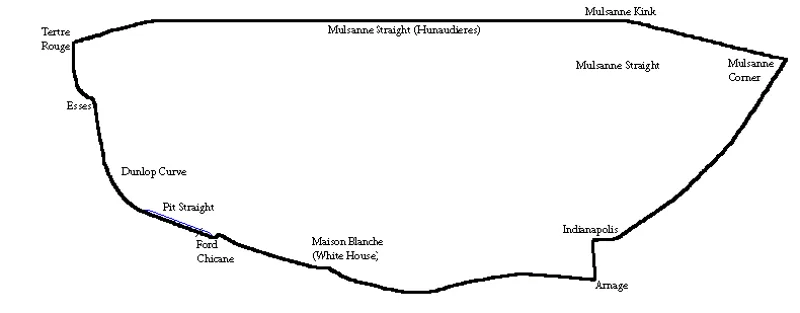
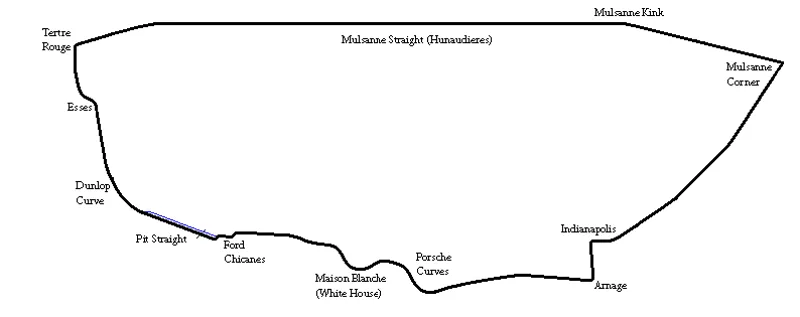
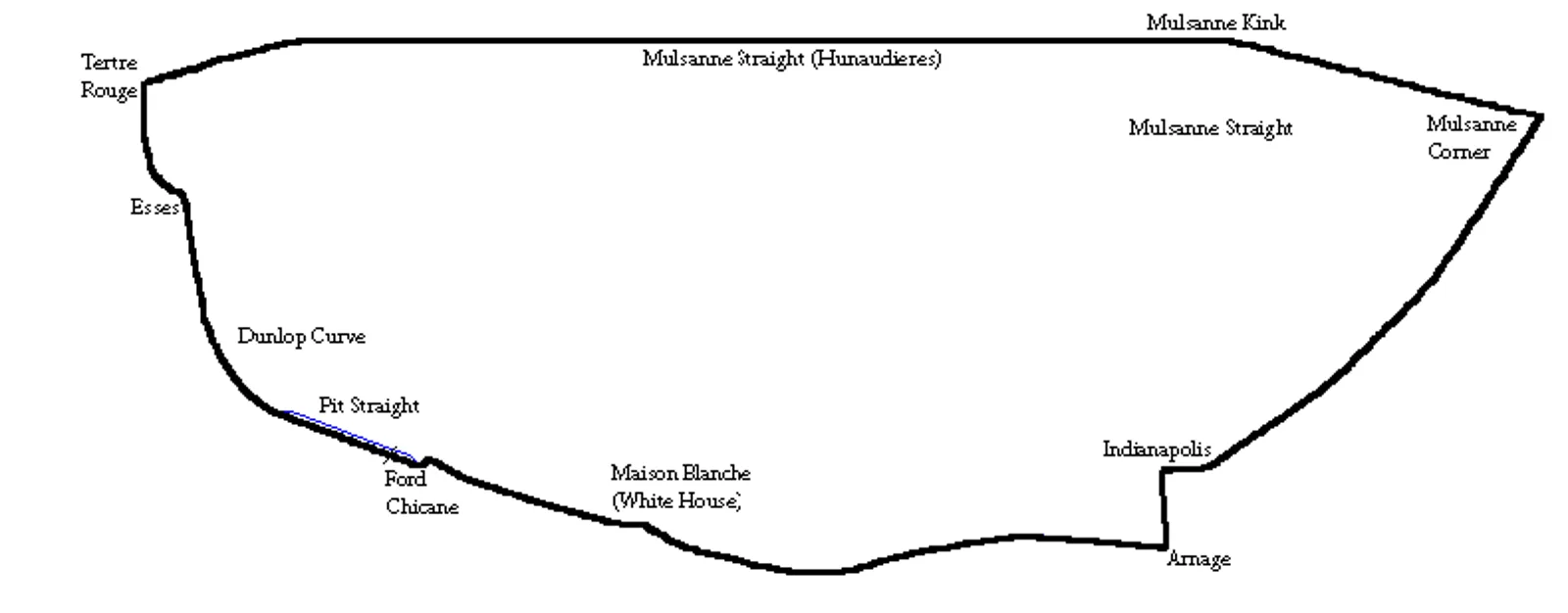
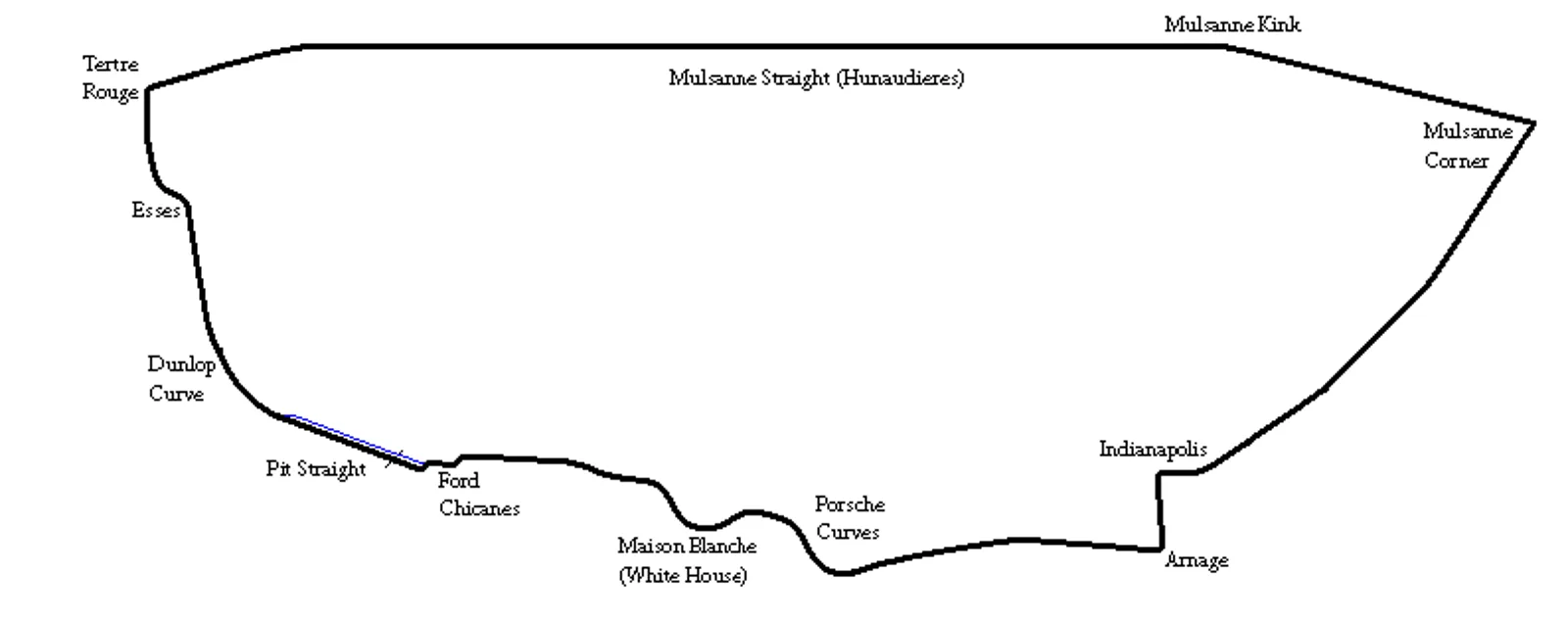
The biggest change was on the circuit. Technical curves were built between Arnage and the Ford chicane to go around the dangerous Maison Blanche corner. Porsche financed the work, so the section became known as the Porsche Curves. The layout added 71 metres to the lap and cut average speeds by about 30 km/h (18 mph). Over 65% of a lap was still spent at full throttle.
Matra's French one-two and Graham Hill's Triple Crown, with the new Porsche Curves changing the lap for good.
How big was the 1972 entry?
Entries reached 91 applications, and a solid 66 cars arrived for practice. For the first time in several years the grid was complete at 55 starters. Ferrari's absence was the main talking point of the entry list, although Alfa Romeo still came.
Ferrari, unbeaten in the championship so far, pulled its works team out under two weeks before the race. It argued that its 312PB engines were only suited to the 1000 km races, not to 24 hours. Alfa Romeo had voiced the same durability worries but still came, and John Wyer left his Gulf-Mirages at home, since their Weslake V12s were unfinished.
Why did Matra go all out?
French patriotism was running high, and Matra took no chances. The team bought four cars and 60 crew, and its MS670 was a new 3-litre V12 detuned to 450 bhp for the race. The car reached 310 km/h (195 mph) on the Mulsanne straight.
Two cars carried the long-tail bodywork, one driven by Jean-Pierre Beltoise and Chris Amon and the other by Cevert and Ganley. Pescarolo and Graham Hill had a short-tail car, and Hill had not raced at the event since 1966, while Jean-Pierre Jabouille and David Hobbs drove the reliable 660C.
Alfa Romeo had developed its open-top T33/3 with a tubular chassis rather than a monocoque, which made it narrower and 50 kg lighter. Its 3-litre V8 produced 445 bhp. The team signed ex-Porsche drivers, with Vic Elford and Helmut Marko in one car, Rolf Stommelen and Nanni Galli in another, and Nino Vaccarella with Andrea de Adamich in the third.
Porsche was busy with its 917 Can-Am programme, but Reinhold Joest received considerable unofficial factory help for his 908LH. The car, backed by ATE, had once been Jo Siffert's, and Siffert had died less than a year before. Porsche refitted it with a new 3-litre engine.
What were the other entries?
Eric Broadley built a three-litre version of the T210 for Jo Bonnier, with a Cosworth DFV, and the T280 was very quick. Bonnier's team ran two cars: he shared one with van Lennep, while Larrousse and de Fierlandt had the other. They were painted with gruyere cheese holes, as sponsored art cars for a Swiss firm.
Alain de Cadenet built his own car with Gordon Murray's design, around a Cosworth DFV of 390 bhp and Brabham BT33 suspension. Guy Ligier entered three JS-2s with a Maserati V6 supplied by Citroen, but they had to run in Group 5 because too few had been built to qualify for the other class.
Nine Ferrari 365 GTB/4 Daytona cars were entered by six Ferrari agents, including Luigi Chinetti's NART, Ecurie Francorchamps, and Charles Pozzi's Paris team. Five Chevrolets took on the Ferraris, including two specially lightened Corvettes from John Greenwood, and their top speed was 330 km/h (210 mph). Goodyear-shod English Racing Team cars had won at Daytona and Sebring, and NART let them enter a Ferrari-badged car, provided it carried the Ferrari motif. The European Touring Car Championship also came to Le Mans, with Ford Germany's three Capri RS2600s and a Schnitzer BMW 2800 CS.
How did practice go?
At the March test weekend Ferrari had gone quickest, with 3:40.4, yet it skipped race week altogether. On the Thursday Matra went all out, and Cevert, Pescarolo and Beltoise qualified 1-2-3 for French pride. Cevert took pole with 3:42.2.
Stommelen qualified 3:47.9 with Bonnier close behind, and then came the Alfas of Elford and Vaccarella in sixth and seventh. Joest's Porsche was at 4:03.3, and the fourth Matra of Jabouille headed Larrousse. De Cadenet's Duckhams car performed impressively for its age and youth.
A hoarding blown onto the track cut the first evening's practice short, and a serious accident followed. The Thompson Corvette was damaged, and then a GRAC prototype crashed and burst into flames. Its driver, Lionel Noghes, suffered serious burns to his face.
The GT entries had their own troubles. Three of the Panteras blew engines because of a faulty batch of pistons from the United States. Migault's Ferrari was the fastest GT at 4:21.7 in 20th, and the NART Dino starting last on the grid had qualified at 4:53.9.
How did the race begin?
A French President was the honorary starter for the first time, and Georges Pompidou stood on the grid in front of a large partisan crowd. Pescarolo moved ahead of Cevert on the opening lap, but Beltoise's engine gave up on the front straight, and Bonnier took over at the front on lap three.
Soon after, a short downpour soaked the circuit, and de Fierlandt's fast laps put him in front for a while. The Lolas needed more frequent stops because of their smaller tanks. The Alfa Romeos then moved up, first Elford and then Stommelen, while Migault's Ferrari led the GT class until a jammed gearbox stopped it.
What happened in the night?
At 6.20pm Jabouille's Matra stalled for lack of fuel close to the pit entry. Someone had switched it to the reserve tank, which dropped the car to 12th and five laps down. The leading Matras kept swapping the lead through the night, and by half-time at 4am they were running 1-2-3.
Earlier, at the quarter mark, the two Matras were still swapping the lead, three laps clear of the Alfa Romeos. By this stage the field was very strung out, with the Duckhams and Weigel's Porsche among the cars still running. As the light faded, Bonnier and van Lennep set the fastest lap of the race.
Vaccarella and Elford each lost half an hour to clutch problems, and the Alfas fell back. Joest's long-tail Porsche was seventh, and the Lola was eighth, 15 laps behind the leaders. Ballot-Lena and Andruet's Ferrari and the NART car led the GT class at that point. The Ferraris held the GT class for much of the night as the Corvette engines failed one by one.
What happened to Jo Bonnier?
Jo Bonnier was killed at about 8.25am when his Lola struck the Filipinetti Ferrari of Florian Vetsch on a straight between Mulsanne and Indianapolis. The Lola was launched 100 metres over the barriers, landing among the trees. Bonnier, a 13-time Le Mans starter who chaired the Grand Prix Drivers' Association, died soon afterwards.
Vic Elford came upon Vetsch's car on fire and stopped to help the driver, who had escaped with burned hands. Elford then pulled into the pits and Marko took over, but the replacement clutch on his car soon failed. Hill was told of Bonnier's death only after the race and was deeply affected.
How did rain change the race?
Rain returned in the late morning. The Weigel 907 struck the barrier at the Dunlop curve when it was seventh, and Ganley was struck from behind by Marie-Claude Beaumont's Corvette on the Mulsanne straight. Beaumont's car was too wrecked to carry on.
With two hours to go the rain grew heavier. Cevert, de Adamich and Craft had slicks on, and all three aquaplaned off approaching the flooded Esses. The Duckhams car took the worst of the damage and dropped to 12th before rejoining for its final lap.
In the final minutes the third-placed Jabouille and Hobbs Matra was stopped by gearbox trouble, and a Spanish Porsche running eighth ended its race with a wheel-bearing failure.
Who won, and by how much?
Pescarolo and Hill took the chequered flag eleven laps ahead of Cevert and Ganley. It was the first win for a French car since the Talbot-Lago of 1950, and it made Hill the first driver to hold the Triple Crown of Le Mans, Indianapolis and the Formula One title.
Joest, Casoni and Weber took third in the 908LH, nine laps further back. Vaccarella and de Adamich's Alfa Romeo beat the French Ferrari of Ballot-Lena and Andruet by a single lap.
The leading finishers
| Position | Car and drivers | Note |
|---|---|---|
| 1 | Matra-Simca MS670: Henri Pescarolo, Graham Hill | Winner, eleven laps clear |
| 2 | Matra-Simca MS670: Francois Cevert, Howden Ganley | Second, eleven laps behind the winner |
| 3 | Porsche 908LH: Reinhold Joest, Mario Casoni, Michel Weber | Nine laps further back |
| 4 | Alfa Romeo T33/3: Nino Vaccarella, Andrea de Adamich | A lap ahead of the French Ferrari |
Charles Pozzi's Ferrari headed the GT class home and took the Index of Thermal Efficiency too. Five of the nine Ferraris finished, while Chevrolet, De Tomaso and Porsche each had only one finisher. Rene Ligonnet's privately run Lola T290 took 14th, the first Lola finish in the event's history.
Cevert set the practice pace at 3:42.2, or 220.99 km/h (137.32 mph), and van Lennep's 3:46.9 was the fastest race lap at 216.41 km/h (134.47 mph). The winning average was 195.46 km/h (121.45 mph) over 4,691.34 km (2,915.06 miles).
Why did the 1972 race matter?
The new Porsche Curves became a permanent part of the circuit, and the old Maison Blanche corner, the scene of many serious accidents, was retired from the lap. The race showed that the layout worked for safety. The Ford chicane itself gained a second bend further up the track, creating a dedicated pit-lane entrance.
Porsche unveiled its 2.7-litre Carrera RS three months later, a customer car that would even up the Group 4 competition. For Hill, the win completed a set of victories that no other driver had matched, and for Matra it confirmed a strong French year at Le Mans.