Matra arrived with four cars and the favourite's role after Alfa Romeo pulled out. Henri Pescarolo and Gerard Larrousse won again, and the French team left the sport after the season.
This race, held on 15 and 16 June 1974, was run after Alfa Romeo withdrew its works cars. Matra-Simca won with Henri Pescarolo and Gerard Larrousse, a third consecutive Le Mans win for Pescarolo. The field was the smallest in years, with 50 cars qualifying.
The 42nd running of the race came with Alfa Romeo's works team absent, which left Matra as the clear favourite. Henri Pescarolo and Gerard Larrousse won by six laps, which gave Pescarolo his third consecutive Le Mans victory. The win was the last big result of the French team's sports-car era.
Why was the 1974 grid so small?
Fuel shortages after the 1973 Yom Kippur War had cancelled Daytona and Sebring. Ferrari had stepped back from sports cars once 1973 ended, concentrating on Formula One instead, and Alfa Romeo's works team withdrew only days before the event. The ACO received 81 applications, and just 50 cars came for qualification.
Only eleven works entries remained, all of them in Group 5. The three-litre universal race-engine formula had lost its appeal, and the field showed it. Six female drivers still took part across three teams, the most at Le Mans since 1938.
Matra won its third Le Mans in a row, and the French team left sports-car racing after its most complete season.
How did the rules and costs change?
There was little change to the regulations. The ACO cut the eligible classes back to six by removing the intermediate Group 2 and Group 5 divisions. It also tightened qualifying, so that every driver, not just every car, had to stay within 133% of the quickest lap times posted by the top three car types.
Cost was a constant worry. Modern Motor magazine put the bill for the event at close to one million pounds, with Chrysler-France paying 500000 pounds and the French government 300000 pounds. John Wyer, whose Gulf team was among the entries, reckoned a single Le Mans car cost more than a full Formula One season.
Who was in the Matra squad?
Matra arrived with four cars. Three were the long-tail MS670B, and the fourth was the MS680, which had side radiators and a sleeker nose. Jean-Pierre Beltoise and Jean-Pierre Jarier drove the MS680, while the other crews were all French: Pescarolo with Larrousse, Jabouille with Francois Migault, and Jaussaud with Bob Wollek and Jose Dolhem.
The V12 engines were tuned down to 460 bhp to protect them, although they still reached about 320 km/h (200 mph). The cars ran Porsche-designed gearboxes, which gave the team a clear edge in the corners as well as on the straights.
Who challenged Matra for the win?
John Wyer's Gulf Research Racing was the main challenge. It had dropped the Mirage name, and its new Gulf GR7 was a much lighter version of the M6 designed by Len Bailey, with a 450 bhp Cosworth V8 and stronger ZF gearboxes.
Derek Bell and Mike Hailwood shared one Gulf, and Vern Schuppan with Reine Wisell took the other. The GR7 remained about 40 kg heavier than the Matras, so it had to rely on handling and reliability to stay in the hunt.
Porsche returned to sports car racing with its Martini-sponsored team, running an evolution of the Carrera RSR. The 2142cc flat-six, with a KKK turbocharger, made 490 bhp, and under the x1.4 equivalency the engine counted as 2999cc. Gijs van Lennep shared one car with Herbert Muller, and Manfred Schurti drove the other with Helmut Koinigg.
Guy Ligier's improved JS2 ran a Maserati engine developed to 300 bhp. Guy Chasseuil shared one car with Michel Leclere, and Jacques Laffite drove with Alain Serpaggi. Ligier himself was not racing that year, and the team was encouraged by its strong showing in the March test.
Several one-off cars joined the field. Alain de Cadenet was injured in a motorcycle accident, and John Nicholson took the place alongside Chris Craft. Michel Dupont Racing entered a Lola T284 with a Cosworth engine, NART developed its own 312P spyder, and the Japanese Sigma rotary returned with stronger Mazda backing.
In the GT class the battle was between Ferrari and Porsche. NART and Charles Pozzi fielded five of the 365 GTB/4 Daytona entries, and Porsche sent 13 RSR cars from private teams, including Kremer and Gelo.
How did practice set the grid?
Pescarolo took pole with 3:35.8 on Wednesday night. Jarier was second on Thursday in the MS680 with 3:36.8, and the Gulfs took third and fourth, with Schuppan ahead of Bell. The other two Matras came next, so the French cars filled the front of the grid.
An eight-second gap followed, with Muller's Porsche turbo and Craft's De Cadenet both at 3:52.4. Ligier's cars took 10th and 12th, and Chasseuil was 27 seconds faster than the year before. The new aero pack was clearly working.
The Lola-ROC was the quickest two-litre car, at 4:07.9 for 14th. Kremer's Porsche was the fastest GT entry in 15th at 4:11.3, and the Jolly Club ex-works BMW was 17th at 4:14.2. The NART 312P managed 4:18.0, and the 308 GT4 was down in 38th at 4:25.3. The De Tomaso was the last qualifier, at 4:43.6.
Problems hit Sigma's rotary in practice, and it set 4:20.4, nine seconds slower than the year before. The RX-3 was left out of the field because it could not get inside the qualifying limit.
How did the race start?
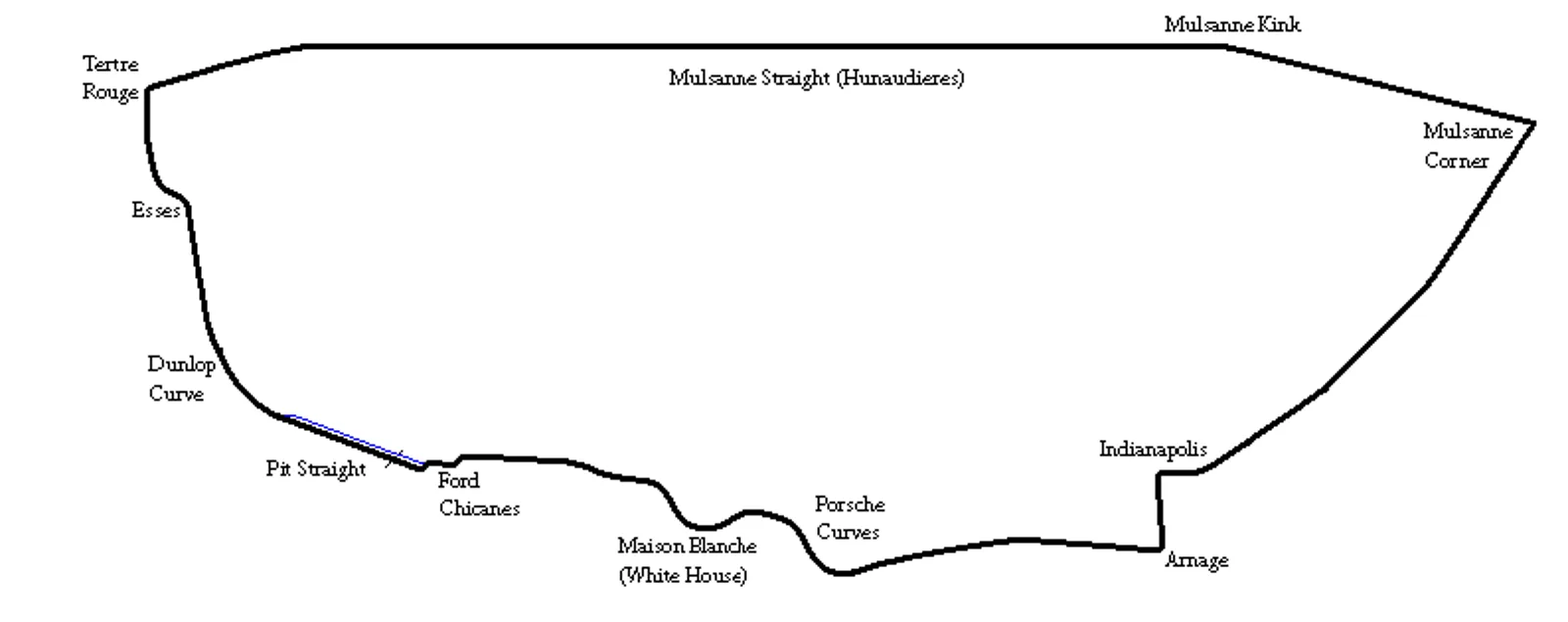
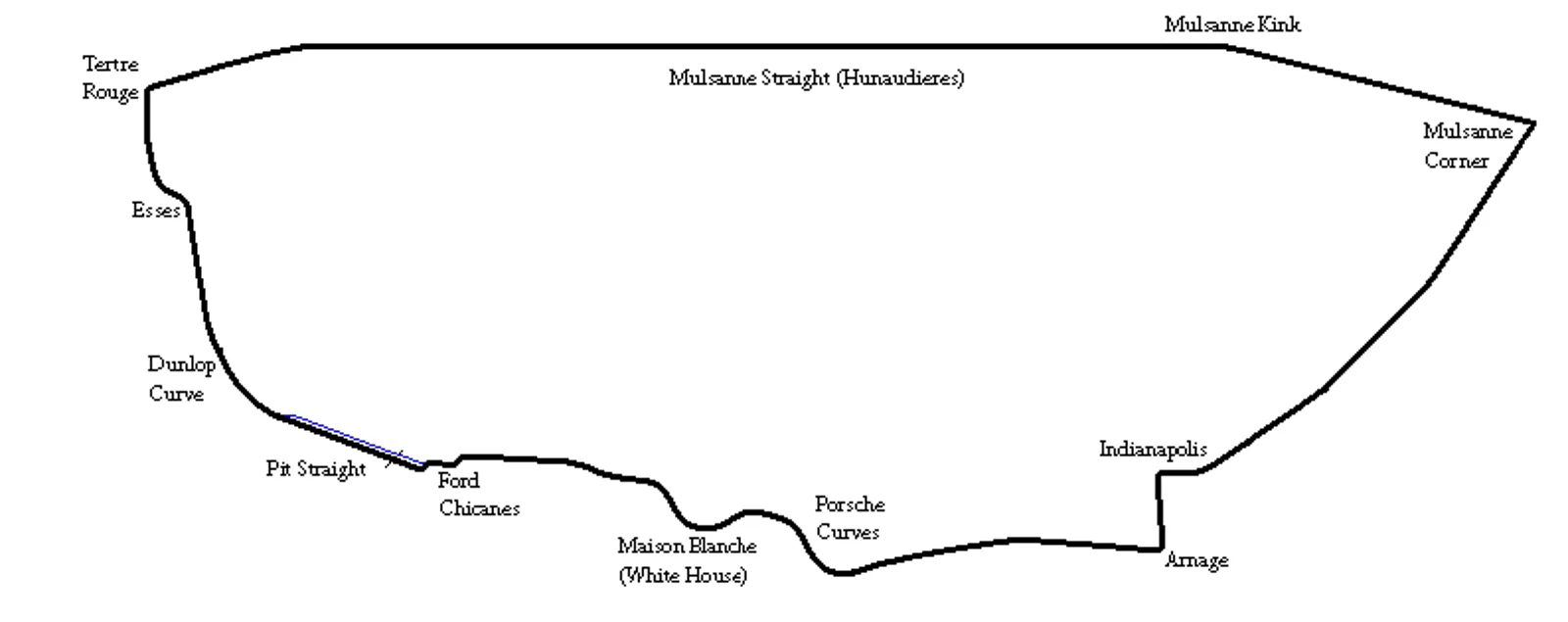
Pescarolo led from the start, but Jarier passed him at Mulsanne just as rain began to fall on the first lap. The shower was brief and no one switched tyres. By lap four the Matras held the first four places, and Schuppan's Gulf had already stopped for new plugs.
One of the NART Ferraris braked too late at the Esses and clouted both barriers, ending its race. Chasseuil made an early stop to change plugs in the leading Ligier, and the Porsches began to suffer when Ballot-Lena and Haldi came in with their leading cars for repairs.
Pescarolo regained the lead after the first round of driver changes, with the Matras a lap clear of the Gulfs. Wisell was stranded when the second Gulf's CV joint broke after three hours. In the fourth hour Jarier pulled out of the pits and collided with the GT-leading Kremer Porsche, and Jabouille's car came in with water leaking from its engine.
How did the night unfold?
At 11pm the engine of the Schurti and Koinigg Porsche blew on the Mulsanne straight. Within the hour the Matras of Jarier and Wollek had also lost their engines, and by 1am Pescarolo led the van Lennep Porsche by six laps. The Gulf of Bell and Hailwood climbed back to fourth.
Craft's De Cadenet lost a suspension bolt at 1.30am, and he had to change the steering arm himself, a half-hour job, since reversing up the pit lane was banned. He resumed in 11th and kept going through the night. At 2am the second Gelo Porsche retired after a loose screw dropped into its distributor.
By half-time at 4am Pescarolo and Larrousse had completed 179 laps, with the Porsche on 172 and the Gulf on 166. Jabouille and Migault had climbed back to fourth. The Swiss Romand Porsche ran fifth with the Pozzi Ferrari on its tail.
What broke at dawn?
Just after 5.30am De Cadenet's suspension failed again, its second failure of the night. This time Nicholson was going fast down the pit straight when he hit the barriers and slid 200 metres along the road. He climbed out unhurt.
The Jolly Club BMW, the quickest Group 2 car in practice, was slowed by a gearbox problem in the first hour. It climbed back through the field to 17th before its engine overheated just after dawn, and it retired.
At 8am Larrousse brought the leading Matra in with a misfire, and several stops were needed to fix it, costing three-quarters of an hour. The Gulf lost almost 45 minutes to a starter motor. By about 10am the Porsche's steering had started to misbehave, leaving it eleven laps adrift of the Matra at the head of the field.
How did Matra take the win?
Once the misfire was cured the Matra ran smoothly, and Pescarolo and Larrousse rebuilt their lead. Larrousse took the chequered flag six laps ahead of Muller and van Lennep. The Jabouille and Migault Matra was third, ten laps behind the winner.
Both leading cars had endured trouble for much of the race, and every pitstop needed attention: water went into a leaking Matra engine, and grease into the Gulf's fragile CV joint. Grandet and Bardini's Ferrari won the GT class and finished fifth overall after a reliable run that cost only 30 minutes in the pits. The GT class had been a fight between the 3-litre Porsche RSR and the V12 Ferrari, and the leading Porsches dropped out along the way.
The Gelo Porsche's engine gave out with less than three hours left. Serpaggi and Laffite's Ligier finished eighth, the team's best Le Mans result to date, despite a fuel fire at its last stop. The NART Ferrari 312 special finished ninth after six broken throttle cables. The all-female crew of the third Dupont entry was the only S-2000 car to finish, placing 17th.
The leading finishers
| Position | Car and drivers | Note |
|---|---|---|
| 1 | Matra-Simca MS670C: Henri Pescarolo, Gerard Larrousse | Winner, six laps clear |
| 2 | Porsche RSR turbo: Gijs van Lennep, Herbert Muller | Six laps behind the winner |
| 3 | Matra-Simca MS670: Jean-Pierre Jabouille, Francois Migault | Ten laps behind the winner |
| 4 | Gulf GR7: Derek Bell, Mike Hailwood | Four laps behind the third-placed Matra |
Porsche's cars were not the only ones to suffer. Of the field of 50, many fell out with fuel-system, electrical and gearbox failures, and the GT class was decided by the Ferrari and Porsche battle that ran all afternoon.
Was the winning car legal?
The winning Matra's mechanics had replaced the gearbox housing during the race, which broke the regulations. The officials chose not to disqualify the car because no team protested the change. The gearbox was a Porsche unit, and the Matra team stood by its work.
Pescarolo joined a short list of drivers with three consecutive Le Mans wins, alongside Woolf Barnato and Olivier Gendebien. Matra then won the World Championship with nine wins from ten rounds, and it announced its retirement at the end of the season.
Qualifying speed was led by Pescarolo's pole, which averaged 227.55 km/h (141.39 mph). Jarier's MS680 set the fastest race lap at 220.49 km/h (137.01 mph), and the attendance was put at 200000.
Why did the 1974 race matter?
The race marked the end of an era for Matra, and it showed how thin the entry had become after the fuel crisis. Only 50 cars came to qualify, and the field was far less varied than in earlier years. The French team's last Le Mans victory came after it had already decided to leave the sport.
Porsche's challenge was a story of mechanical trouble. Its cars fell behind through early engine and steering problems, and the Martini team took second place only after its rivals had struggled. The race showed how hard it was to keep fragile endurance machinery running for 24 hours.