With Matra gone and Alfa Romeo absent, a race run on strict fuel limits gave a Gulf-Mirage a win that was as much about discipline as speed.
This race, held on 14 and 15 June 1975, was run under strict fuel limits. The Gulf GR-8 driven by Ickx and Bell took the win, with Ligier second one lap back. The race was not part of the World Sportscar Championship.
The 43rd running of the race took place in June 1975 under fuel limits that the organisers had imposed in response to the oil crisis. Jacky Ickx and Derek Bell won in a Gulf GR-8 after a race that rewarded economy as much as speed. Their margin over the Ligier was a single lap.
Why did Le Mans run under fuel-economy rules?
Fuel shortages after the 1973 oil shock had hit motor racing hard, and critics viewed the sport as wasteful. The ACO set a ceiling of 40 litres per 100 km. Cars had to complete 20 laps before taking on petrol and oil again, roughly 270 km (170 miles) or about 7mpg.
With the FIA's rules out of step, the race lost its place on the World Sportscar Championship calendar. Le Mans had lost points before for similar reasons, and the CSI had put off its planned Group 5 silhouette rules until 1976. The fuel formula put the event out of step with the rest of the sport's calendar.
A Gulf-Mirage won at Le Mans under fuel limits that many dismissed, and the rules pointed toward the endurance racing that followed.
What other rules did the ACO introduce?
The ACO created a new GTX class for GT cars that used equipment not homologated for production. Group 3 GTs were also admitted, joining Group 5, Group 4 and Group 2 cars. Teams could replace parts during the race, but the defective items had to be handed to the ACO technical team.
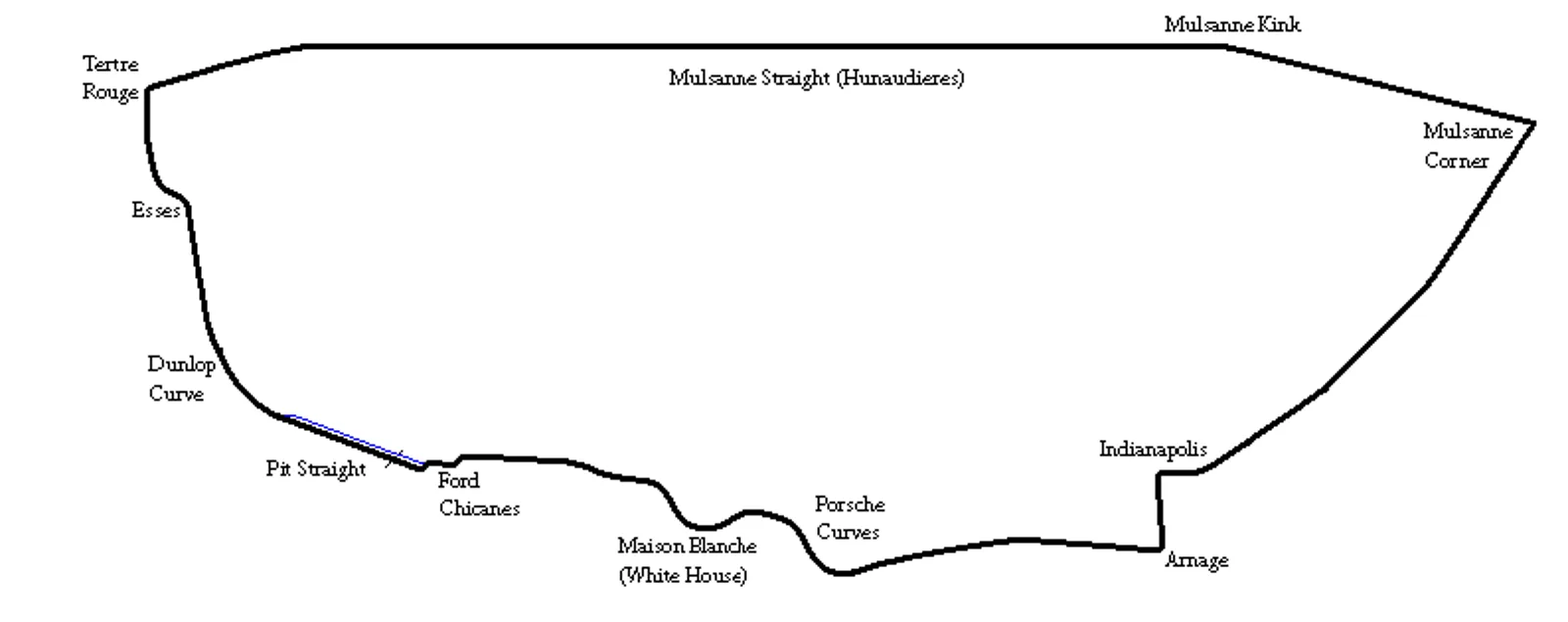
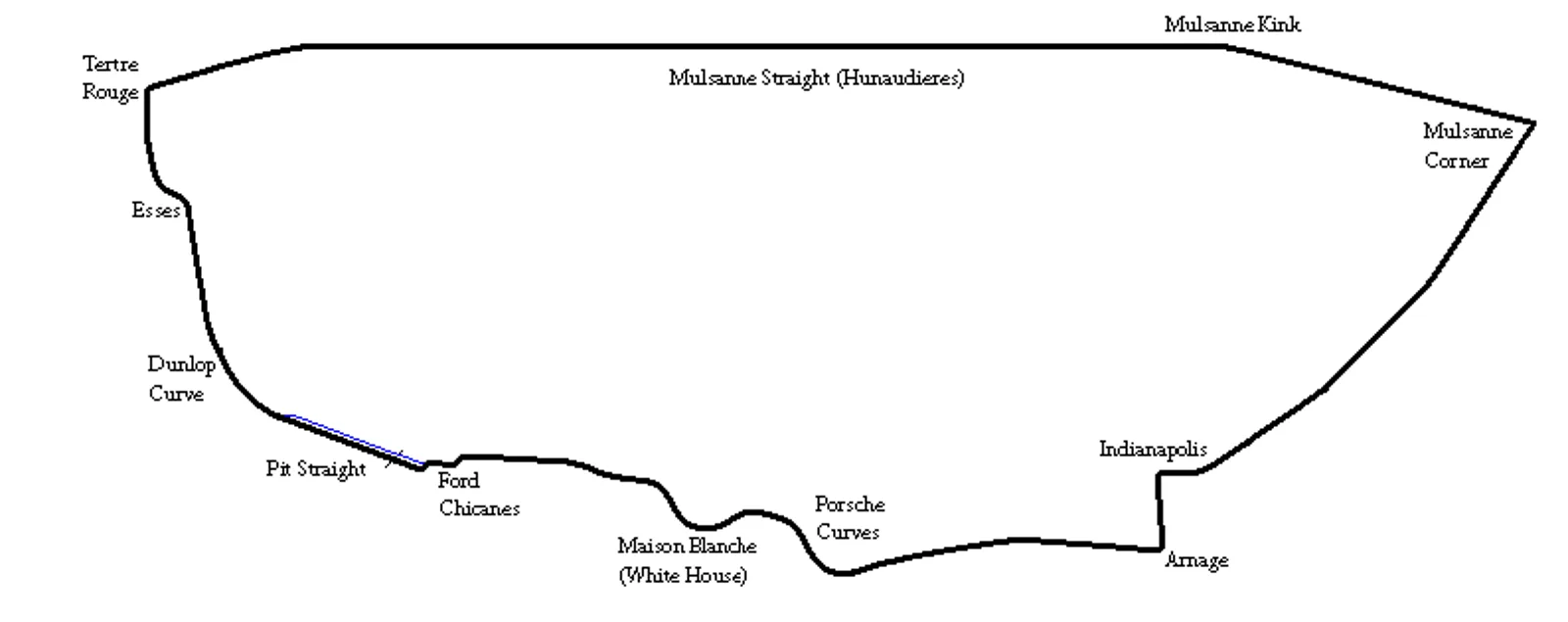
A prize was offered to the car that used the least fuel, and the Index of Thermal Efficiency was extended to every class. A plan for a new Mulsanne straight beside the public road had been proposed in the early 1970s, but the economic downturn meant no work had started, and it was dropped later in the year.
Who entered the 1975 race?
The ACO received 101 applications, which became 71 cars arriving for qualifying and 55 starters. Matra had withdrawn from sports car racing at the end of 1974, and Ferrari had left after 1973. Alfa Romeo's Autodelta sold its cars to Willi Kauhsen, who chose not to enter, and Alpine-Renault gave the same fuel reason for staying away.
Porsche 911s made up half the field, with 28 of the 55 starters. The NART Ferraris ran in three categories, and the Gulf and Ligier prototypes were the only serious sports-prototype challengers. A Plymouth Barracuda with a 426cu in Hemi engine was entered as a curiosity. Elf and Esso backed smaller sports cars with all-female crews, and Esso France suggested the all-female line-up for the Moynet car.
The Moynet car used a Chappe et Gesselin chassis and a Simca-JRD engine, and carried an all-female crew: Michele Mouton, Christine Dacremont and Marianne Hoepfner.
Why was Gulf the team to beat?
John Wyer's Gulf team was the strongest challenge, with a race-only version of the Gulf GR-8. Its DFV engine ran to an 8400rpm limit and gave 380 bhp, reaching 310 km/h (195 mph). Gulf Oil's chemists produced a fuel that returned 7.25mpg in testing, and the strategy was built around it.
Gulf's cars had managed 6.1mpg the year before, so the team knew how far the rules would squeeze it. Ickx partnered Derek Bell in one car, while Vern Schuppan and Jean-Pierre Jaussaud shared the other. Their long-wheelbase body was low-drag, and the fuel plan had been worked out in detail before the race began.
How strong were the Ligier and Matra-era rivals?
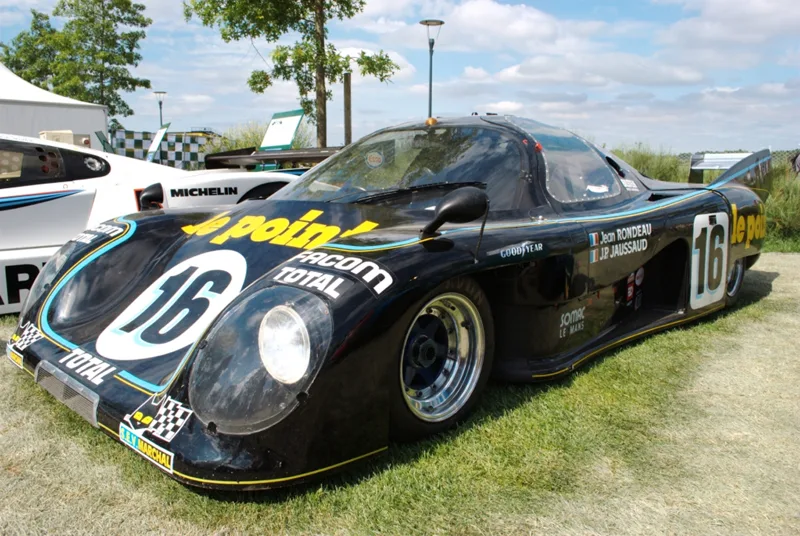
Guy Ligier's JS2 cars ran Cosworth DFV engines detuned to about 410 bhp. The cars were about 10% heavier than the Gulfs, so they were slightly slower in a straight line, but they remained the only real opposition. Ligier had also bought the Matra facilities and kept Matra's engineer Gerard Ducarouge on the job.
Migault and Pescarolo shared one Ligier, while Jean-Louis Lafosse and Guy Chasseuil shared the other. A late entry with a Maserati engine was run by Jean-Pierre Beltoise and Jean-Pierre Jarier, both former Matra drivers. Joest's Porsche 908/03 had a longtail chassis designed by Norbert Singer and was driven by Mario Casoni and Jurgen Barth.
Alain de Cadenet arrived with a new Lola T380 running a Cosworth DFV good for 400 bhp. Its chassis was new, and on the straights it was almost 40 km/h off the pace of the Gulfs and Ligiers. Heinz Schulthess entered a Lola-Cosworth tuned by Heini Mader, and Shin Kato returned with the Sigma MC-75, which used a 1.6-litre Toyota turbo engine.
How did practice cope with the fuel rules?
The March test weekend was cancelled, so many teams arrived with little idea of their fuel consumption. Each car had to show it could complete 20 laps at race pace before refuelling. Practice time rose to ten hours across Wednesday and Thursday, and every driver had to set a minimum lap time in daylight and darkness.
Ickx set the pace on Wednesday night, with pole going to his Gulf at 3:49.9. Jaussaud took the sister Gulf onto the front row on Thursday with 3:51.8. Lafosse was third in a Ligier, Casoni was fourth in the Joest Porsche, and Pescarolo ran the other Ligier.
A dispute broke out on Friday when officials declared the NART Dino 308 GT4 unqualified, although it had met the requirements. Luigi Chinetti appealed, and when the appeal was denied he pulled the four Ferraris off the dummy grid in protest. The Ecuador-Marlboro 911 managed three laps before being black-flagged.
How did the race start?
On a hot Saturday afternoon Bell moved into the lead at the rolling start. Schuppan then went past him on the Mulsanne straight and started to pull away. Joest was running third, with Craft and Pescarolo behind, and the Poulain BMW art car ran a credible sixth.
Several cars had early problems. The Schulthess Lola did not fire up in time and started a lap down. Beaumont's Alpine ran out of fuel three laps before its scheduled stop, because the team had misjudged its needs, a mistake that team principal Gerard Larrousse later admitted. That made it the first Alpine at Le Mans in six years.
The Gulfs kept a strong four-minute pace until their first stops after 21 laps, and Ickx took the lead soon afterwards and never lost it. By the third hour the Gulfs were separated by only two seconds, and de Cadenet, Joest and Casoni were the last cars still on the lead lap. Beltoise's Ligier-Maserati was pushed off into the Armco at Indianapolis after he tried to outbrake a Ferrari.
Painted by Alexander Calder, the BMW art car made an impressive start but dropped back after a broken brake line. It later stopped for good in the sixth hour with a damaged driveshaft. Craft's de Cadenet came in with rivets popped out of the engine case and a broken exhaust, then set the fastest lap while rushing back through the field.
What happened in the night?
At 9.30pm the second Gulf spent 25 minutes replacing an alternator and dropped to fifth, six laps behind its team-mate. The BMW art car had a broken CV joint, and Posey was stranded on the circuit. In the GT class Fitzpatrick held a two-lap advantage over the Beurlys car, and the Kremer was closing.
Shortly before midnight De Cadenet's engine cover came off at speed. It came down on the track, and Migault's Ligier struck it at full speed in the dark. Repairs took three-quarters of an hour, and an alternator fault later dropped the car out of contention. Around 2am Joest's Porsche collided with Poirot's 908 at Mulsanne corner, and the repairs dropped it to fourth.
By half-time the Gulf cars were running first and second, six laps apart, ahead of the Lafosse and Chasseuil Ligier. The Gelo Porsche remained in front of the GT field, with the Kremer second in its class.
Who led at the halfway stage?
The two Gulfs held first and second through the middle of the race, although the leading car had a constant vibration problem that cost it time. Soon after dawn Pescarolo punctured his Ligier and damaged its bodywork. Joest had a puncture at 8am, and the car kept its place despite the delay.
Ickx and Bell had built a sizeable lead by sunrise, and the second Gulf kept passing and then pitting to investigate its engine vibration. Soon after midday the rain arrived, and water got into the second Gulf's electrics, which took 15 minutes to dry out.
How was the finish decided?
The leading Gulf had the same vibration, and at 2.30pm its exhaust shook apart. While repairs were done the Ligier closed in, and it had just reached the lead lap when Bell rejoined in the Gulf with a full tank for the run home.
Victory went to the Gulf by a lap over the Lafosse and Chasseuil Ligier. It was the first all-British winner since Aston Martin in 1959. Schuppan and Jaussaud were third, five laps behind, with Joest's Porsche another five laps back. The Kremer Porsche had a major engine failure, but the team replaced the whole engine in 30 minutes and finished ninth. Eight Porsche GTs followed, and the Gelo car of van Lennep, Fitzpatrick and Hezemans beat the rest of Group 4 by four laps.
The leading finishers
| Position | Car and drivers | Note |
|---|---|---|
| 1 | Gulf GR-8: Jacky Ickx, Derek Bell | Winner by a lap |
| 2 | Ligier JS2: Jean-Louis Lafosse, Guy Chasseuil | One lap behind the winner |
| 3 | Gulf GR-8: Vern Schuppan, Jean-Pierre Jaussaud | Five laps behind the winner |
| 4 | Joest Porsche 908/03: Reinhold Joest, Mario Casoni, Jurgen Barth | Five laps further back |
The winners covered 4,595.58 km (2,855.56 miles) at an average of 191.50 km/h (118.99 mph). The fastest lap of the race was set by Chris Craft in the de Cadenet Lola.
Among the prizes, the Index of Thermal Efficiency went to an X-Racing Group 3 Porsche. The Lola-ROC, the slowest of the S-2000 cars, used the least fuel and finished second in its class. Moynet's all-female car, the first S-2000 finisher, came home 21st, having run carefully and without trouble.
Ickx's practice pole was 3:49.9, or 213.59 km/h (132.72 mph), and Craft's fastest race lap came in 210.03 km/h (130.51 mph). The attendance was put at 80000.
Why did the 1975 win matter?
Earning its first Le Mans win, the DFV, nine years old by then, also proved its reliability over 24 hours. It was also Wyer's fourth win, stretching back to Aston Martin's success in 1959, and Ickx's second. After the race Wyer retired and the JWA team was disbanded.
Ickx and Bell completed one lap fewer than the previous year's Matra winner, since they ran at much lower revs. Thirty cars were still running at the finish, equalling the record set in 1923 and 1951. The fuel rules were derided at the time, but they foreshadowed the Group C era of the 1980s.