From a Vespa at 16 and a Formula Three title to Tyrrell's number two seat, a 1971 Grand Prix win and a fatal qualifying crash in 1973.
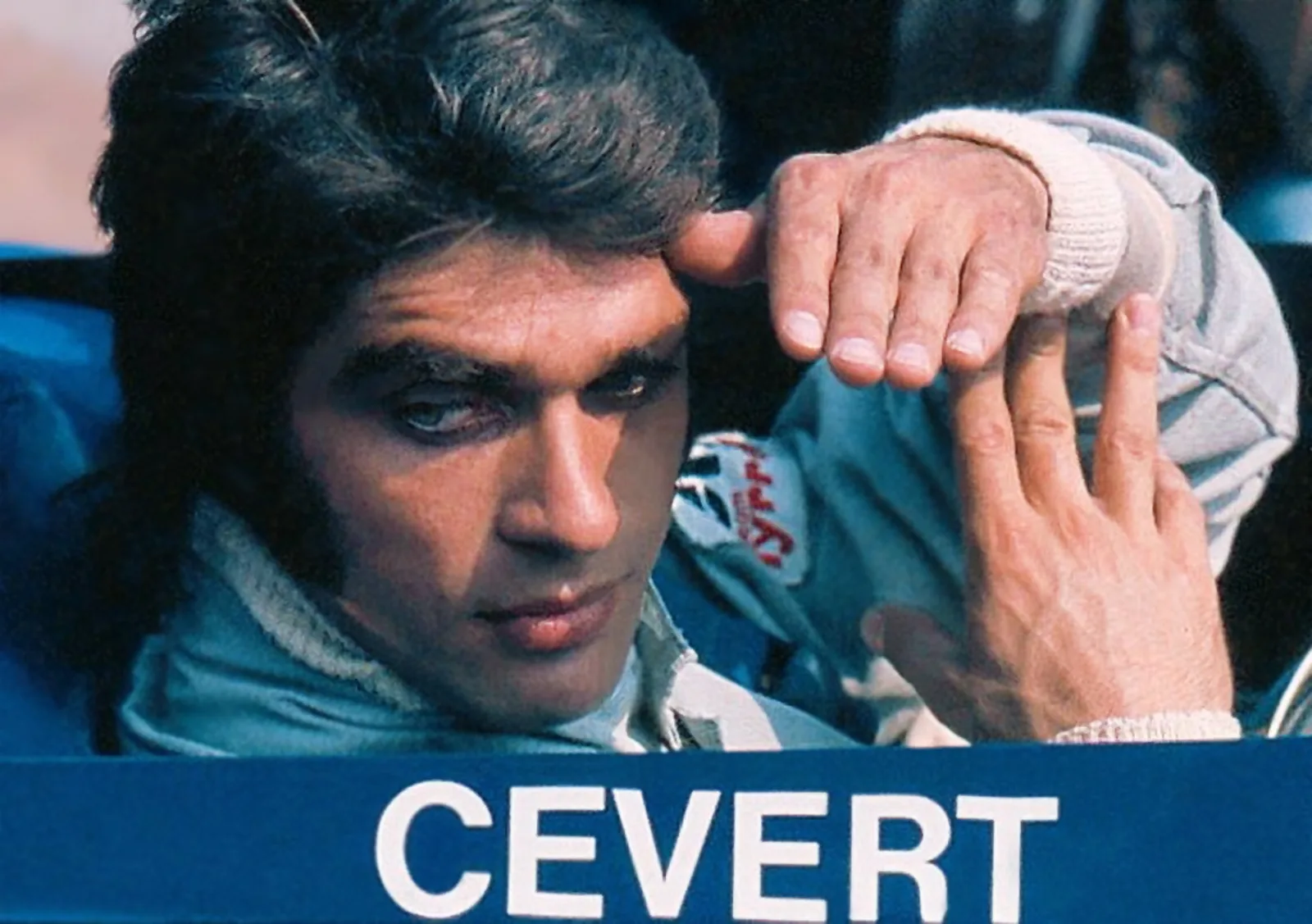
A French racer, Cevert drove for Tecno and Tyrrell between 1969 and 1973, winning once at Watkins Glen in 1971. He was killed in qualifying at the same circuit in 1973. He finished third in the 1971 championship and was Jackie Stewart's team-mate for much of his time at Tyrrell.
Francois Cevert was a French driver whose Formula One career ran from 1969 to 1973, first with Tecno and then with Tyrrell. His single Grand Prix win came at Watkins Glen in 1971, the year he finished third in the world championship. He died in qualifying at the same circuit in 1973, while chasing his first pole position.
Who was Francois Cevert?
Albert Francois Cevert was born on 25 February 1944 and died on 6 October 1973. He spent most of his Formula One career as Jackie Stewart's team-mate at Tyrrell, and the two men were close on and off the track.
His racing began on two wheels. At 16 he raced his mother's Vespa scooter against friends, and by 19 he owned a Norton motorcycle. He turned to cars once his national service was finished.
A French driver who rose on Jackie Stewart's recommendation, won once at Watkins Glen and died in qualifying there two years later.
How did Cevert break into car racing?
In 1966 he completed a course at the Le Mans driving school and then enrolled at the Winfield Racing School at Magny-Cours. As the top student he won the Volant Shell scholarship, and the prize was an Alpine Formula Three car.
That first season in the Alpine went badly, because he lacked the money and the experience to set up and run the car properly. Sponsorship for 1968 let him trade up to a Tecno, and with it he began to win. The season closed with the French Formula 3 crown in his hands, narrowly ahead of Jean-Pierre Jabouille.
How did Cevert reach Tyrrell and Formula One?
In 1969 Cevert joined Tecno's works Formula Two team and finished third overall in the European championship. He also drove in the F2 class at the German Grand Prix that year. Formula Two was then a useful training ground for ambitious drivers, since many Grand Prix stars raced in it when their own calendars allowed.
At Crystal Palace in 1969, Stewart struggled to get past Cevert in a Formula Two race. Afterwards he urged team boss Ken Tyrrell to watch the young Frenchman closely. That advice came back into play when Tyrrell needed a replacement in a hurry in 1970. Tyrrell later said the choice had really rested on what Jackie had said about him.
When Johnny Servoz-Gavin retired three races into 1970, Cevert became Tyrrell's second driver alongside the defending champion. He made his bow at Zandvoort for the Dutch round, in a March-Ford running as the team's second customer car. Over the following seasons he cut the gap to Stewart at almost every event.
His first world championship point arrived with sixth place at Monza that year. The same season he also won the 1000 km of Paris in a sports car, a result that showed the speed he could generate outside Formula One.
Did Cevert win a Grand Prix?
Yes, once. In 1971 he was runner-up in France and in Germany, both times behind Stewart. The season ended at the United States Grand Prix, held on the newly extended Watkins Glen circuit, where he took his first and only Grand Prix win.
He started fifth and moved ahead of Stewart on lap 14, after the Scot's tyres began to fade in the heat. Jacky Ickx closed in the Ferrari, and on lap 49 Ickx's alternator came loose and damaged the gearbox, spilling oil across the track. Denny Hulme's McLaren spun into the barrier, and Cevert went on to coast home with a lead of 29 seconds.
He became the second Frenchman to win a Grand Prix counting towards the world championship, after Maurice Trintignant, and he received 50,000 US dollars for the victory. That win was the peak of his time in the sport, and it helped him finish third in 1971 behind Stewart and Ronnie Peterson.
By 1971 Tyrrell was building its own cars rather than running customer chassis, so the Watkins Glen result came in a car the team had designed itself. Stewart's protege was now a regular winner in the same garage.
What were the 1972 and 1973 seasons like?
1972 failed to live up to the hopes that Cevert, Stewart and Tyrrell had shared. He scored only three times, with runner-up results in Belgium and the United States, plus fourth at Clermont-Ferrand, his home race. One bright spot was a second place at Le Mans, where he finished in a Matra-Simca 670 alongside Howden Ganley.
The Tyrrell team was back at the front in 1973, and Cevert kept pace with Stewart at nearly every event. He took six second places, three of them behind his team-mate, and Stewart later described him as an obedient partner at times. Stewart was privately planning to retire after the final race of the season, and Cevert was due to become Tyrrell's team leader for 1974.
What happened at Watkins Glen in 1973?
Stewart had already clinched his third world title when, during Saturday morning qualifying at Watkins Glen, Cevert was fighting Ronnie Peterson for pole position. At The Esses his car drifted across the track, struck the kerb and then the barrier. He died at the scene, aged 29 years and 224 days.
Stewart was among the last people to reach the scene, and he left immediately for the pits. Peterson later said Cevert had been his closest friend in Formula One. Tyrrell withdrew its entry for the race, and Stewart did not run what would have been his 100th start. Cevert was buried at Vaudelnay in the Maine-et-Loire region of France.
Word of the severity of the crash spread slowly through the paddock. Lotus boss Colin Chapman was among those who walked to the Tyrrell pit, where word was that Cevert was the driver hurt, and the verdict was that it looked very bad. Wilson Fittipaldi, who had wished Cevert luck before qualifying, protested the decision to restart the session.
Stewart later examined the crash and the gear choices he and Cevert had made through The Esses. Their discussion on that point was captured on film minutes before the fatal session.
What changed at Watkins Glen after the accident?
Another young driver, Helmut Koinigg, died at the same circuit in 1974, when his car ran straight on at turn 7 and struck the barrier. In response to the two accidents, a chicane was introduced in 1975 to reduce speeds through turns 2 to 4.
How is Cevert remembered today?
Cevert appeared at length in the film Rush, which portrays a composite of his fatal crash in 2013. The same year 1: Life on the Limit documented the 1973 accident, and in 1975 he had been profiled in the documentary The Quick and the Dead.
His record includes the 1966 Volant Shell win, the 1968 French Formula 3 title, third place in the 1971 world championship, second at Le Mans in 1972 and victory in the 1000 km of Paris in 1970.
What did Cevert's seasons look like year by year?
| Year | Team | Notable result |
|---|---|---|
| 1969 | Tecno, Formula Two | Third overall in the European F2 championship |
| 1970 | Tyrrell | Sixth at Monza for his first world championship point |
| 1971 | Tyrrell | Watkins Glen win; third in the championship |
| 1972 | Tyrrell; Le Mans with Matra | Second in Belgium and the US; second at Le Mans |
| 1973 | Tyrrell | Second six times; killed in qualifying at Watkins Glen |