Jaguar's full works return, a relaxed fuel formula and a race in which Jo Gartner was killed on the Hunaudieres straight, won by Bell, Stuck and Holbert.
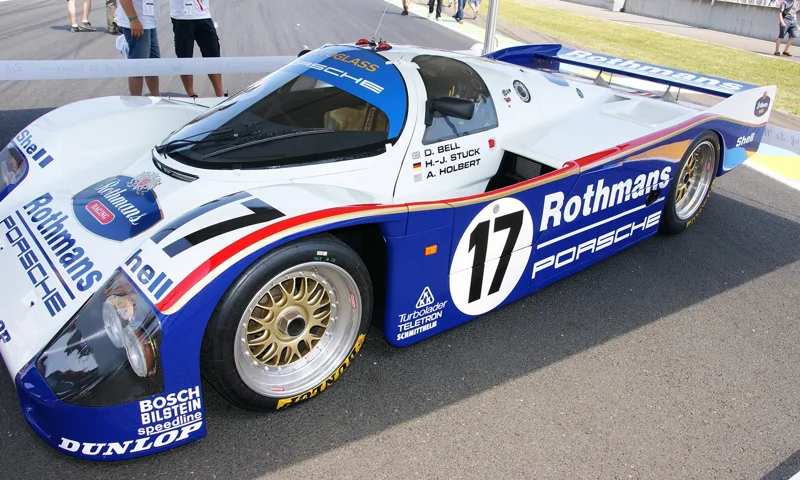
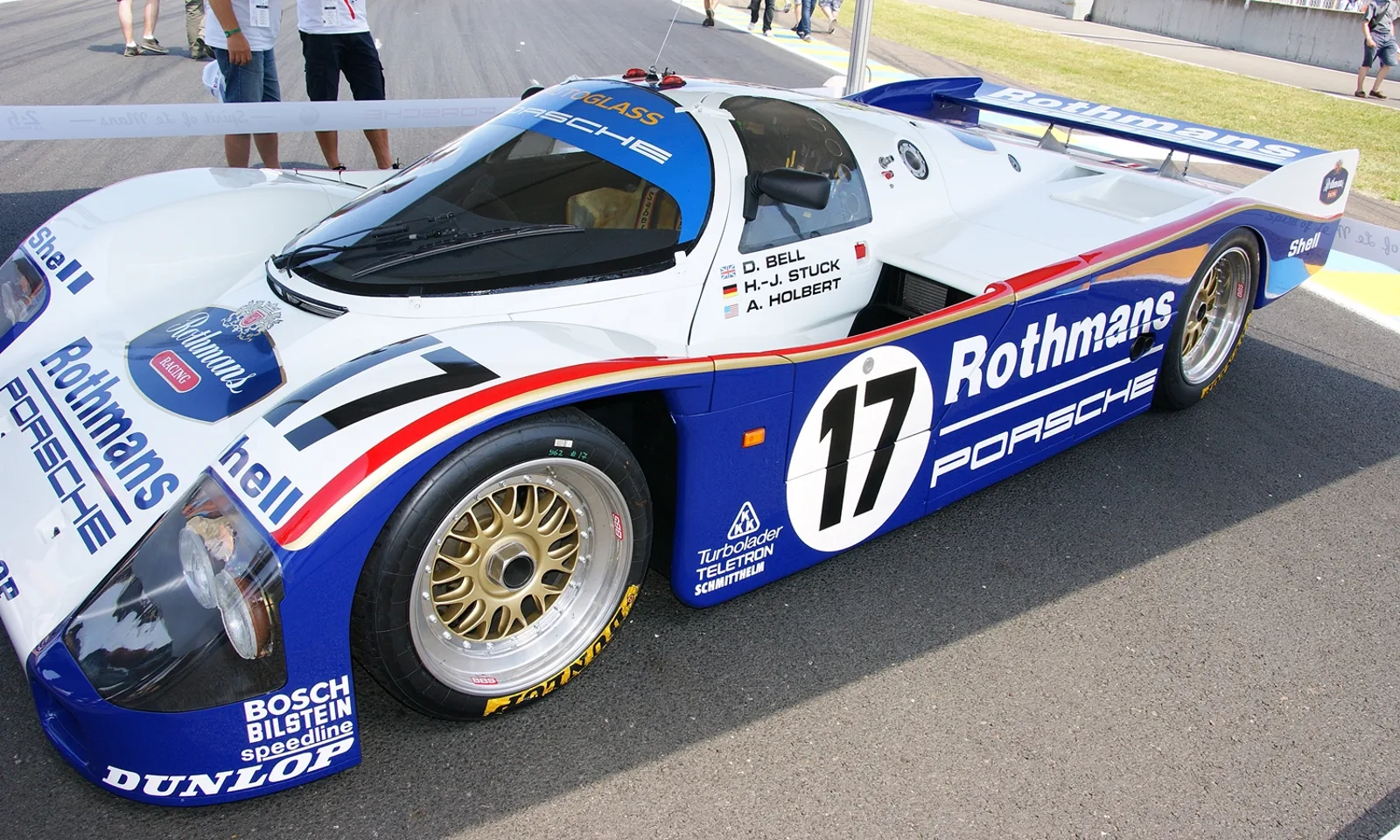
The works Porsche 956 of Bell, Stuck and Holbert won the 1986 Le Mans 24 Hours, eight laps ahead of the Brun car. The race was overshadowed by the death of Jo Gartner on the Hunaudieres straight.
Derek Bell, Hans-Joachim Stuck and Al Holbert won the 1986 24 Hours of Le Mans in the works Porsche 956, eight laps ahead of the Brun Porsche. The 54th running took place on 31 May and 1 June 1986, the third round of the renamed World Sports-Prototype Championship. Jaguar returned with a full works team, and Jo Gartner's death on the Hunaudieres straight cast a shadow over the 54th running.
Why did the championship and its fuel rules change in 1986?
For 1986 the championship was renamed the World Sports-Prototype Championship, partly to take the emphasis off endurance racing. The fuel rules were relaxed too: C1 and GTP cars were given 2550 litres, up from 2210, and Class C2 rose from 1430 litres to 1650 litres.
The fuel rigs were adjusted to flow 60 litres per minute instead of 50, which trimmed the time for a full refuel by about 20 seconds. The FIA also added several shorter races to the calendar, alongside the long endurance events.
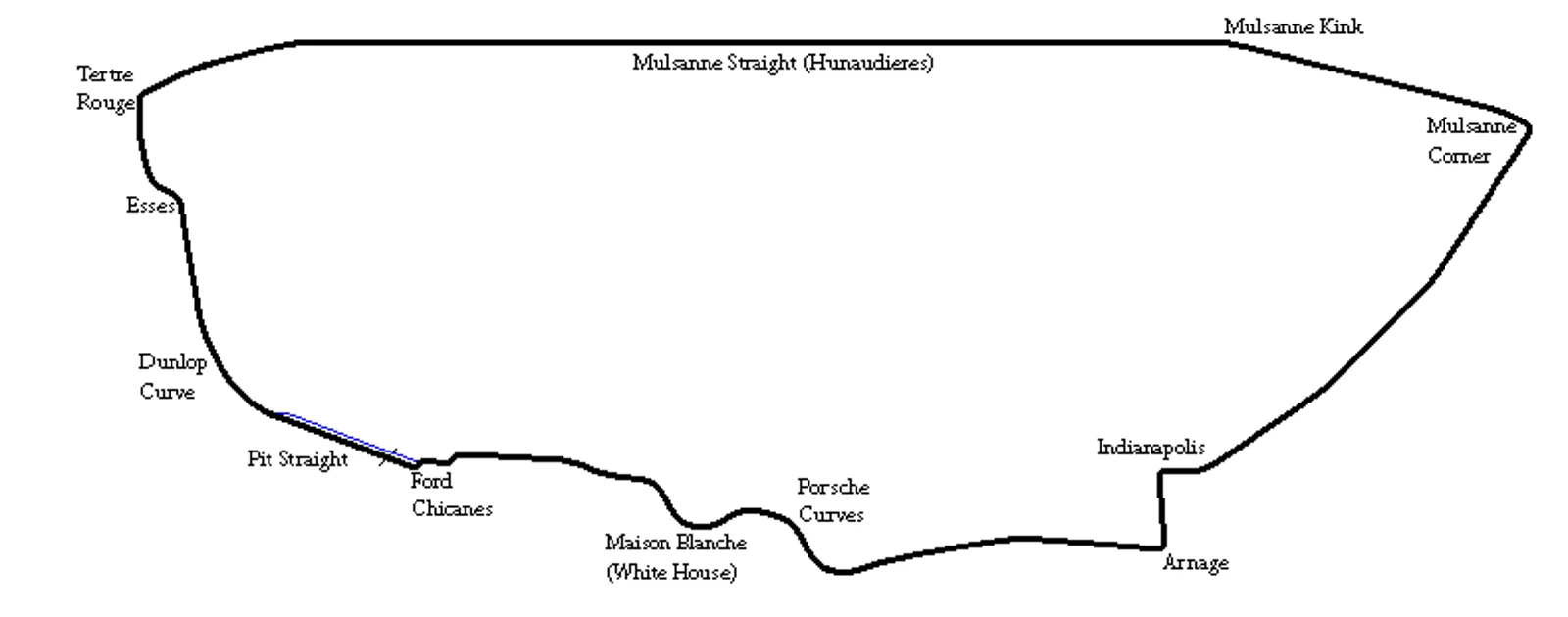
The public roads section changed as well. A roundabout was built at Mulsanne corner after a serious accident black spot, which shortened the circuit by 98 metres (320 feet). Triple-tier Armco was fitted along the whole length of the Hunaudieres straight.
The pre-race test day drew only 17 cars. The hors course rule was reinstated for the final four hours, and any car finishing with less than 60% of the leader's distance could be excluded.
Eight laps clear at the finish, but the story of 1986 was the crash that stopped the race for two and a half hours.
Who was in the 1986 entry list?
Jaguar's full works team returned to the championship, after immediate success in the first two races of the series. Lancia withdrew to focus on rallying, Nissan joined Toyota and Mazda in the top classes, and for the first time since 1956 there were no American teams.
Porsche dominated the C1 entry with a mix of 962 and 956 models. The Rothmans works team brought four chassis, including the T-car, and it ran Bell and Stuck with Al Holbert in the lead car. Bob Wollek had left Lancia and joined Jochen Mass in the second works car.
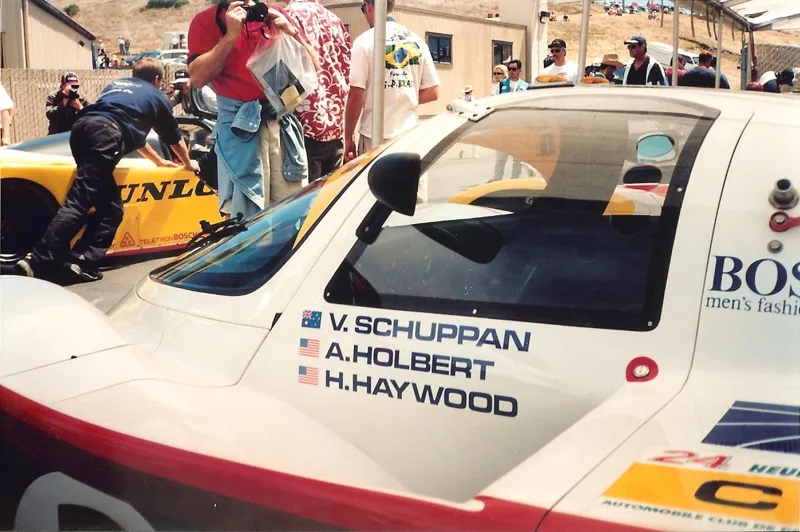
The third works car had Vern Schuppan and Drake Olson, and it used Porsche's experimental PDK dual-clutch gearbox, which offered electronic gearshifts and an in-car camera. Joest ran its winning 956B with Klaus Ludwig, Paolo Barilla and Louis Krages, and its second car had Kenper Miller, George Follmer and John Morton.
Brun ran two 962Cs built at its own workshop, along with an older 956. Kremer Racing was regrouping after the death of its lead driver, Manfred Winkelhock. Its 962C was driven by Jo Gartner, Sarel van der Merwe and Kunimitsu Takahashi, and Gartner had earlier that year taken a Sebring 12 Hours win alongside Stuck and Akin.
Walter Brun stepped into the lead car himself, with Massimo Sigala and Frank Jelinski, after Stefan Bellof, who had been killed the previous year, was replaced. The other regular drivers were Oscar Larrauri, Jesus Pareja and Joel Gouhier.
The tyre picture was split. The works team had a long relationship with Dunlop, Kremer had a new contract with Yokohama, and Joest, JFR and Richard Lloyd ran Goodyear. With Lancia out, Michelin switched its support to the Brun team.
What did Jaguar bring to Le Mans?
Jaguar's XJR-6 was designed by Tony Southgate and powered by a 6.0-litre twin-valve V12 with a single overhead camshaft. Tom Walkinshaw's engine specialist Allan Scott tuned it to 630 bhp, and the car could reach 370 km/h (230 mph) on the straights.
The season drivers were Eddie Cheever with Derek Warwick, and Jean-Louis Schlesser with Gianfranco Brancatelli. Win Percy joined Brancatelli in the second car for Le Mans, while Brian Redman, Hurley Haywood and Hans Heyer shared a third car. Warwick and Cheever had won the Silverstone round, which gave the team confidence.
Sauber's C8 was backed by Kouros cosmetics sponsorship, and Mercedes-Benz stayed committed to the project. Henri Pescarolo drove one car with Christian Danner and Dieter Quester, while John Nielsen and Mike Thackwell shared the other.
NISMO's president, Yasuharu Nanba, reportedly arrived with orders for the cars to finish at all costs, and March brought in Keith Greene as team manager, with James Weaver for his Le Mans expertise.
Mazdaspeed stepped up its racing programme, moving from C2 into the IMSA GTP class with the new 757. Its 13G was the first triple-rotor Wankel, and the cars were much lighter than the C1 machines.
Porsche's four-wheel-drive 961 was entered in the GTX class. It had a 2847cc twin-turbo engine producing 640 bhp, could reach 330 km/h (205 mph), and was driven by Rene Metge and Claude Ballot-Lena.
Despite the recent death of the Rondeau founder, Jean Rondeau, two Rondeaux were entered in C1. Graff Racing had heavily modified the bodyshell of its car, which carried an in-car camera for a French TV channel, and the second car was an older Rondeau that Patrick Oudet had bought from Christian Bussi.
Tim Lee-Davey modified one of his Tiga cars to C1 standard, with a turbocharged Cosworth DFL engine, a Hewland transmission and Bosch Motronic engine management. Neil Crang was his co-driver, along with John Gimbel.
How did qualifying set the grid?
Jochen Mass took pole with a 3:15.99 lap at dusk on the first day, and the works Porsches were the fastest cars in qualifying. Stuck's first-day time was over six seconds slower than his 1985 record.
Ludwig set the top speed on the Hunaudieres straight at 375 km/h (232 mph). The best Jaguar was Warwick, fifth at 3:21.6, and Danner was ninth for Sauber at 3:26.7, although the Sauber top speed was held to 330 km/h (205 mph).
The GTP Mazdas qualified 25th and 29th, and Dome's Toyota was 30th at 3:45.3. The new R86V of Nissan was 24th at 3:41.5, but its top speed was 70 km/h (45 mph) lower than the Porsches and Jaguars.
In C2 the new Spice-Fiero set the fastest time, qualifying 23rd at 3:40.4. Rondeau qualified second in the class, over four seconds behind, and Gebhardt started 28th. The GTX Porsche 961 started 26th, while the Group B BMW was 50th at 4:08.7.
How did the race start?
The race started at 4pm, with Sir John Egan, the chairman of Jaguar, as honorary starter. Ludwig and Boutsen tried to pass the Rothmans Porsches four-wide down the main straight, and Ludwig and Warwick led at Mulsanne before the works cars caught up.
An early casualty was Raphanel's Cougar, which lost a door on the first lap. The repair cost 20 minutes, and the replacement door came off again three laps after the car returned to the track. The team then spent hours making a substitute from sheet aluminium.
After the first hour nine cars were still on the lead lap, and after two hours only five. Joest's car was still less than 30 seconds ahead of two works Porsches at the first stops, and Pescarolo's Sauber lost its oil cooler to debris from the car ahead.
What happened in the night?
The early phase had been a tactical match between the two Porsche teams, with Joest holding a narrow edge on fuel economy.
Win Percy's Jaguar had its fuel cell overfilled to about 128 litres during a pit stop, which was dangerous in a crowded pit lane. Later a driveshaft failed on the car at speed, and Percy parked it on the circuit.
Bell and Ludwig traded fastest laps through the night, often within seconds of each other. The Rothmans Porsche took the lead at 2am and held it, while Mass's car was wrecked soon after 3am when he spun on spilt oil in the Porsche Curves.
Sauber's Le Mans was a fairly dismal one. The Pescarolo, Danner and Quester car had been climbing back up the field after an early delay, but a broken gearbox put it out at 11pm.
How did Jo Gartner's crash change the race?
Jo Gartner was killed in the early hours of Sunday, when the transmission of his Kremer Porsche failed on the Hunaudieres straight. The rear wheels locked, and the car hit the Armco at 260 km/h, then struck a telephone pole and went up into the trees.
The car came down across the track and ended upside down and on fire on the far guardrail. Cars were held behind the pace cars for two and a half hours while crews repaired the barriers, and the Kremer team withdrew its other car.
The long caution period had a lasting effect on the leaders. The field's pace was cut, and the extended slow running overheated the engine of Ludwig's leading Porsche, which ran its bearings and retired.
How did the leaders finish the race?
That left Bell, Stuck and Holbert with a nine-lap lead over the rest of the field, and fuel was no longer an issue for them, so the result looked comfortable. Larrauri drove a long night stint to bring the Brun Porsche back up to fourth.
At 6am the works car had completed 210 laps, while the Brun car and the remaining Jaguar were both nine laps back. The JFR Porsche of Velez, de Villota and Fouche was fourth on 198 laps.
Race at a glance
| Item | Detail |
|---|---|
| Winners | Bell, Stuck and Holbert, works Porsche 956 |
| Margin | Eight laps over the Brun Porsche |
| Second place | Brun Porsche, Larrauri, Pareja and Gouhier |
| Fatal accident | Jo Gartner, Kremer Porsche, Hunaudieres straight |
| Last classified | Spice-Fiero, which won the Index of Thermal Efficiency |
Who won the 1986 Le Mans 24 Hours?
Bell, Stuck and Holbert crossed the line first in the works Porsche 956, after the Rothmans team had taken the lead at 2am. The Brun Porsche of Larrauri, Pareja and Gouhier finished second, eight laps behind, in a comfortable margin for the works team.
The win gave Bell his fourth Le Mans victory, which put him among a select group of drivers with four wins. The Spice-Fiero, the last car classified, took the Index of Thermal Efficiency prize despite its delays.
Why does the 1986 race still matter?
The race is remembered for the death of Jo Gartner, which was the most serious incident of the weekend. It was a reminder of how fast the cars had become on the Hunaudieres straight, even with the new Armco.
The result also confirmed the works Porsche team's strength in a year when Jaguar had come back with its full factory effort. The works Porsche team's strength told in the end, after the Jaguars had faded, and the margin shows how far the Porsches could pull clear. Joest's bid for a third straight win ended behind the pace cars when its engine failed.
Half the field had retired by the morning, which showed how hard the race had been on the cars. The hors course rule was in place to deal with the cars that could not keep up.