Jaguar had won the first four rounds of the Championship, but rain, a cut in fuel octane and a 2.45am tyre blow-out on the Hunaudieres straight left a works Porsche alone at the front.
The works Porsche 962 of Bell, Holbert and Stuck won the 1987 Le Mans 24 Hours after rain, a fuel octane cut and a crash that wrecked the Jaguar challenge. Only twelve cars were classified.
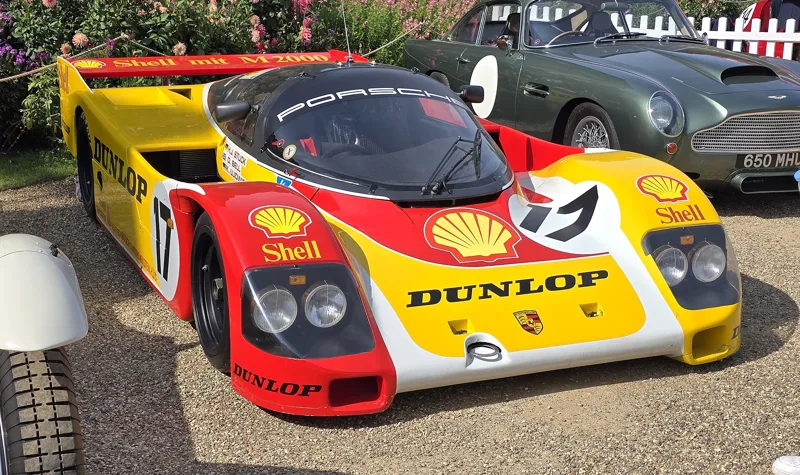
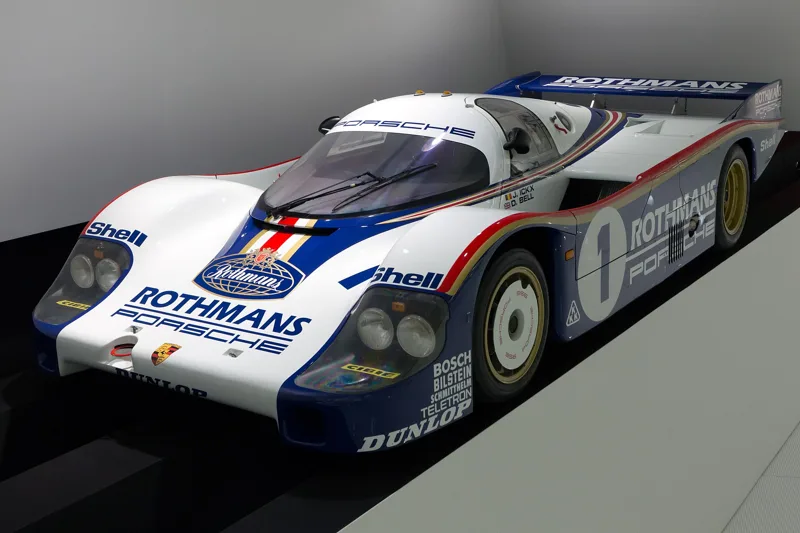
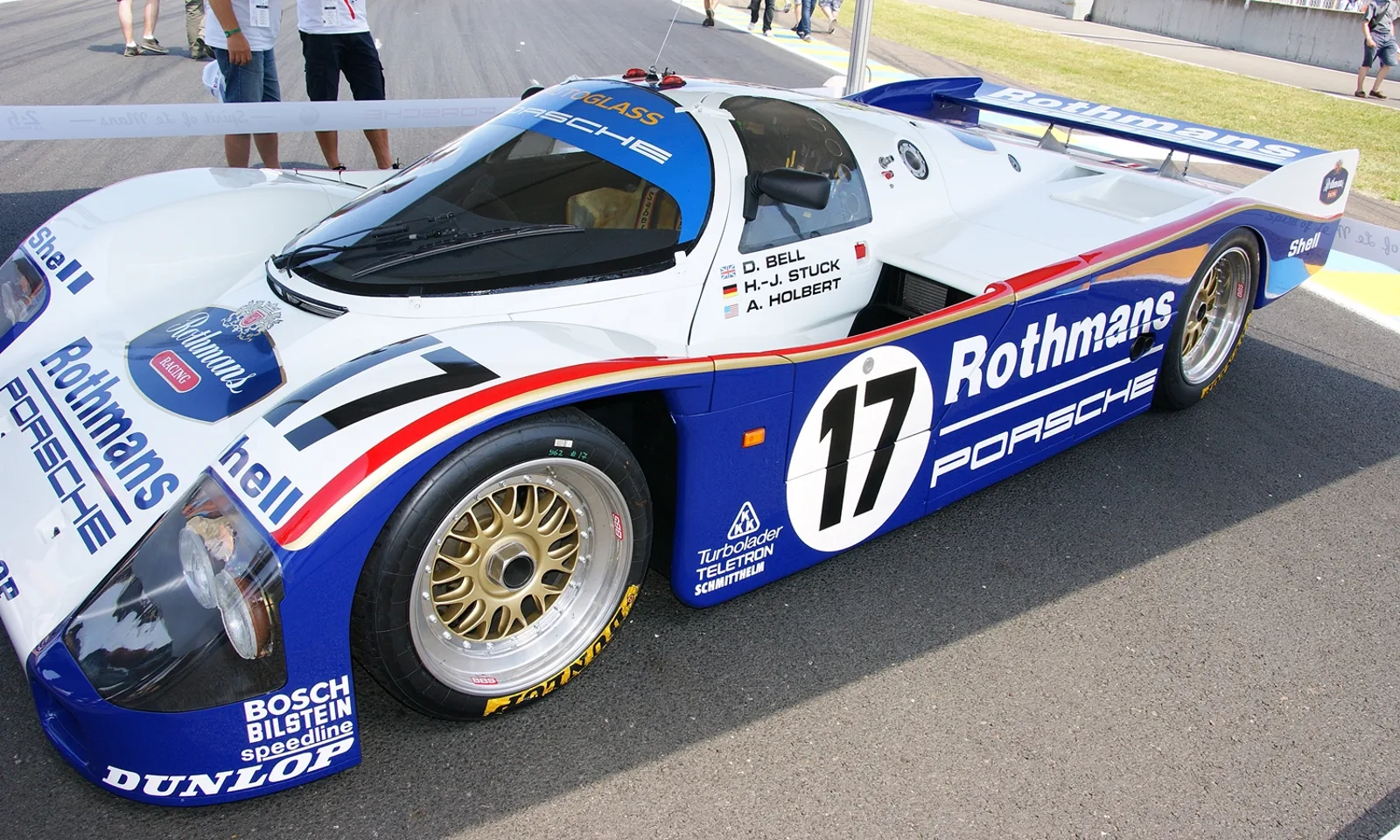
The works Porsche team won the 1987 24 Hours of Le Mans for the second year running, with Derek Bell, Al Holbert and Hans-Joachim Stuck sharing the 962 that finished the race ahead of the remaining cars. Jaguar had won the four preceding rounds of the Championship, but its challenge fell apart in the rain. The 55th running took place on 13 and 14 June 1987, and only twelve cars were classified at the finish.
What changed in the rules for 1987?
The FIA aligned the Group C safety rules with IMSA. The foot-pedals now had to sit in a reinforced box behind the front axle, which was a change that affected every car on the grid.
The fuel was also downgraded from 105 to 98 octane, and the special additives such as toluene were removed. The change was expected to cost turbo cars about 20 bhp, and it became one of the reasons the race was so difficult for the Porsches.
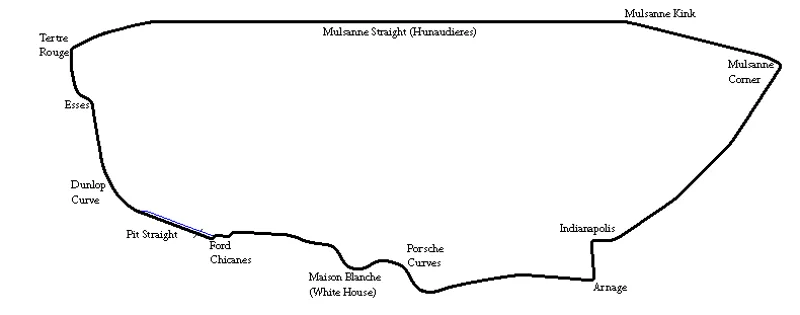
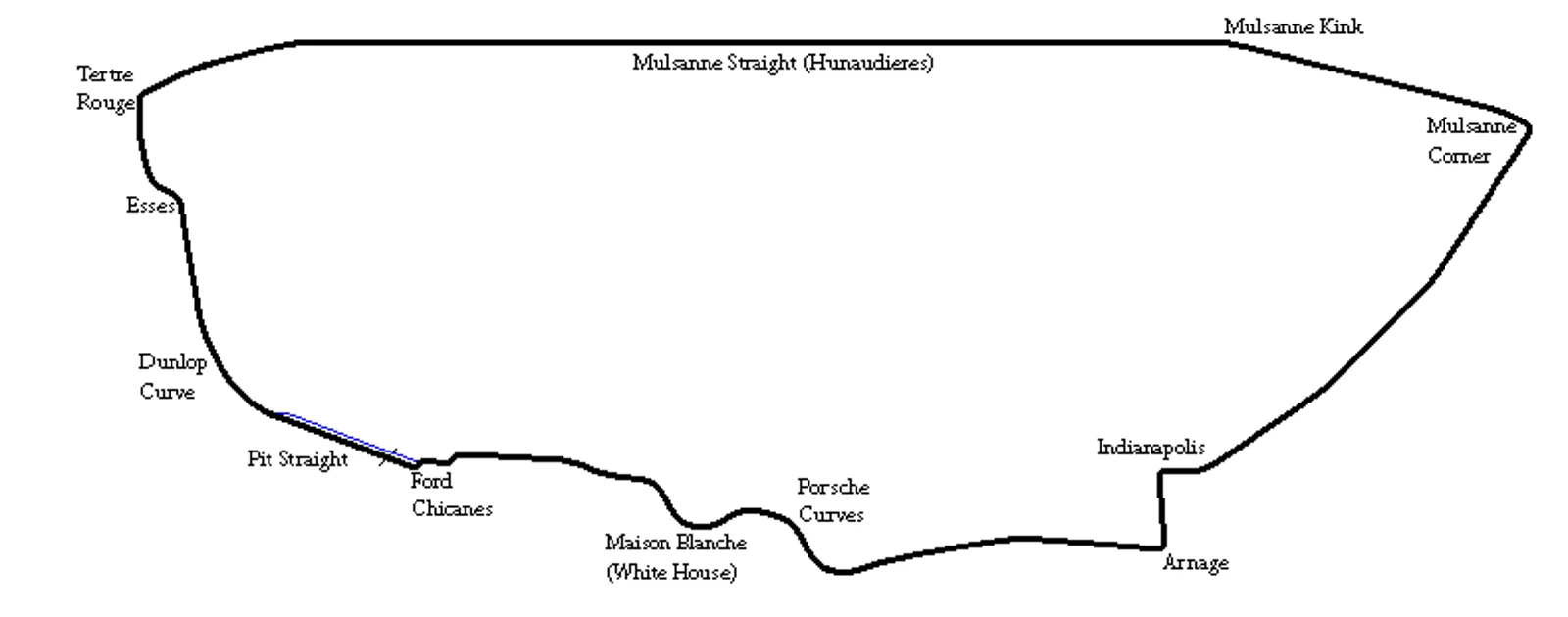
The Dunlop Curve was tightened, with a chicane added before the brow of the hill and the Dunlop bridge. The circuit grew by only 7 metres, but lap times rose by around 4-5 seconds, and the department resurfaced the section from the Indianapolis corner to the Porsche curves.
Of 50 prospective entries at the test day, only 23 cars arrived, and Silk Cut and Autosport magazine backed Radio Le Mans that year. It was not broadcast through the whole night, but it gave the British fans on site informed commentary.
Four rounds won by Jaguar, then rain, a fuel change and a 2.45am crash left a works Porsche alone at the front.
Who was on the 1987 grid?
Five works manufacturers from the previous year returned, and the showdown was between Porsche and Jaguar. Tens of thousands of British fans came to the circuit, about a quarter of the crowd.
The Rothmans Porsche team arrived with a fully water-cooled 3-litre engine, and twelve of the 962s built to date were in the field. The standard 962 still had its 2.85-litre engine, now producing 640 bhp. Brun Motorsport, the 1986 Teams Championship winner, ran three 962s.
Jaguar's XJR-8 had a 7.0-litre V12 producing 720 bhp, and its top speed was close to 355 km/h (220 mph). The cars weighed just a kilo over the 850 kg minimum. Cheever and Boesel led the regular season pairings, with Lammers and Watson in the second car and Win Percy as a co-driver, while Brundle and Nielsen drove the third.
Sauber's C9 produced 650 bhp, or 800 bhp in qualifying trim. Nissan's March 87G had a 3.0-litre DOHC twin-turbo V8 producing 700 bhp, and Toyota's 87C used a 2.1-litre turbo producing 680 bhp, although it reached only 335 km/h (210 mph).
Toyota brought its racing division in-house during the close season, with TOM'S Racing as the works team and staff from Dome, including chief designer Masahiro Ohkuni. Alan Jones teamed up with Geoff Lees and Eje Elgh, while Masanori Sekiya, who married during race week, drove the second car with Kaoru Hoshino and Tiff Needell.
WM's P87 had a V6 that raced at 600 bhp and reached 900 bhp in qualifying. Francois Migault reached 415 km/h (260 mph) on a new section of autoroute. Courage's C20 used a 2.8-litre Porsche engine, and it was 18 kg heavier than the car it replaced, but it reached 370 km/h (230 mph).
In C2 the Ecosse C287 reached 345 km/h (215 mph) on the Hunaudieres straight. The Tiga GC287 used a 2.65-litre Porsche twin-turbo engine producing 500 bhp, while Dune Motorsport's Tiga had a 3-litre Rover V6 with 380 bhp and Thyrring's car used a BDT rally engine producing 600 bhp.
The IMSA GTP class was a contest between Mazda's 757 and Porsche's four-wheel-drive 961, which was driven by Rene Metge and Claude Haldi. Group B cars were absent, and there were no production-homologated cars in the field for the first time since 1959.
How did qualifying set the grid?
Qualifying was hampered by poor weather. Stuck's first-day time was 3:21.1, which was over six seconds slower than his 1985 record, and Wollek beat it by four-hundredths of a second on the same day.
Price Cobb crashed a third works Porsche at the Porsche Curves in practice, and he was lucky to get out with only singed eyebrows. Schuppan joined the Wollek and Mass car, and the car that Cobb had been driving was written off.
The fastest Jaguars were third, fourth and fifth, all in the 3:24s. Raphanel's Cougar qualified sixth at 3:26.1, and the Saubers, who had been third and fourth on the first day, ended up 7th and 8th. Joest's #7 was at 3:27.5.
Palmer's 3.2-litre qualifying engine blew up on the first lap. The WM P87 started 21st at 3:38.7, while Toyota's best was 14th at 3:34.5, and the three GTP Mazdas qualified within three seconds of each other, the leading one 27th at 3:45.6.
In C2 Nick Adams set the pace in the Spice-Fiero at 3:40.0 for 22nd. The works Spice qualified 25th at 3:42.3, and Ivey's Tiga was the fastest Tiga at 30th, 3:50.3. The Porsche 961 started 31st at 3:50.9, and the Chevron was last at 4:14.3.
What happened in the first hour?
Gerald Lascelles, who chaired the British Racing Drivers' Club, was the honorary starter. The day had started with showers, and the first hour was chaotic as many cars pitted to change from rain tyres to slicks.
Lammers and Palmer pitted after the first lap as the track dried. The standard-grade fuel was a real problem. It burned out the pistons in the Joest and Kremer Porsches within seven laps, while the pole-sitting works Porsche of Wollek, Mass and Schuppan was out after 16 laps.
Later the Richard Lloyd Porsche caught fire at Mulsanne corner, and a safety car came out. The race then had to deal with a series of other problems as the fuel rules took their toll.
How did the Jaguar challenge collapse?
After three hours the Porsche led the Brundle and Nielsen Jaguar by barely a car's length, and Brundle and Watson later got past to lead for three hours. Then Cheever's car had a puncture and a broken throttle link at dusk. The team had to fight through more trouble in the night.
At 2.45am Win Percy's Jaguar blew a tyre at over 350 km/h on the approach to Mulsanne. The car slammed into the barriers, disintegrated, and Percy walked away with the cockpit intact and no fuel spilled. Southgate, the car's designer, was proud of how the tank had held.
The two Jaguars both failed in the morning, leaving the works Porsche alone at the front with a lead of fifteen laps. The Porsches had the race to themselves, and the leading car had a fifteen-lap cushion that the rest of the field could not match.
What did the night do to the smaller teams?
The Brun team had a wretched race and lost all three cars before halfway. The BLR Porsche caught fire at Mulsanne corner soon after midnight, and the Canadian entry was stopped by a water leak later.
The Chamberlain Spice lost more than an hour to a water leak, and the Spice/Velez car duelled with the Ecosse in C2 for most of the night. Ecosse's battery failed behind the pace car, stranding Mike Wilds on the circuit.
Alan Jones ran out of fuel at the first stop after a misunderstanding about the size of the Toyota's reserve tank. Hasemi's Nissan had a flash fire at its first fuel stop, and it later lost three hours to electrical problems before retiring in the early morning.
Dumfries, who had been running sixth after the second hour, turned in the quickest lap of the race during the third hour, but the Sauber's gearbox failed, and Pescarolo's car lost a universal joint, which he repaired on the track with his own tools. A puncture at 4.30am shredded the bodywork of the last Sauber.
The race had three safety periods, and the last of them lasted nearly two hours.
Who won the 1987 Le Mans 24 Hours?
Bell, Holbert and Stuck won in the works Porsche 962, giving them consecutive Le Mans victories. Their win came after the Jaguar challenge had collapsed in the rain and the morning.
The Obermaier Porsche survived the attrition for a fine second place, and Yves Courage finished third in his Cougar. Gordon Spice won the C2 class in his Spice-Fiero, finishing sixth overall ahead of Ecurie Ecosse.
Race results at a glance
| Position | Entry | Result |
|---|---|---|
| 1 | Works Porsche 962, Bell, Holbert and Stuck | Consecutive Le Mans wins |
| 2 | Obermaier Porsche | Reliable race through the attrition |
| 3 | Cougar, Yves Courage | Third overall |
| 6 | Spice-Fiero, Gordon Spice | Won the C2 class |
| Index | Ecurie Ecosse | Index for Energy Efficiency |
Why does the 1987 race still matter?
The race is remembered for the rain and the fuel rules. Just twelve cars were classified, the fewest since 1970, and the attrition was severe.
Radio Le Mans was sponsored that year by the Silk Cut Jaguar team and Autosport magazine. It went on to become an established feature of the event.
The result also showed how strong the works Porsche team remained, even with the octane cut and the Dunlop changes. The fuel and circuit changes did not stop the Porsche team from winning.
Porsche's newest chassis went to Wollek and Mass. Bell and Stuck drove a one-year-old chassis, after Stuck had crashed their new car in pre-race testing, and Holbert was in the same team, while Schuppan, Price Cobb and Kees Nierop drove a car from 1985.
Walter Brun stepped aside from driving that year, and his lead car had an all-French line-up led by Pierre de Thoisy. Oscar Larrauri and Jesus Pareja had the second car, and a third car carried a Canadian crew with a television camera.
The Liqui Moly team of Richard Lloyd, renamed Britten-Lloyd Racing, had been busy with a new chassis designed by Nigel Stroud. The car was renamed the 962C GTi, with adjustable suspension and moveable wings on a honeycomb composite chassis. The regular driver was Jonathon Palmer, a Tyrrell Formula One driver, and he was joined by James Weaver and Pierre Petit for the race.
The Obermaier Racing team, now co-sponsored by Primagaz, ran a brand-new 962C for Jurgen Lassig, who was joined by Pierre Yver and Bernard de Dryver.
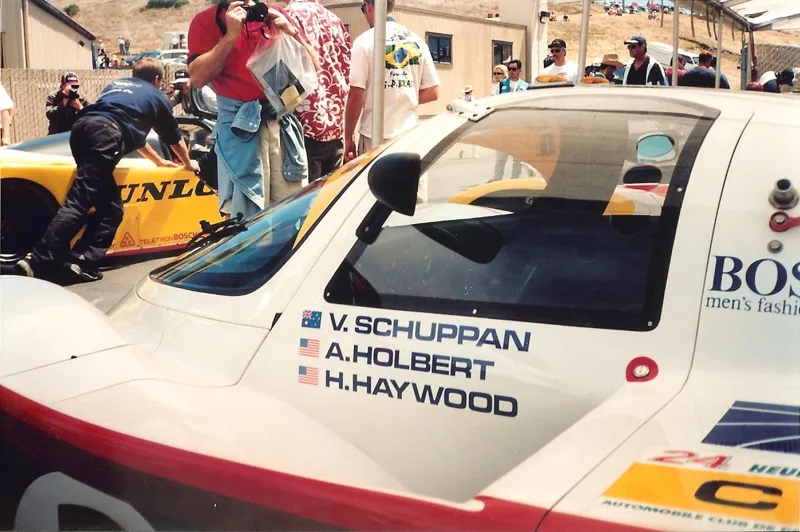
Joest Racing had two new crews, with Stanley Dickens joining Hurley Haywood and Frank Jelinski. Peter Sauber sold one of his C8 cars to the French privateer Noel del Bello, who had moved up from his Tiga in C2.
The team had done extensive winter testing at Paul Ricard, and it had shared the season's four wins between its two driving pairs. The engineers at Tom Walkinshaw Racing made more than sixty modifications to the XJR-8, and Dunlop developed Kevlar-laced tyres to hold their shape under the increasing downforce.