A race kept out of the Championship by a contract dispute, with Sauber-Mercedes taking the win after Jaguar's gearbox trouble left the cars that had led most of the race.
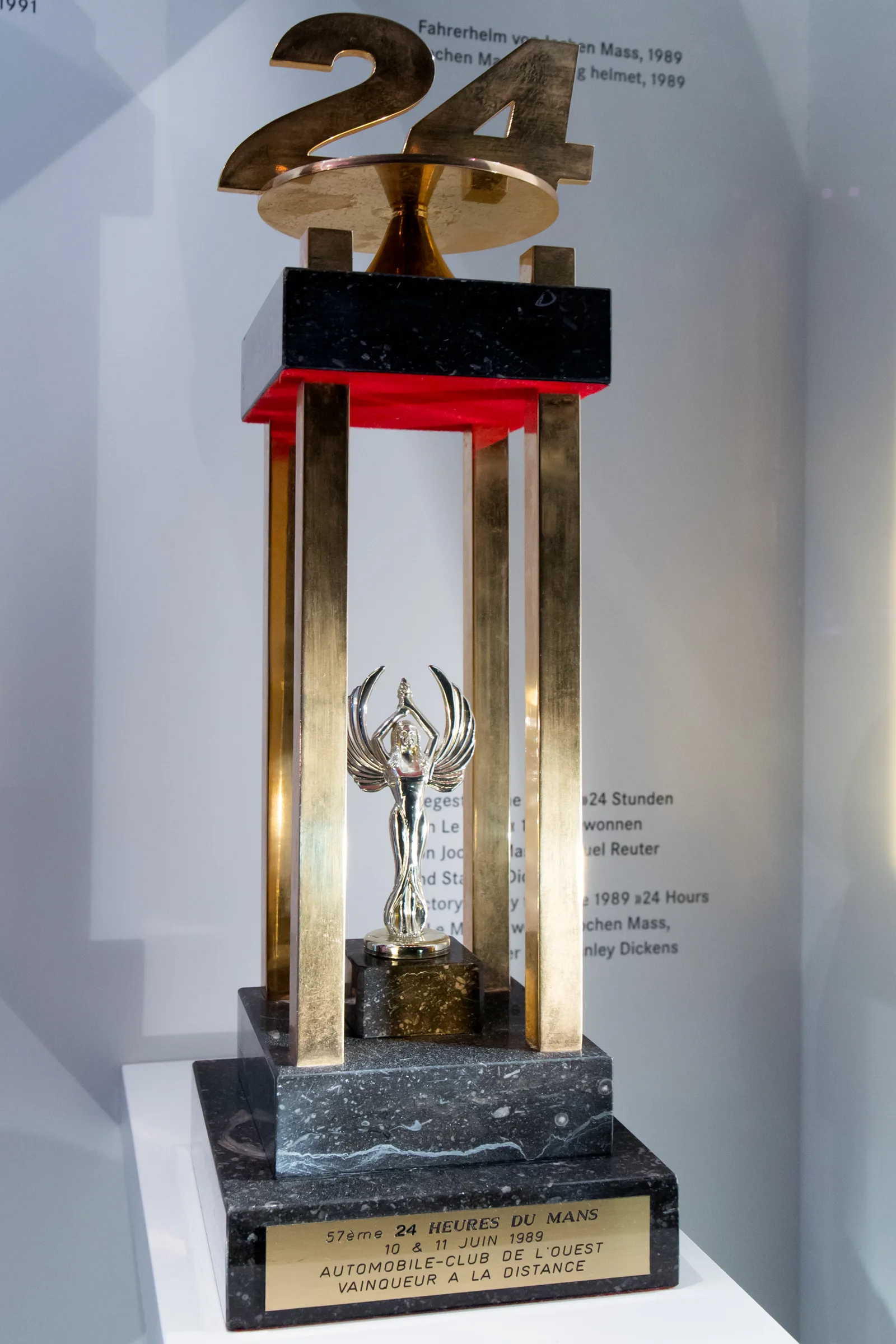
The Sauber-Mercedes C9 of Mass, Reuter and Dickens won the 1989 Le Mans 24 Hours, a race run outside the World Sports-Prototype Championship after a dispute between the ACO and the FIA.
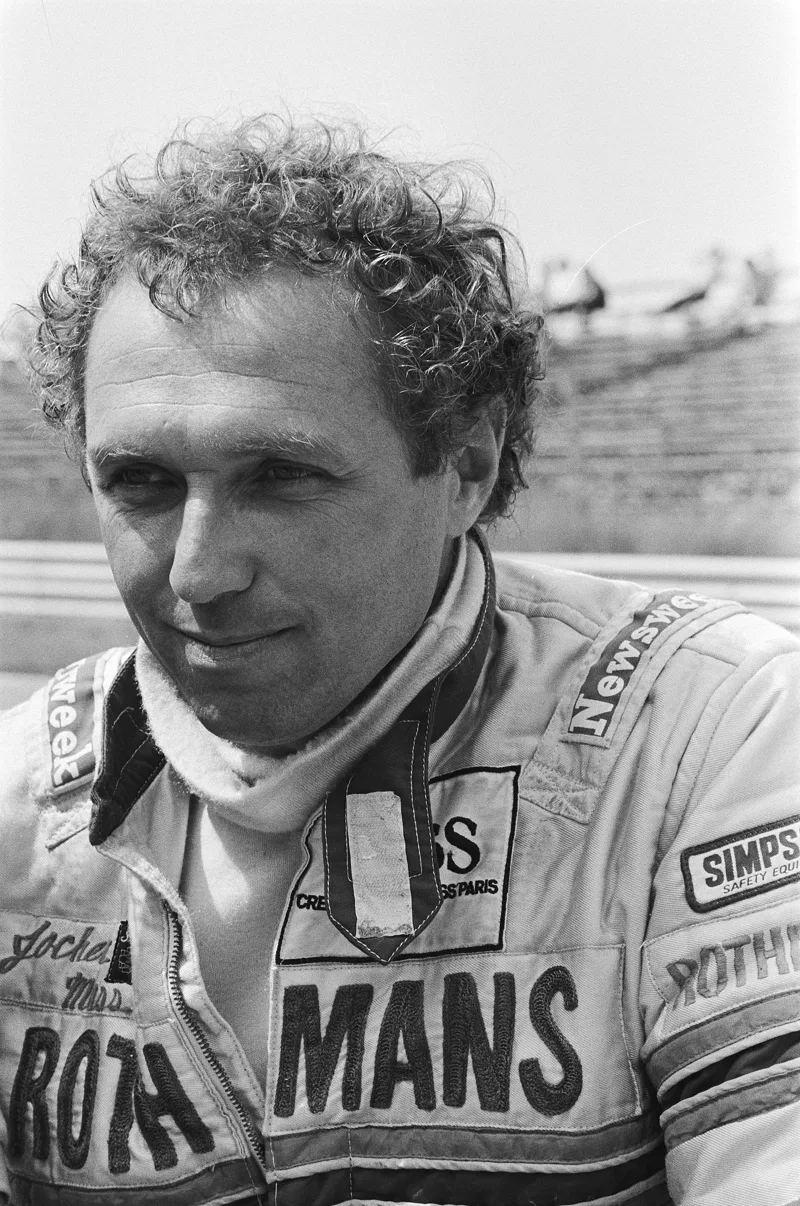
The Sauber-Mercedes C9 of Jochen Mass, Manuel Reuter and Stanley Dickens won the 1989 24 Hours of Le Mans, a race that was not part of the World Sports-Prototype Championship. The 57th running took place on 10 and 11 June 1989, after Jaguar had won the 1988 race and gone on to take the Championship, while Sauber had finished second in it.
Why was the 1989 race outside the Championship?
The ACO had contracts in place that clashed with those of the FIA, and by May it had been forced to take the race out of the Championship. Many teams were unhappy, particularly the Japanese teams that had committed to a full season in order to compete at Le Mans.
The ACO was allowed to take entries from non-Championship cars if the official entries fell below 50. The Japanese teams could now race at Le Mans anyway, although they had paid for a full season they would not need for this race.
The ACO also modified its efficiency index that year, renaming it the Challenge Econergie. Le Mans was the only endurance race on the calendar.
Outside the Championship, Sauber-Mercedes won a race that Jaguar's gearboxes had nearly given away.
What rules were coming for 1991?
At the end of 1988 the FIA had announced an overhaul of Group C. From 1991 the fuel restrictions would be removed, the cars would weigh at least 750 kg and they would run 3.5-litre non-turbo engines. Bernie Ecclestone, who ran promotion for the FIA, proposed the formula.
Group C would be phased out, with 1989 and 1990 as transitional seasons, and Group C2 would end at the close of 1989. Group C cars kept the fuel limits in the meantime, with an extra 50 kg of minimum weight and no manual control of boost.
The Championship had nine rounds that year, and teams that missed a round faced a US$250,000 fine. Japanese teams alone were allowed to skip one European round. Ecclestone also said the FIA controlled the television rights and had contracts for race timing with Longines and Olivetti.
Who entered the 1989 race?
The entry list promised a strong contest between five manufacturers with race-winning hopes. There were 25 factory cars, with Porsche as the notable exception, although the factory supported a flotilla of 17 customer entries.
Aston Martin returned with its AMR-1, built by Protech and fitted with a Callaway-converted V8 producing 685 bhp. Spice Engineering entered the first 3.5-litre cars, and its C2 class had 18 entries, eight of them Spice cars. For the first time since 1982 the full grid of 55 cars took the start.
Jaguar prepared four of last year's XJR-9s for Le Mans, while a new twin-turbo V6 car was in development. The XJR cars could reach 390 km/h (240 mph) after refinement, and Jan Lammers was paired with Patrick Tambay and Andrew Gilbert-Scott.
Sauber's C9 used a 5.0-litre twin-turbo M119 V8 producing 720 bhp. Mercedes sports director Jochen Neerpasch brought dozens of works personnel to support team manager Dave Price, and the three cars wore the Mercedes star and silver livery to stress the closer bond. Jean-Louis Schlesser led the crew with Alain Cudini and Jean-Pierre Jabouille, Mauro Baldi drove with Kenny Acheson and Gianfranco Brancatelli, and Mass drove with Manuel Reuter and Stanley Dickens.
Joest entered three 962s, one for Bob Wollek and Hans-Joachim Stuck, and two more for Frank Jelinski with Raphanel and Winter, and for Henri Pescarolo with Jean-Louis Ricci and Ballot-Lena. Wollek and Jelinski had already won at Dijon, the first Porsche win since 1987.
Walter Brun ran five cars for an all-out effort, although his EuroBrun Formula One venture was expensive and unsuccessful. Two new chassis built on honeycomb and carbon-fibre tubs were dubbed 962C-BM, and Brun shared the newest of the other cars with Oscar Larrauri. Richard Lloyd's GTi team fielded two honeycomb GTi cars, while Kremer ran two CK6s.
Toyota ran three cars. John Watson and Johnny Dumfries joined Geoff Lees in the first, Paolo Barilla and Hitoshi Ogawa shared the second with Ross Cheever, and the third was a 2.1-litre car from the year before, run by Hoshino, Suzuki and Artzet.
Nissan Motorsports Europe had set up at a new facility in England, and three cars came under the experienced team manager Keith Greene. The Lola-built R89C was designed around the new VRH35 engine. The European works drivers were Julian Bailey, Mark Blundell and Martin Donnelly, the Japanese crew was Hoshino, Suzuki and Hasemi, and the IMSA car carried Geoff Brabham, Chip Robinson and Arie Luyendyk.
Obermaier Racing ran a Porsche backed by Primagaz. Tim Lee-Davey's car came from Porsche GB, and the Almeras brothers from France returned for the first time since the 1970s. Richard Lloyd's team had Derek Bell, Tiff Needell and James Weaver in one car, while veteran David Hobbs ran with the Formula 3000 debutants Damon Hill and Steven Andskar in the other.
Vern Schuppan raced with his own team, and Eje Elgh and Gary Brabham ran an ex-works Porsche that the Andretti family had used the previous year. The second car was a new chassis for Will Hoy, Dominic Dobson and the young Jean Alesi, who was leading the Formula 3000 series and about to start his Formula One career.
Spice Engineering's new car had a Cosworth engine prepared by John Nicholson, with a chassis designed by Graham Humphrys. Gordon Spice had announced that he would retire from driving after this race, and he was joined by Ray Bellm and the American Lyn St. James.
Tiga Race Cars was in severe financial difficulty, but three of the five chassis it had built were at Le Mans. John Sheldon, Robin Donovan and Max Cohen-Olivar drove the works car, and the Argo JM19 of Jean Massaoudi joined the C2 entries.
How did qualifying set the grid?
Rain on the first day of practice had limited the number of fast runs. The Saubers showed their mettle in the evening, and Schlesser took pole at 3:15.0. Geoff Lees had briefly set 3:15.5 in a Toyota, but that time was annulled because it was set in a designated test car rather than a race car, which had already cost Toyota once at Suzuka.
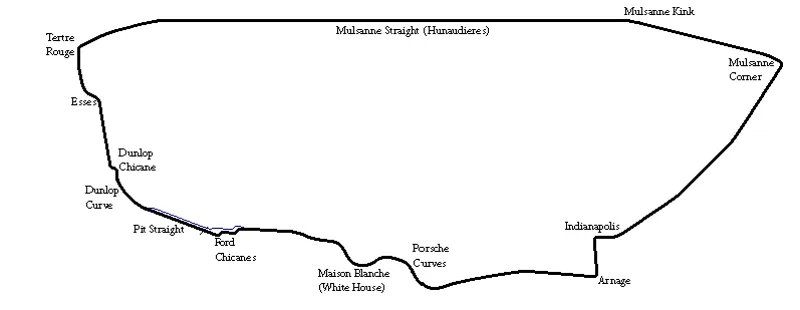
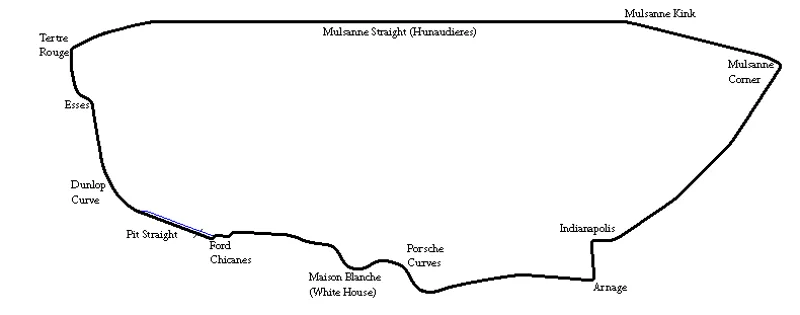
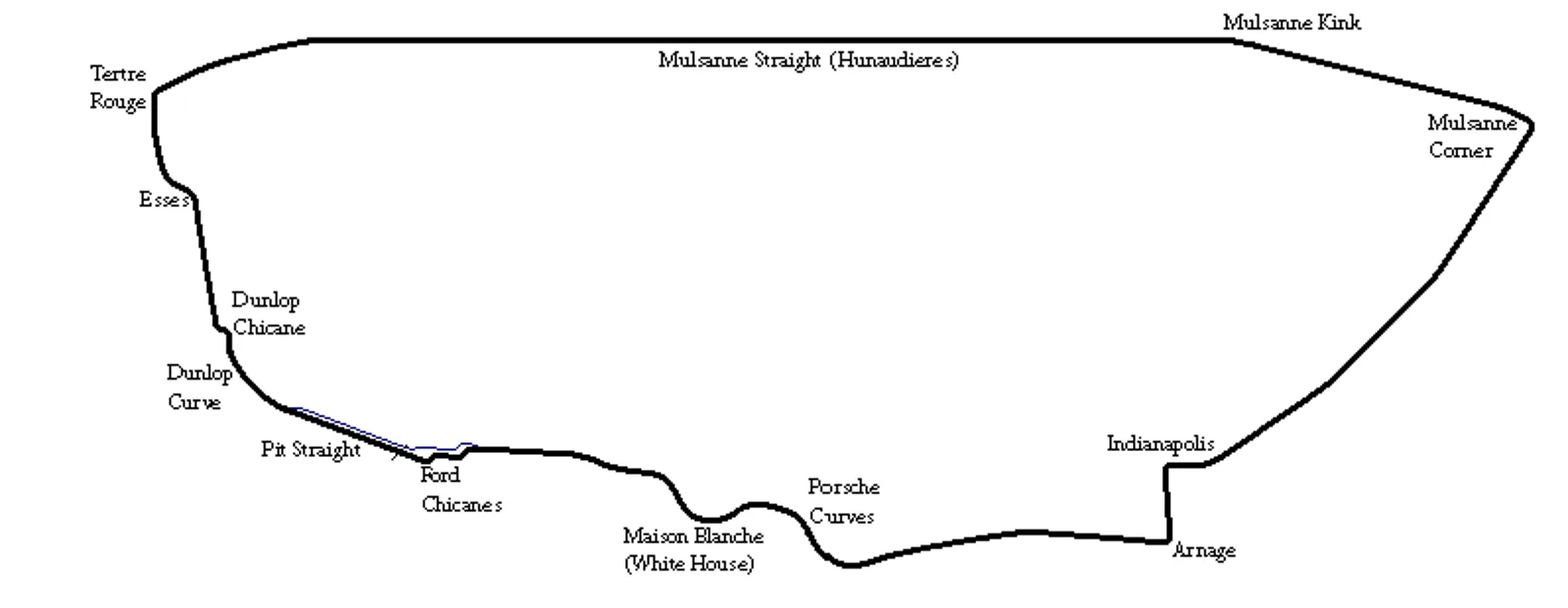
Baldi had set 3:15.7 earlier, and the lap broke the speed radar on the Hunaudieres straight at 400 km/h (248 mph). Schlesser's time came in response, and the Saubers locked out the front row once Lees's time was removed.
Lammers and Jones took third and fourth, and Stuck's Joest Porsche started next. Lees was left 17th after the annulment, while the Mass Sauber lost its fifth gear in practice and the team warned its drivers that gear changes would need to be more measured in the race.
The Aston Martins were a disappointment, qualifying 32nd at 3:34.1 and 40th at 3:40.1. The Nissan team had to move the rear wings higher after they caused instability, and the cars were back on the pace on the second day.
A multiple pile-up at the Ford chicane in the rain caught out several cars, and a Porsche was one of them.
How did the race start?
It was a warm, sunny Saturday. The Saubers started on the front row, but the Jaguar of Davy Jones led the first three hours before it stopped suddenly on the back straight, dropping the team well down the field.
Julian Bailey made a lightning start in his Nissan and challenged Nielsen's Jaguar for second, but he lunged at Mulsanne and the cars collided. The Nissan's suspension was too bent to continue, and it was the race's first retirement.
The WM had not been ready to take its place on the grid, so it started from the pit lane and received a big cheer from the grandstand as it went out a lap behind the field.
Who led through the day and into the night?
With the Saubers running to a designated race pace, the Joest Porsche of Wollek and Stuck took the lead and kept it for six hours and into the night. The Joest Porsches ran 1-2 as darkness fell, which many had not expected.
At 1.20am Stuck brought his car in with overheating problems, which cost the Joest team the three-lap lead it had built. The Lammers Jaguar then moved to the front for the rest of the night, with two of the Saubers chasing it.
Jaguar's luck did not hold. As dawn came, its three remaining cars were waylaid, and two of them needed full gearbox changes. The Saubers were then left to race each other for the lead on the same lap.
In the evening, Sekiya's Kremer CK6 had a big accident at the Porsche Curves. He was unhurt, and an extended local caution gave the crews time to repair the barrier. Soon afterwards Dumfries slammed his Toyota into the Armco further along the road and had to abandon it, which ended a wretched weekend for Toyota.
A full-course caution was called after Dobson's Schuppan Porsche suffered a major fuel fire. The five pace cars were out for only three laps, so the race was not compromised.
Who won the 1989 Le Mans 24 Hours?
Baldi ran out of brakes and ended up in the gravel trap at the Dunlop curve, which allowed Dickens to take a lead he kept to the finish. Baldi's Sauber then lost its chance to fight back when its gearbox broke, leaving Acheson to run home stuck in fifth gear.
The win went to Mass, Reuter and Dickens in the Sauber-Mercedes C9, and the Joest Porsche of Wollek and Stuck was third, fighting clutch problems and seven laps behind the winners.
Results at a glance
| Position | Entry | Result |
|---|---|---|
| 1 | Sauber-Mercedes C9, Mass, Reuter and Dickens | Won, after taking the lead when Baldi ran out of brakes |
| 2 | Sauber-Mercedes C9, Baldi, Acheson and Brancatelli | Gearbox broke, Acheson finished in fifth gear |
| 3 | Joest Porsche, Wollek and Stuck | Seven laps behind the winners |
| 4 | Jaguar, Lammers, Tambay and Gilbert-Scott | Best of the Jaguars |
| C2 | Courage Cougar, Philippe Farjon | Won the C2 class |
Why does the 1989 race matter?
The race stood outside the Championship, so its result did not count towards the title. Two Sauber-Mercedes cars finished first and second overall, at the head of the field. Jaguar had won the Championship, and Sauber had finished second and was matching Jaguar on the track, so the Le Mans result gave both teams a chance to show their form.
The C2 class was thinned out badly. Only five of the fourteen starters finished, and the Cougar run by Farjon, backed by the Courage team, took the class.
The attrition was severe, with six cars suffering engine fires in practice or during the race. The drivers were all able to stop and get out without injury, but the fires showed how hard the cars were being pushed before the new formula arrived in 1991.