A youthful Grand Prix starter for Tyrrell who later won the 1984 European Formula Two title, then stepped away from motorsport at the end of 1988.
Mike Thackwell is a former New Zealand driver who competed in five Formula One Grand Prix weekends in 1980 and 1984 without scoring points. He won the 1984 European Formula Two title and the 1986 Nurburgring 1000km before retiring from motorsport in 1988.
Mike Thackwell was a New Zealand-born driver, raised in Western Australia, who raced in Formula Ford, Formula Three, Formula Two, Formula 3000 and sportscar racing. He was briefly the youngest driver to take part in a Formula One race when he took part in the 1980 Canadian Grand Prix, and he won the European Formula Two Championship in 1984 before leaving motorsport at the end of 1988. He never scored a championship point in Formula One.
Who was Mike Thackwell and how did he start racing?
Michael Christopher Thackwell was born on 30 March 1961 and is a former racer from New Zealand who spent his formative years in Perth. He came from a motor racing family, and he began on motocross bikes before moving to karts, where he won the Western Australian title at fourteen.
His father Ray had been an international speedway rider and racing driver. Once Mike turned six the family emigrated from New Zealand to Perth, and between 1972 and 1976 he attended Christ Church Grammar School in Claremont. By the time he made his Formula One debut he spoke with an Australian accent, yet he regarded himself as a New Zealander and liked to be known as one.
He won the Hong Kong Kart Grand Prix during 1975 and again in 1976, and then he moved to England. A friend of his father, who built Formula Ford cars, put him in touch with the Mike Eastick's Scorpion Racing Drivers School in Thruxton, Hampshire, which opened the route into European single-seaters.
A teenage Grand Prix starter who won Formula Two's biggest prize, then walked away from a career that had promised far more.
How did Thackwell progress through the European single-seater ranks?
Thackwell's European career began in 1978 with the Dunlop Star of Tomorrow Formula Ford series, winning five of eleven rounds and finishing third. He moved up to British Formula 3 in 1979, where he again finished third after five wins, and he also won at Monza in the European F3 round.
His third-place finishes were no failure. In British Formula 3 he finished ahead of Stefan Johansson, Nigel Mansell, Alain Prost and Thierry Boutsen, all of whom went on to lengthy Formula One careers. The title went to Chico Serra, ahead of Andrea de Cesaris.
In 1980 he stepped up to Formula Two, but first he raced a works March in the New Zealand Formula Pacific series. The cars were modified Formula Two machines that proved overweight and underperformed. Back in Europe he was soon setting fastest laps at Hockenheim and on the Nurburgring Nordschleife, and his form at Zandvoort convinced observers that he was a genuine talent.
What was Thackwell's Formula One debut like?
Thackwell made his official debut at the 1980 Canadian Grand Prix on 28 September, when Tyrrell gave him the third car. A first-lap collision brought out the red flag, and Tyrrell then asked him to give up his car to Jean-Pierre Jarier. He never completed a lap, but Formula One still credits him with the start.
That start took the youngest-starter record from Ricardo Rodriguez. The record stood until Jaime Alguersuari broke it at the 2009 Hungarian Grand Prix, and Max Verstappen later passed Alguersuari in 2015. Thackwell's name therefore remains part of the sport's record books, even though his Formula One results were modest.
His debut year also brought disappointment at the 1980 United States Grand Prix. He fractured a brake disc in qualifying and failed to make the race at Watkins Glen. Ken Tyrrell had signed him as a test driver and expected more from him that season.
Why did Thackwell's Formula One career stall after 1980?
After his Tyrrell stint, Thackwell returned to Formula Two in 1981 with Ralt. He won the International Trophy at Silverstone, and he took third at Hockenheim before a testing accident at Thruxton in a works Ralt-Honda shattered a heel and caused head injuries. He completed the season on crutches and finished sixth in the championship.
Team owners were unwilling to give him a works seat in 1982, partly because they doubted he had fully recovered. He raced for small privateer outfits, Horag Racing and Bertram Schafer Racing, and still scored two podium finishes at Pau and Spa-Francorchamps. He also raced a Porsche 956 in two World Endurance Championship events.
He returned to Formula One in 1984 as a fill-in for two races while his Formula Two season was in full swing. The stalled career never recovered, and by 1985 he was competing mainly in the Formula 3000 series.
How did Thackwell's Formula Two career peak in 1984?
Thackwell rejoined the works Ralt team in 1983 and finished second in the European Formula Two championship to Jonathan Palmer. In 1984 he dominated the series, winning seven of eleven races and taking the title. He also recorded six pole positions and nine fastest laps that year.
He led 408 of the 580 laps that season, and his International Trophy success at Silverstone added to a long run of results. Those wins made him one of the standout drivers in the European Formula Two field.
The same year he returned to Formula One for a brief spell. At the Canadian Grand Prix he took over the RAM seat from Jonathan Palmer, qualified 25th and finished 1.556 seconds faster than teammate Philippe Alliot in qualifying. A broken turbo wastegate ended his race on lap 30. At the German Grand Prix he missed qualifying by a fraction of a second, and he also tested for Williams that season.
International Formula 3000, CART and sports cars
In 1984 Thackwell also raced in CART for Penske, replacing the injured Rick Mears in two races. He scored no points in either event, although the team ended the 1984 season third overall. He then moved to International Formula 3000, where he finished second in the championship in 1985.
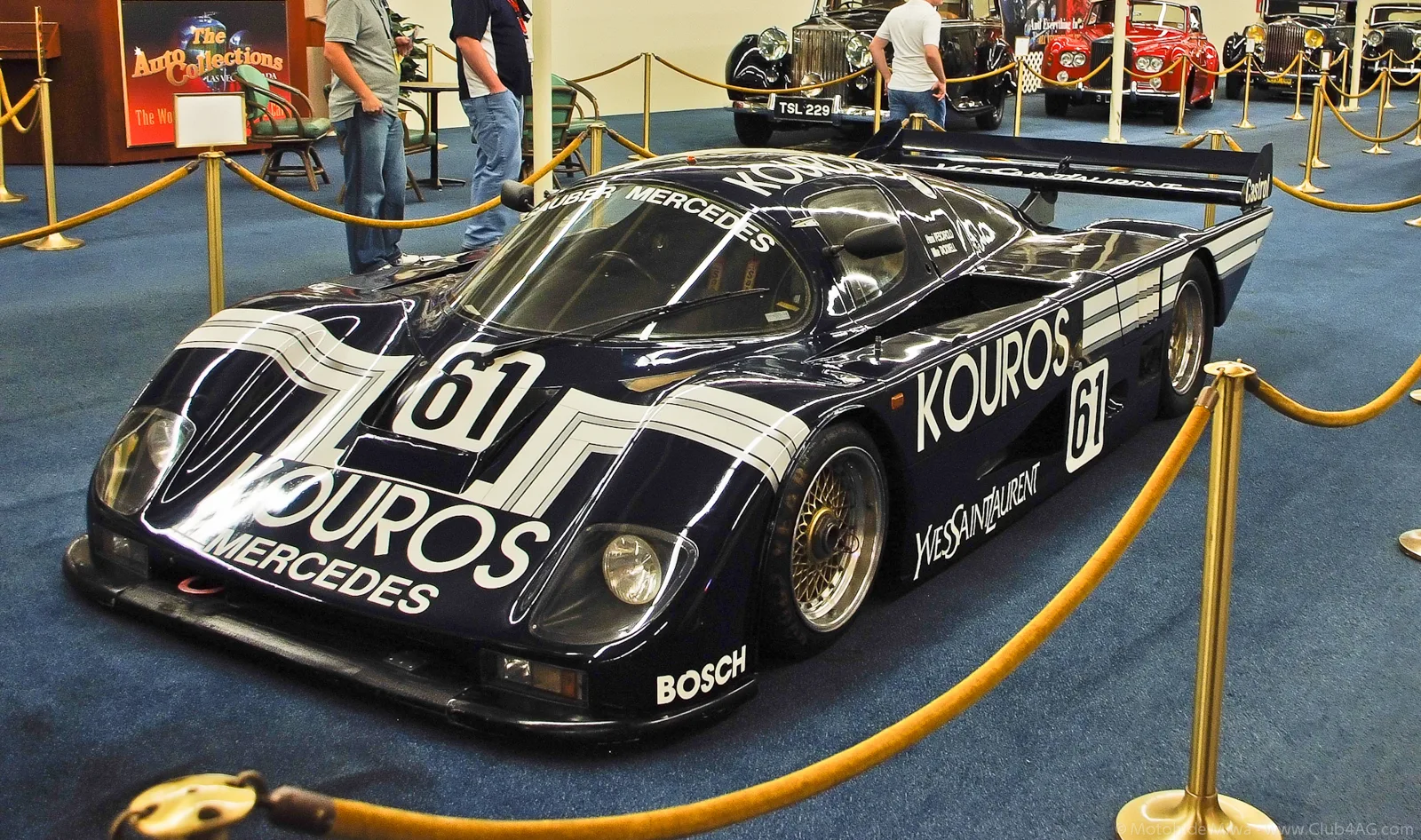
In 1986 he continued to win in Europe and Japan, and he took the Pau Grand Prix in a works Ralt. Later that year he and Henri Pescarolo won the Nurburgring 1000km in a Sauber C8.
During the European winter of 1987 he returned to New Zealand and won the MANZ Formula Pacific International Championship after taking the first three rounds. He then put a Sauber C9 on pole at Spa for Kouros Racing, only to see the seat mountings break while he led the race. In 1988 he made a one-off Formula 3000 start at Pau, and he left motorsport at the end of that year.
Career summary at a glance
| Season | Series | Result |
|---|---|---|
| 1978 | Dunlop Star of Tomorrow Formula Ford | Third with 72 points; five wins |
| 1979 | British Formula 3 (March-Toyota) | Third with 71 points; five wins |
| 1980 | Formula One (Tyrrell) | Canadian Grand Prix start; no lap completed |
| 1981 | Formula Two (Ralt) | Sixth in the championship after the Thruxton accident |
| 1983 | Formula Two (Ralt) | Runner-up to Jonathan Palmer |
| 1984 | Formula Two (Ralt) | European champion with seven wins |
| 1984 | Formula One (RAM and Tyrrell) | Qualified 25th in Canada; retired on lap 30 |
| 1985 | International Formula 3000 | Runner-up in the championship |
| 1986 | Pau Grand Prix and sports cars | Pau win in a works Ralt; Nurburgring 1000km win with Henri Pescarolo |
| 1987 | New Zealand Formula Pacific | Champion after winning the first three rounds |
| 1988 | Formula 3000 (one-off at Pau) | Final competitive drive before leaving motorsport |
What did Thackwell do after motorsport?
After leaving racing he worked a series of unusual jobs. He flew helicopters over the North Sea for British International Helicopters, prospected for gold in north-west Western Australia, and later taught in England. Those years took him far from the paddock.
He is widely regarded as one of motorsport's great lost talents, a driver whose career was affected by bad timing and bad luck. According to Motorsport magazine he now lives on England's south coast, where he surfs when the waves allow.
How did the 1985 Formula 3000 season go?
In 1985 Thackwell turned to International Formula 3000 after failing to find a decent drive in Formula One or CART. He won the first round at Silverstone, took his third International Trophy success and added two more wins before finishing as runner-up to Christian Danner.
He also made four starts for the TWR Jaguar team that year. At Shah Alam he finished second, partnered by John Nielsen, which closed out his season.
Early Formula One attempts and the Dutch Grand Prix
At the 1980 Dutch Grand Prix Thackwell was at Zandvoort as a Tyrrell spectator, but Arrows boss Jackie Oliver invited him to drive the team's Arrows A3 after the first unofficial practice session. The car was still set up for its regular driver, Jochen Mass, who had been injured at the previous race. Thackwell failed to qualify, yet his time was quicker than Keke Rosberg's in a Fittipaldi.
What did Thackwell win in endurance racing?
His 1986 Nurburgring 1000km win with Henri Pescarolo gave Mercedes-Benz its first modern racing success. His only podium in the World Endurance series came in 1987, after he left the Kouros team and joined Britten Lloyd Racing in a Porsche 962GTi alongside Mauro Baldi.
The 1979 European formula season in more detail
In the 1979 FIA European Formula Three Championship, March entered Thackwell in two rounds. He won a race and set the fastest lap at Monza during the Gran Premio della Lotteria, and he finished equal eighth overall in a championship that Alain Prost won.
He also claimed pole and set the fastest lap in the non-title RAC FOCA Trophy event at Donington Park, although he finished only ninth in it.