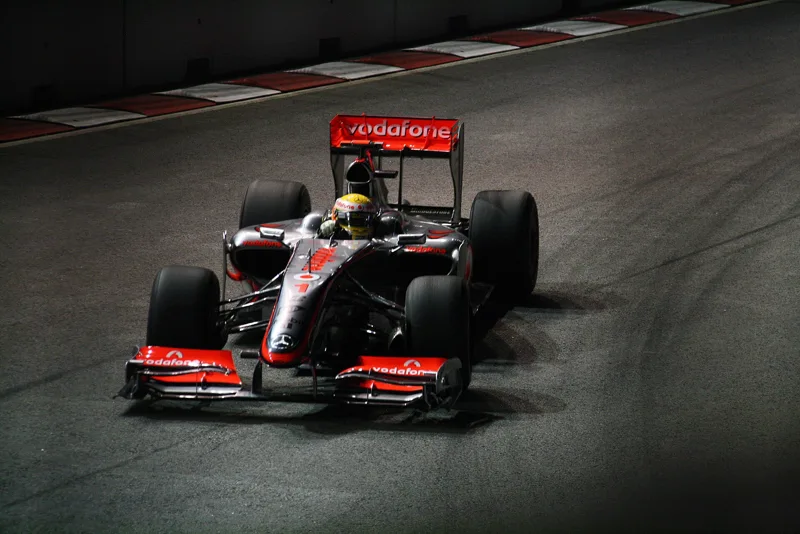
Lewis Hamilton won from fourth on the grid in the first race won by a KERS car, while Felipe Massa's qualifying accident cast a long shadow over Budapest.
Lewis Hamilton won the 2009 race from fourth on the grid, with Kimi Raikkonen second for Ferrari and Mark Webber third for Red Bull. Felipe Massa's qualifying crash kept him out of the tenth round of the season, which was run in dry, hot conditions.
The 2009 Hungarian Grand Prix was held on 26 July 2009 at the Hungaroring, near Budapest, as the tenth race of the season. Lewis Hamilton won from fourth on the grid for McLaren-Mercedes, and it was the first Grand Prix victory for a car fitted with KERS. The afternoon's most serious moment came in qualifying, when Felipe Massa suffered a serious accident that left him with a fractured skull.
Who won the 2009 Hungarian Grand Prix?
Lewis Hamilton won the 70-lap race from fourth on the grid, his first win since the 2008 Chinese Grand Prix and his tenth in Formula One. Kimi Raikkonen finished second for Ferrari, which was its best result of the season so far, and Mark Webber took third for Red Bull Racing. Jenson Button had a poor race and finished seventh.
The race also marked the first time a car equipped with a KERS system had won a Grand Prix. Hamilton used the KERS button to get past Webber on lap five, and he then pulled away from the field. His victory gave him a comfortable margin over the rest of the leading pack for much of the race.
Hamilton said afterwards that he had not expected to win. He praised his team for refusing to give up during a difficult season, and he described the feeling of being back at the front as incredible. The McLaren team had been working hard, and the result rewarded that effort.
The first KERS win, a sensational qualifying accident and a title race that Hungary turned on its head.
Why did the title race look different after Budapest?
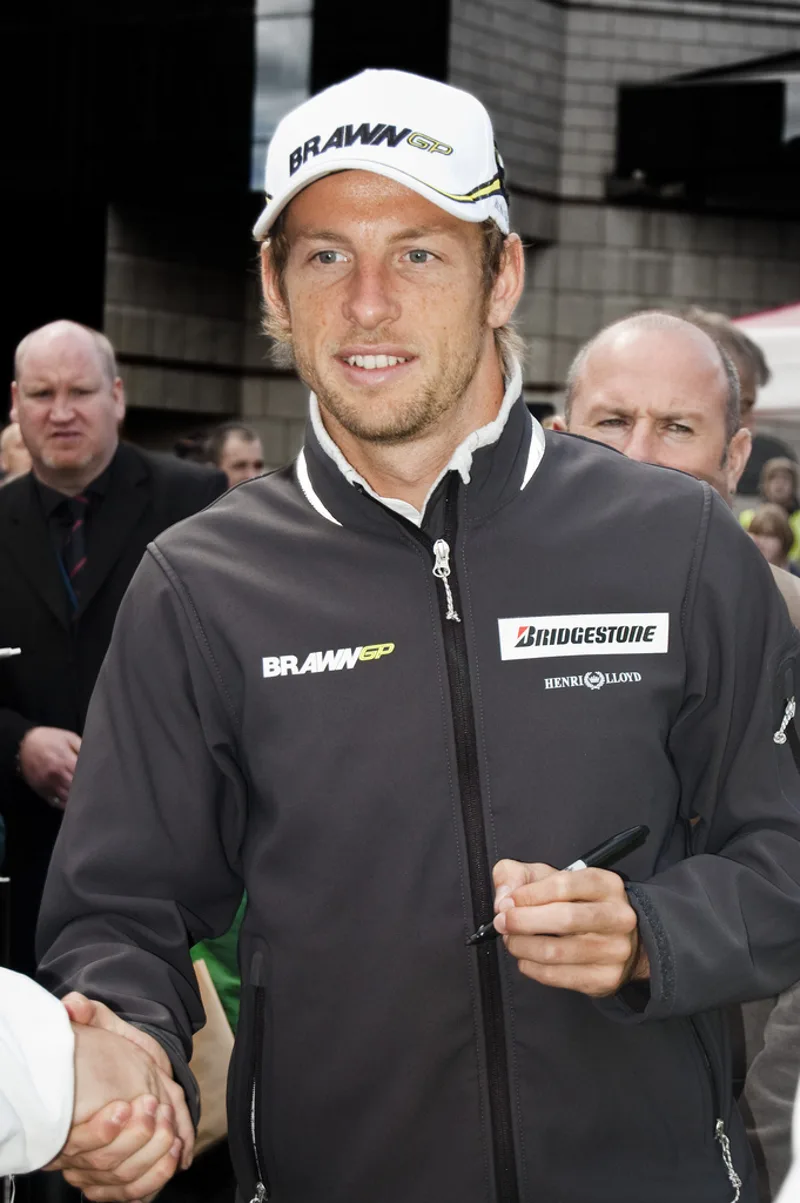
Before the race Button topped the standings on 68 points for Brawn GP, a 21-point cushion over Vettel. Mark Webber was 1.5 points behind Vettel, and Brawn also led the Constructors' Championship by 19.5 points from Red Bull Racing. Red Bull were a further 48 points clear of Toyota, which held only a 1.5-point advantage over Ferrari.
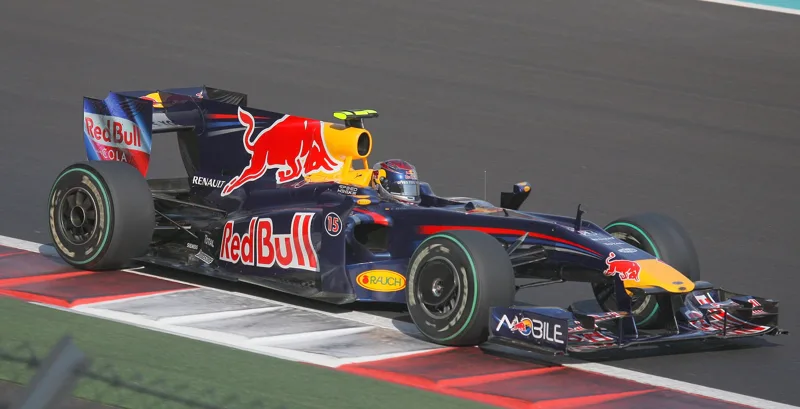
Webber had won the previous race in Germany from pole, a first career win that had taken a long time to arrive. An early drive-through for a dangerous move that kept Brawn's Rubens Barrichello behind him did not stop him, and he rejoined in front to win by nearly ten seconds from Vettel. Felipe Massa was third in Germany, and Nico Rosberg finished fourth from fifteenth on the grid.
Webber's win in Hungary moved him into second place in the championship, and Button's seventh place cut his lead to 18.5 points. Those results showed how quickly the top of the standings could change from one weekend to the next.
Who was Jaime Alguersuari?
Jaime Alguersuari made his Formula One debut in Budapest, replacing Sebastien Bourdais at Scuderia Toro Rosso. He became the youngest driver in the championship's 59-year history, at 19 years and 125 days, and he was the first to be born in the 1990s. Before the race he had raced 118 times in single-seaters and won 17 of those races.
His appointment had caused plenty of talk. He had not done any circuit testing in a Formula One car, and in the week before the Grand Prix he had only completed straight-line aerodynamic tests at Faenza. Massa felt that he was too young and inexperienced for a modern Formula One car, while Mark Webber and Jenson Button also voiced their concerns about him driving at the Hungaroring.
Sebastian Vettel came to his defence and suggested that he should take his time to build up speed. That advice was sensible, because the young Spaniard had a difficult first weekend. He was last on the grid after a hydraulic failure in qualifying, and his first pit stop came on lap 28 in thirteenth place.
How did practice look at the Hungaroring?
Three sessions were held before the race: two on Friday lasting an hour and a half each, and one on Saturday morning lasting an hour. The Friday sessions were dry, and the track temperature reached 45 C (113 F) in the second session. McLaren set the pace on Friday, with Kovalainen topping the first session and Hamilton the second.
Brawn GP ran its usual strategy of carrying fuel during the Friday sessions. Button was tenth in the first session and then thirteenth in the second, while Barrichello improved to seventh in the second. Button's best lap was only 0.727 seconds off Hamilton's time, which showed how tight the field was.
Renault had a mixed weekend. Alonso was seven tenths of a second off the pace in both sessions, and Piquet struggled to find the ideal set-up. BMW Sauber were around six tenths off the pace and unhappy with their car, while Force India outpaced Toro Rosso in both sessions. Buemi was busy with set-up work for the Italian team and improved his lap time by eight tenths between sessions.
On Saturday Hamilton was fastest again, with Heidfeld surprising everyone in second for BMW Sauber and Rosberg third. Glock's session was far from trouble-free, because his Toyota developed a hydraulic leak on its first flying lap. He returned before the end and still recorded the sixth-best time. Sutil misjudged turn eight during the session and hit the barrier.
How did qualifying unfold?
Qualifying was held in hotter conditions, with the track at 41 C (106 F). Rosberg topped the first part at 1:20.793, with Hamilton and Webber the only other drivers in the 1:20s. Alguersuari suffered a hydraulic failure at turn 12 and was left last on the grid.
Massa was sixth at the time of his accident in the second part of qualifying, when he was involved in a serious crash at turn four. Replays showed debris striking his helmet just above the left eye, while he was doing 261 km/h (162 mph). The blow rendered him unconscious, and his car drifted towards the grass on the inside of the corner before it hit the barrier at 100 km/h (62 mph).
The debris was a spring from the rear suspension damper, weighing around 800 grams. It was believed to have come from Barrichello's car, which had reported that something had come loose a few minutes earlier. Brawn confirmed that the part had come from Barrichello's car, and changed the same part on Button's car before the race. The inspection cost Button a second run in qualifying.
Massa's accident came just six days after the death of the FIA Formula Two driver Henry Surtees at Brands Hatch, when a wheel bounced across the circuit and struck him. It provoked wider discussion about the safety of open-cockpit racing cars. Massa was treated at a military hospital in Budapest, where he had surgery and remained under observation.
Only nine drivers reached the final part of qualifying, because the crash and the clean-up delayed the session by twenty minutes. The timing system then malfunctioned, and the problem was later traced to a broken cable. When the system returned, Fernando Alonso discovered he had taken pole, his first since the 2007 Italian Grand Prix.
Vettel joined Alonso on the front row, with Webber and Hamilton on row two. Starting weights were later released, and Alonso was some 17.5 kg lighter than Vettel and 27 kg lighter than Button, who had qualified eighth. Massa's injuries were serious: a cut to the head, damage to his skull and a concussion, which ruled him out of the race.
How did the race unfold?
The race was dry, with the air at 26 C (79 F) and the track at 43 C (109 F). Alonso kept his pole advantage into the first corner, but Hamilton and Raikkonen almost touched on the run to turn one. Webber kept third, while Vettel made a slow start from the dirty side of the grid.
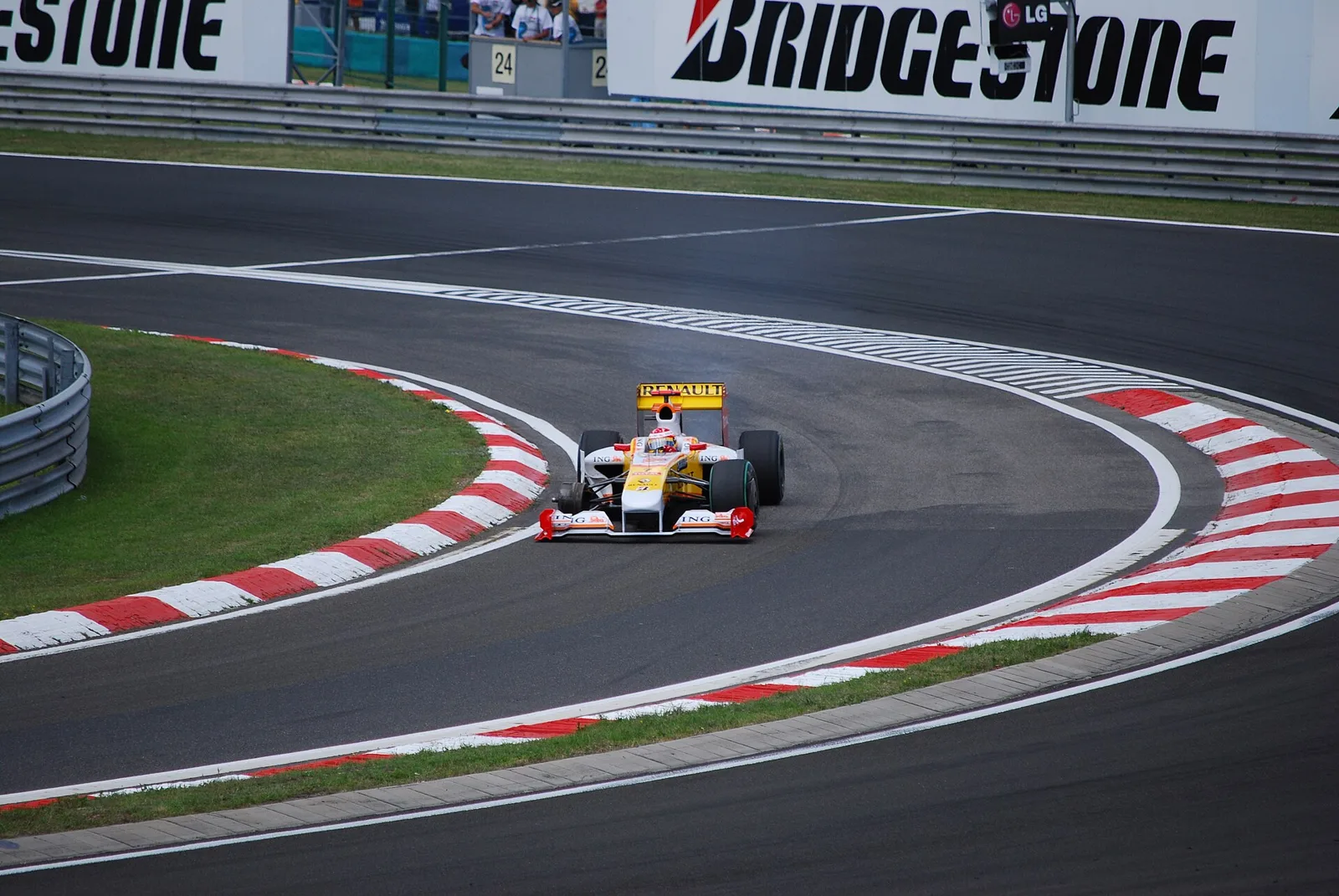
Sutil retired at the end of the first lap with water pressure problems, the first retirement of the afternoon. Alonso set the fastest lap of the race on lap four, but his Renault was suffering graining on its rear tyres and a fuel pump problem. Hamilton then passed Webber on lap five with the aid of KERS, and he began to cut into Alonso's advantage.
Alonso pitted on lap 12 and was stationary for 6.4 seconds. His front right wheel had been fitted incorrectly, and the wheel-mounted brake duct fell off and broke up at turn four as he continued. The wheel then came off at turn nine, and Alonso brought the car back to the pits on three wheels. The wheel was replaced, but he returned to the pits again the next lap because the fuel pump problem had become terminal.
Hamilton's lead grew to nearly six seconds, aided by a best lap of 1:22.479 set on the sixteenth lap. Raikkonen and Webber pitted on lap 19. Raikkonen was stationary for 8.3 seconds, while a problem with the fuel rig cost Webber valuable seconds. The two cars nearly collided, and Webber almost ran into a group of Williams mechanics standing in the pit lane.
Hamilton's stop followed on the next lap, but Rosberg's Williams, entering the pit lane, cost him a moment. That promoted Kovalainen into the lead, with Vettel behind him, but both drivers pitted at the end of lap 21, handing the lead back to Hamilton. Vettel's sluggish stop cost him track position, and he filtered out behind Rosberg.
Hamilton's race engineer, Phil Prew, told him to look after his tyres because he had a comfortable gap of 15 seconds over Raikkonen. Button had climbed to second before his first stop on lap 25. Vettel was struggling and was passed for eighth by Barrichello on lap 27, and his team replaced the nosecone and checked the rear suspension. He retired on lap 30.
Alguersuari made his first stop on lap 28. Glock moved into the points thanks to a 32-lap opening stint, while Buemi spun at turn two on lap 38 and rejoined behind Alguersuari. Hamilton faced no challenge after that, and his final stop came on lap 46 before he took the flag.
Raikkonen took second and Webber third, and that podium lifted Webber above Vettel in the championship. Webber also set the first fastest lap of his career, a 1:21.931 on lap 65. Rosberg took fourth for the third consecutive race, with Kovalainen, Glock, Button and Trulli completing the top eight. Barrichello finished 16th, the first time a Brawn had finished outside the points.
What were the post-race consequences?
The stewards summoned representatives of Ferrari, Red Bull and Renault after the race because of incidents during the event. Ferrari and Raikkonen were cleared of wrongdoing in his first-lap incidents with Hamilton and Vettel. Red Bull were reprimanded for the second race running after releasing Webber into the path of Raikkonen in the pit lane.
Renault received the harshest punishment. The stewards found that the team had released Alonso's car from the pit stop without the wheel-nut retaining device being securely in place, and that the team had failed to act when the driver radioed in believing he had a puncture. The result was a suspension from the European Grand Prix, which the team appealed.
Renault's appeal was heard by the International Court of Appeal on 17 August, and the suspension was overturned. The team was fined $50,000 for the breach and was allowed to race at Valencia. The verdict meant that the team could compete at Valencia.
How was Massa's recovery followed?
Massa's condition improved over the weekend, although he had been sedated in a coma for 48 hours. Ferrari's president, Luca di Montezemolo, and Rubens Barrichello visited him, and the hospital released a statement that he could make a full recovery. He left hospital on 3 August and went home to Brazil.
He checked into a hospital in Sao Paulo for tests, and all the tests for abnormalities came back negative. He was given the all-clear to continue his recuperation at home.
Michael Schumacher had agreed to stand in for Massa on 29 July, subject to medical tests, but he withdrew on 11 August because of a neck injury that had lingered since a motorcycle test six months earlier. Luca Luca Badoer took the Valencia seat and returned to Grand Prix racing for the first time since 1999, after a gap of nine years, nine months and 24 days. Only Jan Lammers had waited longer between starts.
Nelson Piquet Jr's Hungarian appearance was his last race for Renault, as he left the team on 3 August 2009. Romain Grosjean was announced as his replacement.
| Position | Driver | Team | Note |
|---|---|---|---|
| 1st | Lewis Hamilton | McLaren-Mercedes | Won from fourth on the grid; first KERS win |
| 2nd | Kimi Raikkonen | Ferrari | Ferrari's best result of the season so far |
| 3rd | Mark Webber | Red Bull Racing | Moved into second in the championship |
| 4th | Nico Rosberg | Williams | Fourth for the third race in succession |
| 7th | Jenson Button | Brawn GP | Cut his championship lead to 18.5 points |