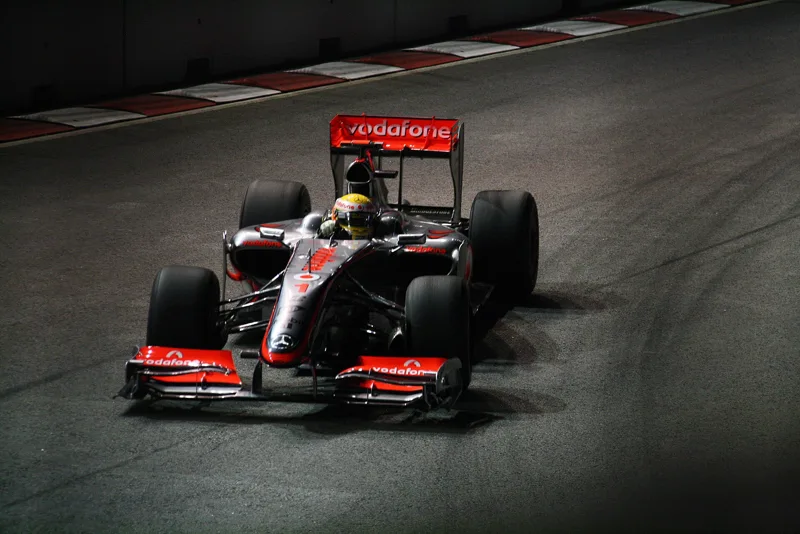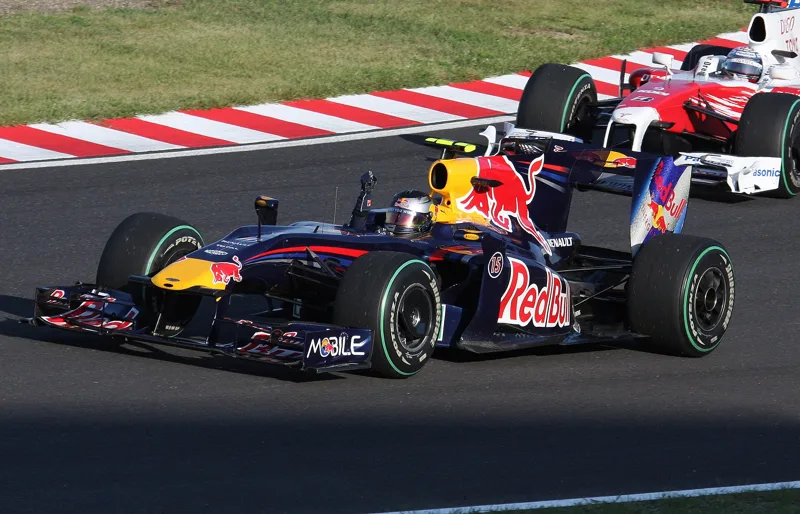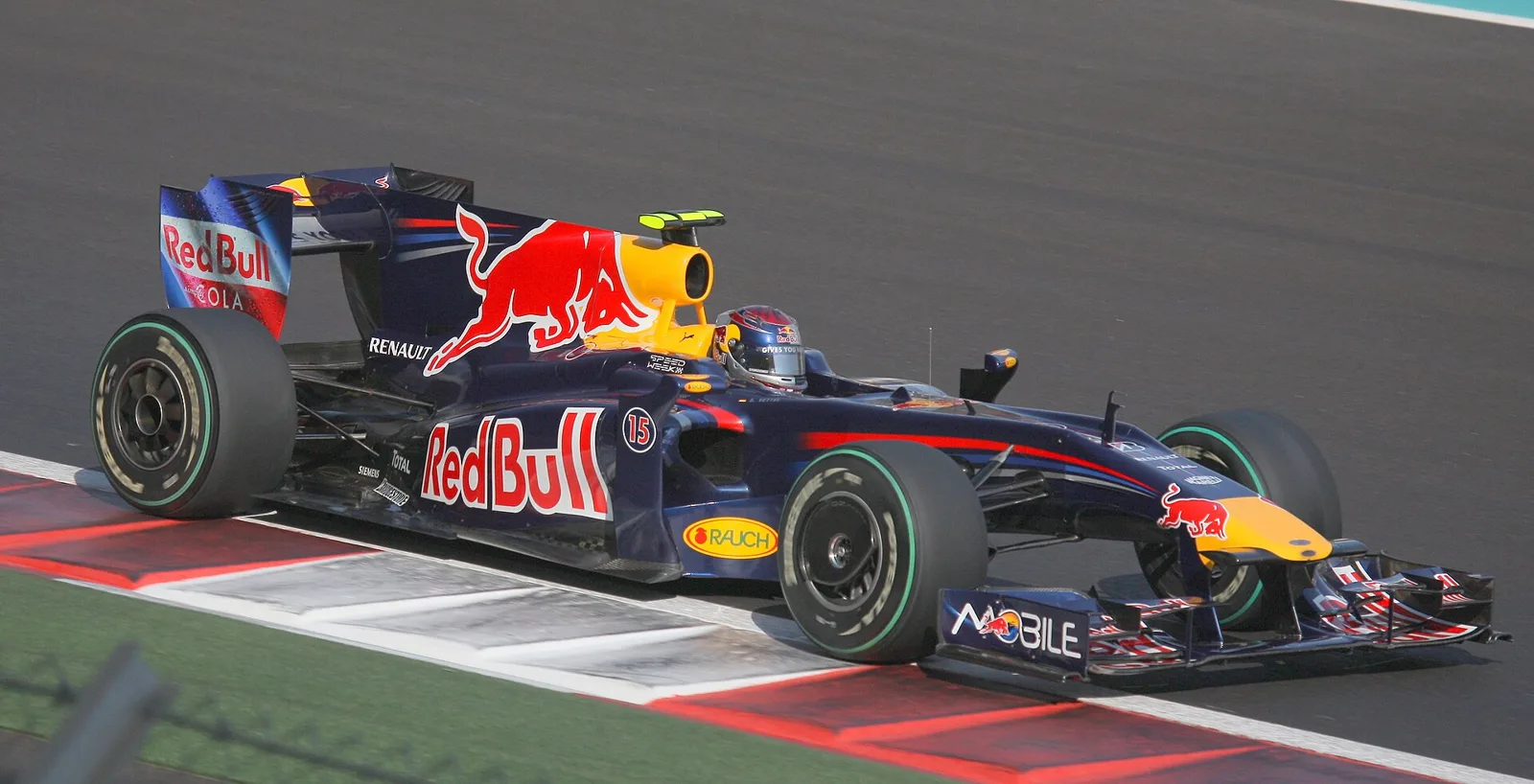
Sebastian Vettel won the inaugural Abu Dhabi race and closed the 2009 season, while Lewis Hamilton's pole ended with a brake failure after 18 laps.
Sebastian Vettel won the 2009 Abu Dhabi Grand Prix for Red Bull on 1 November 2009, the season finale and the first day-night Grand Prix. Vettel inherited the lead when the polesitter's brake failed, and Webber completed the one-two. Button had already won the title in Brazil.
The 2009 Abu Dhabi Grand Prix was run at the Yas Marina Circuit on 1 November 2009, the seventeenth and final round of the Formula One season. Sebastian Vettel won for Red Bull, while Mark Webber completed a Red Bull one-two. Lewis Hamilton, who had started from pole, retired with a brake failure, in the first Grand Prix to start in the evening light.
Who won the 2009 Abu Dhabi Grand Prix?
Sebastian Vettel won the race for Red Bull, finishing 17 seconds ahead of his teammate Mark Webber. It was Red Bull's fourth one-two finish of the season. Hamilton had started from pole and led the early laps. Vettel inherited the lead when Hamilton retired.
Hamilton had led the race from the start, but he did not open the commanding lead many had expected. Vettel stayed within a few seconds of him in the opening phase. Then Vettel leap-frogged Hamilton during the first round of stops, before McLaren reported a problem with Hamilton's right-rear brake.
Hamilton retired after eighteen laps. McLaren had concluded that it was unsafe to continue, because the circuit contained three very large braking areas. A faulty data logger was briefly suggested as the cause, but the team still had to retire the car. Vettel went on to win the first day-night Grand Prix in the sport's history.
A day-night finale at Yas Marina, a polesitter out with a brake failure, and a Red Bull one-two to close the season.
What was at stake in the 2009 title race?
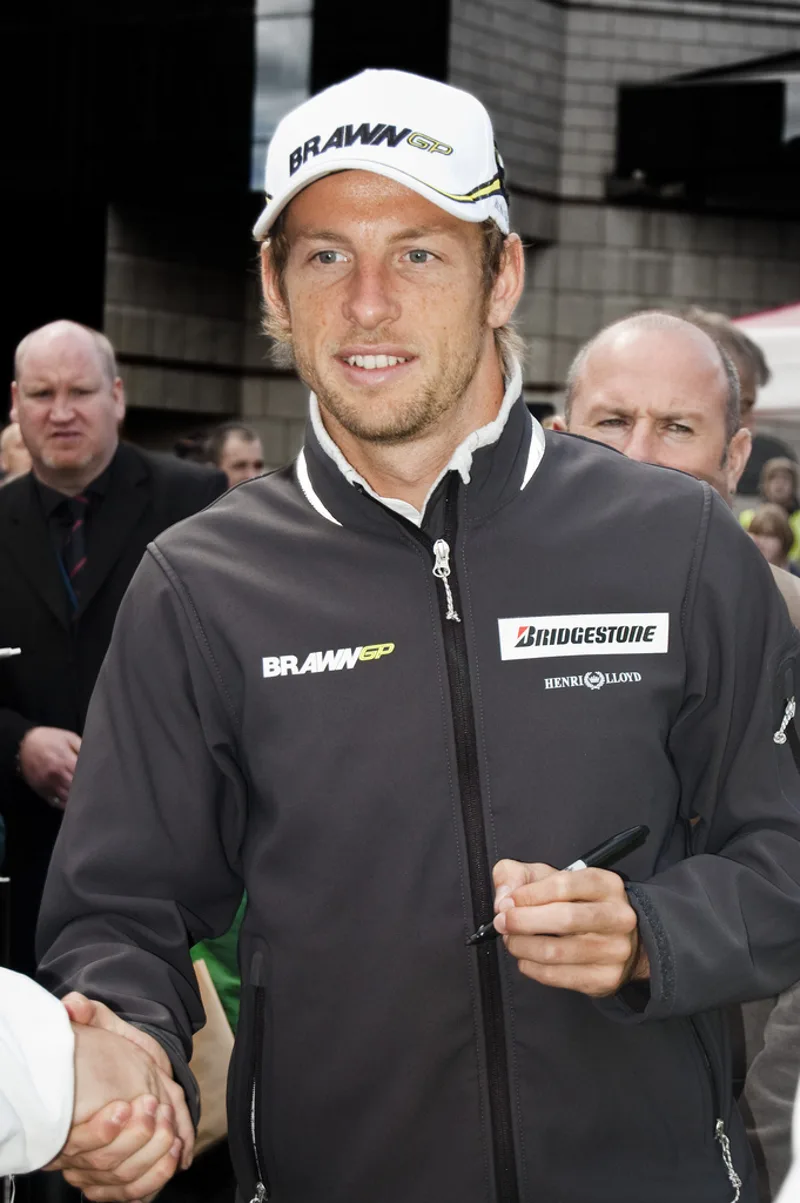
Jenson Button had already secured the world championship in Brazil. Only two points had separated the second- and third-placed Sebastian Vettel and Rubens Barrichello going into the final race, so the battle for runner-up was still open. Brawn GP had already been declared Constructors' Champion, with Red Bull second.
Third place in the Constructors' Championship was still undecided between McLaren and Ferrari. Ferrari's failure to score points in Abu Dhabi meant that it conceded third to McLaren, which closed a difficult season for the Maranello team.
The race was also a farewell for several drivers. Nico Rosberg's last race for Williams and Robert Kubica's last for BMW Sauber also took place here, with Kubica due to join Renault in 2010 to replace Alonso. Nick Heidfeld's final race came in the same weekend, and Kimi Raikkonen was leaving his first stint with Ferrari before moving to the World Rally Championship.
How did the practice sessions work at night?
The FIA required practice and qualifying to run under the same conditions as the race, so the sessions were held in the late afternoon and early evening. That allowed the teams to simulate the change from daylight to night. The Yas Marina circuit was designed by Hermann Tilke and measured 5.554 km (3.451 mi).
McLaren dominated the sessions. Lewis Hamilton set the early standard in the first session with a lap of 1:43.939. Heikki Kovalainen struggled at first but set the fastest time of the second session, 1:41.307, which was two-tenths quicker than Hamilton. He retained his pace in the third session.
Ferrari struggled, and Kimi Raikkonen and Giancarlo Fisichella spent most of the weekend at the bottom of the timing sheets. Raikkonen made two last-minute one-lap charges that saved the team from total embarrassment. Fisichella complained about the underground pit exit, which he described as difficult and dangerous, although it was incident-free.
Sebastien Buemi became the first to dip under 1:40.000 in the third practice session. Jenson Button exchanged blows with Hamilton across the first session, and in the third session he set 1:40.625, which was two-thousandths quicker than Hamilton.
How did qualifying turn out?
Hamilton was fastest in the first qualifying session with 1:39.873, the first time anyone had gone below 1:40.000. Button was the only other driver to come close, half a second slower. A Ferrari qualified last for the fourth race of the season, after Luca Badoer at Valencia and Spa and Giancarlo Fisichella at Interlagos.
In the second session Hamilton again set the top time. Sebastian Vettel also broke the 1:40.000 barrier, the only other driver to do so all weekend. Night fell over the circuit during that session, and the track temperature fell with it. Heikki Kovalainen stopped on the track with a gearbox failure, which gave him a five-place grid penalty.
The third session was different because the drivers stayed out for the whole session. That was attributed to the tyres, which took several laps to reach a working temperature. Hamilton stayed in the pits while the other drivers circulated, and Button and Jarno Trulli exchanged lap times before Hamilton emerged and took the provisional pole.
Hamilton secured a front-row berth with a time of 1:40.948 on his final lap. Vettel and Mark Webber were second and third, Rubens Barrichello was fourth, and Button edged out Trulli for fifth. Robert Kubica and Nick Heidfeld took seventh and eighth, and Buemi took tenth on his twenty-first birthday.
Why did Hamilton retire from the lead?
Hamilton led from the start, but Vettel stayed close during the early phase. Barrichello and Webber made contact in the first corner, and Barrichello lost part of his front wing, which hurt his pace from the beginning. Otherwise the first lap was clean.
Hamilton retired after eighteen laps because of the brake problem. McLaren judged it unsafe to continue, since the circuit had three very large braking areas. The team was obliged to retire the car. Vettel then moved into the lead, and his advantage grew from there.
Alguersuari was the other retiree, during the pit stops, after pulling into the Red Bull box by mistake on a slow in-lap. Sebastian Vettel was due in that lap, so Red Bull had to send him back out. Alguersuari later said his own team was not ready for the stop. The two garages sat next to each other, with similar uniforms, and he retired when he returned to the circuit.
How did the rest of the field race?
Jenson Button exited his stop behind the Toyota of Kamui Kobayashi, who was on a one-stop strategy. Button was in a heavier car on tyres that needed several laps to come in, and he could not stop Kobayashi driving around the outside at the giant hairpin.
His performance impressed Toyota's management enough that he was seriously considered for a full-time seat in 2010, although Toyota later withdrew from Formula One before that season. Kazuki Nakajima finished thirteenth, and that left him as the one driver who had raced at every round of the year without a point.
Fisichella took a drive-through penalty and ended his final Ferrari outing sixteenth, ahead of only Sutil and Grosjean. Kimi Raikkonen had a similar struggle from eleventh on the grid, finishing twelfth behind fellow Finn Heikki Kovalainen. Ferrari's failure to score meant it conceded third in the Constructors' Championship to McLaren, which closed its worst season since 1993.
Jenson Button began to reel in Mark Webber in the closing laps, as the Red Bull's rear tyres lost grip. Button caught him with six laps to go, and the battle that followed was fierce. Both drivers made mistakes, and Webber defended his line into the switchback. Button drew alongside in the run to the bottom corner, but Webber kept his line and held second despite a minor error at turn fourteen.
What were the final points and records?
Vettel won by 17 seconds, and that result took the runner-up spot in the championship from Barrichello. Barrichello finished fourth ahead of Heidfeld in BMW Sauber's last race, and Kobayashi's sixth place brought his first career points. Trulli took seventh, , and Buemi took eighth.
The race was the last to feature refuelling stops, which had been reintroduced in 1994 and were banned for 2010. Jarno Trulli made the final refuelling stop on lap 42. It was also the last race to use the points system of 10-8-6-5-4-3-2-1, which had been introduced in 2003, and the last race for Fisichella, Nakajima, and the Toyota, BMW and Brawn GP teams.
| Position | Driver | Team | Note |
|---|---|---|---|
| 1st | Sebastian Vettel | Red Bull | Won by 17 seconds; first day-night Grand Prix |
| 2nd | Mark Webber | Red Bull | Held off Button on the final lap |
| 4th | Rubens Barrichello | Brawn GP | Ahead of Heidfeld in BMW Sauber's last race |
| 6th | Kamui Kobayashi | Toyota | First career points, in only his second race |
| Retired | Lewis Hamilton | McLaren | Polesitter; brake failure after eighteen laps |