Lewis Hamilton converted pole into a commanding win over the two Ferraris, while the constructors' title race tightened and Kubica's hopes faded.
The 2008 Chinese Grand Prix, held on 19 October 2008 at Shanghai, was won by Lewis Hamilton of McLaren from pole. Ferrari's Felipe Massa and Kimi Raikkonen finished second and third, extending Ferrari's constructors' lead over McLaren.
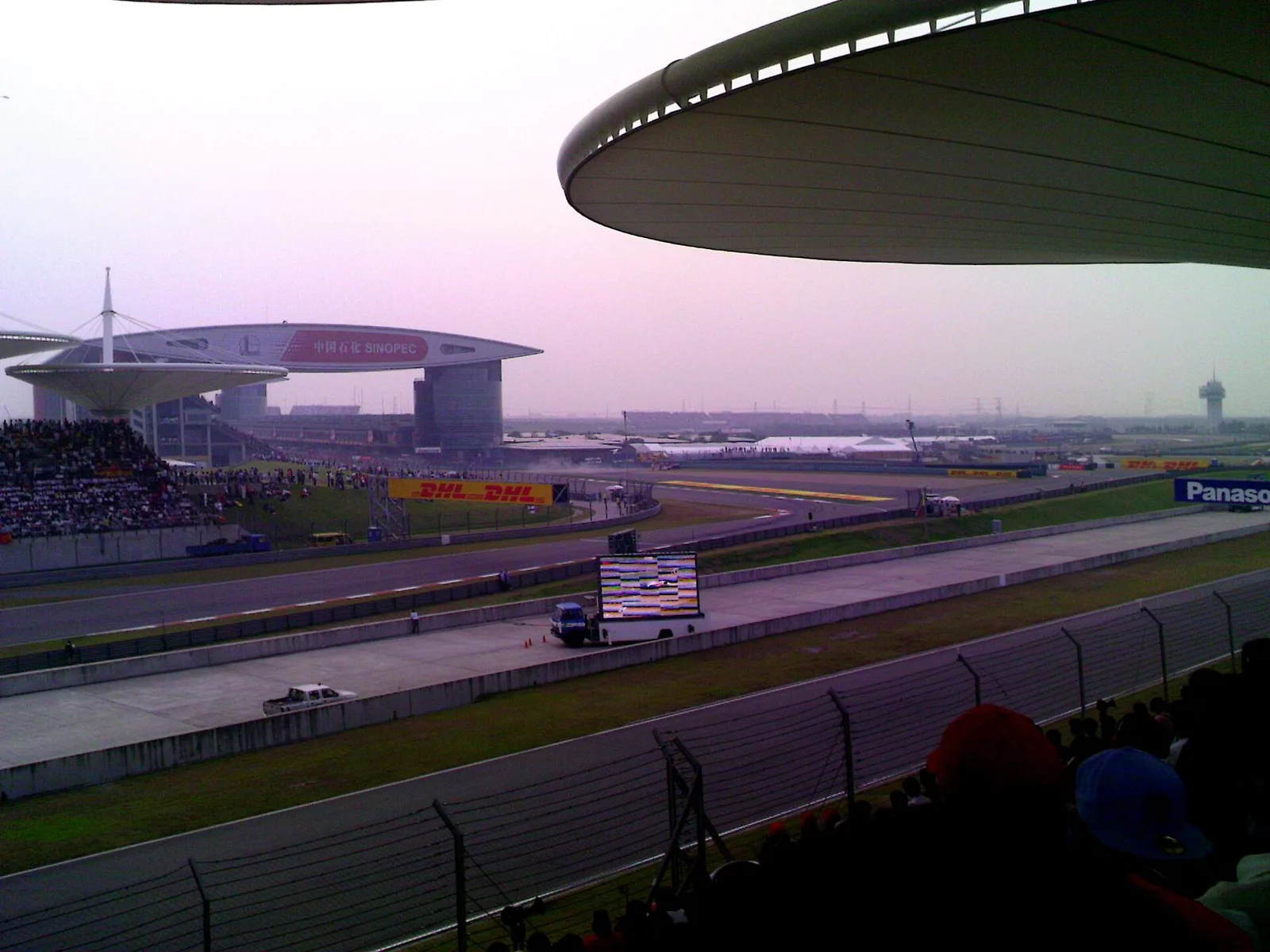
The 2008 Chinese Grand Prix took place on 19 October 2008 on the Shanghai International Circuit, a Formula One round run in dry weather. Lewis Hamilton of McLaren claimed victory in the 56-lap event from pole, with Felipe Massa second and Kimi Raikkonen third in the two Ferraris. It was the penultimate round of the season, and it left Hamilton in a strong position with one race to go.
The race mattered for three reasons: it settled the front of the field, it moved the constructors' championship in Ferrari's favour, and it ended Robert Kubica's realistic chance of the drivers' title. The sections below set out the background, the weekend, the race and what it meant for the championship.
Where did the championship stand before Shanghai?
Going into the race, Hamilton topped the drivers' table on 84 points, ahead of Massa on 79. Robert Kubica was third on 72 points in his BMW Sauber, Raikkonen was fourth on 63, and Nick Heidfeld was fifth on 56. The title was still open to several drivers, and Hamilton could take a decisive step with a good result.
In the constructors' standings Ferrari led on 142 points, seven ahead of McLaren-Mercedes, a gap that had been reversed at the previous round. BMW Sauber sat third on 128 points, and Renault were fourth with 66, 16 points clear of Toyota. The battle for the lower places was therefore close.
The previous round in Japan had been bruising for Hamilton. He had started from pole but made a poor getaway, braking late into the first corner and forcing Raikkonen wide. He later received a penalty that dropped him out of the points, and Massa was also penalised for a collision with him on lap two, although he still finished seventh.
Renault's Fernando Alonso also made headlines before the race, saying that if he could help, he would help Massa. His departure from McLaren after 2007 had been bitter, and his dislike of the rookie Hamilton was well documented. Hamilton declined to be drawn in, saying he had no particular opinion and was only interested in his own race.
Hamilton said he would not take risks in China and would focus on finishing well. Massa said the race was just another race, though with a different kind of pressure. With ten points on offer for a win, the stage was set for a possible title decider in Shanghai.
A pole-to-flag win for Hamilton, a Ferrari one-two behind him and a constructors' lead stretched to 11 points, all in Shanghai in October 2008.
How did the weekend's practice and qualifying set up the race?
Practice ran over Friday and Saturday morning, all on a dry track. Hamilton was quickest in the first session at 1:35.630, just 0.39 seconds quicker than Massa. He improved in the second session to 1:35.750, while Heidfeld topped the final session at 1:36.061, so the pace was close throughout.
Qualifying ran in three parts. The first lasted 20 minutes and eliminated the cars finishing 16th or lower, the second lasted 15 minutes and removed positions 11 to 15, and the final part decided the top ten. Cars that did not reach the last session could refuel before the race, while the top ten ran on what they had used in qualifying.
Mark Webber's day ended early after an engine failure on the back straight, forcing an engine change before qualifying. That change carried a ten-place grid penalty for Webber, whose car had been running well in the earlier sessions. Renault's Nelson Piquet also went into the gravel at the pit-lane entry during practice, but he rejoined without damage.
Qualifying was a three-part knockout, and Bridgestone's softer compound, marked by a single white stripe, was part of the choice for the teams. Hamilton took his seventh pole of the season in 1:36.303. Raikkonen was 0.342 seconds slower and took the second row, Massa qualified third, and Fernando Alonso was fourth, ahead of Heikki Kovalainen in fifth.
Heidfeld had qualified sixth, but a three-place penalty for impeding Coulthard in the first session moved him back, which promoted Sebastian Vettel to sixth. Kubica struggled with his set-up to eleventh, his worst qualifying result to that point of the season. Rubens Barrichello reached the top fifteen for Honda for the first time in ten races.
What happened at the start and in the early laps?
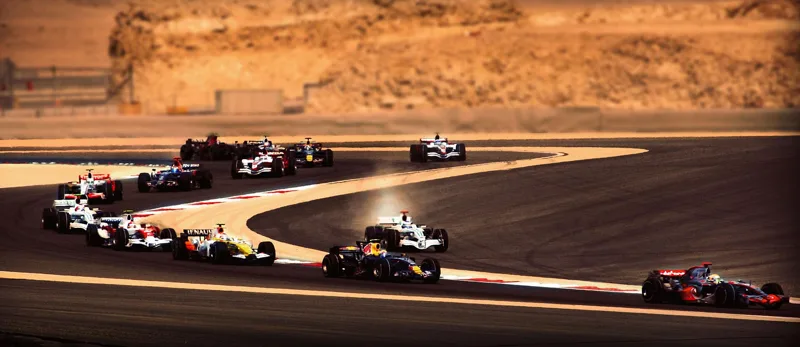
The grid was dry, with an air temperature of 27C (81F) and a track temperature of 30C (86F). Hamilton and Alonso started on the harder compound, while both Ferraris chose the softer tyre. Hamilton pulled away from the Ferraris off the line and led into the first corner.
Further back, Rosberg got past Glock on lap 12, but his own pit stop dropped him to 18th, a six-place fall that left him fighting to recover from the back of the midfield. Bourdais, meanwhile, began a steady climb through the field, passing Sutil, Nakajima and Coulthard to reach 15th by lap 30.
Kovalainen moved ahead of Alonso early on, but Alonso regained the position at the turn 14 hairpin, having followed the McLaren down the back straight. After one lap Hamilton was ahead of Raikkonen, Massa, Alonso and Kovalainen. Bourdais ran into Trulli at the first corner, and Trulli retired after the second lap.
Heidfeld gained three places from ninth at the start, while Webber climbed from sixteenth to twelfth by the second lap. Kubica also moved up from eleventh and was eighth behind Vettel shortly afterwards, showing that the early laps were busy for the midfield.
How did the race develop through the middle stint?
Hamilton was quickest on laps three, six and eight, stretching his lead over Raikkonen beyond four seconds. Raikkonen fought back around lap ten, but Hamilton responded with the fastest lap of the race, 1:36.325 on lap 13, to stay clear of his rival.
Webber was first to pit, on lap 12, and his stop dropped him to eighteenth. Massa and Alonso came in on lap 14. Hamilton and Raikkonen stopped on lap 15 for harder tyres and fuel, which handed the lead to Kovalainen for a short time.
Once the pit stops had settled, Hamilton held a clear advantage: 6.9 seconds over Raikkonen and 14.1 seconds over Massa. Raikkonen pulled back a little over the following laps, but he lost time again on lap 30 and the gap held.
Kovalainen's car had a puncture on lap 35, and the McLaren limped back to the pits on a disintegrating tyre before rejoining seventeenth. The Ferraris made their final stops over laps 36 to 38. Hamilton led Raikkonen by 13 seconds after the second round of stops, with Massa behind Raikkonen.
How did the race finish?
On lap 49 Massa got by Raikkonen on the back straight to move into second. Sutil ended his race with a gearbox failure after a spin, and Kovalainen later retired, parking his car in the McLaren garage, while Trulli and Sutil had already retired earlier in the race.
Hamilton crossed the line first after 56 laps, his fifth victory of 2008, almost 15 seconds clear of Massa. Raikkonen finished third ahead of Alonso, and Heidfeld climbed from ninth on the grid to fifth, just ahead of Kubica, who had started eleventh. Glock took seventh with a one-stop strategy, and Piquet was eighth.
That afternoon also proved to be the final occasion on which Piquet Jr. collected a world championship point, and the specialist press played down the Massa pass as normal racing.
Vettel, Coulthard, Barrichello and Nakajima finished ninth through twelfth, and After his early clash with Trulli, Bourdais came back to finish thirteenth. Webber's two-stop strategy faded and he finished fourteenth, while Rosberg took fifteenth ahead of Button and Fisichella.
What did the result mean for the title race?
Raikkonen had been fourth before the race on 63 points, and his third place kept him in the battle for the top positions. Massa's second place left Hamilton leading the drivers' standings with a clear advantage going into Brazil, where he would enter with a seven-point lead and expect a hard fight from Ferrari. Massa had needed a strong result to keep his title hopes alive, and he said the day had been difficult, with McLaren's car clearly stronger than the Ferraris for the weekend.
For the constructors, the race extended Ferrari's lead over McLaren from seven to 11 points. Kovalainen's retirement, combined with the two Ferraris finishing second and third, made the difference.
Going into the race Kubica had been third in the standings, with 72 points. Sixth place left him with no realistic route to the title, which was a clear disappointment after a season in contention.
Kubica's sixth place ended his chance of the drivers' title. He said he would now aim to defend his third place in the standings in Brazil, and he finished the year in that spot.
Was there any controversy over the pass?
Hamilton praised his team after the race, saying the car had been a dream to drive, and he expected Ferrari to push hard in Brazil. Massa admitted that he had been pushing on the limit to close the gap, but that McLaren had the better car all weekend.
Massa's pass on Raikkonen did not lead to any investigation by the stewards. Team orders have been banned since the 2002 Austrian Grand Prix, and Raikkonen said the team knew what it wanted and that the outcome was normal in those situations.
Kovalainen's problem was a technical one. Mismatched tyres at the front of his car made it understeer, and his team adjusted the front wing at the first stop before the tyres were corrected. The handling problems that followed led to his retirement.
Race classification
| Position | Driver | Team | Grid |
|---|---|---|---|
| 1 | Lewis Hamilton | McLaren-Mercedes | 1 |
| 2 | Felipe Massa | Ferrari | 3 |
| 3 | Kimi Raikkonen | Ferrari | 2 |
| 4 | Fernando Alonso | Renault | 4 |
| 5 | Nick Heidfeld | BMW Sauber | 9 |
| 6 | Robert Kubica | BMW Sauber | 11 |
| 7 | Timo Glock | Toyota | n/a |
| 8 | Nelson Piquet | Renault | n/a |
| Ret | Heikki Kovalainen | McLaren-Mercedes | 5 |