Hamilton skipped the pit stop under the safety car, rejoined fifth on his final stop and still won the race at Hockenheim.
The 2008 German Grand Prix was held on 20 July 2008 at the Hockenheimring and was the tenth race of the season. Lewis Hamilton won from pole for McLaren, ahead of Nelson Piquet Jr. in a Renault and Felipe Massa in a Ferrari. The race was contested over 67 laps.
Lewis Hamilton won the 2008 German Grand Prix for McLaren from pole position, his second straight win after Silverstone. The result turned on a decision under the safety car that left him fifth on his final stop, before he worked his way back to the front. Nelson Piquet Jr. was second for Renault and Felipe Massa third for Ferrari.
The race was also a test of nerve. McLaren gambled on fuel while the rest of the leading cars made their stops, and the team's choice only paid off because the safety car period ran longer than expected.
Why did Hamilton stay out under the safety car?
Timo Glock crashed on lap 36, and the safety car came out. The pit lane opened on lap 38, and most of the leaders pitted, but McLaren kept Hamilton on track because he still had plenty of fuel. He finally stopped on lap 50 and rejoined fifth.
The plan was for Hamilton to pull away from his heavily fuelled rivals once the safety car went in. Piquet had pitted just before the safety car came out, so he was fuelled to the finish as well. Massa rejoined fourth after pitting under the safety car, and he was also fuelled to finish.
Ron Dennis later explained the thinking. Hamilton still had a lot of fuel on board, but the track was cleared more slowly than expected, so the safety car came in later than planned. Hamilton was unable to rejoin in the lead.
Hamilton stayed out under the safety car, rejoined fifth and then passed three rivals to win at Hockenheim.
How did the race start and develop?
Hamilton, Massa and Kovalainen kept their grid positions at the start. Kubica passed Raikkonen off the grid, then passed Alonso and Trulli at the hairpin, and he was soon up to fourth. Hamilton began to pull clear at about half a second per lap.
Kubica ran wide at the final corner on lap four and impeded Trulli, which gave Alonso a chance down the main straight. Trulli held his position, and Alonso was passed by Raikkonen, dropping to sixth. At the back, Nakajima spun his Williams but recovered and kept going.
Hamilton's first stop, on lap 18, was not clean. Coming out of the pits he made an error and was passed by Trulli. The two nearly collided at the hairpin, and Hamilton held back for the rest of that lap while Trulli made his own stop. Hamilton had regained the lead by lap 22, after Massa, Kovalainen, Trulli and Raikkonen had all stopped.
How did the back of the field fare?
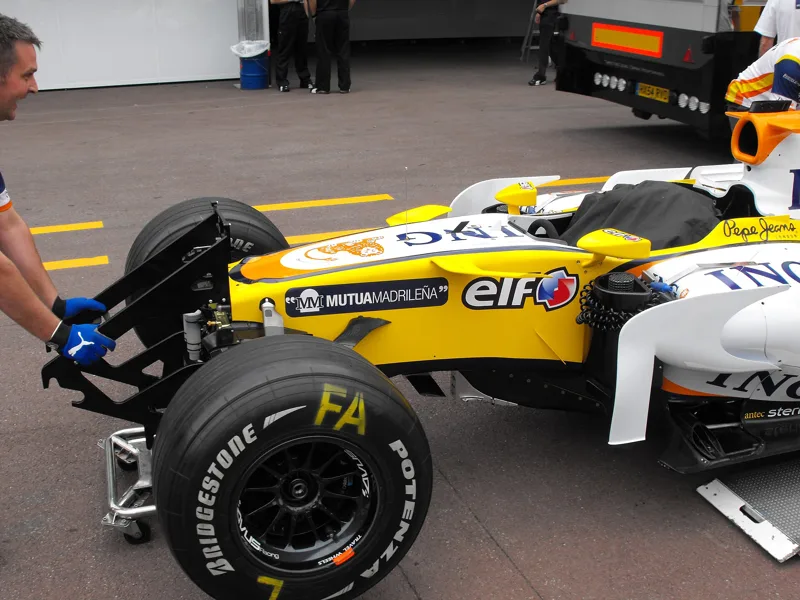
Nakajima spun his Williams early on but recovered and kept going, while Fisichella and Sutil started 19th and 20th on the grid. Button finished last of the classified drivers in 17th. Coulthard and Barrichello collided on lap 48, and Barrichello retired three laps later with the damage from that contact.
Webber's Red Bull had been dripping oil after picking up debris from Glock's crash, and he pulled out of the race on lap 40. His retirement came before the safety car had gone, and it left the order behind the leaders unsettled for the rest of the afternoon.
What happened when Glock crashed?
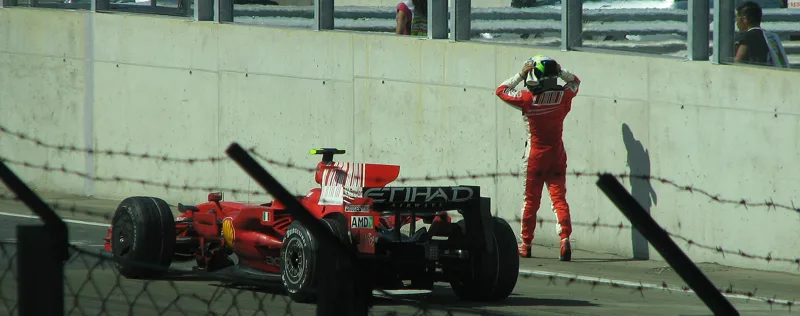
On lap 36 a suspension failure sent Glock's car spinning after the final corner. He spun through 180 degrees and hit the pit wall with a strong rearward impact, and debris spread across the track. The car rolled to a stop on the grass, and a dazed Glock climbed out and was treated at the medical centre.
The safety car followed, and when the pit lane opened on lap 38 most drivers came in, including every leader apart from Hamilton. McLaren's view was that he could manage on the fuel he had, so he would pull away once the safety car went in.
Piquet had pitted just before the deployment and carried enough fuel for the rest of the race. He was promoted to third from 14th after the stops. Further back, Vettel squeezed past Alonso at the pit exit and pushed him over the white line. Alonso complained over the radio, but no action was taken against either driver.
Key moments in the race
| Lap | Event |
|---|---|
| 18 | Hamilton pits and is passed by Trulli |
| 22 | Hamilton regains the lead |
| 36 | Glock crashes; the safety car is deployed |
| 38 | The pit lane opens; most drivers pit, Hamilton stays out |
| 40 | Webber's Red Bull, dripping oil, retires |
| 42 | The safety car comes in; Hamilton leads |
| 48 | Coulthard and Barrichello collide |
| 50 | Hamilton pits and rejoins behind Heidfeld, Piquet, Massa and Kovalainen |
| 52 | Heidfeld sets the fastest lap of the race, 1:15.987 |
| 60 | Hamilton retakes the lead |
Who lined up where in qualifying?
Hamilton took pole with a lap of 1:15.666, his ninth pole of his career, beating Massa by two-tenths of a second on his final lap of the third session. Kovalainen qualified third after an error in his first run, and Trulli took fourth. Alonso and Raikkonen were separated by just 0.004 seconds in fifth and sixth, and Kubica took seventh with Webber eighth.
Vettel and Coulthard completed the top ten. Timo Glock took 11th for Toyota, seven places behind his teammate Trulli, and Button and Bourdais took 14th and 15th. Nakajima was 16th, Piquet 17th and Barrichello 18th, while the two Force Indias of Sutil and Fisichella brought up the back of the grid.
Qualifying also brought a penalty and a complaint. Kovalainen was fined 5,000 euros for using a refuelling system that the FIA had not approved. Piquet said he had been blocked by Vettel during his first-session run, although the FIA felt Vettel had not impeded him.
How close was the finish?
Piquet finished 5.5 seconds behind Hamilton after starting 17th, and he called the second place a great reward for the team. Massa held third ahead of Heidfeld, Kovalainen, Raikkonen and Kubica. Vettel took eighth, the last of the points-scoring places.
Hamilton passed Massa on lap 57 at the hairpin. Massa had the inside line covered but was not fully committed into the braking zone, and Hamilton took second. Three laps later Hamilton made a similar move on Piquet, although the Renault driver fought harder than Massa had.
Hamilton then led easily to the finish, although Piquet stayed within six seconds of him. Raikkonen passed Kubica for sixth on lap 60 and the field settled around them.
How many drivers finished on the lead lap?
Sixteen drivers finished on the lead lap, a record that beat the fourteen set at the 1999 Belgian Grand Prix. Heidfeld set the fastest lap of the race on lap 52, a 1:15.987 that was the only lap under one minute 16 seconds.
What did McLaren say about the strategy?
Hamilton said the team had opted to keep him out, and that he needed a gap of 23 seconds with only about seven laps to build it. Ron Dennis said the debris was cleared more slowly than hoped, which delayed the safety car and kept Hamilton from rejoining in front.
Hamilton was upbeat about the rest of the season. He said that if McLaren could keep the momentum it had, the team would look very good in the races to come.
Piquet, who had qualified 17th, was delighted with his second place. He credited the team with making strong decisions when the safety car came out.
What technical changes did the teams bring to Hockenheim?
Hamilton had tested the MP4-23's new front wing, introduced at Silverstone, in the simulator and then in a test session at Hockenheim before the race. Once he had honed the setup to his liking, he used the wing in the race. His teammate Kovalainen was less comfortable with the car's handling, so he ran a greater front wing angle for more downforce.
That choice cost Kovalainen some straight-line performance. The extra downforce meant larger radiators were needed, because the reduced airflow over the car made cooling harder, and the slight reduction in performance was the trade-off.
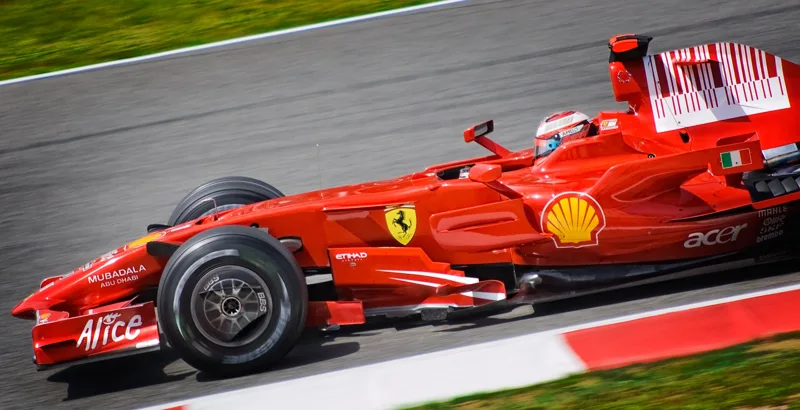
Ferrari brought revised bargeboards, exhaust exits and an altered windscreen for its F2008. BMW Sauber added turning vanes to the top of the F1.08 nose, Toyota removed some bodywork from the exhaust exits of its TF108, and Honda introduced new bargeboards for its RA108 chassis. Every one of those changes aimed at better aerodynamic performance.
How did the practice sessions look?
The first practice session was run on a wet track after early-morning rain. Hamilton was fastest, with Kovalainen second, and Massa and Raikkonen third and fifth. Alonso sat between them in fourth. Kubica spun off the track, and Bourdais had a mechanical problem with his flywheel sensor, so both ended at the bottom of the timesheets.
The dry second session again belonged to Hamilton, while Massa and Raikkonen moved up to second and third. Webber set the fifth-fastest time after earlier electrical and clutch problems with his car. On Saturday morning Kovalainen was quickest, ahead of Massa and Hamilton, and Kubica was once more at the bottom of the table, this time with a transmission problem.
What did the result do to the championship?
Hamilton's second straight win put him four points ahead of Massa and seven ahead of Raikkonen in the Drivers' Championship. Before the race Hamilton, Raikkonen and Massa had been tied on 48 points.
In the Constructors' Championship McLaren closed in on the two teams ahead of it. Ferrari still led by 15 points from McLaren and 12 points from BMW Sauber, whose drivers, Heidfeld and Kubica, finished fourth and seventh.