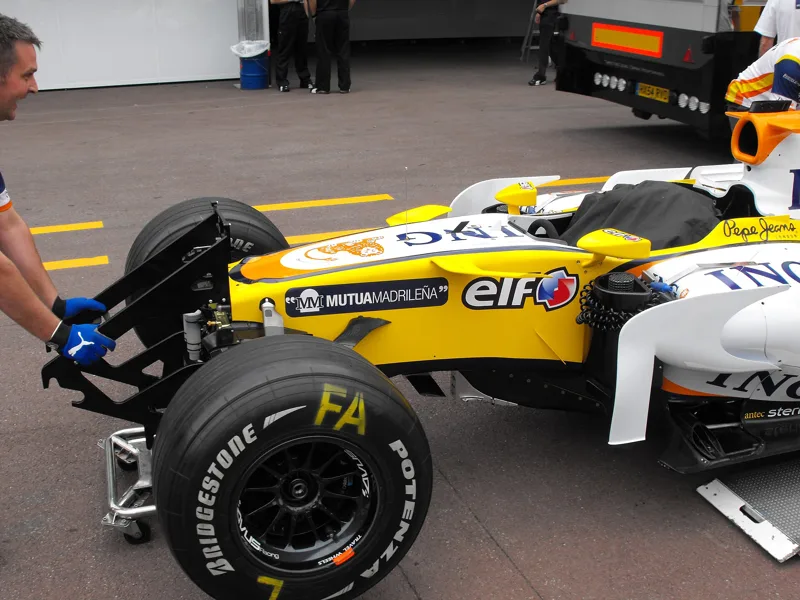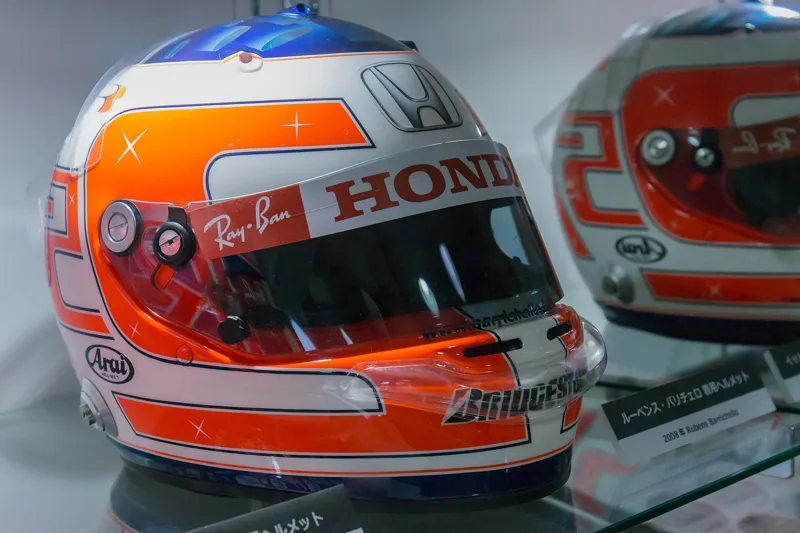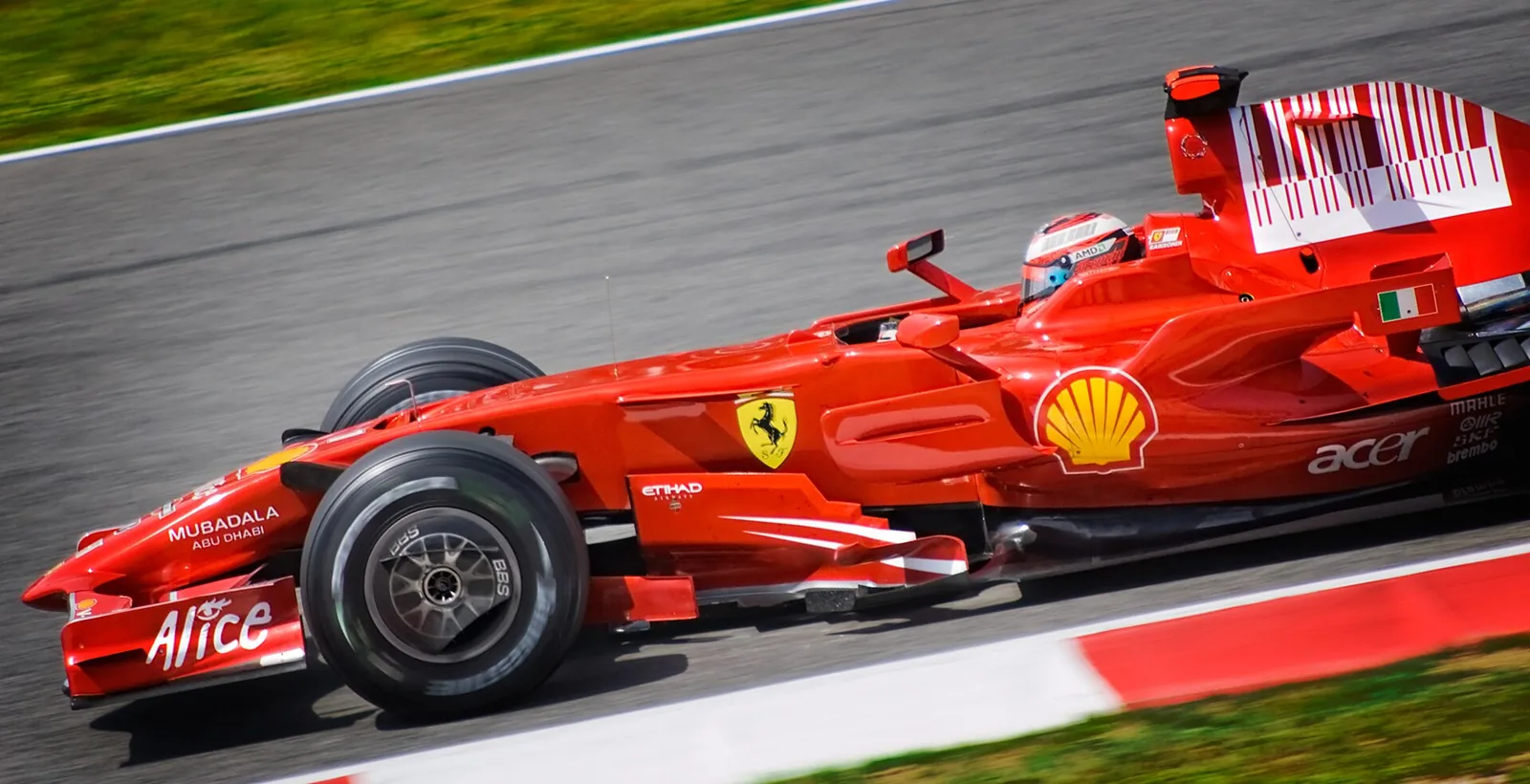
A Ferrari one-two at Catalunya, a crash that left Kovalainen with a minor concussion, and the final race for Super Aguri.
The 2008 Spanish Grand Prix was held on 27 April 2008 at the Circuit de Catalunya in Montmelo. Kimi Raikkonen won from pole position for Ferrari, with teammate Felipe Massa second and Lewis Hamilton third for McLaren. It was the fourth race of the season.
Kimi Raikkonen won the 2008 Spanish Grand Prix from pole position, and Ferrari finished one-two when Felipe Massa followed him home. Lewis Hamilton completed the podium for McLaren. Safety car periods and retirements shaped the afternoon as much as the battle for the lead.
The race also marked the end of a team. Super Aguri's final Grand Prix came in Barcelona, and the withdrawal that followed left the sport with ten teams. Both of the team's drivers, Takuma Sato and Anthony Davidson, made their last starts for it that weekend.
Why was the Spanish race under a cloud before it began?
The FIA placed the Spanish and European Grands Prix on probation after racist taunting of Lewis Hamilton during pre-season testing at the circuit. The governing body launched a Racing Against Racism programme, and no such incidents were reported during the race weekend.
Hamilton's relationship with Spanish fans was already strained. Many resented his bitter rivalry with Fernando Alonso, which had ended with Alonso leaving McLaren for Renault. Hamilton had also collided with Alonso in Bahrain, a lap after a poor start.
Super Aguri's future had been uncertain for weeks. A takeover backed by Dubai International Capital had collapsed, and Honda confirmed the team's entry only on the Friday before the race. Its withdrawal followed the weekend, for financial reasons.
Pole position, a Ferrari one-two and a safety car period that kept deciding who was still in the fight.
Who was on the grid, and where did they start?
Twenty-two drivers in eleven teams took the start. Raikkonen was on pole with Alonso alongside him on the front row, while Massa began third beside Kubica. Hamilton, who began fifth, got past Kubica at the first corner while Massa went around Alonso for second.
Qualifying ran in three parts. The first part eliminated the cars that finished 17th or lower, and the second part removed those finishing 11th to 16th. Raikkonen's pole lap was 1:21.813, his first pole of the season, and only 0.2 seconds separated Hamilton's time from his.
Alonso's place beside Raikkonen fed suspicions that he had started with light fuel. Piquet reached the final session for the first time in his career, ahead of Barrichello and Nakajima. Rosberg was outqualified by his Williams teammate for the first time that season and started 15th.
Both Super Aguri drivers, Davidson and Sato, lined up on the back row. Their team had nearly folded in mid-April, and the Spanish race was its last.
How did practice and qualifying set up the race?
Raikkonen was quickest in the first Friday session at 1:20.649, and Massa recovered from a spin and an off-track excursion to take second. In the second session Raikkonen repeated his effort with 1:21.935, as the frontrunners ran higher fuel loads.
Heidfeld was quickest in the final session at 1:21.269, using the quicker soft compound. Bridgestone had brought two compounds to the circuit, and the softer of the two carried a single white stripe. Webber set no time after two installation laps.
Piquet, who had been fastest in none of the sessions, still earned a place in the final qualifying session. Heidfeld was ninth on the grid after tyre problems on his final lap.
How did the race unfold?
Raikkonen kept the lead from the start, and Massa passed Alonso for second. Hamilton passed Kubica at the first corner to take fourth. Shortly afterwards Sutil spun while trying to pass Coulthard, and the collision eliminated Sutil and Vettel.
The safety car restarted the field on lap four, and Raikkonen immediately pulled more than a second clear of Massa. Ahead of the Ferraris, Hamilton hunted Alonso, but Renault pitted Alonso on lap 16, which promoted McLaren to third.
Behind the leaders the field thinned quickly. Piquet ran wide on lap five and collided with Bourdais at turn 10 two laps later, and both retired. Davidson's race ended on lap eight after debris damaged his radiator.
Key moments in the race
| Lap | Event |
|---|---|
| 1 | Hamilton passes Kubica at the first corner; Massa passes Alonso for second |
| 4 | The safety car restarts the field; Raikkonen extends his lead |
| 5 | Piquet runs wide at turn 10 |
| 8 | Davidson retires after radiator damage |
| 16 | Alonso pits; Hamilton moves up to third |
| 22 | Kovalainen's tyre fails; his McLaren hits the barriers |
| 26 | Barrichello and Fisichella collide in the pit lane |
| 42 | Rosberg's engine fails while he is seventh |
| 66 | Raikkonen wins, 3.2 seconds ahead of Massa |
What went wrong for Alonso at home?
Alonso started on the front row beside Raikkonen, and the suspicion that his car had been fuelled light added pressure to a home weekend. Massa passed him for second at the first corner, and Alonso then lost ground while Renault decided its pit timing. The team pitted him on lap 16, which let McLaren move up behind the two Ferraris.
Alonso's race ended later with a much more serious problem. Smoke billowed from his engine, and he pulled over to the side of the track and retired after the safety car had gone. It was a bitter end to a home Grand Prix in which he had been in contention.
How did the BMW and Renault cars fare?
Kubica finished fourth behind Hamilton, ahead of Webber and Button. Heidfeld had been held back by tyre problems in qualifying, and he recovered to finish ninth, ahead of Fisichella. Piquet did not finish after his lap-five error at turn 10, which ended his race in a collision with Bourdais.
Those results mattered for the constructors' order. BMW Sauber was the team that could trouble Ferrari, and the afternoon gave it a solid if unspectacular set of points.
What happened to Kovalainen?
Kovalainen's front left tyre deflated on lap 22 while he was running at about 210 km/h (130 mph), and his McLaren hit the barriers with an impact measured at 26 g. He suffered only a minor concussion, and he was given the all-clear for the following round, two weeks away.
The safety car came out again while the marshals extracted the car. Heidfeld had to pit immediately because he was low on fuel, and he took a ten-second stop-go penalty.
McLaren said a faulty wheel clamp had made the wheel vulnerable to the rapid load changes a car endures, and that this led to the deflation. Kovalainen praised the FIA's safety standards and the medical team that got him out quickly.
How did the race finish?
Raikkonen took the chequered flag on lap 66, finishing 3.2 seconds clear of Massa. Hamilton took third ahead of Kubica, Webber and Button, and Button's finish gave Honda its first points of the season.
Nakajima finished seventh, ahead of Trulli, who had been running sixth until a team error sent him into the pits. Toyota had confused Glock's damaged car with his, and the mistake cost him the place. Heidfeld finished ninth ahead of Fisichella.
Glock and Coulthard filled the next places after their late collision, and Sato finished 13th in Super Aguri's final race. Rosberg, Alonso, Barrichello, Kovalainen, Davidson, Bourdais, Piquet, Vettel and Sutil were among the retirements.
Did the start decide the race?
Raikkonen and Hamilton both pointed to the start. Raikkonen said the circuit was very hard to overtake, so the best place to win was from the front. Hamilton said a good start and making as many places as possible had been his plan, and he managed both.
Only two passing moves were recorded after the start, Heidfeld's move on Fisichella on lap 55 and Coulthard's move on Sato on lap 61.
Massa said the one-two was important for the championship, because it lifted Ferrari ahead of BMW Sauber in the Constructors' Championship. He also said Ferrari's speed was not significantly better than its rivals, so the factory had to keep working on the car.
How did the McLaren pair perform?
Hamilton was 0.2 seconds slower than Raikkonen in qualifying and started fifth, but he passed Kubica into the first corner and held third for much of the race. His early work on Alonso led nowhere until the Renault pit stop changed the order, and by then Raikkonen and Massa were well clear.
Kovalainen's afternoon was dominated by his crash. He had started in the third row beside Hamilton, and his race ended with the tyre failure on lap 22. He was checked and kept under observation, and the McLaren team said its wheel clamp had caused the failure.
What happened to Super Aguri on track?
Both Super Aguri cars lined up on the back row for their final Grand Prix. Davidson retired early, on lap eight. Sato finished 13th, and the team's last Grand Prix ended with that result.
Honda's involvement in the team's future had been confirmed only days before the weekend, which left little time to prepare. The team's departure from Formula One left ten teams on the grid for the rest of the year.
Did the circuit's run-off concern the drivers?
The Kovalainen accident raised questions about the barriers and run-off areas. McLaren blamed a faulty wheel clamp for the wheel failure, but the wider question of how the corner was protected remained. Kovalainen praised the FIA's safety standards, the medical team and the marshals who got him out quickly.
Mark Webber took a sharper view. Writing in his regular BBC Online column, he said the run-off at that corner was too tight, and that any driver who made an error there would be in for a big crash, so the area needed a close look.
How did the championship change?
Ferrari moved into the lead of the Constructors' Championship, twelve points ahead of BMW Sauber and thirteen ahead of McLaren. Raikkonen led the Drivers' Championship on 29 points, nine clear of Hamilton and ten clear of Kubica. Massa moved into fourth on 18 points, with 14 races still to run.
The gap at the top of the table was not large. Hamilton's third place kept him in contention after his difficult Bahrain race.