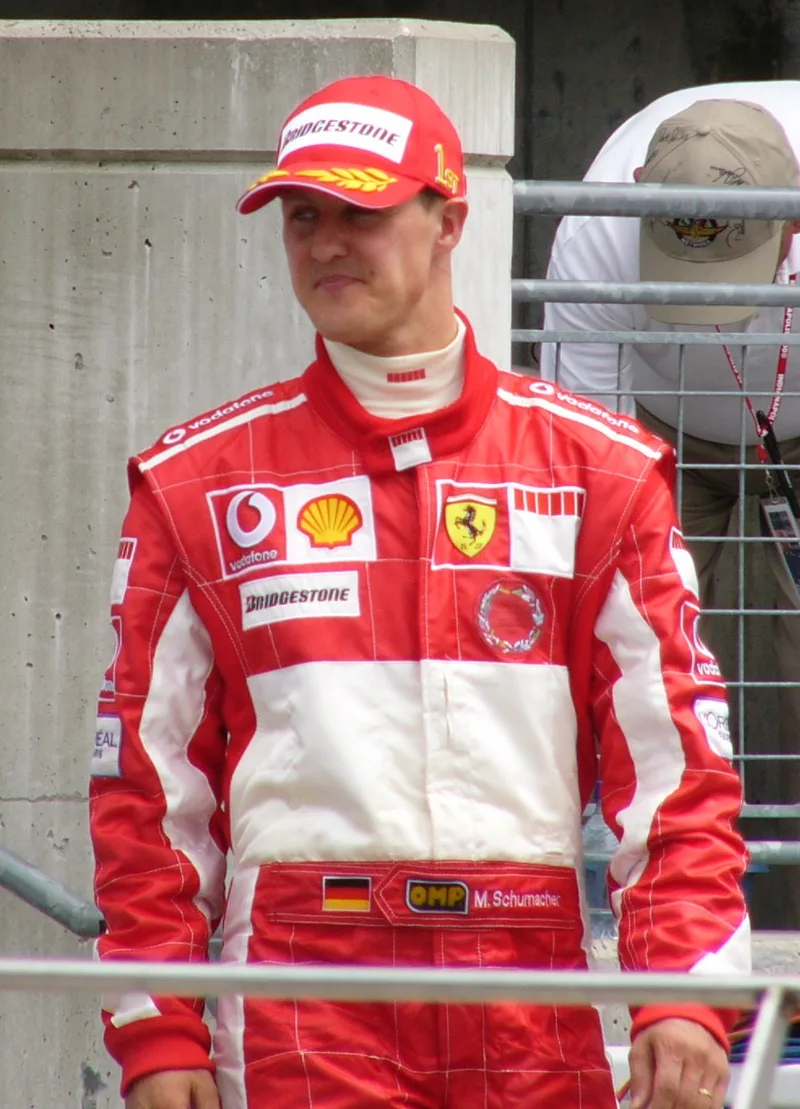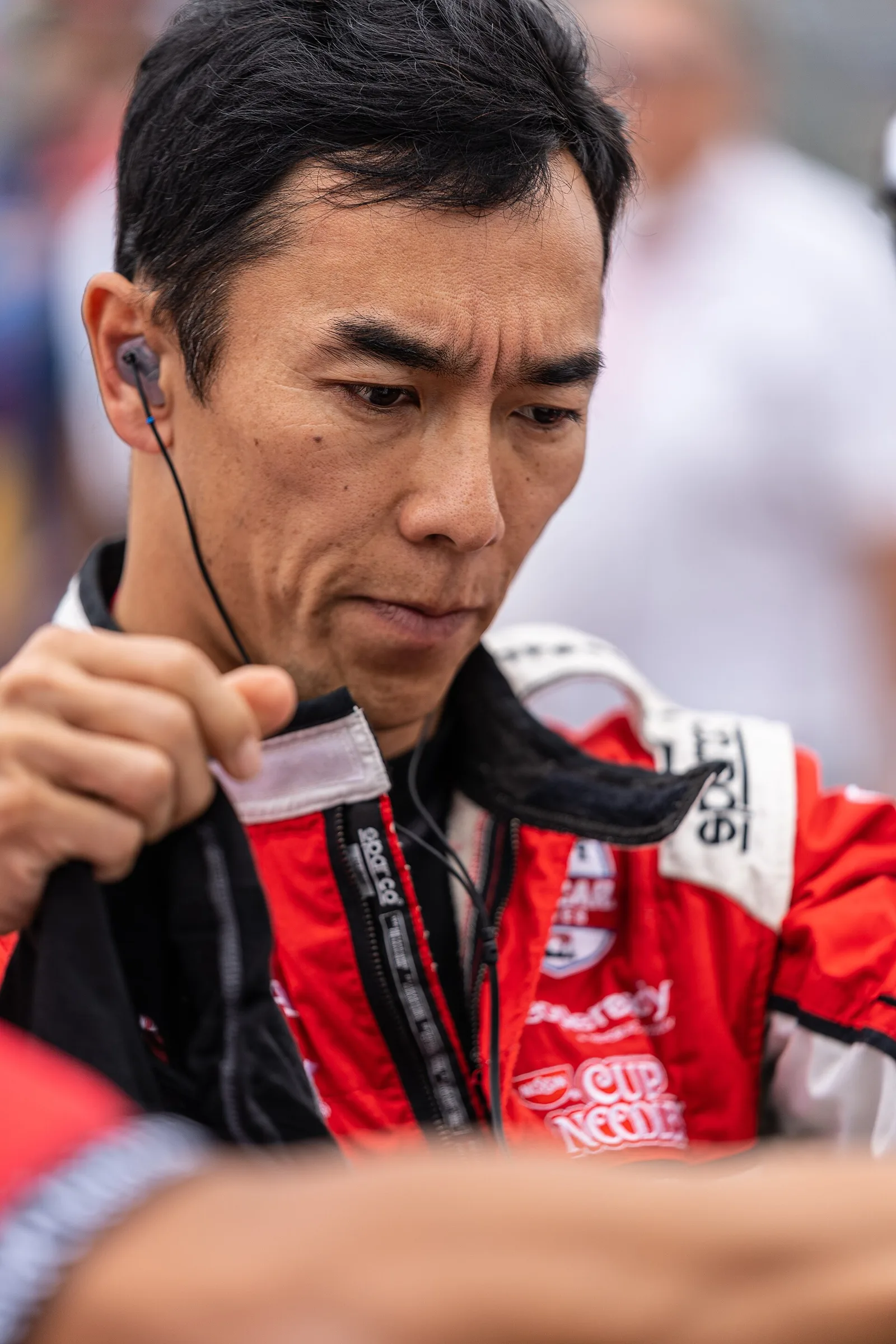
A Tokyo-born driver who took the 2001 British Formula Three title, raced for Honda-powered teams in Formula One and became the first Asian winner of the Indy 500.
Takuma Sato is a Japanese racing driver born in Tokyo on 28 January 1977. He raced in Formula One from 2002 to 2008, then won the Indianapolis 500 in 2017 and 2020 in IndyCar. He remains the only Asian driver to win the race.
Takuma Sato is a Japanese racing driver who competed in Formula One from 2002 to 2008 and built his later career in IndyCar. He won the Indianapolis 500 in 2017 and again in 2020, and the Tokyo-born driver has the distinction of being the first Asian winner of the race. His aggressive style has made him one of the most popular figures in the sport.
How did Sato start in racing?
Sato began karting in Japan and won the national karting title in 1997. With Honda's backing he moved to Europe in 1999, where he raced in Vauxhall Junior and Formula Opel before joining the British Formula Three Championship mid-way through the year. He scored class wins at the British Grand Prix and Spa for Diamond Racing that season.
He moved into the top class of the championship with Carlin Motorsport in 2000, winning four races and finishing third overall. In 2001 he won twelve of the 26 races to take a dominant title, the first for a Japanese driver in the series. He also won the Macau Grand Prix and the Masters of Formula 3 that year.
A driver whose Formula One years were shaped by Honda and team finances, and whose Indianapolis wins came after he rebuilt his career in America.
What happened to Sato in Formula One at Jordan and BAR?
Sato graduated to Formula One in 2002 with the Honda-powered Jordan team, partnered by Giancarlo Fisichella. His low point was a heavy crash in Austria, when Nick Heidfeld's Sauber hit the side of his car and punched a hole in the cockpit. He still scored fifth place at his home race in Suzuka.
Honda moved its focus to British American Racing for 2003, and Sato joined as a test driver. The season was overshadowed by the death of Daijiro Kato, who was killed during the 2003 Japanese MotoGP race. Kato was Sato's closest friend in the Honda camp, and Sato led a tribute to him during the San Marino Grand Prix weekend. Late that year he replaced Jacques Villeneuve at the Japanese Grand Prix and collected sixth, having fought with Michael Schumacher for position. A full-time race contract for 2004 followed.
How strong was Sato's 2004 season?
The 2004 season was his breakthrough. He qualified in the top three four times, started from the front row once and set an overall lap record at the European Grand Prix. At the United States Grand Prix, after the team did not pit under safety car conditions, he fought back with daring overtaking moves to take his first podium.
Reliability problems caused six retirements, but he scored points in nine of the eleven races he completed. That gave him eighth in the championship with 34 points, the best result ever by a Japanese or Asian driver in Formula One. BAR-Honda finished second in the Constructors' Championship that year.
Why did 2005 go wrong for BAR?
Sato missed the Malaysian Grand Prix with illness in 2005. Both BAR drivers were then disqualified from the San Marino Grand Prix for running underweight once all fuel was removed, and the team was banned from the next two races. The court did not find that the fault was deliberate.
His only points that year came with eighth at the Hungarian Grand Prix, despite seven qualifying sessions in the top ten. The car was not as competitive as the previous year's design, and Sato was not re-signed for 2006 when Honda took full control of the team.
How did Sato fare at Super Aguri from 2006 to 2008?
Sato joined the new Super Aguri team for 2006, run by former driver Aguri Suzuki. The squad was effectively a Honda B-team and ran the first half of the season with a modified older chassis. By the end of the year he was outpacing the Midland cars, and he finished tenth at the Brazilian season finale.
For 2007 the team ran a reworked version of the previous year's Honda chassis, and its performance improved sharply. Sato reached Q3 at the Australian Grand Prix and scored the team's first point at the Spanish Grand Prix. At Canada he climbed from the middle of the grid to fifth, passed Kimi Raikkonen and then dropped to eleventh after a pit-stop error.
He recovered by moving five places in the last fifteen laps, passing Ralf Schumacher and then Fernando Alonso to finish sixth. The Alonso move earned him the Overtake of the Year award from F1 Racing magazine, and it was cheered loudly around the circuit.
Financial trouble then undermined the team. The 2008 car was a modified version of the Honda chassis, and Super Aguri only just reached the opening round. A transmission problem in Australia ended a chance to score, and thirteenth at Spain was Sato's best result of the year. Super Aguri withdrew after the Spanish Grand Prix, leaving him without a drive after four races.
Did Sato get another Formula One chance?
Sato tested for Toro Rosso at Jerez in late 2008 as a candidate for the seat vacated by Sebastian Vettel. He set the fastest time on the seventeenth of November, three tenths ahead of Sebastien Buemi, and he competed with Sebastien Bourdais for one of the race seats. The seat went to Bourdais, and in March 2009 Sato learned he would not be the Red Bull reserve driver.
How did Sato establish himself in IndyCar?
Sato returned to open-wheel racing with KV Racing Technology in 2010, finishing 21st in the series. He improved to thirteenth in 2011, taking his first pole at the Iowa Corn Indy 250. In 2013 he joined A. J. Foyt's team and won at Long Beach, making him the first Japanese driver to win an IndyCar race.
That Long Beach win came in his 52nd start in the series, and it made him the first Asian driver to win at the Grand Prix of Long Beach. He went on to score six top-five finishes, two podiums and two poles with Foyt before leaving at the end of 2016.
What did the 2017 Indianapolis 500 win mean?
Sato joined Andretti Autosport for 2017 and won the Indianapolis 500, becoming the first Asian driver to take the race. He then won a pole at the Dual in Detroit on Belle Isle, and he added another at Pocono Raceway in August.
The win was the start of a run in which Indianapolis became central to his career. A second victory followed three years later, and he is still the only Asian driver to have won the race.
How did Sato's second spell with RLL go?
Sato rejoined Rahal Letterman Lanigan Racing for 2018, driving the No. 30 car alongside Graham Rahal. He won at Portland from a 20th-place start, his third career victory and his first on a permanent road course. The season had its hard moments, including a crash early at Indianapolis.
In 2019 he started from pole and won the third race at Barber Motorsports Park, and he later won at Gateway. On 23 August 2020 he took the 104th running of the Indianapolis 500 from a front-row starting spot on the outside, winning for a second time. In October 2021 RLL confirmed he would not return for 2022, and Christian Lundgaard took the seat.
What did Sato do from 2022 to 2024?
In 2022 Sato raced for Dale Coyne Racing with Rick Ware Racing, replacing Romain Grosjean, and he finished 25th at the Indianapolis 500. In 2023 he joined Chip Ganassi Racing to run only the oval rounds, the first season since 2010 without a full-time IndyCar seat.
In March 2024 RLL announced he would drive for the team at the Indianapolis 500 alone. He finished 14th after showing significantly more speed than his teammates, and he made the Fast 12 round of qualifying.
How close did Sato come to a third Indianapolis win?
In 2025 Sato qualified second and led 51 laps, more than any other driver. He was in strong contention for victory when he overshot his pit box on lap 86, and the crew had to push him back into place. He finished eleventh on track before a disqualification of the Andretti drivers lifted him to ninth.
RLL confirmed that Sato would contest the Indianapolis 500 with the team again in a later season. He qualified 13th, was promoted to 12th after a rival's car failed post-qualifying inspection, and finished tenth.
What did Sato do in other series?
In Formula Nippon, Team Mugen ran Sato in the last three rounds of the 2012 season. He raced with the team again in the opening round of the renamed 2013 Super Formula season and returned for the last three races, scoring his first points with eighth in the season finale.
Formula E came in September 2014, when he replaced Antonio Felix da Costa at Amlin Aguri for the Beijing ePrix. He set the fastest lap of 1:45.101 and scored two points before retiring with mechanical issues. It was his only Formula E race and his only race without a Honda power unit, since he used a spec McLaren powertrain. He finished with a 100% fastest-lap record in the series.
What is Sato's reputation and legacy?
Sato is widely popular among fans and media, and his aggressive driving is central to that reputation. His motto, No Attack, No Chance, is one of the best-known in IndyCar. In 2024 he was inducted into the Long Beach Motorsports Walk of Fame, a fitting recognition for the driver who first won there.
How close did Sato come to Indianapolis success before 2017?
Sato had a strong run at the 2012 Indianapolis 500 for Rahal Letterman Lanigan Racing. He chased Dario Franchitti to the finish and made a move for the lead at the first turn of the last lap. The attempt did not succeed, but Indianapolis fans respected him for going for it on the final lap.
He had first visited the race in May 2009, before joining KV Racing Technology for 2010. In 2011 he scored three top-five finishes and two poles with that team, finishing thirteenth in the series. His 2017 victory came after several seasons of oval racing in IndyCar.
What were Sato's key results by season?
Sato's career spans Formula One, IndyCar and one-off appearances in other series. The table highlights his most important results, from his first Formula One points finish at Suzuka to his Indianapolis 500 wins. It shows how his results moved with his teams, from Honda-powered Jordan and BAR to smaller IndyCar outfits and back to Rahal Letterman Lanigan Racing.
| Season | Team | Series | Notable result |
|---|---|---|---|
| 2002 | Jordan | Formula One | Fifth at his home race in Suzuka |
| 2004 | BAR-Honda | Formula One | Eighth in the championship with 34 points; first podium at the United States Grand Prix |
| 2006 | Super Aguri | Formula One | Tenth at the Brazilian season finale |
| 2007 | Super Aguri | Formula One | Sixth at the Canadian Grand Prix after passing Fernando Alonso |
| 2011 | KV Racing Technology | IndyCar | Thirteenth in the championship with two poles |
| 2013 | A. J. Foyt Enterprises | IndyCar | First IndyCar win at Long Beach, his 52nd start |
| 2017 | Andretti Autosport | IndyCar | Indianapolis 500 win, the first by an Asian driver |
| 2018 | Rahal Letterman Lanigan Racing | IndyCar | Portland win from 20th on the grid |
| 2020 | Rahal Letterman Lanigan Racing | IndyCar | Second Indianapolis 500 win |
| 2025 | Rahal Letterman Lanigan Racing | IndyCar | Led 51 laps at Indianapolis, promoted to ninth after two disqualifications |