From the 1952 world championship run to F2 rules to the 2017 rebrand of GP2, the feeder series that have filled the rungs beneath F1.
Formula Two began in 1948, Formula 3000 replaced it in 1985, GP2 replaced that in 2005, and in 2017 GP2 was rebranded as FIA Formula 2. Formula Three sits below, with a global FIA championship from 2019. Together they form the main training ladder for Formula One drivers.
For two seasons in the early 1950s the Formula One World Championship was not run to Formula One rules at all. So few entrants turned up that in 1952 and 1953 every championship Grand Prix except the Indianapolis 500 was contested by Formula Two cars. That tells you how thin the top of the sport was, and why a ladder of lower categories grew up beneath it.
The rungs have been renamed, scrapped and revived more than once. Formula Two began in 1948, Formula 3000 took over in 1985, GP2 followed in 2005, and in 2017 GP2 itself was relabelled as Formula 2, with an FIA Formula 3 championship following in 2019.
Why does Formula One need feeder series?
Formula One is widely treated as the summit of open-wheel racing, and its fast, costly cars have always meant drivers need a path to reach it. For much of the sport's history Formula Two has been the penultimate step, with Formula Three underneath, and later Formula 3000 and GP2 occupying the same slot.
| Series | Years | Engine and character |
|---|---|---|
| Formula Two | 1948 to 1984 | Engine size changed repeatedly, from two litres through 1.5, 1.0, 1.6 and back to 2.0 L |
| Formula Three | Adopted by the FIA in 1950 | Began with 500 cc motorcycle engines; two-litre rules since 1974 |
| Formula 3000 | 1985 to 2004 | 3000 cc V8 engines; single Zytek-Judd V8 and Lola chassis from 1996 |
| GP2 Series | 2005 to 2016 | Spec Dallara car with a 4.0-litre Mecachrome V8 producing 612 hp |
| FIA Formula 2 Championship | 2017 onwards | GP2 rebranded; Dallara F2 2024 chassis and a Mecachrome engine |
| FIA Formula 3 Championship | 2019 onwards | 3.4-litre six-cylinder Mecachrome spec engine |
Before the Second World War, a separate class called voiturette, meaning "small car", let amateurs and smaller marques prove themselves. By the outbreak of war it allowed 1.5 L supercharged engines, while Grand Prix cars could run 3.0 L supercharged or 4.5 L naturally aspirated units.
In 1952 and 1953 the world championship itself was run to Formula Two rules.
How did Formula Two begin?
Formula Two was first codified by the FIA to take effect on 1 January 1948, under the original name Formula B, as a smaller and cheaper partner to the Grand Prix cars of the day. Engines were limited to two litres naturally aspirated, or 500 cc supercharged, an option that was rarely used.
The 1948 Stockholm Grand Prix was one of the first races held to the formula, and on 26 September that year Ferrari's 166 F2 first raced at the Florence Grand Prix. The small, light and inexpensive cars tempted newcomers such as Cooper to step up and take on big manufacturers like Alfa Romeo and Maserati.
F2 went into decline when the 2.5 L Formula One arrived in 1954, but a new 1.5 L formula came in for 1957. Rear-engined Coopers dominated, drawing on their Formula 3 and sports car experience, with Porsches built on their RSK sports cars also doing well. Ferrari developed its "Sharknose" Dino 156 as an F2 car while its Grand Prix cars kept their engines up front. The usual power came from the Coventry Climax FPF four-cylinder.
The influence reached the top almost at once. A slightly enlarged Climax engine in an F2 Cooper took the opening two Formula One Grands Prix of 1958, and with that the rear mid-engine era began at the top.
What happened to Formula Two in the 1960s and 1970s?
Formula Junior, introduced in 1959, tried to be everything to everyone, a training class and a high-level category in one, and it soon had to be split. For 1964 Formula Two and Formula Three were reintroduced, with F2 limited to 1.0 L engines but free to use pure racing units, and Formula One stars often dropped in on their days off.
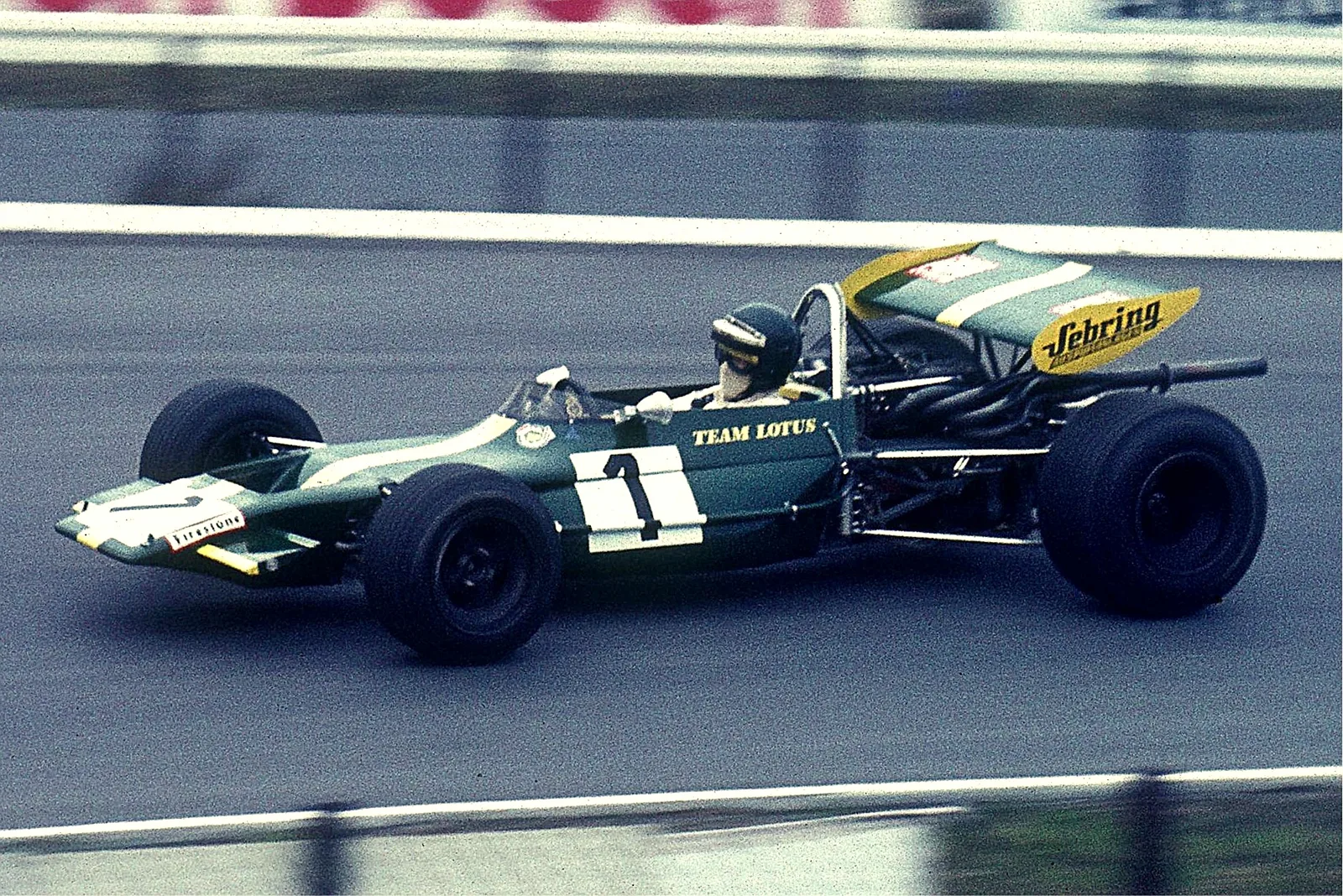
In 1967 the FIA raised the limit to 1.6 L with production-based engines, which restored the category's role as a feeder after Formula One returned to power. The new European Formula Two Championship began that year, and Jacky Ickx won the inaugural title in a Matra MS5, 11 points clear of Australian Frank Gardner. Matra took the first three championships, with Tecno winning the fourth.
The favourite engine was the Cosworth FVA, a sixteen-valve head bolted to a four-cylinder Cortina block, giving 220 bhp at 9000 rpm and served as a proof of concept for the legendary DFV. A grading system let Grand Prix drivers compete without taking points: any driver graded A could not score, and a Formula One World Champion kept that grade for five years.
The late 1960s were costly in lives. Jim Clark was killed in an F2 race at Hockenheim early in 1968, and a year later Gerhard Mitter died at the Nurburgring while practising in an F2 car for the German Grand Prix.
Rules changed again in 1972 to allow 2.0 L production-based engines, and BMW-powered Marches gradually took control. From 1976 engines built purely for racing were allowed, and Renault produced a potent V6, backed by Elf sponsorship, which briefly made French teams and drivers the force to beat. Honda came back at the start of the 1980s with a strong V6, though the works Ralt-Honda operation was so costly to oppose that grids shrank. After 1984 the FIA swapped Formula Two for a new category.
Where did Formula Three come from?
Formula Three grew out of post-war budget racing. Cars used lightweight tube-frame chassis and 500 cc motorcycle engines from makers such as Norton and JAP, in a formula that started in 1946 among enthusiasts in Bristol and was adopted by the FIA in 1950. Petrol rationing was still in force, and the cars were built for the "impecunious enthusiast".
The second post-war race in Britain, organised by the VSCC at RAF Gransden Lodge in July 1947, was a 500 cc affair. Four cars started, three retired on the opening lap, and Eric Brandon's Cooper strolled to victory at an average of 89.79 km/h (55.79 mph).
Cooper mass-produced the cars and used the income to move up the ladder. John Cooper and most other 500 builders put the engine behind the driver, partly because of chain drive, and the superb handling that resulted led eventually to the mid-engined revolution in single-seaters.
The route attracted Stirling Moss, Peter Collins, Ken Tyrrell and Bernie Ecclestone. Statistically the most successful was Don Parker, who came to racing at 41 in 1949 and won 126 Formula 3 races, taking the title in 1952, 1953 and again in 1959.
A one-litre category returned in 1964, running to 1970 on short-stroke Ford Anglia-based engines that revved so high they were known as "screamers". New rules arrived in 1971 for 1600 cc engines with restricted air intakes, and from 1974 the two-litre formula took over, a layout whose engine regulations have stayed basically unchanged.
By the 1980s F3 looked much like the modern category, and had become the chief proving ground for Formula One. Reynard pioneered carbon fibre in the middle of the decade, and Dallara, after an unsuccessful Formula One project, concentrated on F3 in the early nineties and swamped the field with its F393. Today the Dallara chassis is everywhere.
How do Formula Three cars and championships work?
An F3 car is a monocoque with slick tyres and wings, rear-wheel drive only, with a minimum weight of 550 kg including the driver and a maximum width of 1,150 mm. Regional series use a stock-derived 2.0 L engine with a 28 mm restrictor, giving about 260 hp, while the international version uses 3.4 L for about 380 hp.
Not until the FIA Formula 3 Championship was launched in 2019 had there been a global F3 title. Its cars use 3.4-litre, six-cylinder naturally aspirated spec engines from Mecachrome. Before that, European and British championships were the most prominent in the 1970s and early 1980s, while the European series faded away by the middle of the 1980s. In 2003 French and German F3, both short of entrants, merged to create the Formula 3 Euro Series.
The season traditionally ends at the Macau Grand Prix, first held in 1983 and won by Ayrton Senna, with David Coulthard, Takuma Sato and the Schumachers, Michael and Ralf, among later winners. Others include the Pau Grand Prix, run from 1999 to 2006, and the Monaco F3 race, which was held until 1997 and restored only in 2005.
What was Formula 3000 and why did it replace Formula Two?
The FIA created Formula 3000 in 1985 as the final preparatory step for drivers heading to Formula One. Formula Two had grown too costly, with works cars and factory engines setting the pace, so the new class was meant to deliver quicker, cheaper and more open racing.
The name came from the 3000 cc engine limit. At the start the Cosworth DFV was the popular choice, an engine Formula One no longer wanted once 1.5-litre turbos arrived, and any 90-degree V8 was allowed provided it had a rev-limiter. A Honda engine based on a Judd Indy V8 appeared, and later a Mugen-Honda V8 eclipsed the DFV, prompting Cosworth to respond with a new AC engine.
Early chassis from March, AGS and Ralt grew out of 1984 F2 designs, while Lola's looked like an Indy car. Small teams that tried obsolete three-litre Grand Prix cars found them unwieldy, their fuel tanks being about twice the size needed. Reynard entered with a new chassis in 1988, as it had done in other formulae, and won its first race. By the mid-1990s the series was a virtual Reynard monopoly.
Tyres were standardised from 1986, and in 1996 a single engine, a detuned Judd V8 badged as a Zytek, and a single Lola chassis followed. The calendar was merged with Formula One in 1997, and several Grand Prix teams formed junior links, McLaren setting up a formal team for Nick Heidfeld. Entries swelled to nearly 40, and in 2000 the field was capped at 15 teams of two cars.
The series was not free of trouble. The 1985 rules were not final until the season was well under way, and in 1989 the eligibility of the new Reynard was challenged because it raced with a different nose from the one crash tested. In 1991 some Italian teams ran Agip's so-called "jungle juice" fuel, worth an estimated 15 bhp. Marco Campos died in the final round of the 1995 series, the only fatality in the International Championship.
Costs rose again, and by 2002 the field and sponsorship had dwindled in the face of cheaper rivals including World Series by Nissan and the Formula Renault V6 Eurocup. The 2004 season was the last. The final cars used a 3.0 L Zytek-Judd V8 with 450 to 520 hp and weighed 545 kg with the driver.
Alesi, Panis and Montoya all won Grands Prix, and Montoya added the Indianapolis 500. Three others, Muller, Junqueira and Wirdheim, never entered a Formula One race.
Did Formula Two return before 2017?
Yes, in 2009, after 25 years away, as a one-make championship managed by Jonathan Palmer's MotorSport Vision. There were no teams: drivers worked with engineers supplied by MSV, in Williams-designed cars with a 1.8L turbocharged Audi engine making 480 bhp (358 kW; 487 PS). A season cost each driver 195,000 pounds.
The first season had eight European events, with two 110 km races at each. Andy Soucek won the title, but the year was overshadowed by the death of Henry Surtees at Brands Hatch. The series ended after 2012 because it struggled to attract drivers, and because GP2 and Formula Renault 3.5 had considerably more powerful cars. No Formula Two driver reached a Formula One team until Jolyon Palmer joined Renault in 2016.
How did the GP2 Series work?
GP2 arrived in 2005 to replace Formula 3000, conceived by Bernie Ecclestone and Flavio Briatore and organised by Bruno Michel. Every team had to use the same chassis, engine and tyres so that driver ability showed, and all but three races ran at Formula One weekends to give young drivers experience of the Grand Prix environment.
A weekend started on Friday with 45 minutes of practice and a 30-minute qualifying session. Saturday's 180 km feature race required a pit stop with at least two tyres changed. Sunday's 120 km sprint reversed the top eight, so Saturday's eighth-placed finisher started from pole. The GP3 Series was launched in 2010 as a feeder class beneath it.
The car was a Dallara with a carbon-fibre monocoque and a 4.0-litre Mecachrome V8 making 612 hp, weighing 688 kg with the driver. The engines were rev-limited to 10000 rpm and rebuilt after 4000 to 4500 km. Mecachrome was the only supplier from 2005 to 2016. Pirelli became sole tyre supplier in 2011, after Bridgestone from 2005 to 2010.
Pre-season tests suggested the 2005 car could reach 200 km/h in 6.7 seconds with a top speed of 320 km/h, while the 2011 car managed 6.6 seconds and 332 km/h in its Monza aero setup. The Dallara GP2/11, used from 2011 until the end of 2017, cost up to 1.5 to 2 million euros per car.
Which GP2 graduates reached Formula One?
Many. Nico Rosberg won the 2005 title and joined Williams for 2006. Lewis Hamilton won in 2006 and went to McLaren, then took the Formula One title in his second season. Timo Glock, the 2007 champion, moved to Toyota for 2008, and Nico Hulkenberg went from 2009 champion to a Williams race seat in 2010. By the end of 2016, nine of the twelve champions had secured a Formula One seat.
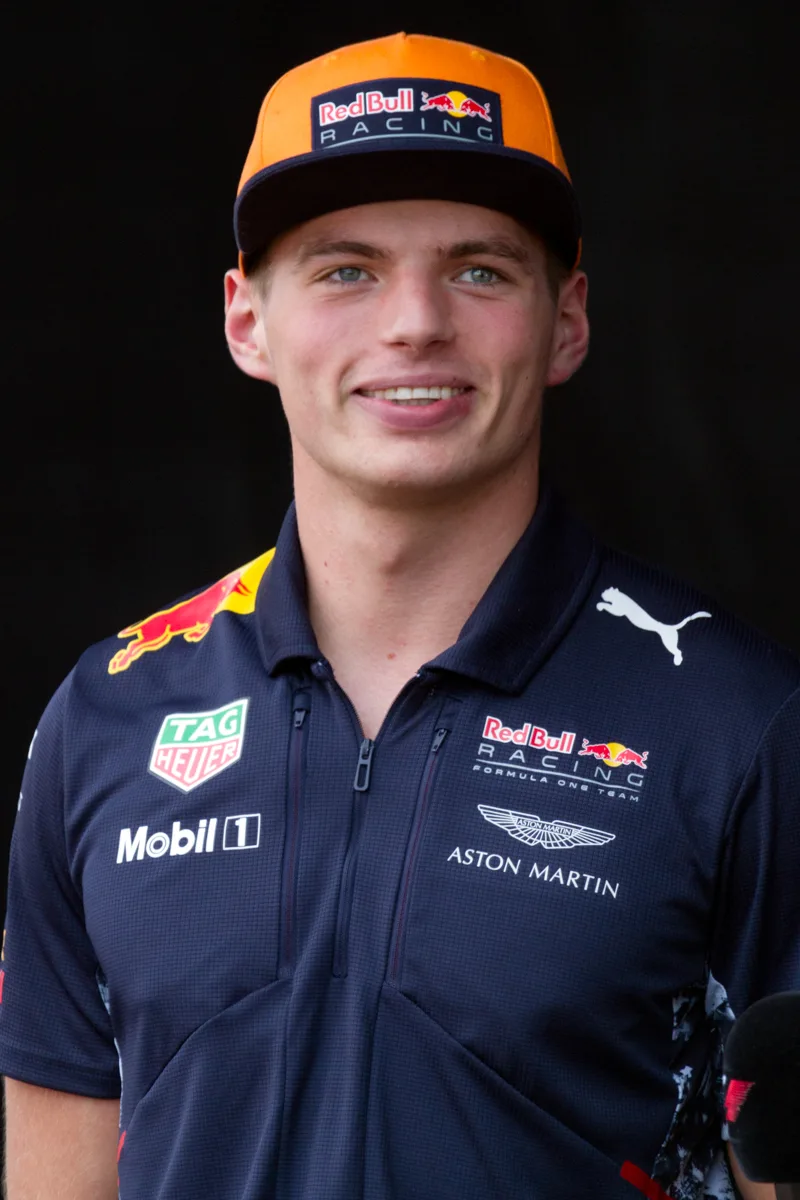
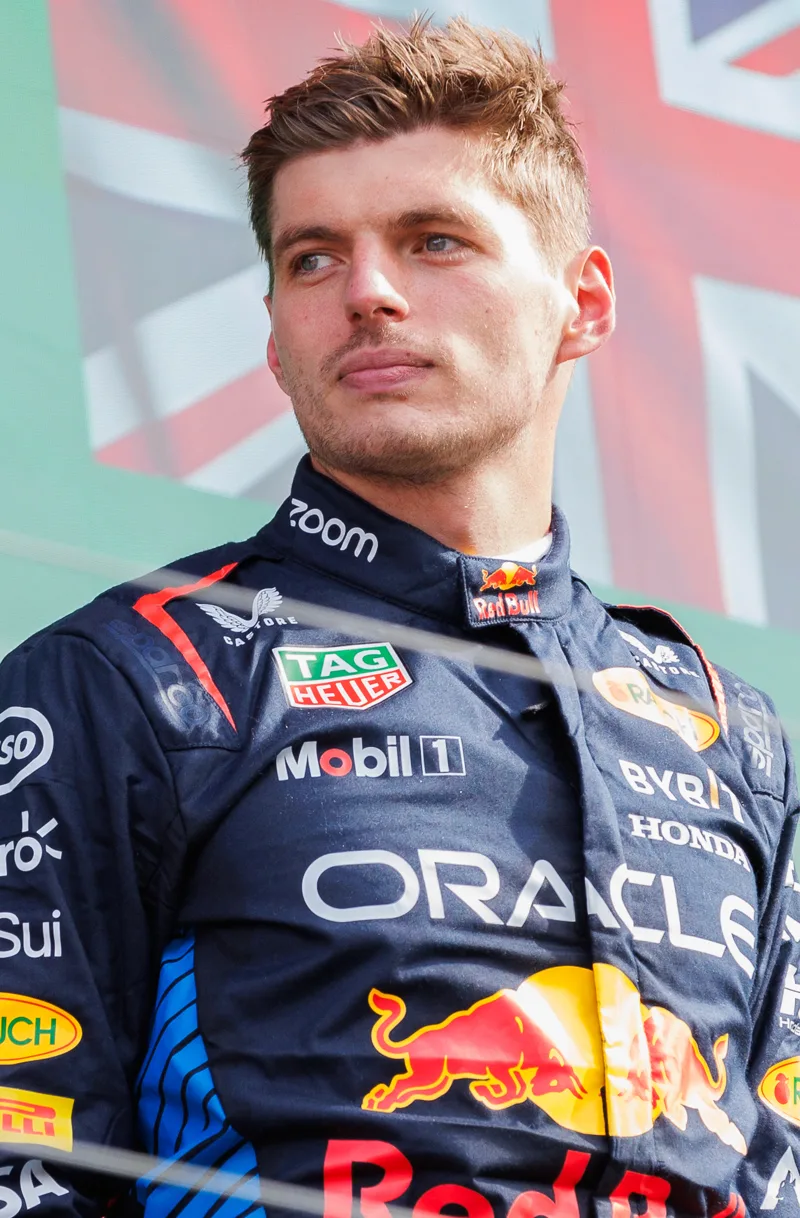
As of 2020, 35 of 174 GP2 drivers, or 20.1%, had raced in Formula One. Some reached it without GP2 at all, among them Sebastian Vettel, Daniel Ricciardo, Valtteri Bottas, Kevin Magnussen and Max Verstappen.
How did the Formula 2 name return in 2017?
In 2015 the FIA announced a rework of the Super Licence system to weight the feeder series and give drivers a more linear route upward, and a Formula Two revival was given priority over other categories. The plan was to follow the pattern of the returned European Formula 3 Championship and the freshly launched Formula 4 class, as one strand of the FIA Global Pathway.
Rather than create a new series, the FIA rebranded GP2 as the FIA Formula 2 Championship in early 2017. Frenchman Anthoine Hubert died at the 2019 Spa-Francorchamps round after being hit by Juan Manuel Correa. Since the rebrand, Formula One seats have gone to Leclerc, Russell, Piastri and Bortoleto, and every one of the eleven teams uses the Dallara F2 2024 chassis, powered by Mecachrome.