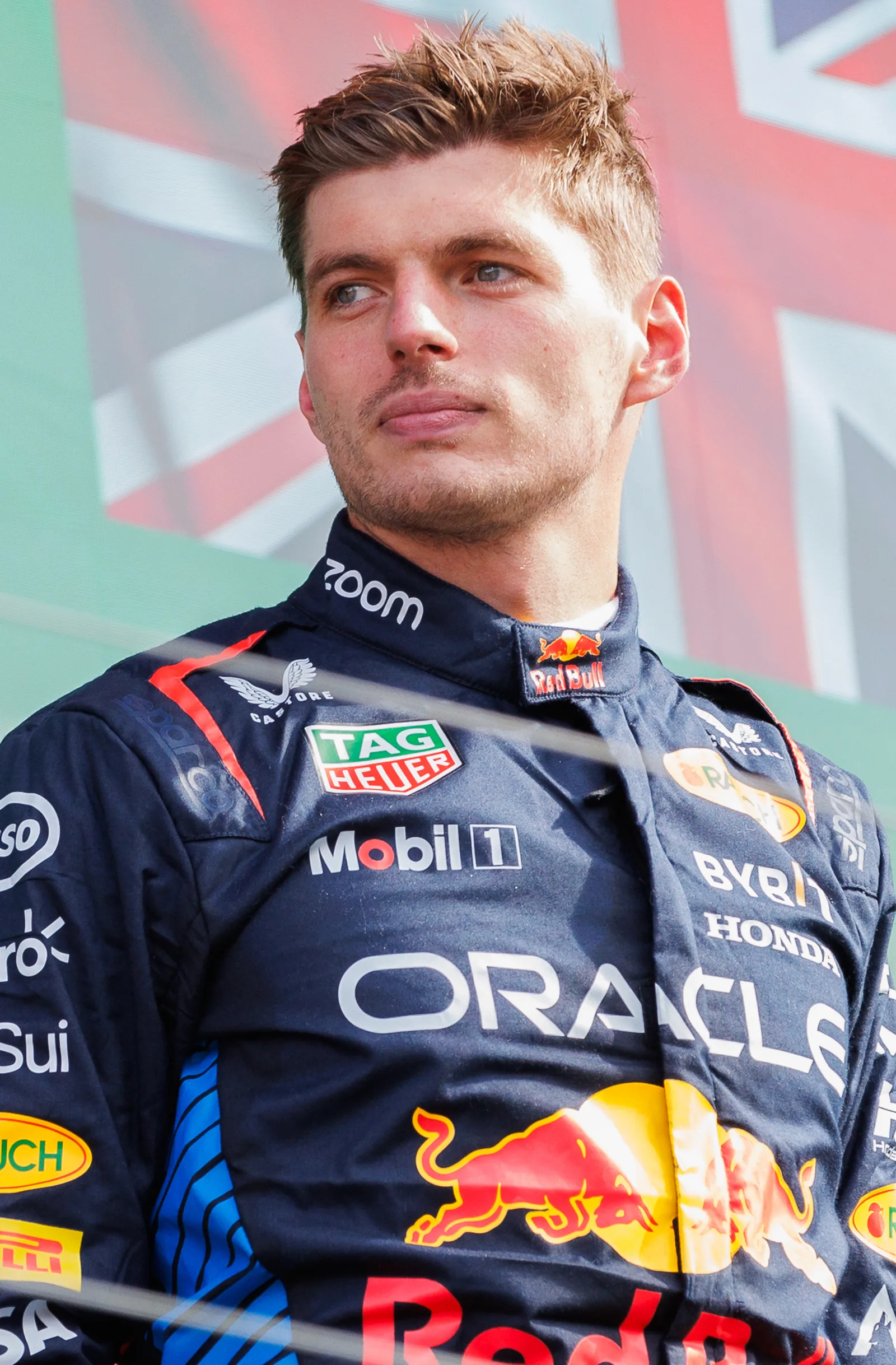
Max Verstappen won a fourth straight drivers' title, while McLaren ended a 26-year wait for the constructors' crown and Lando Norris pushed him hardest.
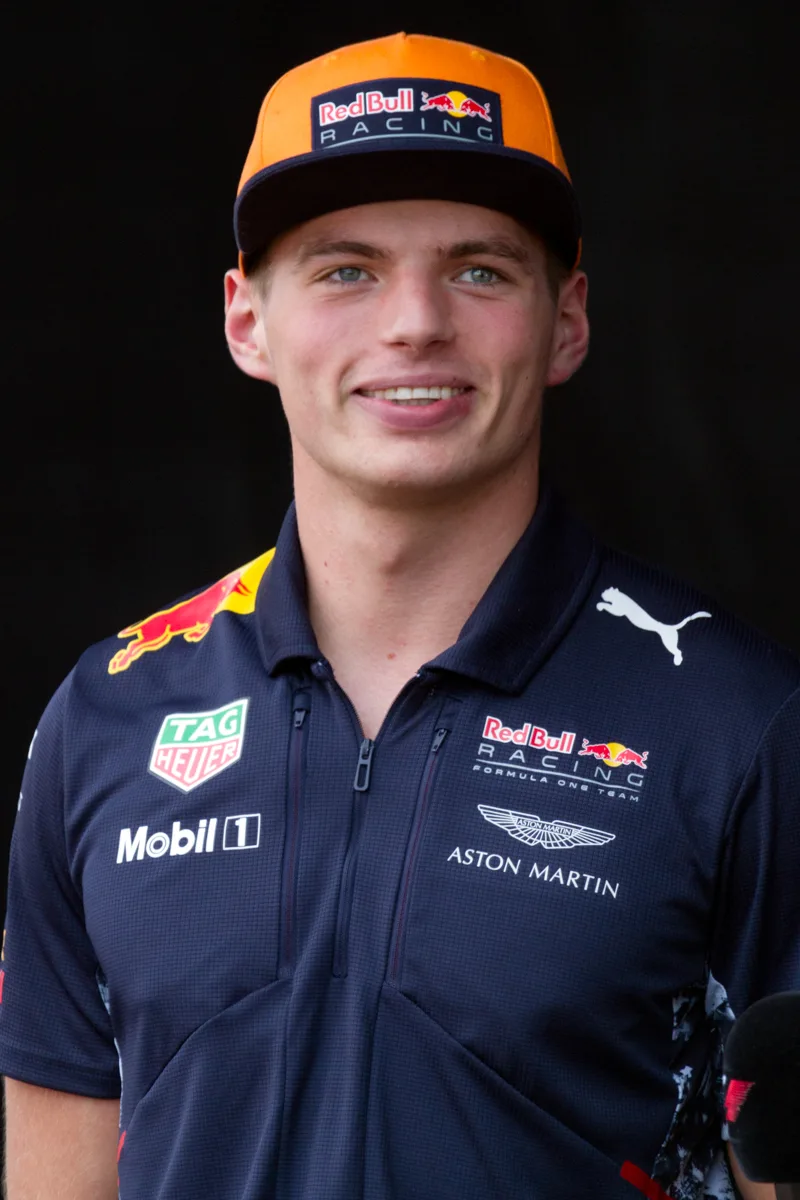
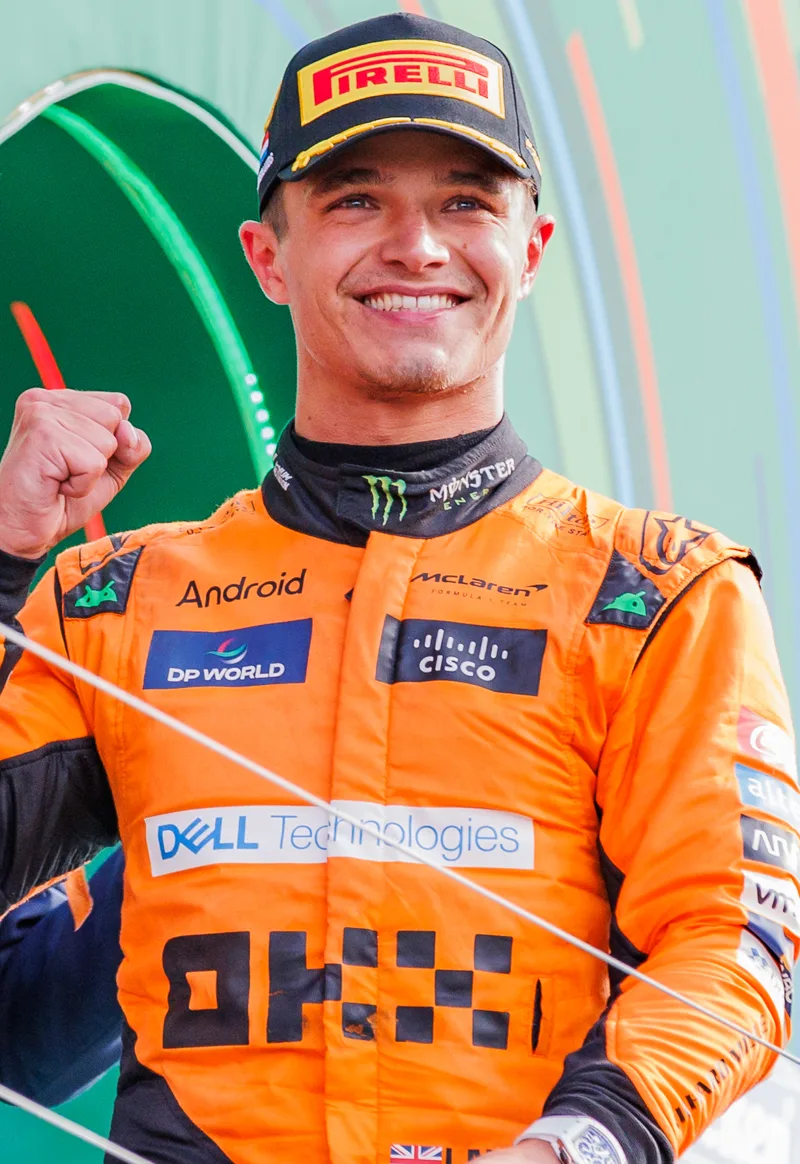
Max Verstappen won the 2024 drivers' title, his fourth in a row, with 437 points to Lando Norris on 374. McLaren won the constructors' title at Abu Dhabi, 14 points ahead of Ferrari, its first since 1998.
Max Verstappen won his fourth consecutive Formula One drivers' title in 2024, clinching it at the Las Vegas Grand Prix. McLaren took the constructors' championship at Abu Dhabi, its ninth title and its first since 1998. The 75th running of the championship featured a record 24 Grands Prix and a far more competitive field than the year before.
Who won the 2024 title?
Verstappen finished the year on 437 points, while Lando Norris took second place on 374. Charles Leclerc was third on 356. Verstappen's advantage had swung back and forth through the year, but by Las Vegas he had enough points in hand to take the title with races to spare.
McLaren's 14-point margin over Ferrari in the constructors' table settled the other title at the final round. It was the first time since Brawn in 2009 that a constructor other than Red Bull or Mercedes had won the championship, and the result marked a sharp turnaround for the team.
A record 24 races, a fourth straight title for Verstappen and McLaren's first constructors crown since 1998.
How did Verstappen start the season?
Verstappen dominated the opening ten races, winning seven of them. He took pole in Bahrain and won the first sprint in China, and his early results gave Red Bull a commanding lead. Sergio Perez was his closest team-mate in the early standings, but Verstappen stayed ahead of him all year.
Bahrain began with Verstappen on pole ahead of Leclerc and Russell, although Leclerc slipped back in the opening laps. Sergio Perez moved up to second, and Sainz recovered his place after an undercut. Norris finished sixth, and after the race Verstappen led the championship by eight points from Perez, with Norris 18 points back.
The Saudi Arabian Grand Prix showed his control. He took pole, lost the lead during a safety car stop, then reclaimed it on lap 12 and held it to the end. In Japan he took pole again and won in a race that was red-flagged after a heavy crash at turn three.
The first sprint of the year came in China, where Verstappen recovered from fourth on the sprint grid, passed Alonso for second and then took the lead from Hamilton on lap nine. He went on to win the grand prix from pole, which made the early pattern of his season clear.
Verstappen's early speed was the foundation of his title. Even so, the season was far more competitive than the previous year, and the gap to his rivals narrowed as the year went on.
How did McLaren close the gap?
McLaren began the season well behind Red Bull, but the MCL38 steadily outperformed the RB20 as the year went on. Norris emerged as Verstappen's closest challenger, and McLaren went from fourth in the early constructors' table to the top of it in the late rounds.
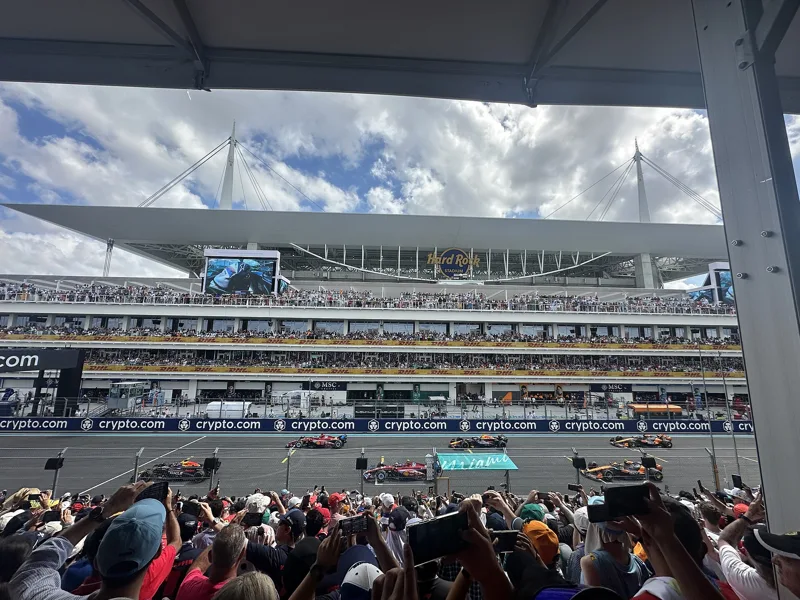
The turning point for Norris came in Miami, where he won his maiden Formula One race. McLaren's pairing of Norris and Piastri gave the team two drivers capable of winning, which helped it move up. He had previously held the unwanted record for the most podiums without a victory, and his win also gave McLaren its first win since the 2021 Italian Grand Prix. Piastri followed with his own breakthrough win in Hungary, and later in Azerbaijan.
McLaren moved ahead in the constructors' table at Azerbaijan, leading it for the first time since 2014, and it held the advantage until Abu Dhabi. Red Bull's position slipped in the late rounds, which created the title race that McLaren won.
What changed in the rules for 2024?
The standard penalty for gaining a lasting advantage by overtaking off track rose from five seconds to ten. Stewards could also penalise a jump start even when the timing transponder did not register it, a change that followed Norris's start in Saudi Arabia. Jump starts were judged after the four-second light and before the start signal.
Teams received more flexibility too. The power unit allowance rose from three components to four per driver per season, to accommodate the record calendar. Cars could fit a cooling scoop after the heat of the 2023 Qatar race, and the allocation of tyres returned to 13 sets per driver outside sprint weekends.
The sprint weekend structure was reshuffled. Sprint qualifying was held before the sprint on Saturday, and the sprint itself became the first session of Saturday. Penalties incurred during a sprint that could not be served could now be carried into the next grid. The appeals process also changed, with the deadline cut from fourteen to four days and a fee introduced.
Who changed teams and seats in 2024?
The grid was unchanged from the final round of 2023 at the start of the season, which had never happened before. Alfa Romeo left the sport, and Sauber became Kick Sauber, while AlphaTauri rebranded as RB and moved its aerodynamics to Milton Keynes.
Mid-season changes were frequent. Carlos Sainz Jr. needed surgery for appendicitis before Saudi Arabia, and Ferrari reserve Oliver Bearman made his Formula One debut in his place. He qualified eleventh, finished seventh and was widely praised for a performance that came after he had missed the opening two practice sessions. Franco Colapinto replaced Logan Sargeant at Williams from the Italian race, and Liam Lawson replaced Daniel Ricciardo for the United States race after Ricciardo lost his seat.
Jack Doohan made his debut at Abu Dhabi, replacing Esteban Ocon at Alpine after Ocon was required to vacate his seat for a post-season test with Haas. Alex Albon also took over Sargeant's car in Australia after a heavy practice crash destroyed his own chassis.
How did the mid-season races shape the table?
Emilia Romagna gave Verstappen his win and a 161-point lead, with Norris closing in. Norris finished within a couple of seconds and later said he could have passed had the race been a couple of laps longer. Monaco was a different story, because Leclerc took his first win at home and Piastri finished second, cutting Verstappen's lead.
- Canada: Verstappen won, with Russell third after a wet race that included a safety car period.
- Spain: Verstappen won by 2.2 seconds from Norris, who claimed second in the drivers' standings.
- Austria: Russell won, his second career victory, after a collision between Norris and Verstappen.
- Britain: Hamilton won, his first win since the 2021 Saudi Arabian Grand Prix, after Russell retired with a water leak.
- Hungary: Piastri won his first Formula One race after a team-order controversy with Norris.
- Belgium: Hamilton inherited the win after Russell was disqualified for an underweight car.
- Netherlands: Norris won after an overtake on Verstappen on lap 16, with Verstappen second.
- Italy: Leclerc won at Monza, ahead of Piastri and Norris.
Hungary also brought a team-order debate. McLaren asked Norris to let Piastri through, and Piastri went on to win his first Formula One race. Team principal Andrea Stella later said the swap was an agreed approach if one driver had gained on the other during the pit stops. Monaco had its own drama, as a collision involving Perez, Magnussen and Hulkenberg stranded three cars and caused a red flag.
How did the closing rounds decide the title?
Azerbaijan turned the championship fight towards McLaren. Piastri won, Leclerc finished second and Colapinto scored his first Formula One points in eighth. McLaren took over the constructors' lead there for the first time since 2014, and Red Bull dropped to second.
Singapore belonged to Norris, who won despite grazing the wall several times. That result cut his deficit to Verstappen to 52 points. In the United States, Leclerc won from Sainz, while Norris was handed a time penalty for an illegal pass.
Mexico City was won by Sainz, with Norris second and Leclerc third. Verstappen was given two time penalties there and dropped to fifteenth after serving them at his pit stop. Sao Paulo produced a wet race in which Verstappen won from Esteban Ocon and Pierre Gasly, and Verstappen then increased his championship advantage to 62 points over Norris.
Las Vegas gave Verstappen the title. Russell took pole, Hamilton finished second, and Norris ended up sixth. The result left Verstappen 63 points clear with only 60 points still available to Norris, which made the title mathematically certain.
Qatar's sprint went to Piastri, and Verstappen won the grand prix from second on the grid after a one-place penalty promoted Russell to pole. Abu Dhabi closed the season with Norris on pole and the win, while Ferrari finished second in the constructors' table. McLaren's margin over Ferrari was 14 points, which secured the constructors' title.
Which records were set in 2024?
The season used a record 24 Grands Prix, which was the longest calendar in the history of the sport. Verstappen's title came with a team that finished third or lower in the constructors' table, a feat previously managed only by two earlier champions, in 1982 and 1983.
McLaren's title was its first constructors' championship since 1998, and it came after the team had spent much of the year behind Red Bull. The Brawn title of 2009 was the last such result before this one.
Race winners at a glance
| Grand Prix | Winner | Key point |
|---|---|---|
| Australian | Carlos Sainz Jr. | Verstappen retired with brake issues |
| Japanese | Max Verstappen | Red-flagged after a heavy crash |
| Miami | Lando Norris | His maiden Formula One victory |
| Emilia Romagna | Max Verstappen | Norris second, Leclerc third |
| Monaco | Charles Leclerc | First win at his home race |
| Spanish | Max Verstappen | Won by 2.2 seconds |
| Canadian | Max Verstappen | Russell third after a wet race |
| Hungarian | Oscar Piastri | First Formula One win |
| Dutch | Lando Norris | Verstappen second |
| Azerbaijan | Oscar Piastri | McLaren took the constructors' lead |
| Singapore | Lando Norris | Won despite repeated wall contact |
| Las Vegas | Max Verstappen | Title clinched |
| Abu Dhabi | Lando Norris | Pole and win in the final race |