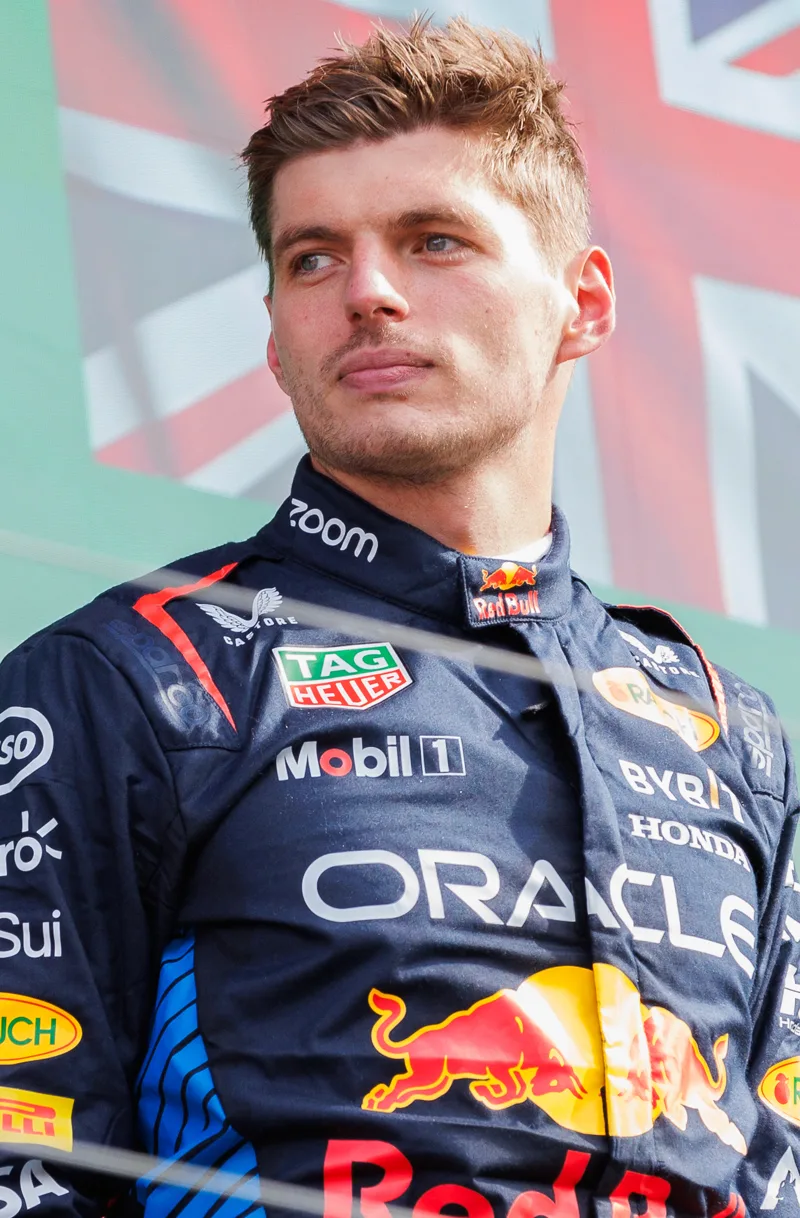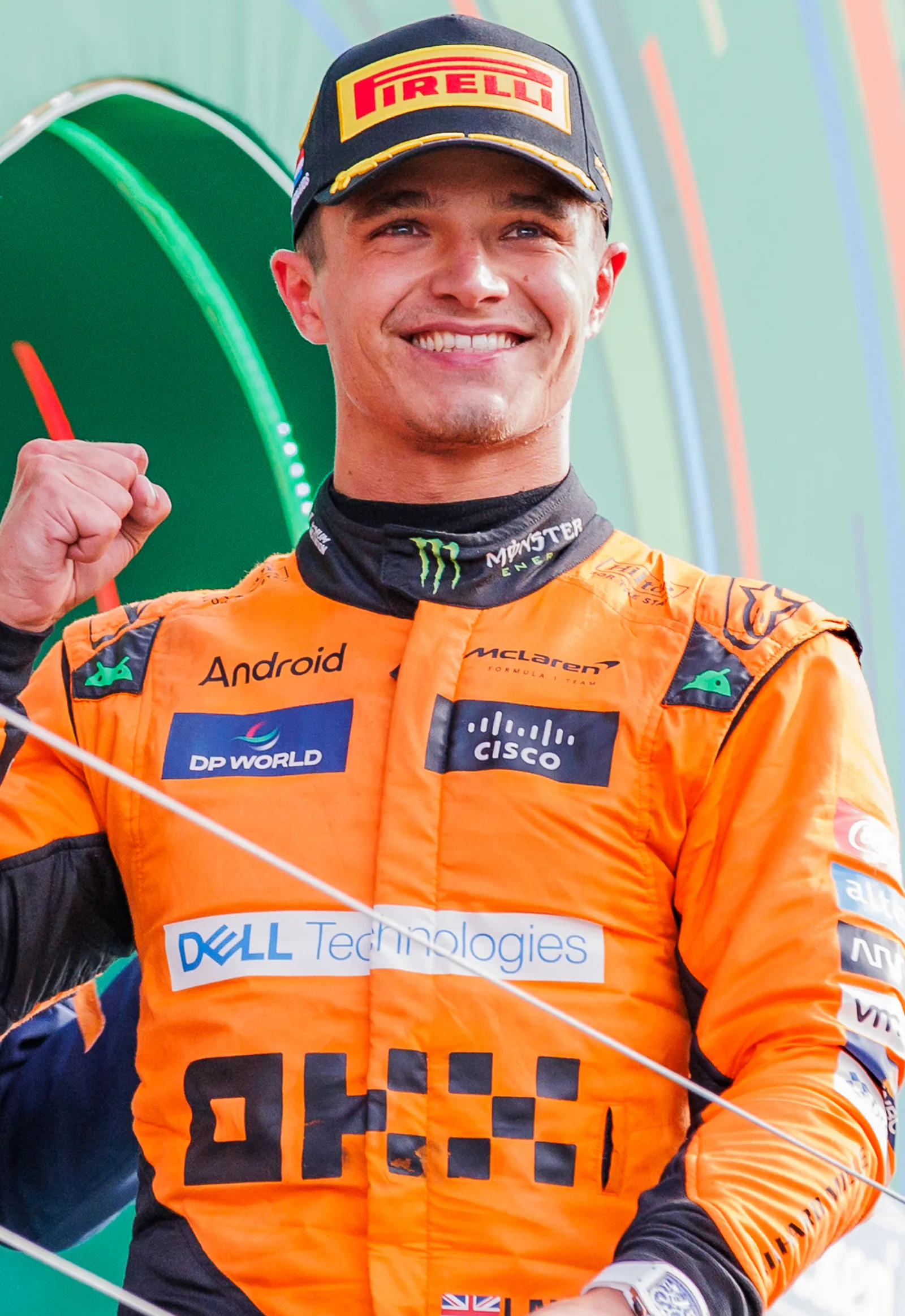
A three-way fight between McLaren and Red Bull ended with Lando Norris taking the crown by two points in Abu Dhabi.
Lando Norris won the 2025 Formula One World Championship by two points over Max Verstappen, becoming the 35th driver to take the title. McLaren retained the constructors' championship at Singapore, their tenth title, across 24 Grands Prix.
Norris took the 2025 Formula One drivers' title at the Abu Dhabi Grand Prix, two points clear of Max Verstappen. The season was the 76th running of the championship, contested over 24 Grands Prix from March to December. McLaren also kept the constructors' crown, which they clinched at Singapore.
Who won the 2025 title?
Lando Norris won the drivers' championship after a season dominated by McLaren and Red Bull. Oscar Piastri led the standings for much of the year and finished third, 13 points behind Norris. Verstappen's win in Abu Dhabi put him two points behind, and Norris became the 35th driver to win the title.
The season was really a three-way fight between Norris, Piastri and Verstappen, all three still in contention going into the finale. Verstappen had closed a 104-point gap down to 12, a late surge that made the final round decisive. Norris's third place in Abu Dhabi was enough to secure the crown, and it became his first world title.
Norris took the title by two points, after a season in which three drivers took turns at the front.
How did the rules change for 2025?
The 2025 rules focused on driver welfare, car weight and the conduct of drivers. The minimum driver weight allowance rose from 80 kg to 82 kg, the minimum car weight increased from 798 kg to 800 kg, and a driver cooling kit was introduced for hot races. The kit was mandated when temperatures were forecast above 30.5 C.
Aerodynamic checks were tightened as well. Rear wing slot gap deflection was limited to 2 mm under a 2 kN load, and front wing deflection fell from 10 mm to 5 mm under a 1 kN load after a directive ahead of the Spanish Grand Prix. The limit on gearboxes was also removed, because gearbox reliability had made the cap obsolete.
The sporting rules changed too. The fastest lap point, which had been reintroduced in 2019, was abolished. Driver misconduct, including offensive language, now carried heavy fines: 40,000 euros for a first offence, 80,000 euros and a one-month suspension for a second, and 120,000 euros, a suspension and a championship point deduction for a third.
Race procedures were tweaked as well. Full wet tyres were no longer compulsory for wet safety car starts, giving race officials flexibility in bad weather. Monaco made a minimum two-stop strategy mandatory, and at Qatar each set of tyres was limited to 25 laps after concerns about tyre damage.
Testing and grid procedures were reworked. Teams could only test cars that had raced two to four seasons earlier, and previous-car testing was capped at twenty days. The final grid was now fixed one hour before the start, and pit lane starters had to take part in the formation lap.
Who moved teams for 2025?
The biggest move saw Lewis Hamilton leave Mercedes after twelve seasons to join Ferrari, while Carlos Sainz went from Ferrari to Williams. Kimi Antonelli was promoted from Formula 2 to take Hamilton's seat at Mercedes, and Liam Lawson replaced Sergio Perez at Red Bull Racing.
Haas lost two of its drivers. Nico Hulkenberg left after two seasons for Sauber, and Oliver Bearman stepped up from Formula 2 to take a Haas seat. Esteban Ocon replaced Kevin Magnussen at the team, giving Haas an all-new line-up for 2025.
Sauber signed Gabriel Bortoleto, the reigning Formula 2 champion, to partner Hulkenberg. RB dropped its initialism and became Racing Bulls, which promoted Isack Hadjar from the Red Bull reserve ranks. Lawson was demoted after the Chinese Grand Prix, and Yuki Tsunoda made his Red Bull debut at the Japanese Grand Prix.
At Alpine, Franco Colapinto took over the seat from Jack Doohan after the Miami Grand Prix and kept it for the rest of the season, which was a change from the rotating arrangement first planned.
How did the championship start?
Norris took pole for the opening race in Australia, but a spell of rain and a Verstappen error shaped the race. Norris won from Verstappen and George Russell, and after round one he led the drivers' standings with 25 points to Verstappen's 18 and Russell's 15.
Piastri could not hold onto the early running in Australia. He was stuck in the grass on the penultimate corner and dropped to 15th before recovering.
China gave Ferrari a moment to remember. Hamilton led from start to finish in the sprint to take the team's first sprint victory. Piastri then took his maiden career pole and won the grand prix, with Norris second despite a brake problem.
The early season was then decided by the McLaren pair. Verstappen took his first pole of the season in Japan and won, cutting Norris's championship lead to one point. Piastri won in Bahrain by 15 seconds, and in Saudi Arabia he moved to the top of the standings, the first Australian to get there since Mark Webber in 2010.
Which races shaped the mid-season title fight?
The title race swung from round to round through the middle of the year. Piastri won at Miami and built a lead, Verstappen won the final Emilia Romagna race, and Norris won at Monaco to cut Piastri's advantage to three points. By Canada, Piastri led Norris by 22 points.
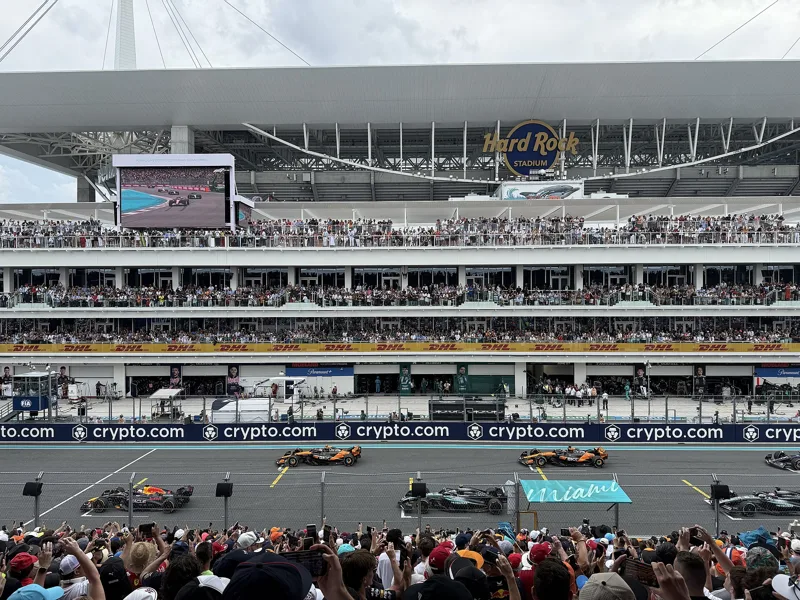
- Miami: Piastri won from Norris and Hamilton, while Norris took the sprint after a safety car period.
- Emilia Romagna: the final running of the race went to Verstappen, ahead of Norris and Piastri.
- Monaco: a mandatory two-stop strategy was introduced, and Norris won from Leclerc, Piastri and Verstappen.
- Spain: Piastri won, and Verstappen received a ten-second penalty after colliding with Russell.
- Canada: Russell won, and a collision between Norris and Piastri ended Norris's race.
- Austria: Norris won, while Red Bull failed to score any points.
- Britain: Norris won at home, and Hulkenberg took his first Formula One podium after 239 race starts.
- Hungary: Leclerc took his first pole of the season, and Norris won on a one-stop strategy.
- Netherlands: Piastri led from start to finish to take a grand chelem, and Hadjar claimed his maiden podium after starting fourth.
- Italy: Verstappen won after setting the fastest pole lap in Formula One history.
How did the closing rounds decide the title?
The closing rounds decided the title in Abu Dhabi. Verstappen won from pole, Piastri finished second and Norris third, which was enough for Norris to take the drivers' title by two points. McLaren had already secured the constructors' crown at Singapore, their tenth title.
Verstappen converted his pole at Azerbaijan into his sixth career grand slam, and gave Red Bull two wins in a row. McLaren had the chance to clinch the constructors' title there but could not, as Piastri had a difficult weekend that ended with a crash on the first lap.
McLaren clinched the title at Singapore, their tenth, and their second in a row. It was also the first time the team had won both championships since 1998, a result that moved them second on the all-time constructors' list.
Verstappen dominated the United States Grand Prix from pole, and Norris finished second in the race after McLaren retired in the sprint. Norris then won in Mexico City and took the championship lead by one point, and he controlled both races at Sao Paulo from pole.
Las Vegas was a turning point in the points table. Verstappen won after Norris made a mistake at the start, but Norris and Piastri were later disqualified for skid wear, which tied Verstappen and Piastri on points. Verstappen then won in Qatar from third on the grid, and three drivers still had a chance going into Abu Dhabi.
How did each title contender's season play out?
Norris had the steadier run in the second half of the year, winning in Monaco, Austria, Britain, Hungary and Mexico City. His low point came in Canada, where a clash with Piastri ended his race. His Sao Paulo weekend showed his pace, with pole in both races.
Piastri won in China, Bahrain, Saudi Arabia, Miami, Spain, Belgium and the Netherlands, and he led the drivers' standings for 15 rounds. A disqualification in Las Vegas for skid wear cost him dearly at the end, and he finished third overall.
Verstappen's season was a late fightback, with a run of wins through the second half of the year. Those results kept the title open until the final round, where he finished two points behind Norris.
What did the title race look like after key rounds?
| Round | Championship leader | Position in standings |
|---|---|---|
| Australia | Lando Norris | 25 points, Verstappen 18 |
| Japan | Lando Norris | One point ahead of Verstappen |
| Saudi Arabia | Oscar Piastri | Norris 10 points behind |
| Miami | Oscar Piastri | 131 points, 16 ahead of Norris |
| Monaco | Oscar Piastri | Three points ahead of Norris |
| Spain | Oscar Piastri | 10 points ahead of Norris |
| Canada | Oscar Piastri | 22 points ahead of Norris |
| Mexico City | Lando Norris | One point ahead |
| Abu Dhabi | Lando Norris | Champion, two points ahead of Verstappen |
How were points scored in 2025?
Points went to the top ten finishers in each grand prix and the top eight in each sprint. The fastest lap point had been abolished, so a driver could no longer earn an extra point for the quickest lap. Ties were settled by countback, which gave the place to the driver with more Grand Prix wins.
The sprint format ran at six events: China, Miami, Belgium, the United States, Sao Paulo and Qatar. Those weekends gave drivers extra points and extra chances to shift the title race, and the McLaren pair used them to build their lead.