Seventeen races from Buenos Aires to Fuji, a title settled at Watkins Glen and a year marked by deaths at South Africa and Japan.
Seventeen rounds made up the 1977 Formula One championship, which ran from January to October. Lauda won the drivers' title for a second time, Ferrari retained the constructors' trophy for a third year running, and fatal accidents at two rounds overshadowed the year.
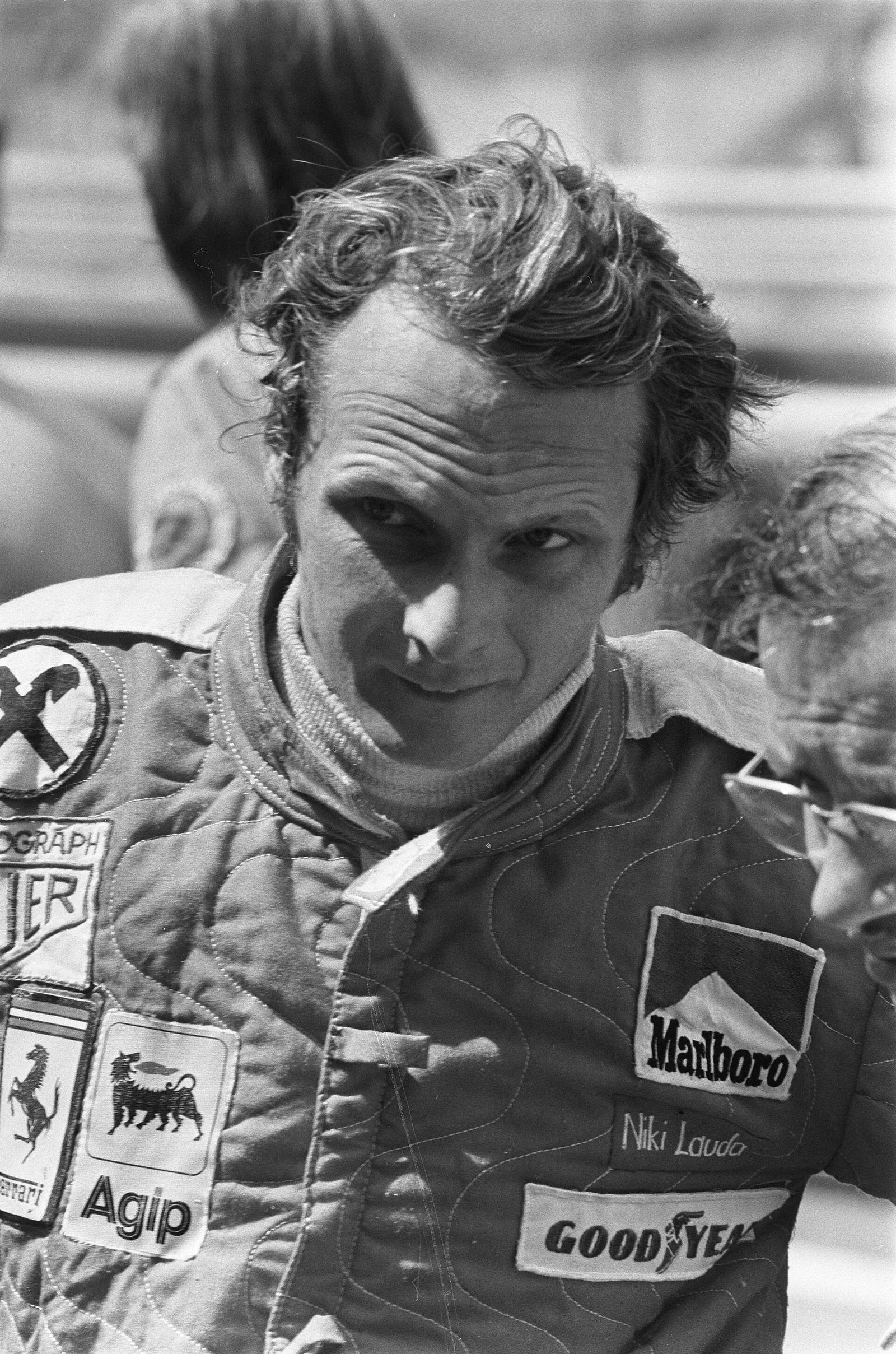
The 1977 season was a year of speed and sorrow. Seventeen rounds took the field from Buenos Aires to Fuji, and the championship was settled at Watkins Glen in upstate New York, where Niki Lauda secured his second title.
What was the 1977 Formula One season?
The 1977 season ran for seventeen races between 9 January and 23 October and counted as the 28th World Championship of Drivers. Niki Lauda secured his second title, while Ferrari took a third straight constructors' crown. The year was also marked by fatal accidents at two of the rounds.
The season opened in Buenos Aires, where the heat and punishing conditions took a heavy toll on the cars. James Hunt, the reigning champion, started his title defence from pole position for McLaren.
It was the longest Formula One season the sport had run up to that point, and the record was not matched until 1995. A single non-championship event, the 1977 Race of Champions, sat alongside the title races, but it did not count towards the championship.
Lauda won the title without winning the most races, in a season where two drivers' deaths shaped everything that followed.
Who were the drivers and teams in 1977?
The grid was reshaped by a long list of moves. Ferrari signed Carlos Reutemann to replace Clay Regazzoni, Tyrrell picked Ronnie Peterson over Jody Scheckter, and Renault arrived with its own chassis and turbocharged engine. Brabham, Shadow, Surtees and Ensign also changed drivers.
Scheckter's move was part of a chain of changes. He went to Wolf, which had split from Williams after the 1976 season. Williams bought a March 761 and signed Patrick Neve, while the Penske team was bought by ATS Wheels and signed Jean-Pierre Jarier.
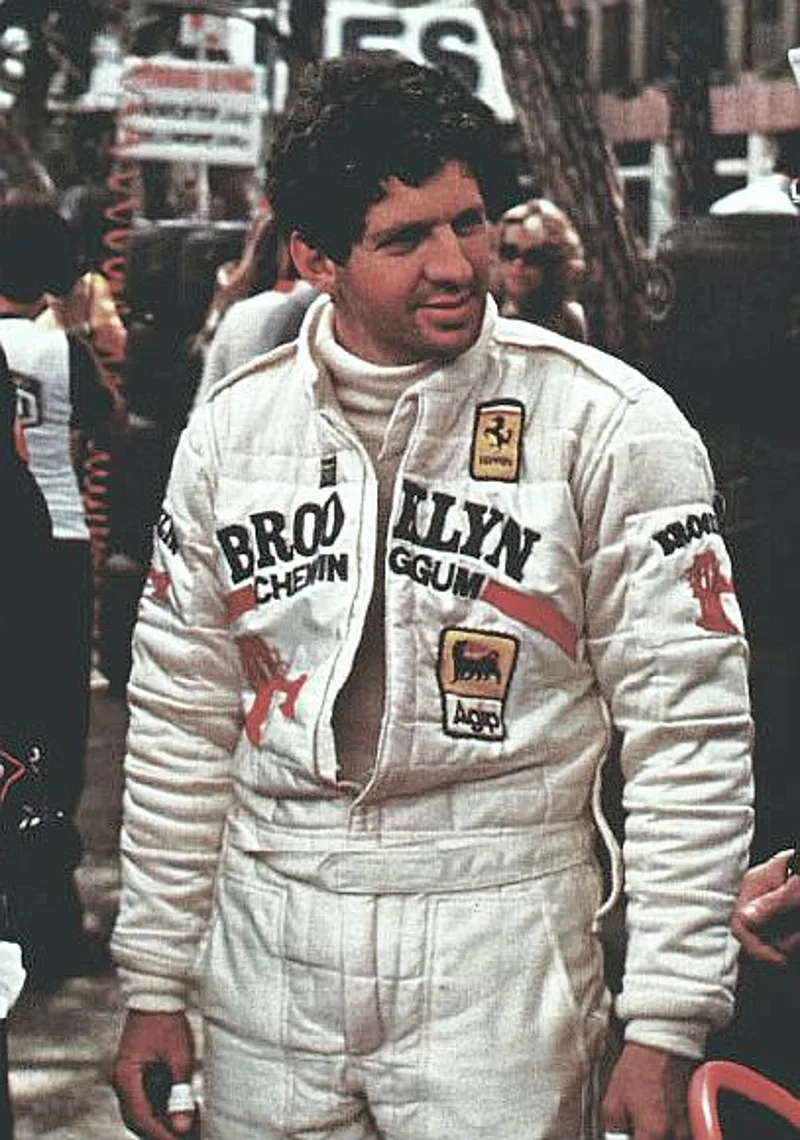
Renault's entry stood out. Jean-Pierre Jabouille drove a factory-built chassis with a 1.5 litre turbocharged engine. Turbo devices had been allowed since 1960, but Renault was the first constructor to invest in the technology at this level.
Smaller teams had their own stories. Hesketh Racing missed the first four races, then expanded to three cars with Rupert Keegan as its number-one driver. David Purley returned to the grid in a LEC chassis designed by Mike Pilbeam. Patrick Tambay, who had won the 1977 Can-Am season with Haas Lola, debuted with Surtees and finished the year at Ensign.
Which drivers and marshals died in 1977?
Five people died in accidents linked to the season. Tom Pryce and marshal Frederik Jansen van Vuuren were killed at the South African Grand Prix on 5 March, Carlos Pace died in a light aircraft crash in Brazil on 18 March, and marshal Kengo Yuasa and photographer Kazuhiro Ohashi were killed at the Japanese Grand Prix.
In South Africa, two marshals ran onto the track on lap 21 after the Shadow of Renzo Zorzi caught fire. Pryce's car struck the second marshal at about 270 km/h (170 mph), and that marshal's fire extinguisher struck Pryce. The race continued, and Lauda won it, his first victory since his crash the year before.
Purley also suffered a serious accident during practice at Silverstone. His throttle stuck open, he hit a wall head-on, and the impact produced a deceleration of 179.8g.
Japan was the most tragic race of the year. On lap 6, Gilles Villeneuve collided with Ronnie Peterson's six-wheeled Tyrrell, and his Ferrari went airborne. It struck Yuasa, who was trying to move spectators away from a restricted area, and it also hit Ohashi. Villeneuve escaped uninjured, but both men died instantly.
What safety rules and concerns came up in 1977?
The FIA set safety standards for helmets for the first time, a step taken while the season's accidents drew sharp attention to driver protection. It was the first formal step of its kind in the sport, and it arrived in a year of deaths.
Circuit safety was an equally pressing question. The bumps and limited safety of Mosport drew criticism, and Briton Ian Ashley vaulted the barriers and crashed into a TV tower. Ashley was flown out only 40 minutes after his accident, and the response was judged poor. The race went ahead regardless.
How did the calendar change in 1977?
The calendar was reshuffled in several places. Belgium and Monaco swapped places, the French Grand Prix moved from Paul Ricard to Dijon-Prenois, the British race left Brands Hatch for Silverstone, and the United States and Canadian rounds switched positions. Germany ran at Hockenheim rather than the Nurburgring.
The German decision was the most notable change. The Nurburgring was judged too dangerous, because its organisers could not manage such a huge circuit, so the race returned to Hockenheim for the first time since 1970.
Argentina rejoined the calendar after a year away, having been cancelled in 1976 for economic and political reasons. The Osterreichring in Austria had gained a chicane the year before, replacing the ultra fast, flat-out Voest-Hugel Kurve.
How did the title fight unfold?
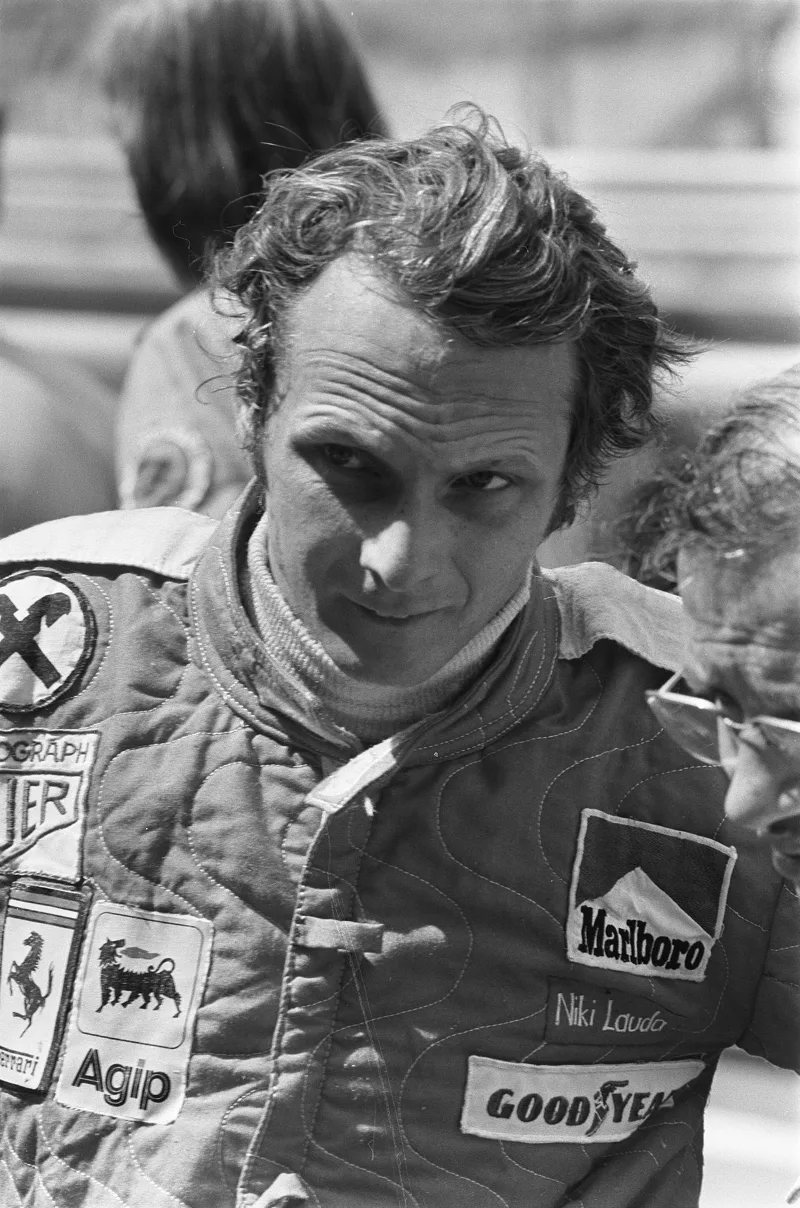
Lauda led the championship for much of the year, even though Mario Andretti won more races. After the Dutch round he held a 21-point lead over Scheckter with four races left, and a fourth place at Watkins Glen was enough to secure his second title.
Lauda's early form built the base. He won in South Africa, and by the Austrian round, with two-thirds of the season complete, he led the standings. A pole position in Austria and a second place in Italy kept him in front.
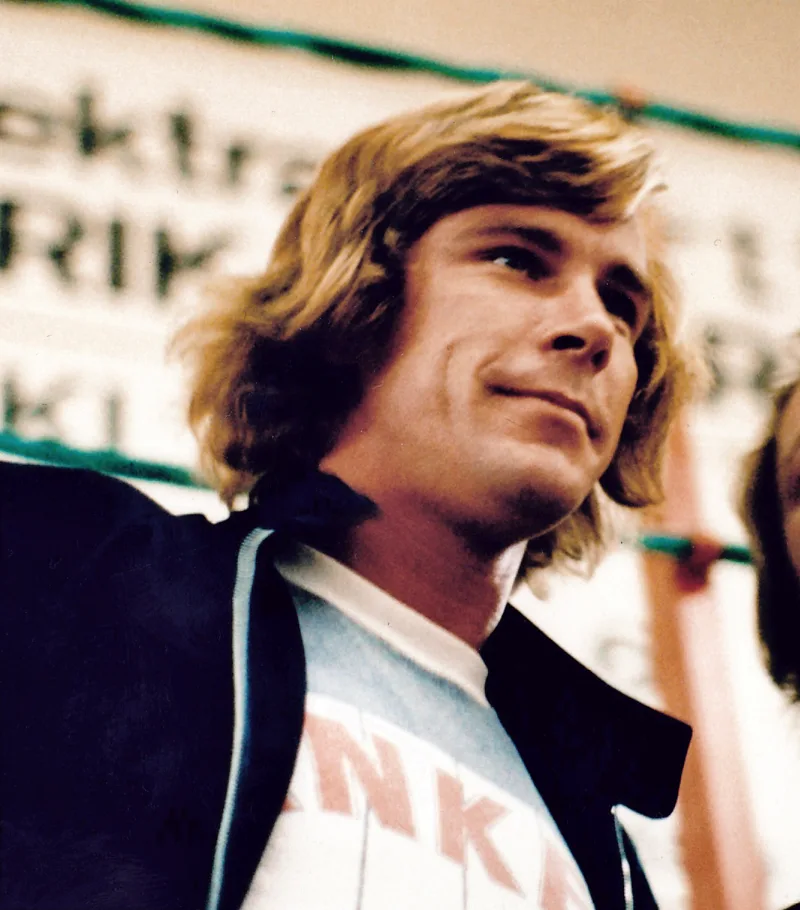
Hunt kept the title open with a late run. He won in Britain, at Watkins Glen and at Fuji. At Zandvoort, Andretti and Hunt collided five laps after the start, and Hunt was out on the spot while Andretti spun and rejoined fourth.
Scheckter was the main challenger. He won in Argentina, at Monaco and in Canada, and he went into the final rounds with a realistic chance of the title.
At Watkins Glen the championship came down to a single result. Lauda qualified seventh and Scheckter ninth. When the leader, Stuck, crashed out, Scheckter moved up to third, but Hunt and Andretti pulled clear, and Lauda's fourth place was enough.
Lauda then stepped back. The declining relationship between him and Ferrari led him to skip the final two races, and Gilles Villeneuve took the third Ferrari entry for Canada, his debut race with the team.
Which races stood out during the 1977 season?
Four races show how the title was won and lost on track. Brazil and Belgium produced chaotic openings, while Sweden and Italy were decided by fuel and engine problems. Each one shifted the points that later separated Lauda from his rivals.
Brazil was held at Interlagos, the longest circuit of the year at 5 miles (8 km). Hunt took pole, but he and Pace made contact early, and Hunt took the lead while Pace pitted for repairs. Tyre trouble later cost Hunt the place to Reutemann, who went on to win, with Hunt second and Lauda third after Watson crashed out.
At Zolder the Belgian race began on a wet track. Andretti ran into the back of Watson on the first lap while trying to retake the lead, and both spun out. As the circuit dried, the drivers who had pitted early benefited, and Gunnar Nilsson, who had qualified third, went on to win his first race ahead of Lauda and Peterson.
At Anderstorp, Andretti was dominant until a fuel metering problem forced him to pit with two laps left. That handed the lead to Laffite, who took his first ever win ahead of Mass and Reutemann. Earlier, Watson and Scheckter had collided while fighting for second, and Scheckter retired.
At Monza, Andretti passed Hunt on lap 2 and then Scheckter a few laps later. Scheckter's engine failed, and Lauda closed in on the championship, finishing second to Andretti. Jones took third after Reutemann spun off on oil, and it was his second podium in three races.
Which drivers won races and poles in 1977?
Mario Andretti won four races, the most of any driver, while Lauda, James Hunt and Jody Scheckter each won three. Carlos Reutemann, Gunnar Nilsson, Jacques Laffite and Alan Jones took one win apiece. Andretti also collected seven pole positions, Hunt six and Lauda two.
| Round | Race | Pole | Winner | Second | Third |
|---|---|---|---|---|---|
| 1 | Argentina | Hunt | Scheckter | Pace | Reutemann |
| 2 | Brazil | Hunt | Reutemann | Hunt | Lauda |
| 3 | South Africa | Hunt | Lauda | Scheckter | Depailler |
| 4 | United States West | Lauda | Andretti | Lauda | Scheckter |
| 5 | Spain | Andretti | Andretti | Reutemann | Scheckter |
| 6 | Monaco | Watson | Scheckter | Lauda | Reutemann |
| 7 | Belgium | Andretti | Nilsson | Lauda | Peterson |
| 8 | Sweden | Andretti | Laffite | Mass | Reutemann |
| 9 | France | Andretti | Andretti | Watson | Hunt |
| 10 | Great Britain | Hunt | Hunt | Lauda | Nilsson |
| 11 | West Germany | Scheckter | Lauda | Scheckter | Stuck |
| 12 | Austria | Lauda | Jones | Lauda | Stuck |
| 13 | Netherlands | Andretti | Lauda | Laffite | Scheckter |
| 14 | Italy | Hunt | Andretti | Lauda | Jones |
| 15 | United States East | Hunt | Hunt | Andretti | Scheckter |
| 16 | Canada | Andretti | Scheckter | Depailler | Mass |
| 17 | Japan | Andretti | Hunt | Reutemann | Depailler |
How were points scored in 1977?
Points were awarded to the top six classified finishers in each race. The constructors' cup counted only the points of each team's highest-finishing driver in a race. Each championship counted the best eight results from rounds 1 to 9 and the best seven from rounds 10 to 17.
The published standings separated counted championship points, shown without brackets, from total points scored, shown in brackets. Those totals could differ noticeably from the counted tally that decided the titles.
How did the season end at Fuji?
The final round at Fuji Speedway near Tokyo gave Hunt a comfortable win from the front of the field, his third of the year. Andretti, on pole, had a poor start and collided on lap 2 while trying to gain places, which ended his race.
Hunt took the lead at the start, with Scheckter and Mass moving up behind him. Mass and Watson both retired within one lap of each other with engine and gearbox failures, leaving Reutemann in second until Laffite passed him. Laffite then ran out of fuel on the last lap, handing second back to Reutemann and giving Depailler the final podium place.
What was the legacy of the 1977 season?
The season gave Lauda his second world title and gave Ferrari a third consecutive constructors' championship, even though Andretti had won more races. Lauda's title came a year after his own serious crash. The title race also showed that a driver could take the championship without winning the most races.
The deaths of Pryce, Pace, Yuasa and Ohashi kept safety on the agenda. The first helmet standards and the criticism of Mosport both fed into the sport's safety debate.
The Japanese Grand Prix was not held again until 1987, at Suzuka. Talk of moving the race there for 1978 never materialised.