A race kept out of the Championship by the ACO and FISA dispute, run on a lap shortened by new chicanes, and decided when the Nissan and Brun challenges failed.
The Jaguar XJR-12 of Cobb, Nielsen and Brundle took the 1990 Le Mans 24 Hours on a lap shortened by new chicanes, with the Lammers and Wallace car second.
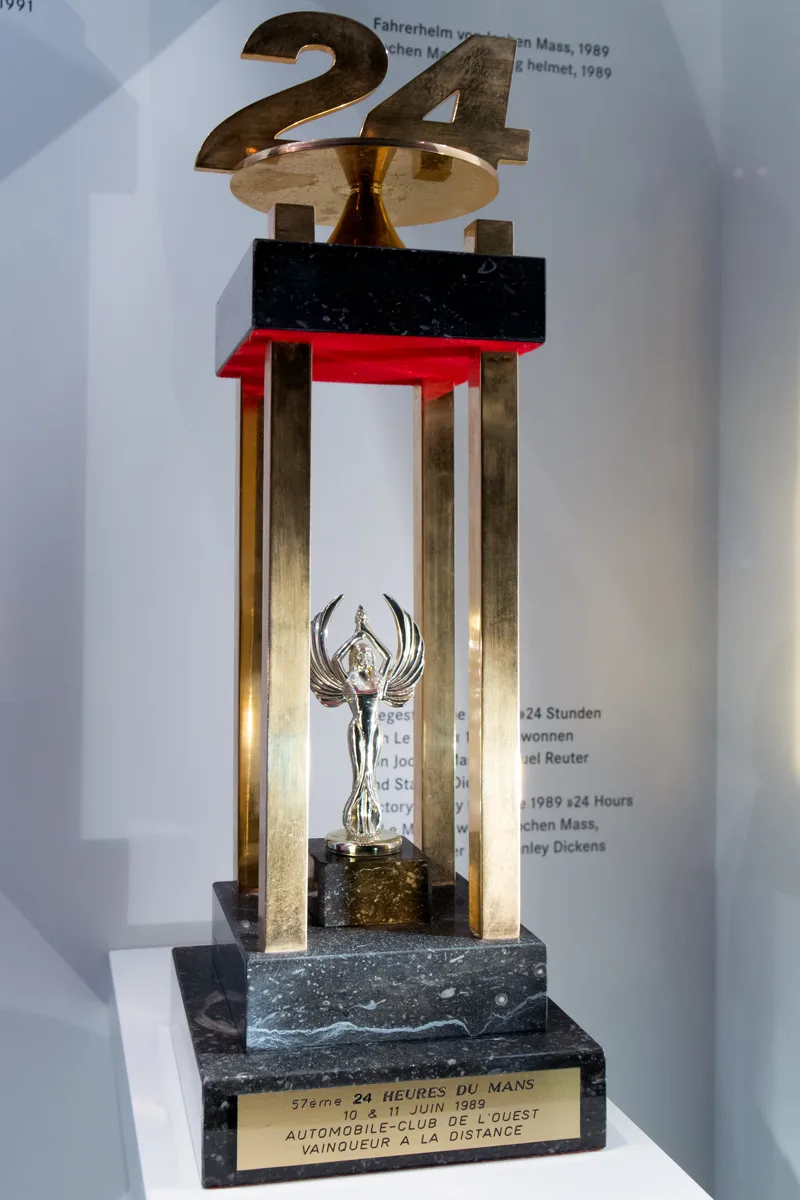
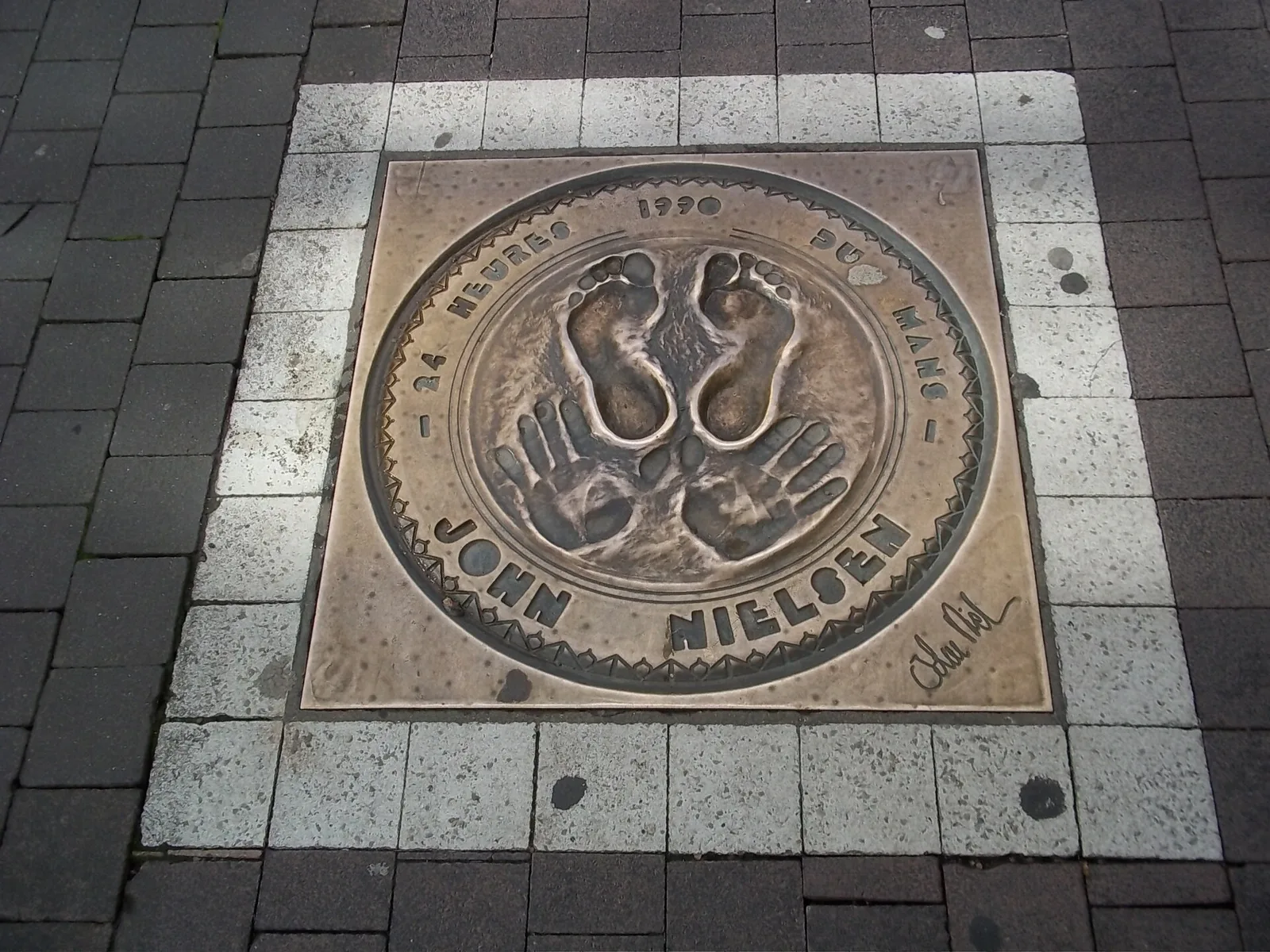
Price Cobb, John Nielsen and Martin Brundle won the 1990 24 Hours of Le Mans in a Jaguar XJR-12, with the Jaguar of Jan Lammers and Andy Wallace second. The 58th running took place on 16 and 17 June 1990, outside the World Sports-Prototype Championship, and it was the last Le Mans run under the Group C formula.
Why did the 1990 race stand outside the Championship?
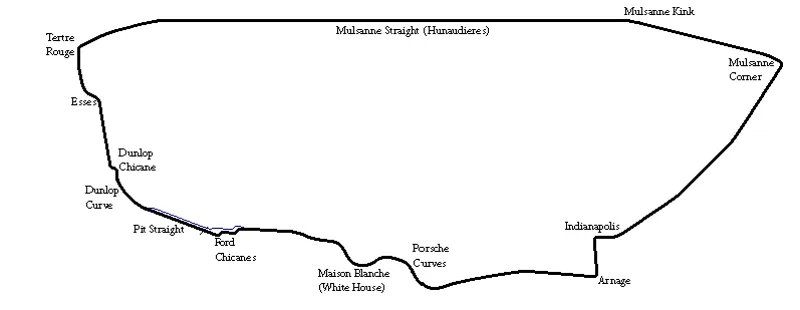
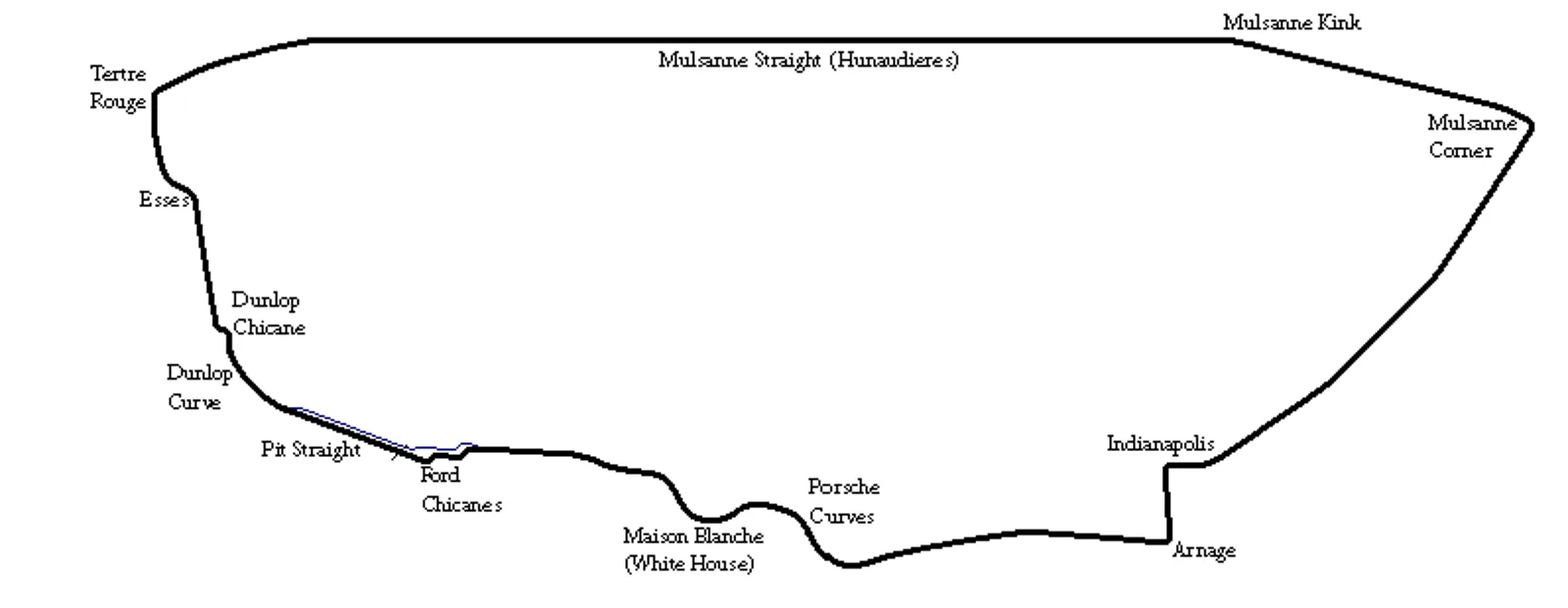
The ACO and FISA were in dispute over the Hunaudieres straight, which was 5.7 km long, the longest straight in motorsport. The governing body decreed that no licensed circuit could have a straight longer than 2 km, and the rule was passed unanimously and took effect in 1990.
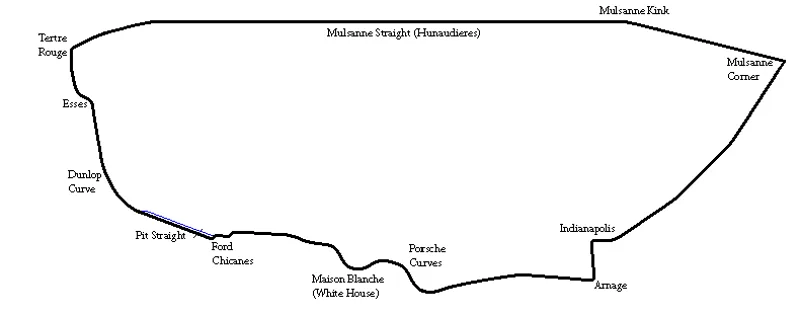
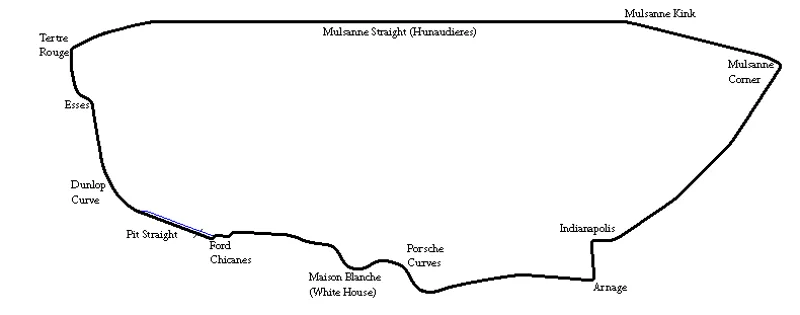
The ACO appealed to the French courts without success, so it bought land and built two chicanes along the straight to meet the new rule. The works added 65 metres to the lap, which rose to 13.600 km (8.45 miles), and a new twisty pit-entry road was built to slow cars entering the crowded pit lane.
The works were completed in February, after the FISA deadline had passed. As a result, Le Mans was again excluded from the World Championship.
A lap cut short by new chicanes, and a 1-2 that came when the Nissan and Brun challenges failed.
How did the chicanes change the lap?
Nissan expected the chicanes to cost roughly 20 seconds a lap, about a tenth of the total, and to cut the overall distance by a similar margin. They thought fuel consumption would stay about the same.
The new surface at the first chicane was not as smooth as the rest of the circuit, and a number of drivers were caught out under braking during practice.
What rules applied to the 1990 race?
Group C cars had a 900 kg minimum weight and were limited to 2550 litres of fuel. The 3.5-litre atmospheric cars had a 750 kg minimum and no fuel limit, and the C2 class was opened to cars at 750 kg with 1815 litres.
Qualifying ran on Wednesday and Thursday, with night defined as 9pm to 4.30am. Every driver had to set a time within 120% of the average of the three fastest cars in the class and complete at least three laps at night. Drivers could drive a maximum of 14 hours in total, with no stint longer than four hours and a minimum stand-down between shifts.
The pit lane speed limit was 80 km/h (50 mph), and no more than four crew could work on a car at once. Engines had to be switched off during refuelling, and a car had to complete at least 70% of the winner's distance to count as a finisher.
Who entered the 1990 race?
There were 41 cars at scrutineering, including 20 Porsches. The works teams came from Jaguar, Porsche, Nissan, Toyota and Mazda, and there were only three cars for the 3.5-litre class.
Spice took six of the 11 C2 entries. Nineteen cars came from Japanese makers, and seven national-championship teams joined the three works teams.
Jaguar's pairings were the 1988 winners Jan Lammers and Andy Wallace, with the Austrian Franz Konrad. Martin Brundle and Alain Ferte had David Leslie as a third driver, while John Nielsen and Price Cobb ran the third car. Michel Ferte was in the fourth car with Davy Jones and Luis Perez-Sala.
The Jaguar XJR-12 had a 24-valve V12 and a March IndyCar gearbox. Tom Walkinshaw's engine specialist Allan Scott had worked on the engine, and the switch to Goodyear tyres meant a redesigned suspension and rear bodywork. Wind-tunnel work gave the XJR-12 60% more downforce for 20% more drag.
Joest's cars were driven by Derek Bell with Hans-Joachim Stuck and Frank Jelinski, Bob Wollek with Jonathan Palmer and Philippe Alliot, and a third car of Will Hoy, Stanley Dickens and John Winter, the name under which Louis Krages raced. Henri Pescarolo ran a satellite car with Jacques Laffite and Jean-Louis Ricci, the heir to the Nina Ricci fashion house, who had paid ninety thousand pounds for his seat.
Kremer's honeycomb and carbon K6 cars were driven by Sarel van der Merwe, Kunimitsu Takahashi and Hideki Okada in one, and by Thierry Salvador, Bernard de Dryver and Patrick Gonin in the other.
Joest's Porsche 962C team was building four new aluminium monocoques with langheck tails. The langheck tail added downforce, improved fuel use and straight-line speed, reaching 365 km/h (225 mph).
Nissan's R90CK used a 3.5-litre VRH35 engine with twin IHI turbos producing 800 bhp. Toyota's 90C-V used a 3.2-litre turbo V8 with a six-speed gearbox, and Mazda's 787 was built around the R26B rotary engine, producing about 700 bhp.
Nissan's Motorsports division had three subsidiaries, and the nine Nissans included test cars. The two European cars had Kenny Acheson, Martin Donnelly and Olivier Grouillard in one, and Julian Bailey, Mark Blundell and Gianfranco Brancatelli in the other. The Japanese R90CP carried Kazuyoshi Hoshino, Toshio Suzuki and Masahiro Hasemi.
Toyota mounted a serious assault with three racing cars and two test cars. Its 90C-V had a six-speed gearbox, and wind-tunnel testing gave 20% more downforce. Ogawa and Sekiya ran one car with Geoff Lees, Suzuki and Johnny Dumfries shared another with Roberto Ravaglia, and the third car, from Shin Kato's SARD team, had Pierre-Henri Raphanel, Roland Ratzenberger and Naoki Nagasaka.
Gianni Mussato's Lancia used a 3050cc Ferrari V8 with an Abarth transmission and twin KKK turbos, producing up to 800 bhp. The Eagle 700 used a 10.2-litre Chevrolet big-block V8 rated at 900 bhp, and it was built to tackle the long Hunaudieres straight before the chicanes.
How did qualifying set the grid?
Mark Blundell took pole in a Nissan with a special qualifying engine at 3:27.0. Brabham had set the fastest time on the first day at 3:33.3, at 10.30pm, while Larrauri's Brun Porsche ran 3:33.1 on the second day.
Blundell's lap was fully six seconds faster than Larrauri's. The turbo wastegates stuck closed on his engine, which pushed it past 1100 bhp, and his lap reached 380 km/h (237 mph) on the Hunaudieres straight.
It was the first Le Mans pole for a Japanese car. The Nissans of Hoshino, Brabham and Acheson were next behind Larrauri, and Stuck's Joest Porsche qualified sixth at 3:36.1.
Jonathan Palmer's Joest Porsche crashed in practice when a suspension bolt broke on the back straight, and he walked away with a broken thumb. The team suspected gravel had caused a puncture at the chicane, and it found that the new Michelin tyres did not suit the aero package. Alliot moved to the Kremer team, and Wollek took the second Joest car.
Stuck, Laffite and Alain Cudini were double-booked by a DTM race in Germany, and they flew back to Le Mans by private plane in the evening, missing the start.
Lees was the best Toyota in tenth at 3:37.1, and the Mazdas qualified 22nd at 3:43.0 and 23rd. Team Mako's Spice was the quickest C2 car, 36th at 3:50.7. GP Motorsport's Spice blew both its engines in practice, the Eagle managed only three flying laps, and the Norma never got onto the track.
How did the race start?
The race started on the hottest day of the race week. Acheson's Nissan parked at the end of the formation lap after losing its brakes, a problem the team had already found in the morning warm-up.
Bailey and Larrauri set the pace, and within three laps they were ten seconds ahead of the other Nissan. Larrauri led from lap four until the fuel stops, and in the second hour Blundell brought the Nissan back to the front. Wollek pitted to have more rear wing added, while Jelinski soldiered on and slipped down the order. When Stuck got into his car at 5.40pm for his first stint, the team was down in fourteenth.
Brancatelli then took the leading Nissan over at 7.45pm, pushing it hard.
Brabham, Robinson and Daly's Nissan moved into the lead later on, with the Jaguars of Brundle and Jones close behind.
At dinner-time, approaching the third round of pit stops, Bailey had a solid gap over Alain Ferte in a Jaguar, Daly in a Nissan, Cobb and Wallace in the Jaguars, and the Brun Porsche. Michel Ferte was seventh in the other Jaguar, ahead of the Japanese Nissan, while Haywood in the Schuppan Porsche and Needell in the Alpha Porsche rounded out the top ten.
The Joest Porsches were languishing outside the top ten, and their brakes were taking a beating. In the next round of driver changes, Larrauri got back into the Brun Porsche and was lapping six or seven seconds faster than his team-mates.
What happened at 8.20pm and midnight?
At 8.20pm, on lap sixty-seven, Brancatelli clipped Aguri Suzuki's Toyota as they went into the Dunlop curve. The Toyota slammed into the barriers and was wrecked, but Suzuki was able to walk away.
The stewards chose not to deploy the pace cars, and for ninety minutes the marshals waved their yellow flags while the barriers were repaired. The drivers became more casual and were soon passing the workers closely.
At midnight the only full-course caution of the race came when another accident sent Fabio Magnani's Lancia into the trees beside the circuit. The Nissan-Jaguar-Brun battle continued through the night.
What decided the 1990 race?
Brabham, Robinson and Daly's Nissan was still in contention until Daly brought it in with a fuel leak. The Jaguars were also delayed, with one car suffering a water leak and another a brake change.
Brun's Porsche engine broke with barely a quarter of an hour to run, and the car stopped at the Mulsanne hairpin. Jaguar inherited a 1-2 victory, with the Cobb, Nielsen and Brundle car ahead of Lammers, Wallace and Konrad.
Third place went to the new Alpha Porsche from Japan, which ran with few problems among the finishers.
Results at a glance
| Position | Entry | Result |
|---|---|---|
| 1 | Jaguar XJR-12, Cobb, Nielsen and Brundle | Winners |
| 2 | Jaguar XJR-12, Lammers, Wallace and Konrad | Jaguar's 1-2 finish |
| 3 | Alpha Porsche, Japan | Trouble-free run among the finishers |
| Pole | Nissan, Mark Blundell | 3:27.0 |
Who won the 1990 Le Mans 24 Hours?
Jaguar's XJR-12 crew of Cobb, Nielsen and Brundle took the flag ahead of the sister car, a result that owed much to the failures of the Nissan and Brun challenges.
The Japanese Alpha Porsche finishing third was a notable result in a race with a large Japanese presence, including 19 cars made in Japan.
Why does the 1990 race matter?
The race was the last Le Mans run under Group C, and it closed an era of endurance racing built on fuel and weight rules. The chicanes built for it changed the lap, and the works were only finished late in the season, beyond the deadline.
The Hunaudieres straight had been one of the defining features of the Le Mans lap. Nissan had expected the chicanes to slow the cars by about 20 seconds, which made the new layout a turning point for the circuit.