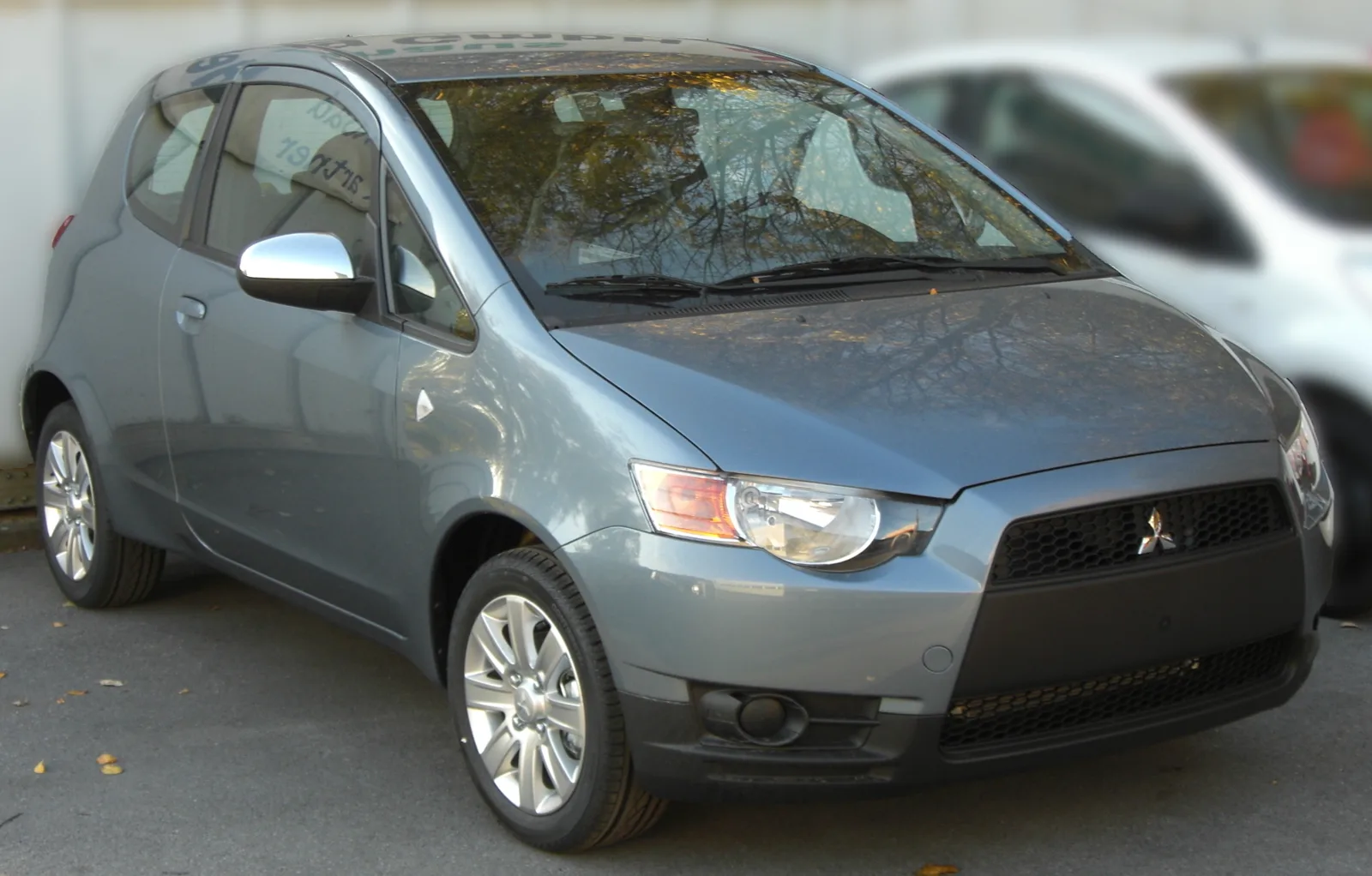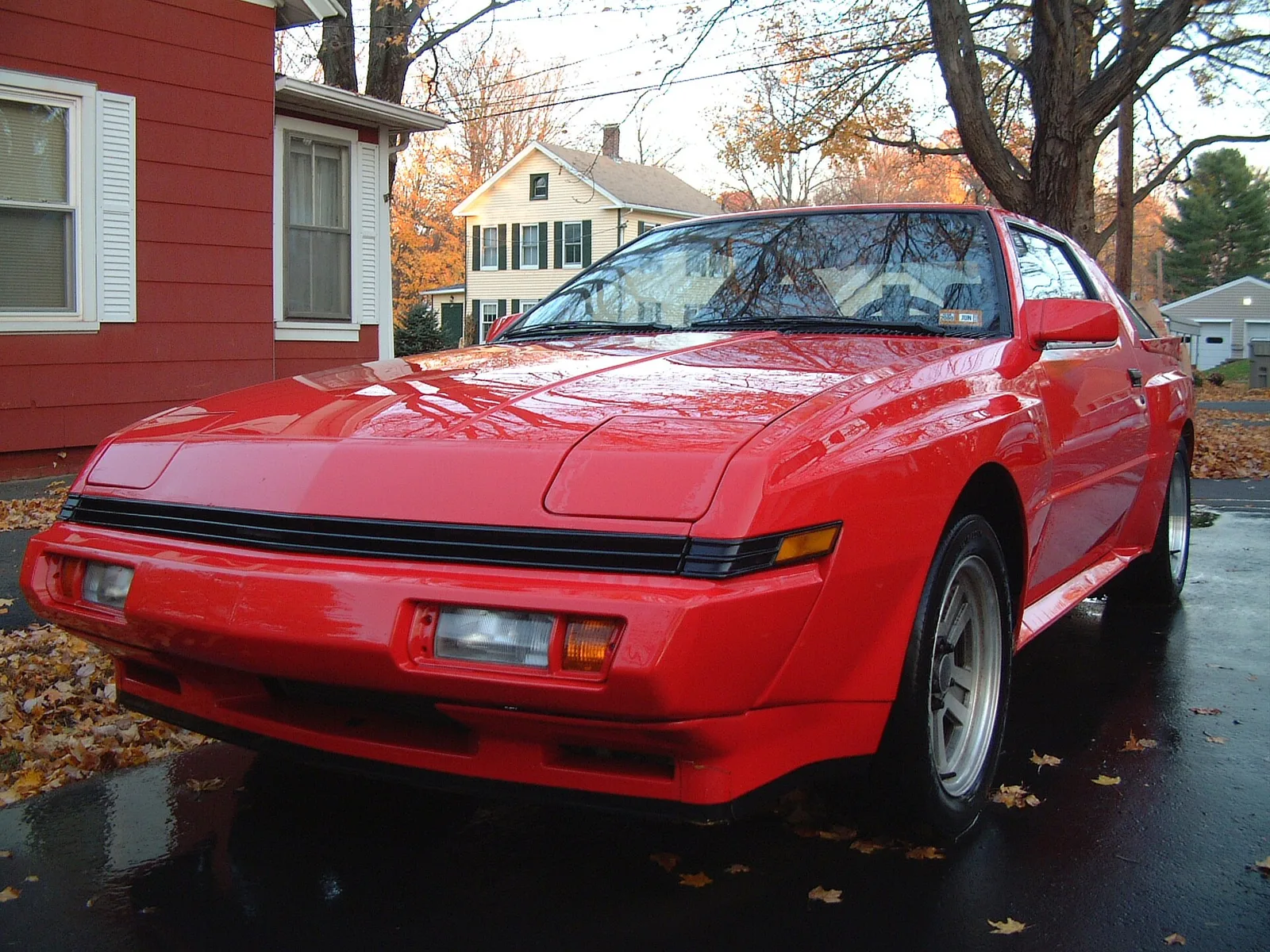
A rear-drive, turbocharged two-door from 1982 to 1989, the Starion lived a double life as a North American Conquest and a serious touring car and rally contender.
The Mitsubishi Starion was a turbocharged, rear-wheel drive coupe built from 1982 to 1989 and sold in North America as the Conquest by Chrysler. It used 2.0-litre and 2.6-litre engines and won endurance and rally events in several countries. Production peaked at 19,438 cars in 1986.
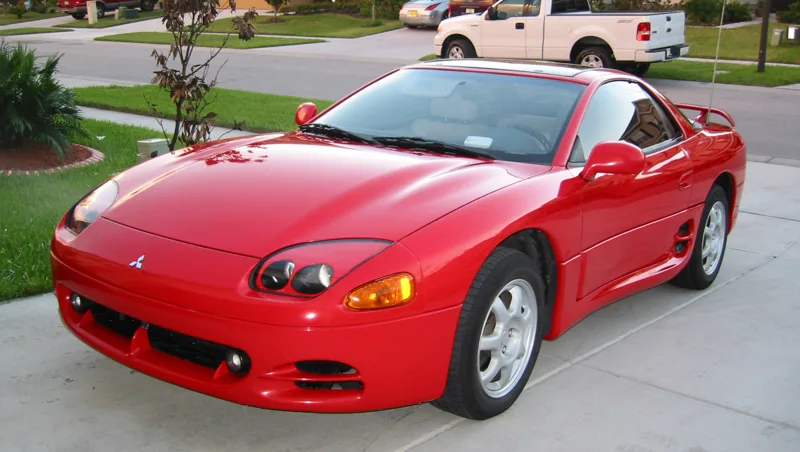
The Mitsubishi Starion was a two-door fastback sports coupe that Mitsubishi built from 1982 until 1989. Its front-mounted engine drove the rear wheels, and its turbocharged versions made it one of the first modern Japanese performance cars with electronic fuel injection. In North America the same car was sold as the Conquest by Chrysler, Dodge and Plymouth, while the Mitsubishi badge stayed on the car sold under its own name.
Where did the Starion come from?
Mitsubishi began selling the Starion in 1982, in a Japanese market full of grand tourers that included the Nissan Z cars, the Mazda RX-7 and the Toyota Supra. Smaller rivals such as the Honda Prelude, Isuzu Piazza and Subaru XT also competed for the same buyers.
In the United States the car was sold as the Mitsubishi Starion, and its Dodge, Plymouth and Chrysler versions carried the Conquest name. In the United Kingdom the car was sold as the Colt Starion.
The name itself has a story. Mitsubishi says it combines star and Arion, the mythical horse from Greek legend, and its May 1982 Japanese sales brochure presented the name as a symbol of the universe and of high performance. Some accounts add that Japanese engineers struggled to pronounce stallion, and an early television advert ended with a stallion's head above the name.
A turbocharged coupe that could win on a rally stage, a touring car circuit and a 24-hour endurance race, depending on the year and the badge.
How was the Starion engineered?
The chassis was derived from the previous high-performance versions of the Mitsubishi Sapporo and Galant Lambda sports coupe. It used MacPherson struts at each corner with sway bars front and rear, and rack-and-pinion steering was not offered. Instead the entire range used gearbox steering.
Many cars came with a limited-slip differential and anti-lock brakes that worked on the rear wheels alone. Early models had a single-channel system, and the drag coefficient was about 0.32, which was better than the Mazda RX-7 and the Nissan 300ZX when the Starion appeared.
The car came in two body shapes. The narrowbody complied with Japanese size rules that taxed larger bodies and engines above two litres, and it was the only shape offered through the 1985.5 model year. The widebody arrived with the intercooled high-performance range, and it was sold as the Starion ESI-R or Conquest TSi in most markets.
The seating arrangement was a 2+2 with rear seats that were unsuitable for large adults. Front seat belts were mounted in the doors on early cars, and the 1987 and later American models gained electrically operated belts. Power windows stayed live for 30 seconds after the engine was switched off.
Later upgrades added an intercooler, five-lug wheels in place of the four-bolt wheels shared with the Galant Lambda, six-bolt rear axles, changes to the fuel management and revisions to the transmission.
What engines powered the Starion?
Engine capacity differed between markets. American customers received the larger 2.6-litre SOHC Astron G54B, while most other markets received the 2.0-litre SOHC Sirius G63B. The smaller unit later appeared in DOHC form in the Mitsubishi Lancer Evolution.
Both families used computer-controlled fuel injection and turbocharging, and the two engines produced roughly the same power, although the 2.6-litre had a slight torque advantage and the 2.0-litre revved higher. Reporters of the time described the 2.0 as peaky and exciting, while the American 2.6 had plenty of torque but was less rewarding to drive.
After 1987 European Starions also used the 2.6-litre engine, as did the GSR-VR in Japan. Emissions rules on leaded fuel drove the change, and many reviewers found the car slower once the heavier widebody body arrived with the bigger engine.
In Japan from 1984 to 1987, a 12-valve intercooled version of the 2.0-litre engine called DASH sat in the top GSR-V trim. The engine's third intake valve engaged at higher revs to boost top-end response, and redline rose to 7,000 rpm. Turbo horsepower across the range ran from 145 to 200 PS, depending on the turbocharger, the intercooler and the cylinder head.
How did the Starion perform in motorsport?
The Starion was a prominent international competitor in the 1980s, and it performed well in Group A racing. In the Netherlands John Hugenholtz won the over-2-litre class in the Dutch championship, and in Britain Andy McLennan won many races and a Monroe championship in a Simmons Drums car.
In the United States the car became best known for endurance racing. Dave Wolin's Team Mitsubishi ran turbocharged 2.6-litre cars built by the Lotus engine specialist Dave Vegher, and they won the Nelson Ledges 24-hour race four years running from 1984 to 1987. The team also took three SCCA endurance championships in that span.
Rally success came from the four-wheel drive prototype. The Starion took victory in Group A World Rally Championship events and the Asia Pacific Rally Championship during 1987 and 1988. The four-wheel drive car was built for Group B, but it was never homologated before the FIA banned Group B cars for safety reasons.
The prototype placed its engine further back than the Audi Quattro, which gave it a better front-to-rear weight split. A strengthened transfer case from a Pajero sat behind the gearbox, and carbon fibre was used for the driveshafts, sumpguard and lower suspension arms.
How many Starions were built?
Production peaked in 1986 at 19,438 cars, a figure covering both cars and all body styles, from Mitsubishi Japan. Output then fell to 17,605 in 1987, 10,655 in 1988 and only 1,961 in 1989.
Australian vehicles were mostly similar to the European Turbo specification. Their model codes, JA from 1982 to 1984, JB from 1984 to 1985 and JD from 1985 to 1987, appear on the vehicle information plates and help identify the variant.
Which Japanese models did Mitsubishi sell?
Japan had the largest choice of Starions. The GSR name was followed by a Roman numeral that marked the specification, starting with the GSR-I base model. The GSR-II added power steering and electric windows, while the GSR-III brought an improved audio system and air conditioning, and the GSR-X added a leather interior and climate control.
The naturally aspirated GX was sold only until 1983. It lacked power windows, air conditioning, independent rear suspension, fuel injection and power steering, and its rear axle was a live unit rather than an independent layout.
The widebody GSR-VR ran from 1987 to 1989 with the 2.6-litre Astron engine rated at 175 PS (129 kW; 173 hp). Roughly 73 widebodies were built with the DASH engine as a limited-edition model called the 2000GSR-VR.
How did the Starion race in Japan?
The Starion competed in the Japanese Touring Car Championship in the mid-1980s. Results in 1985 included a fourth place at the Inter TEC meeting, and in 1986 the car won the Race de Nippon Tsukuba and finished second at Suzaka, ending the season second in the All Japan Touring Car Championship.
The following season brought more success. The Starion won the All Japan Touring Car Race and the Hiland Touring Car 300 km race in 1987, finishing third in the championship overall. In 1988 it took second place in the Hiland Touring Car 300 km race.
How did the Starion do in Australia?
Australian racing gave the Starion some of its best-known results. Peter Fitzgerald and Brad Jones finished first and second outright in the 1984 Australian Super Series, and Starions filled the top six places in the 1986 Winton 300 Group E race.
Other results followed. Peter Fitzgerald won the 1987 Australian Production Car Championship, and Gary Scott and Akihiko Nakaya finished fifth outright in the 1987 James Hardie 1000. The car placed seventh in the 1985 Australian Manufacturers' Championship and eighth in 1988.
What was the North American story?
Mitsubishi sold the Starion in North America from 1983 to 1989, while Chrysler sold the Conquest under Dodge and Plymouth names from 1984 to 1986 and under the Chrysler name alone from 1987 to 1989. The 1987 model year introduced automatic shoulder belts for front occupants, a passive restraint that remained through the last year of production.
The Conquest used the 2.6-litre G54B with a TD05-12A turbocharger from Mitsubishi Heavy Industries. The earlier narrowbody models used the same turbocharger.
Mitsubishi's North American range included Base, LS, LE, ES, ESI and ESI-R versions, with the ESI-R being the intercooled widebody from 1986 to 1989. Chrysler's versions included the LE, the widebody TSi and the Technica, a narrowbody with a digital dash cluster sold between 1985 and 1987.
What was the Sports Handling Package?
Mitsubishi offered an optional handling package in the later model years, listed under option code SH. Chrysler called its version the Performance Handling Package under code AGA, and enthusiasts refer to both as the SHP.
The SHP added adjustable front and rear struts, along with wider wheels that stepped the front from 16 x 7 to 16 x 8 inches and the rear from 16 x 8 to 16 x 9. Tyres grew to 225/50 and 245/45 sizes. The package could be retrofitted to earlier pre-widebody cars, but that meant converting from four-lug to five-lug hubs.
What are the Starion specifications?
| Specification | Detail |
|---|---|
| Layout | Front engine, rear-wheel drive, two-door fastback with 2+2 seating |
| Production years | 1982 to 1989 |
| Most markets engine | 2.0 L SOHC Sirius G63B, turbocharged |
| United States engine | 2.6 L SOHC Astron G54B, turbocharged |
| Japanese DASH engine | 12-valve, 200 PS (147 kW; 197 hp) |
| GSR-VR engine | 2.6 L, 175 PS (129 kW; 173 hp) |
| Turbo range | 145 to 200 PS, depending on turbocharger and head |
| Redline with DASH | 7,000 rpm |
| Drag coefficient | About 0.32 |
| Production in 1986 | 19,438 cars |
| Production in 1989 | 1,961 cars |
| Four-wheel drive prototype | Strengthened Pajero transfer case; under 1,000 kg (2,200 lb) |