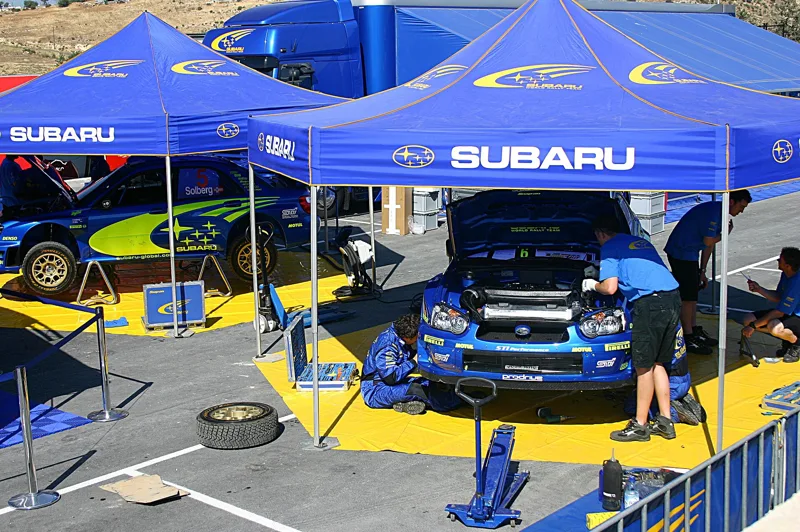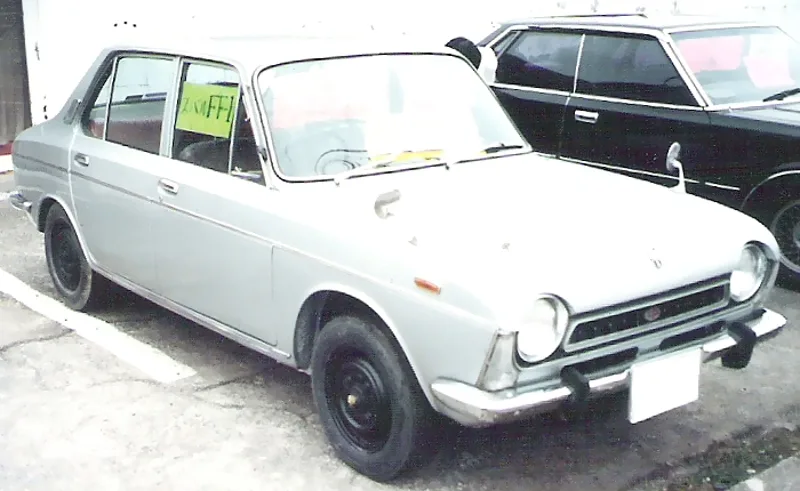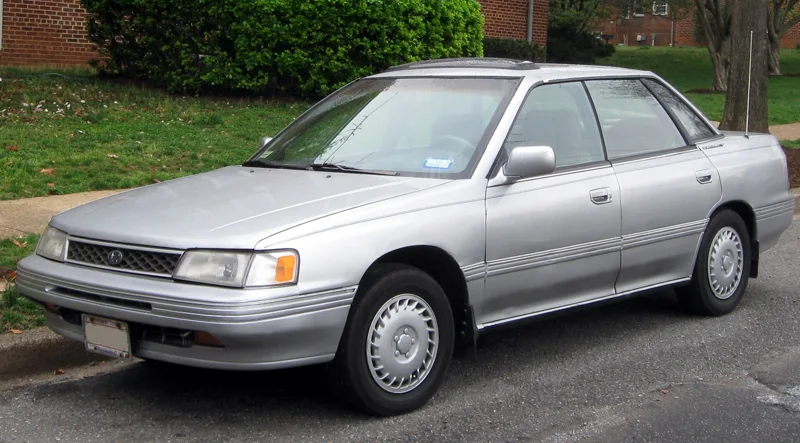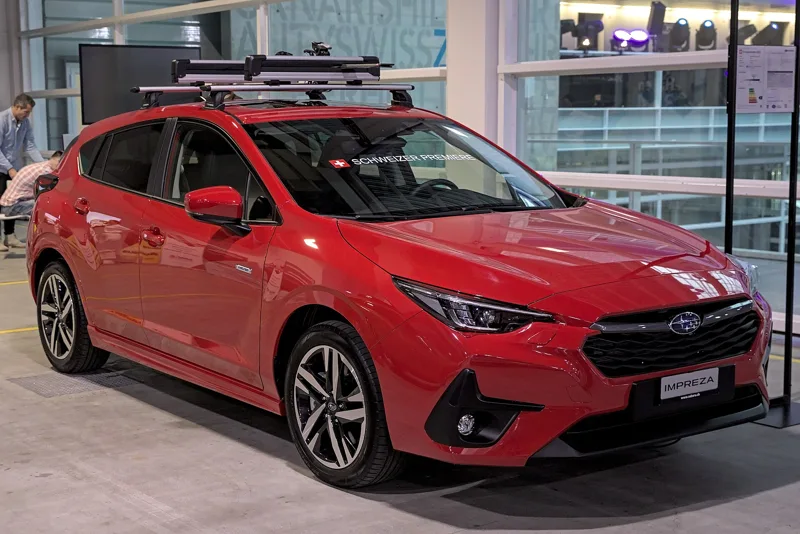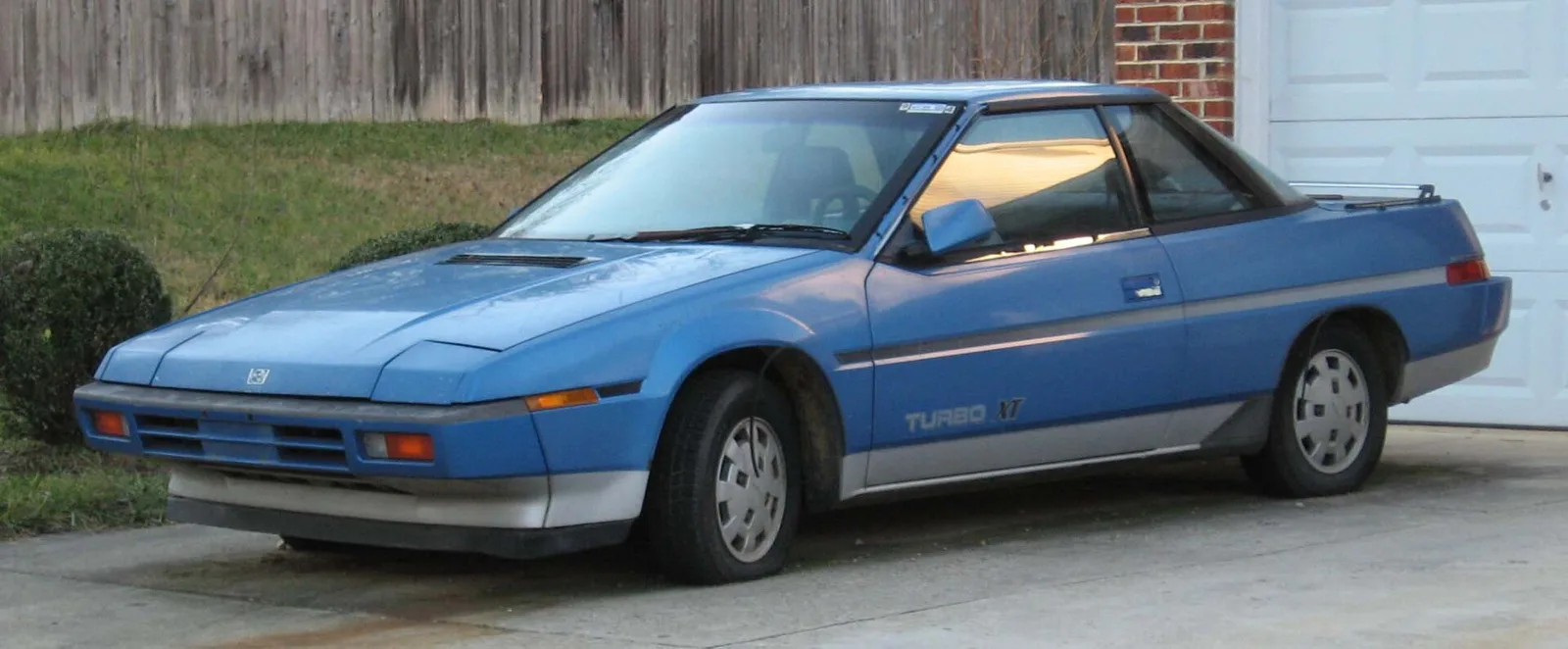
Built from 1985 to 1991, the two-plus-two XT pushed a boxer engine, pop-up headlights and a 0.29 drag coefficient into the American coupe market.
The Subaru XT was a two-plus-two coupe built by Subaru from 1985 to 1991, with a wedge-shaped body, a boxer engine and a drag coefficient of 0.29. It was sold as the Alcyone in Japan and the Vortex in Australia and New Zealand.
The Subaru XT was a two-door, two-plus-two coupe that Subaru built from 1985 to 1991. Its wedge-shaped body, aviation-inspired cabin and boxer engine set it apart from the brand's practical sedans and wagons, although sales stayed small throughout its life.
Where did the Subaru XT come from?
The idea for the XT came from the United States, where it was aimed at American buyers, and it went on sale there in February 1985 before reaching Europe and Japan. It was an unusual car for Subaru, and its name changed from one market to another.
In North America and Europe it was the XT, with the six-cylinder model called the XT6. In Japan it was the Alcyone, and in Australia and New Zealand it was the Vortex. The Alcyone name refers to the brightest star in the Pleiades cluster, the same star cluster that inspired the Subaru logo.
The turbo four-wheel-drive version then debuted in Europe at the Geneva Motor Show in March 1985, and the Japanese debut followed in June 1985. Every XT came off the line at Subaru's Yajima works in Ota, Japan. The Alcyone SVX succeeded the XT in 1992.
A wedge-shaped Subaru coupe with aviation touches and the lowest drag figure on the American market at launch.
What did the XT's design look like?
The XT had a pronounced wedge profile, built on a folded-paper approach that it shared with the Type AA Leone. Its shape was the work of several designers, and it looked nothing like the brand's family models of the period.
Kiyoshi Sugimoto headed the exterior team, and Hiroshi Yako headed the interior, with Tetsuya Hayashi overseeing both. Some accounts credit Kyuchi Akari with the final shape, drawing on the airflow advice of American designer Alex Tremulis.
Critics noticed the difference. The New York Times described the styling as flashy compared with Subaru's other products, and the car was clearly meant to stand out rather than blend in.
How aerodynamic was the XT?
The XT had a drag coefficient of 0.29, which put it ahead of every other production car on sale in America at launch. Its flat boxer engine allowed the low, tapered nose, and extensive wind tunnel work tuned the shape further.
Pop-up headlights helped the wedge profile, and retractable flaps let the door open while the handles stayed flush with the bodywork. A single 22 inch windscreen wiper tucked under the hood when parked, and rubber spoilers ahead of each wheel smoothed airflow past the tyres while doubling as mud guards.
Less wind noise made for a quieter ride, and the aerodynamic gains also helped economy. The design was less practical than earlier Subarus, because its styling came first.
What features did the XT offer?
The XT offered a long list of features that were rare in its class. These included height-adjustable pneumatic suspension, a digital dash, central locking, a trip computer and a fold-down rear seat, and the instrument cluster tilted with the steering column.
The joystick-style gear selector had a thumb trigger that unlocked the part-time four-wheel-drive system. Turbo models used an orange backlit liquid crystal display, which presented boost, temperature and fuel readings as three-dimensional graphs.
The pneumatic suspension recalled the hydropneumatic systems used by Citroen and Mercedes-Benz. Headlight washers appeared on the XT6 alone, and alloy wheels had a distinctive inset rectangular shape. A speed alarm could be armed with a separate key.
How did the XT's engines compare?
The early XT used a 1781 cc flat-four with 97 hp (72 kW), while turbo versions reached 112 hp (84 kW) in North America and 136 PS in Europe. The six-cylinder XT6 used a 2672 cc flat-six with substantially more output.
| Engine | Displacement | Power | Torque | Years |
|---|---|---|---|---|
| EA-82 | 1781 cc flat-four | 97 hp (72 kW) at 5200 rpm | 103 lb ft (140 Nm) at 3200 rpm | 1985-1987 |
| EA-82T turbo | 1781 cc flat-four | 112 hp (84 kW) at 4800 rpm, North America 1985 | 143 lb ft (194 Nm) at 2800 rpm | 1985-1987 |
| EA-82T turbo, 1987 | 1781 cc flat-four | 115 hp (86 kW) for North America | 143 lb ft (194 Nm) at 2800 rpm | 1987 |
| ER-27 | 2672 cc flat-six | 145 hp (108 kW; 147 PS), peaking at 5200 rpm | 156 lb ft (212 Nm) at 4000 rpm | 1987 onwards |
Transmissions were either manual or automatic, and the turbo cars were offered in front-wheel-drive form or with the on-demand system.
What changed when the XT was facelifted?
The XT received a facelift in 1987, with redesigned front and rear bumpers and the reverse lights moved into the centre of the tail panel. The six-cylinder XT6 arrived in 1988, fitted with stiffer suspension to suit its heavier engine.
The XT6 used a Cybrid adaptive electrohydraulic steering system, which varied the assistance according to speed and removed the need for a belt-driven pump. Its hydraulic fluid is incompatible with ordinary power steering fluid, and Subaru still sells it at a premium.
The six-cylinder car also had two electric fans and a higher-output alternator, and its headrests carried a large rectangular cut-out, as did the turbo all-wheel-drive models.
How many XTs did Subaru build?
Subaru built 98,918 XTs, XT6s and Alcyones, but only 8,170 were sold in Japan. Output stayed low because the car did little to grow Subaru's sales in the 1980s. Its novel features may not have contributed much to sales at all.
Buyers with money to spend were not drawn to Subaru in that decade. The later Legacy, Legacy Outback and Impreza WRX models brought the brand far wider success, while the XT remained an interesting design exercise.
What special editions did Subaru make?
Subaru made a limited 30th Anniversary Alcyone VX in 1988, with a white and gold paint job and a red interior. Only 30 were built, and they carried 30th Anniversary decals on the sides. It was a celebration model for the Alcyone VX, the six-cylinder 4WD version.
Two concept cars were shown at the 27th Tokyo Motor Show. One was painted entirely black with a red leather interior, a design credited to fashion designer Junko Shimada, while the FICCE Special was a convertible with hubcaps and interior graphics styled by Yoshiyuki Konishi.
Did the XT appear in sport?
The XT was almost never raced officially. One car competed in the 1985 Wynn's Safari in Australia, but it was damaged and did not finish. The XT's 134 hp was too little to draw serious racing interest, so it stayed firmly a road car.
The car's showbiz side was more successful. The XT Turbo was the official car of the Most Valuable Player at Super Bowl XXII in 1988, and the XT6 served the same role at Super Bowl XXIII in 1989.
How were the XT trims arranged?
Like other Subaru models of the same period, the North American XT came in four trims: the base DL, the better-equipped GL, the front-drive GL-10 Turbo and the four-wheel-drive GL-10 Turbo-Traction. Many of the extra features were reserved for the GL-10 models.
Japan offered two turbocharged models, the Alcyone VR and VS. Australia and New Zealand sold the turbo Vortex alongside a non-turbo Vortex XT, while Europe generally received only the turbo car and the four-wheel-drive version, called the XT Turbo Allrad in Germany.
The 1987 facelift reshuffled the North American range. It left a base four-cylinder GL and the new six-cylinder XT6, and the turbo models were dropped from that market.
What is the XT's legacy?
The XT is remembered as one of Subaru's most unusual cars, and it still has an enthusiast following. Owner forums and dedicated websites keep its history alive, and the car's wedge shape remains a talking point. Subaru's own history pages mention the Alcyone, though not the XT by name.
SubaruXT.com calls itself the home of the Wonder Wedge and runs a forum with a large user base. The XT6 Haven website concentrates on the six-cylinder models, and both sites remain useful resources for owners.
The shape stands in contrast to the brand's later mainstream models, such as the Legacy, the Legacy Outback and the Impreza WRX, which brought Subaru much wider success.