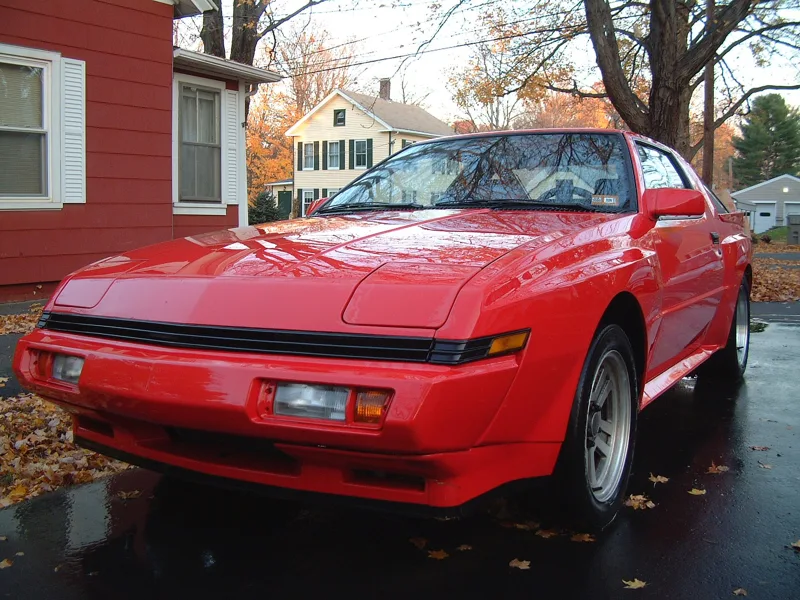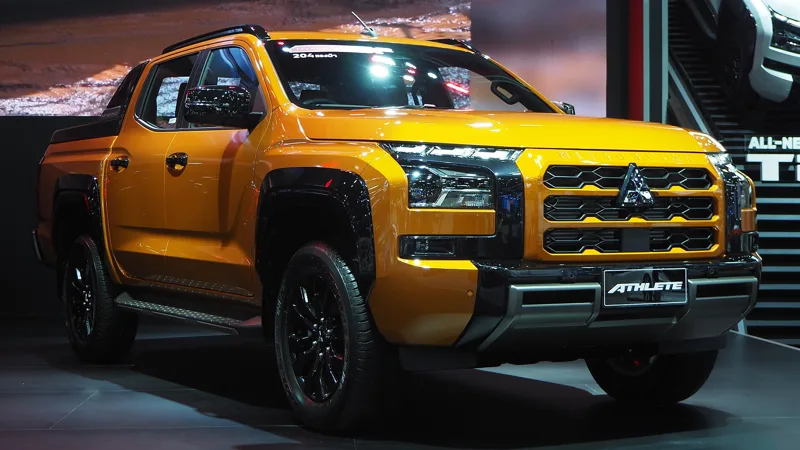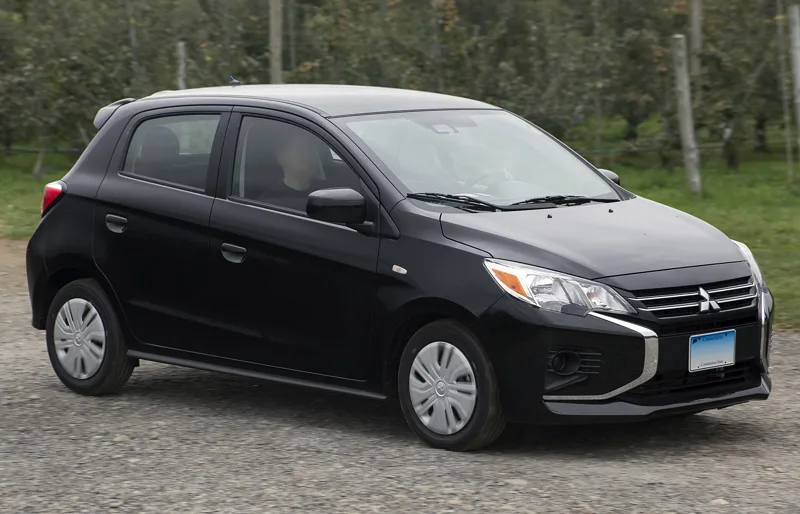
A small-car nameplate that passed through export Mirages, a Smart-platform hatchback, Ralliart hot hatches and a 2023 revival.
Mitsubishi first used the Colt name in 1962 on a small family car, the Colt 600. It later covered export Mirages, a Smart-platform hatchback from 2002, Ralliart hot hatches and an electric prototype, and returned in 2023 on a Renault Clio-based model.
The Mitsubishi Colt is a nameplate that Mitsubishi Motors has used since 1962. It has been fitted to small family cars, export versions of the Mirage, a Smart-platform hatchback, a turbocharged hot hatch and an electric prototype, and it returned in 2023 on a Renault-based car.
What is the Mitsubishi Colt?
The Colt is a nameplate from Mitsubishi Motors, first used in 1962 on the Colt 600 small family car. It was applied to export versions of the Mirage from 1978 to 2002, and to a hatchback that reached international markets from 2002. The generation that replaced it in 2013 reverted to the Mirage name.
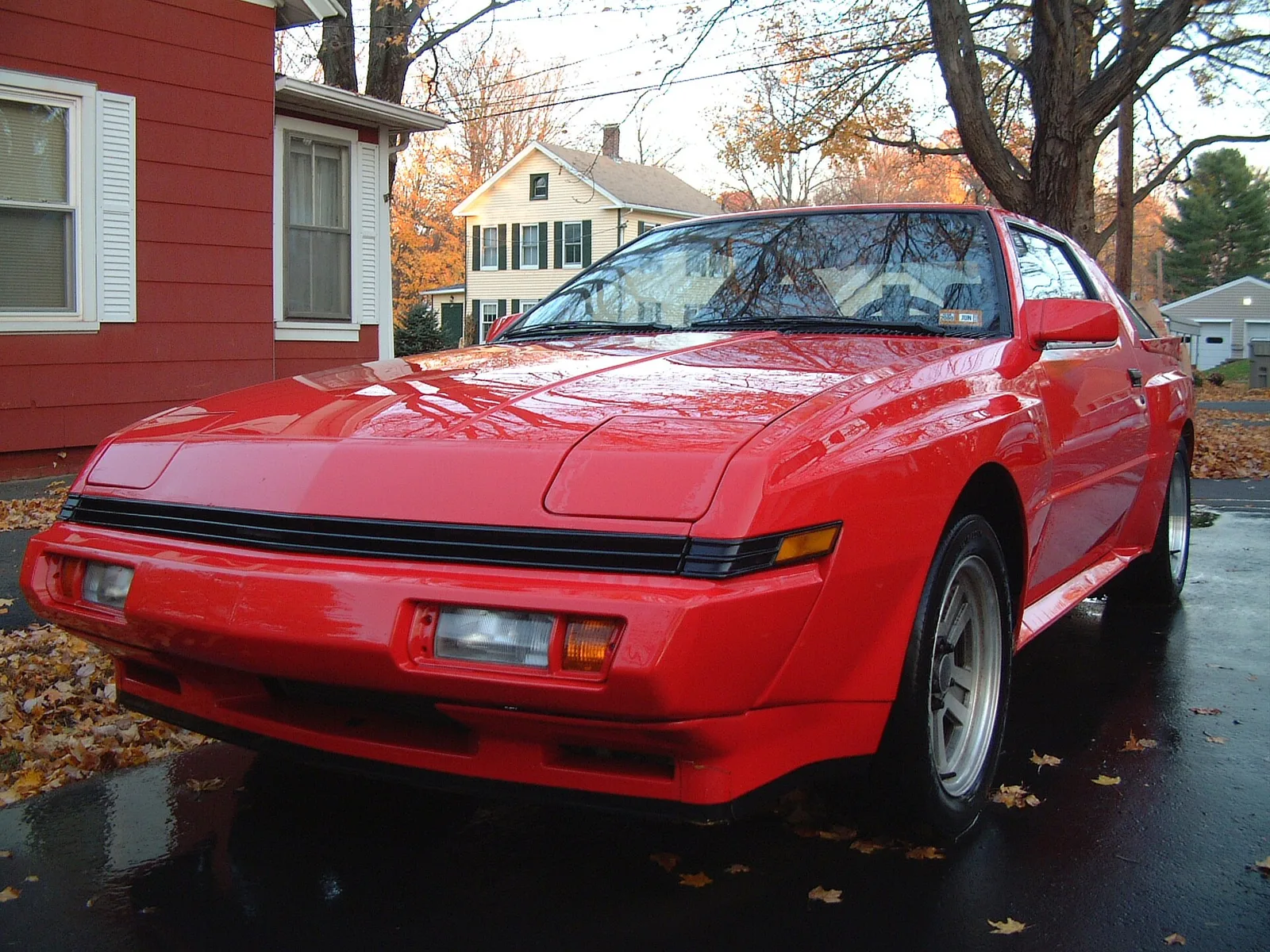
Chrysler also used the name. It rebadged Mitsubishi cars as the Dodge and Plymouth Colt between 1970 and 1994, which put the name on cars sold under other badges.
A nameplate that began as a 594 cc family car and came back, decades later, on a Renault.
Where did the Colt name start?
The Colt name began in 1962 with the Colt 600, the first of a line of small family cars. It complemented the Mitsubishi 500, the company's first post-war passenger car, and it was powered by a 594 cc air-cooled straight-twin engine.
Those early cars were built by three regional subsidiaries of Mitsubishi Heavy Industries, and the parent resumed operating as a single entity in 1964. The line grew quickly, with the Colt 1000 arriving in 1963, the Colt 1500 in 1965, the Colt 1100 in 1966 and the Colt 1200 in 1968.
A smaller fastback, the Colt 800, was built from 1965 until late 1971. The Colt 600 also inspired a convertible concept, shown at the 1962 Tokyo show and never offered to the public.
The Colt marque lasted in Asia until the 1970s and in Europe until the 1980s. That longer run gave the early models a wider reach than the name's Japanese roots alone would suggest.
Which other vehicles carried the Colt name?
The name went well beyond Mitsubishi's small cars. As the successor of the Colt 1500, the first-generation Galant was sold as the Colt Galant, which gave the badge a place on a larger family car.
In South Africa the L200 pickup carried the Colt name from 1992 to 2008. The same badge therefore appeared on a light commercial vehicle as well as on the passenger cars.
Each of these uses meant the same badge could mean a small hatchback in one market and a pickup or a larger car in another. Chrysler's use of the name ran in parallel. The Dodge and Plymouth Colt captive imports sold in North America between 1970 and 1994 showed how far the badge travelled beyond Japan.
How did the Mirage-based Colt work?
From 1978 the Colt name went onto export Mirages, starting with a front-wheel drive hatchback. The Colt name went to export markets, while Japan kept the Mirage name for the same car.
Five generations of Mirage-based Colts were sold between 1978 and 2002. New generations arrived in 1983, 1987, 1991 and 1995, and the Lancer name covered many of the related models in other markets.
Mitsubishi Motors Australia built the Colt in Australia from 1982 to late 1989. That local production gave the Australian market a Colt built on home soil for most of the 1980s.
What did the 2002 Colt bring?
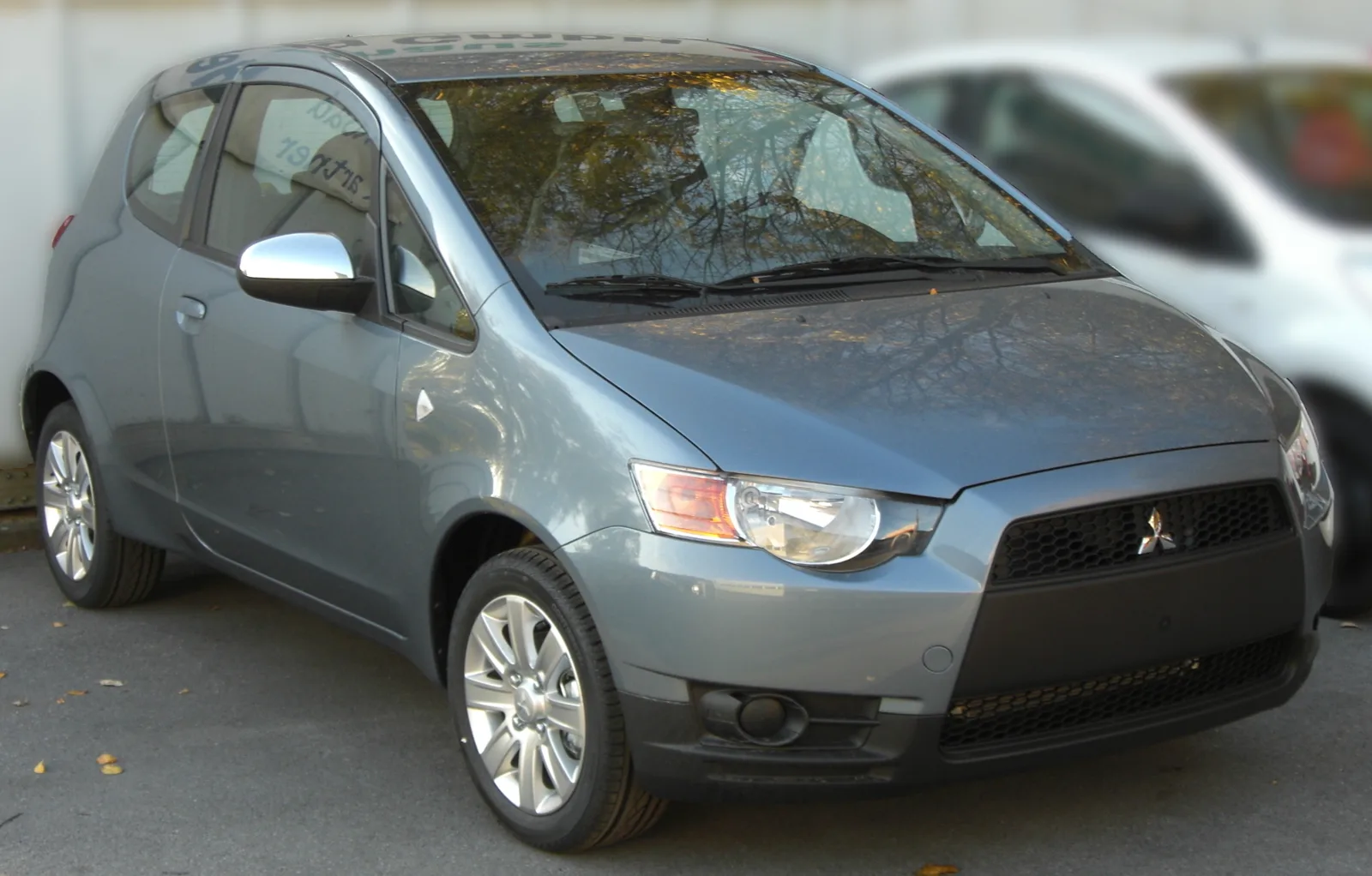
The 2002 Colt, code-named Z20, was designed by Olivier Boulay and built on the same platform as the Smart Forfour. Its 1.3 and 1.5 litre DOHC MIVEC Orion engines were mated only to a CVT, and it arrived in Japan in November 2002.
The Z20 used the MIVEC family of variable valve timing, the same family that later powered the Z30 and the Colt Plus. It went through several facelifts. The first came in October 2004 and adopted the 4A9 engine, and further facelifts followed in November 2006 and October 2008.
The high-performance Ralliart joined the Z20 line-up, using a turbocharged version of the 4G15 engine. That model gave the mainstream hatchback a sharper edge, and it is covered in the section on Ralliart and Version-R models below.
How did the European Z30 differ?
The European Colt, code-named Z30, was built at Mitsubishi's NedCar facility and reached production in April 2004. It used 1.1, 1.3 and 1.5 litre MIVEC petrol engines, along with a 1.5 litre OM639 turbodiesel sourced from Mercedes-Benz.
The Z30 came with a standard five-speed manual gearbox, and the six-speed Allshift automated manual was an option. Buyers therefore had a choice of transmissions from the start of the European run.
The Z30 was facelifted in October 2008, unveiled at the Paris Auto Show. That facelift removed the 1.5 litre turbodiesel from the range, with lack of demand given as the reason.
How did the Ralliart and Version-R perform?
The high-performance Ralliart was a turbocharged 1.5 litre version of the 4G15 engine. It produced 150 PS (110 kW; 148 hp) at 6000 rpm, along with 180 Nm of torque, against 98 PS (72 kW; 97 hp) for the naturally aspirated unit.
The Colt Ralliart Version-R went on sale in Japan on 30 May 2006. Its manual model produced 154 PS (113 kW; 152 hp) at 6000 rpm and 210 Nm of torque.
The Version-R had a 240 km/h speedometer, Recaro bucket seats borrowed from the Lancer Evolution VIII MR and low-profile 16-inch tyres. Its rear seats were moulded for two rather than three.
A 2008 facelift raised the output to 163 PS (120 kW; 161 hp) at 6000 rpm. In Australia and New Zealand the car was sold as the Colt Ralliart, without the Version-R designation.
How many Version-R Specials were made?
The Japanese market received 300 units of the Version-R Special in 2008, and another 200 units followed in 2010. Those batches show how small the Special runs were.
The Version-R Special was launched in the Japanese market as a small-batch model within the Version-R line. Its limited numbers set it apart from the regular car, which stayed in production with a wider audience.
What was the Colt Plus?
The Colt Plus arrived in Japan in 2004 as a longer Colt with about 30 cm (12 in) more boot space. It had an automatic tailgate that could also be opened by remote, and it used a 4A91 MIVEC engine.
The Colt Plus Turbo carried the 4G15 engine with 180 Nm of torque. The Colt Plus Ralliart was uprated to 154 bhp (115 kW), and it gained leather seats and EVO-inspired bonnet vents.
In Taiwan the Colt Plus launched in March 2007 with a 1.6 litre SOHC 4G18 engine. A sporty Colt Plus iO followed in 2008 for the Taiwan market.
A 2013 facelift in Taiwan redesigned every body panel and moved the car to five-bolt wheels. A third facelift arrived in June 2017, bringing the Dynamic Shield design.
Which Colts were electric?
The 2005 Colt EV used two in-wheel motors, each producing 20 kW (27 hp), and its battery pack was rated at 13 kWh. Its estimated range was 150 km (93 mi), with a suggested price of US$19,000.
The Colt MIEV test-bed was shown in 2006 with two 20 kW in-wheel motors. Mitsubishi first announced the technology in May 2006, and the test car had a top speed of 150 km/h (93 mph) and a range of 150 km (93 mi) on one charge.
Charging was suggested as quick as 10 minutes for the MIEV. The Colt EV delivered 600 N m of torque from its two motors, which made the electric drive a strong point of the concept.
What concepts came from the Colt?
The CZ2 prototype of 2001 presaged the next Colt generation, and it was followed by a cabriolet version shown at the 2003 Geneva Motor Show.
The CZ3 Tarmac was a larger version of the CZ2, and it could have replaced the Lancer Evolution in the World Rally Championship. Its Spyder convertible debuted at the 2003 Detroit auto show.
The Colt Targa concept of 1986 was driven by Jackie Chan in the film Armour of God. It was a striking piece of Colt history that lived on screen rather than on the sales floor.
What was the Colt CZC?
The Colt CZC was a coupe cabriolet shown at the Geneva Motor Show in March 2005, and it was co-developed with Pininfarina under Ken Okuyama. It was a 2+2 with a retractable hard-top, powered only by 1.5 litre engines with a five-speed manual.
Production of the CZC was halted in the second half of 2008. It was the only open-top member of the Colt family in that period, which gave it a niche of its own.
How did the Colt end and return?
Colt production ended in 2012, when the Mirage and Space Star took over. The name returned in 2023 as a rebadged Renault Clio, and that car was discontinued at the end of 2025.
The Clio was built by Oyak-Renault, which also manufactured the Mitsubishi Colt. When Clio production ended at that plant, the Colt's run came to a close with it.
Why did the Colt name have trouble in the UK?
The Colt Car Company used the name as a marque in the United Kingdom from 1974 to 1984. The name carried associations with the A6M Zero fighter from the war, which made it an awkward choice for a car brand.
New Zealand dropped the Colt brand in 1970, when the Dyna-wedge Galant arrived under the Mitsubishi name. The move showed that a marque name could be retired market by market.
What were the key Colt figures?
| Specification | Detail |
|---|---|
| Colt 600 engine | 594 cc air-cooled straight-twin, 1962 |
| Z20 engines (2002) | 1.3 and 1.5 litre DOHC MIVEC Orion, mated only to a CVT |
| Z30 petrol engines (2004) | 1.1, 1.3 and 1.5 litre MIVEC |
| Z30 diesel (2004) | 1.5 litre OM639 turbodiesel from Mercedes-Benz |
| Naturally aspirated 4G15 | 98 PS (72 kW; 97 hp) |
| Ralliart turbo 4G15 | 150 PS (110 kW; 148 hp) at 6000 rpm, 180 Nm |
| Version-R manual | 154 PS (113 kW; 152 hp) at 6000 rpm, 210 Nm |
| Version-R after 2008 facelift | 163 PS (120 kW; 161 hp) at 6000 rpm |
| Colt Plus Taiwan engine | 1.6 litre SOHC 4G18 |
| Colt EV | Two 20 kW (27 hp) in-wheel motors, 600 N m, 13 kWh battery |
| Colt MIEV | Top speed 150 km/h (93 mph), range 150 km (93 mi) |