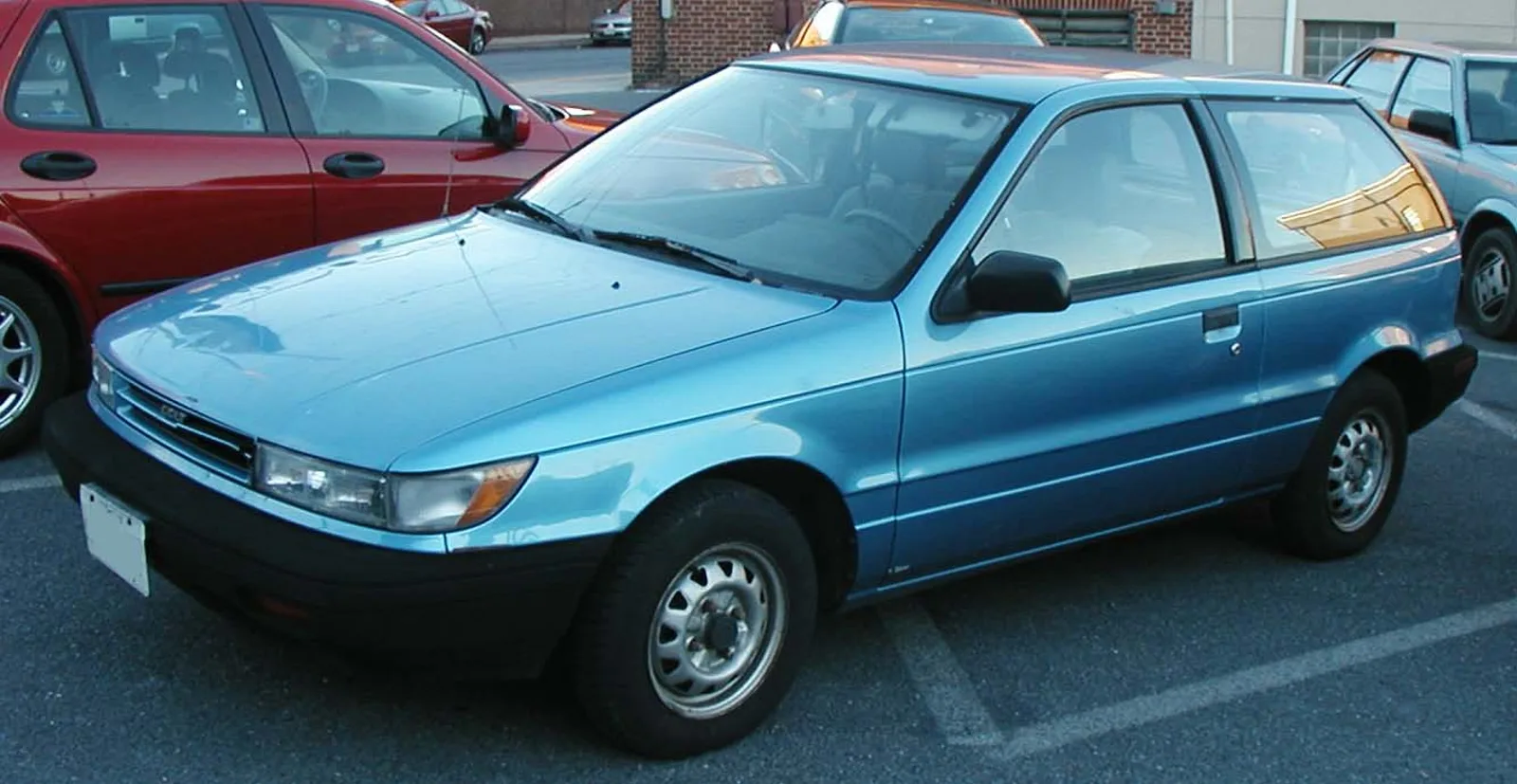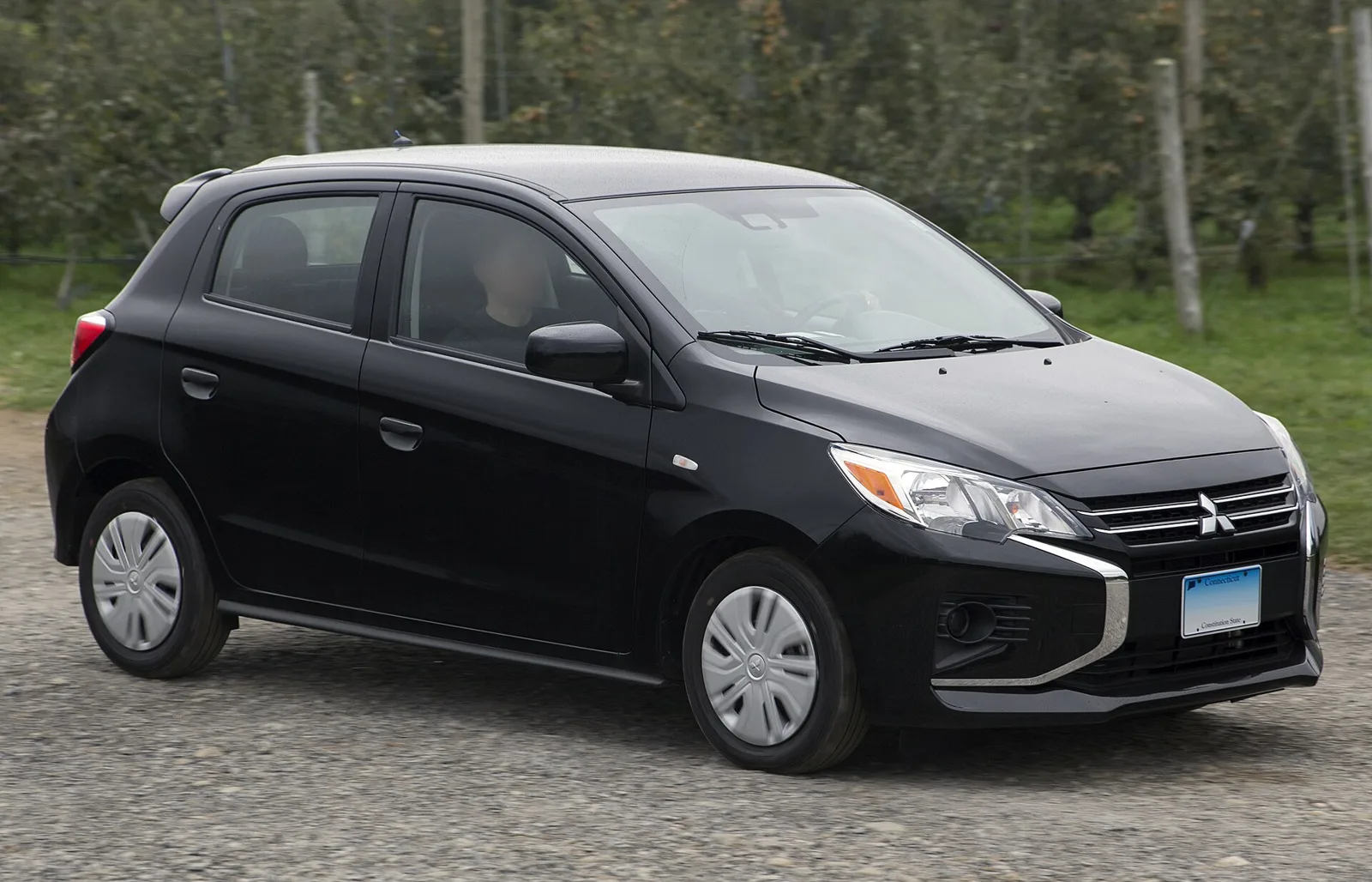
A front-drive economy hatchback that started as a Japanese response to the oil crisis, was sold under many names and returned in 2012 as a three-cylinder city car.
The Mirage is a Mitsubishi economy car first built in 1978 as a front-drive hatchback, later sold as the Colt, Lancer and Dodge Colt, and returned in 2012 as a three-cylinder hatchback and sedan.
The Mitsubishi Mirage is a range of cars built by Mitsubishi from 1978 until 2003 and again from 2012. The hatchbacks of the first period were subcompacts, while the sedans and wagons were marketed prominently as the Lancer, and the current Mirage is a subcompact hatchback and sedan that replaced the Colt.
The name is one of the more confusing in Japanese motoring history, because it was used on five generations in Japan and on a different range of badges in other markets. Its story is as much about marketing as about engineering, and the car appeared under the Colt, Lancer and Dodge names across many countries.
Why is the Mirage name so confusing?
Mitsubishi used the Mirage name for all five generations in Japan, and the US badge followed it for most of those years. Other markets often used the name Colt, and sedan variants were widely sold as the Lancer, including in Japan, where the two retailed alongside one another.
Chrysler carried the first four generations in North America under a joint venture, using the Dodge Colt and Plymouth Champ and Colt names. Later, the same venture brought the Eagle Vista and Summit, which sold alongside them, so one design could carry several badges in a single showroom.
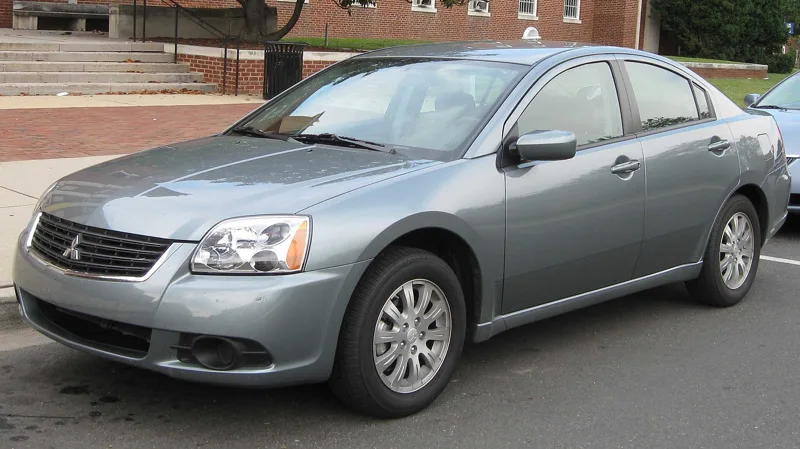
The Lancer name caused its own confusion. Chrysler had used Lancer on an unrelated Dodge in the 1950s and 1980s, and after the DaimlerChrysler alliance ended in 2004 the Lancer name was relinquished to Mitsubishi for use in North America.
A front-drive Japanese economy car that wore Colt, Lancer and Dodge badges before returning in 2012 as a three-cylinder city car.
What was the first-generation Mirage?
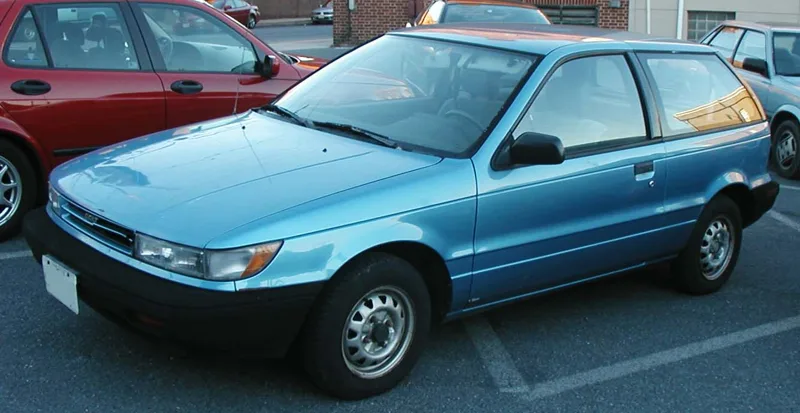
The Mirage first went on sale in March 1978 as a three-door hatch with front-wheel drive, a direct answer to the oil shock of 1973. The longer five-door body followed in September, and the car was usually sold overseas as the entry-level model, since most markets lacked the Minica kei car.
The Mirage had four-wheel independent suspension, rack and pinion steering and front disc brakes. Power came from 1,244 and 1410 cc iterations of the Orion engine, producing 72 and 82 PS (53 and 60 kW), and the 1410 cc unit used modulated displacement to shut down cylinders at cruise or idle.
Mitsubishi added the 1.6-litre Saturn engine in March 1979 for the 88 PS (65 kW) 1600 GT. The Mirage also introduced the Super Shift gearbox, a four-speed manual with a second lever that made the transmission effectively eight-speed, which was not part of the original plan.
How did the Super Shift gearbox work?
The Mirage's transverse engine made the gearbox sit beneath it, and that layout meant power had to be taken down from the clutch in a way that spun the gearbox the wrong way. Engineers added an idle transfer shaft to solve the problem, which proved to be a useful opportunity to build a second gearbox.
The shaft became a separate two-speed unit controlled by a second lever beside the main shift. Its ratios were underdrives, marked as a power mode, while the higher overdrive setting was labelled economy. Mitsubishi called the feature a unique selling proposition in its market.
What changed with the 1982 facelift?
In February 1982 Mitsubishi facelifted the range with flush headlamps that extended into the fender panels, a new grille insert, larger tail lights and firmer engine and transmission mounts. The dashboard also gained rotating satellite buttons for light and wiper functions.
The facelift brought a four-door sedan to Japan under the Mirage Saloon and Lancer Fiore names. The Fiore was often shortened to Lancer or Lancer F in export markets, and it used the same 1.2- and 1.4-litre engines as the hatchback.
A turbocharged 105 PS (77 kW) version of the 1.4-litre engine appeared as the 1400 GT Turbo, with a compression ratio of 8.7 to 1 and a knock sensor to handle different fuels. It used a hood intake, firmer suspension and equal-length driveshafts to reduce torque steer.
How did the Mirage sell in North America?
Chrysler brought the first-generation car over from late 1978, badged as the Dodge Colt and Plymouth Champ for the 1979 model year, initially as a three-door only. The Plymouth Colt GTS Turbo used a fuel-injected 1.6-litre 4G32T engine, though the car's 0-60 time was over 12 seconds.
Mitsubishi itself did not sell the Mirage in the United States until the 1985 model year. The Colt name was already used by Dodge and Plymouth, and Lancer was in use on an unrelated Dodge, so Mitsubishi kept Mirage and licensed the name from Grand Touring Cars of Scottsdale, Arizona, for a 25-year term.
The 1985 Mirage was offered in Base, L, LS and Turbo trim, priced a few hundred dollars below Dodge and Plymouth equivalents. By 1988 only the Turbo Sport hatchback and a naturally aspirated four-door sedan remained, as the Mitsubishi Precis replaced the basic hatchback.
What did the second-generation Mirage bring?
The second generation arrived in Japan in 1983 and split the range again into Mirage hatchbacks and sedans, plus Lancer Fiore sedans. A station wagon came in 1985, and a four-wheel-drive wagon with the 1.8-litre engine followed in the autumn of 1986.
Uprated engines included 1.3 and 1.5-litre Orion units replacing the earlier 1.2 and 1.4-litre engines, along with 1.6 and 1.8-litre Sirius petrol engines and a 1.8-litre Sirius diesel. The 1.6-litre Sirius also came as a turbo, producing between 105 PS (77 kW) and 125 PS (92 kW).
In October 1986 the Japanese sedans and hatchbacks were rebadged Mirage NOW, with better equipment and a revised range topped by the mildly sporty X1 X. The Marion version, aimed at young female buyers, was a three-door with the 1.3-litre engine, and the hatchback was replaced in October 1987.
What was the third-generation Mirage?
Mitsubishi introduced the rounder third-generation Mirage in Japan in October 1987, with Masaru Furukawa heading the design and Yasukichi Akamatsu as chief engineer. The three-door hatchback arrived first, followed by a sedan in January 1988 with near-vertical rear glass, and a five-door liftback in June 1988.
Engines included 1.3 and 1.5-litre Orion four-cylinders and a 1.8-litre Saturn four. The top Japanese models were called the Cyborg, with a turbocharged 1.6-litre engine developing 145 PS (107 kW), the same unit fitted to the Lancer GSR liftback.
A September 1989 facelift brought modernised engines, and the turbocharged 4G61 reached 160 PS (118 kW) at 6000 rpm. Two more facelifts followed in October 1990 and 1992, with the final update reserved for the liftback and its front end resembling the next-generation sedan.
How did the Mirage perform in the late 1980s?
The European range included 1300 EL and GL models, 1500 GL, GLi and GLX versions and 1800 GTi-16V and diesel models. The three-door was called Colt while the sedan and liftback were Lancer, and German buyers could choose a 60 PS version of the catalysed 1.3-litre engine for lower insurance.
In North America the 1989 to 1992 Mirage was sold as a three-door and sedan, with the Dodge and Plymouth Colt and Eagle Summit as badge-engineered siblings. The Mirage Turbo had a 1.6-litre 4G61T rated at 135 hp, but only about 900 were sold in its one model year.
What was the fourth-generation Mirage?
In October 1991 the fourth-generation Mirage made its debut for Japan with a much rounder body. The hatchback and sedan kept the Mirage name, a new Asti coupe was added, and the Lancer sedan adopted more angular styling that set it apart from the Mirage.
The entry-level Mirage R was powered by a 1.6-litre DOHC engine making 145 PS, while the MIVEC version made 175 PS and was called the Mirage Cyborg or RS. The 1.8-litre turbo engine made between 195 and 205 PS and powered the Lancer GSR and its all-wheel-drive system.
In November 1992 a Group A rally homologation model, the Lancer GSR Evolution, arrived with a turbocharged 2.0-litre 4G63T engine. In March 1993 the Libero EV wagon followed, with a lead-acid battery, a range of 165 km (103 mi) at 40 km/h and a run of 36 units for government agencies and large companies.
How did the Mirage travel to Proton and other markets?
Mitsubishi granted Proton of Malaysia a licence to the fourth-generation design from 1993, and the sedan was badged Wira from 1993 to 2007. A Proton-designed five-door Wira Aeroback followed, along with the three-door Satria and the Putra coupe, and Proton's coupe utility, the Arena, arrived in 2002.
In Australia the fourth generation was sold as the CC series Lancer from late 1992, with coupe, sedan and wagon choices. In the United States the 1993 Mirage sedan and coupe were sourced from Japan, using longer bumpers, and Dodge and Plymouth sold Colts alongside them with Eagle Summit badges.
What was the fifth-generation Mirage?
The fifth-generation Mirage arrived in Japan in October 1995 as part of a rationalised lineup. A three-door hatchback and sedan came first, then a two-door Asti coupe in December 1995, and the sedan grew slightly while the hatchback and coupe shrank by 25 mm of wheelbase.
A classically styled Mirage Modarc hatchback arrived in July 1997 with chrome trim, fog lights and optional alloy wheels. The 1.8-litre turbo model with 205 PS powered the Lancer GSR and Mirage VR-X sedans until 1999, and the Lancer Evolution sat above them.
The Mirage was made in Australia as the CE series from 1996 to 2003, and in the United States it returned for the 1997 model year as a sedan and coupe. Production in Japan concluded in 2003, when the Mirage nameplate was retired worldwide, and Mitsubishi used the Colt name on a new three-door in Europe from 2005.
How did the Mirage return in 2012?
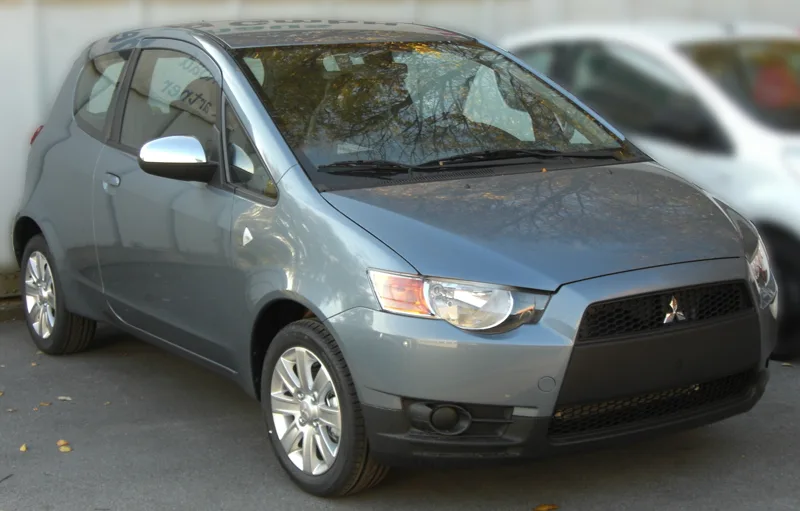
Mitsubishi revived the Mirage name in 2012. The sixth generation first appeared as a concept at the 2011 Geneva show, and production versions were shown at the Tokyo show that same year. The model code is A00, while Australian cars call it the LA.
The Mirage was built at Mitsubishi Thailand's Laem Chabang plant from 19 April 2012, and it was developed as a response to Thailand's Eco Car policy. Its objective was affordability and efficiency, with high-tensile steel and a drag coefficient between 0.27 and 0.31 that gave it one of the lowest figures in its class.
The Japanese version started with a 1.0-litre three-cylinder engine with start-stop and a CVT, achieving 27.2 km/L in the JC08 cycle and priced below 1 million yen. Mitsubishi stopped importing the Mirage to Japan at the end of March 2023, citing type approval problems with its electric power steering and slow sales.
How did the current Mirage fare in reviews?
The current Mirage has been a polarising design. Auto Express and Car Magazine each gave it two out of five stars, while The Motor Report gave it two and a half, and What Car? rated it three out of five for cost and verdict.
Critics often compared it with more expensive cars, but favourable reviews praised its efficiency. Kelley Blue Book gave the 2015 model a 6.2 overall rating, and Forbes named it one of its 12 greenest cars of 2014. In the Philippines it won the 2012 to 2013 Car of the Year award.
What happened to the Mirage G4 sedan?
The four-door sedan version, known as the Attrage or Mirage G4 in some markets, has been made at Laem Chabang since June 2013. It is only offered with the 1.2-litre engine, and it is sold in parts of Western Europe, Singapore, Turkey and Malaysia.
In the Philippines the G4 was launched in October 2013, and in the United States it arrived in spring 2016 as a 2017 model with ES and SE trims. Canada sold the G4 for three model years, from 2017 to 2019, before cancelling it because its sales were low.
What are the Mitsubishi Mirage specifications?
| Generation | Engine | Output | Notes |
|---|---|---|---|
| First (1978) | 1,244 cc Orion | 72 PS (53 kW) | Three-door launch model |
| First (1978) | 1410 cc Orion | 82 PS (60 kW) | Modulated displacement |
| First (1979) | 1.6-litre Saturn, 1600 GT | 88 PS (65 kW) | Super Shift gearbox |
| First (1982) | 1400 GT Turbo | 105 PS (77 kW) | Compression ratio 8.7 to 1 |
| Second (1983) | 1.6-litre Sirius turbo | 105 PS to 125 PS | Electronic fuel injection |
| Third (1987) | Cyborg 1.6-litre turbo | 145 PS (107 kW) | Japanese top model |
| Fourth (1991) | 1.6-litre MIVEC | 175 PS (129 kW) | Mirage Cyborg or RS |
| Fifth (1995) | 1.8-litre turbo | 205 PS (151 kW) | Lancer GSR and Mirage VR-X |
| Sixth (2012) | 1.0-litre three-cylinder | 27.2 km/L (JC08) | Under 1 million yen in Japan |
| Sixth (2012) | 1.2-litre three-cylinder MIVEC | 78 hp after 2017 | Start-stop and CVT |