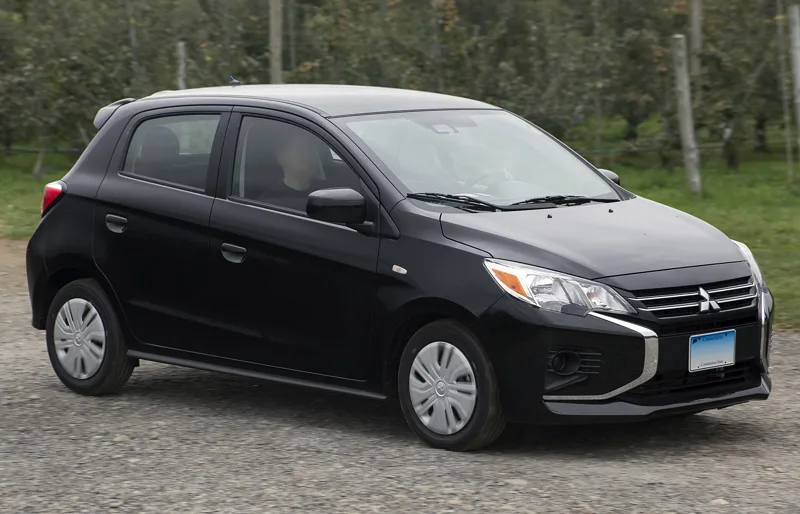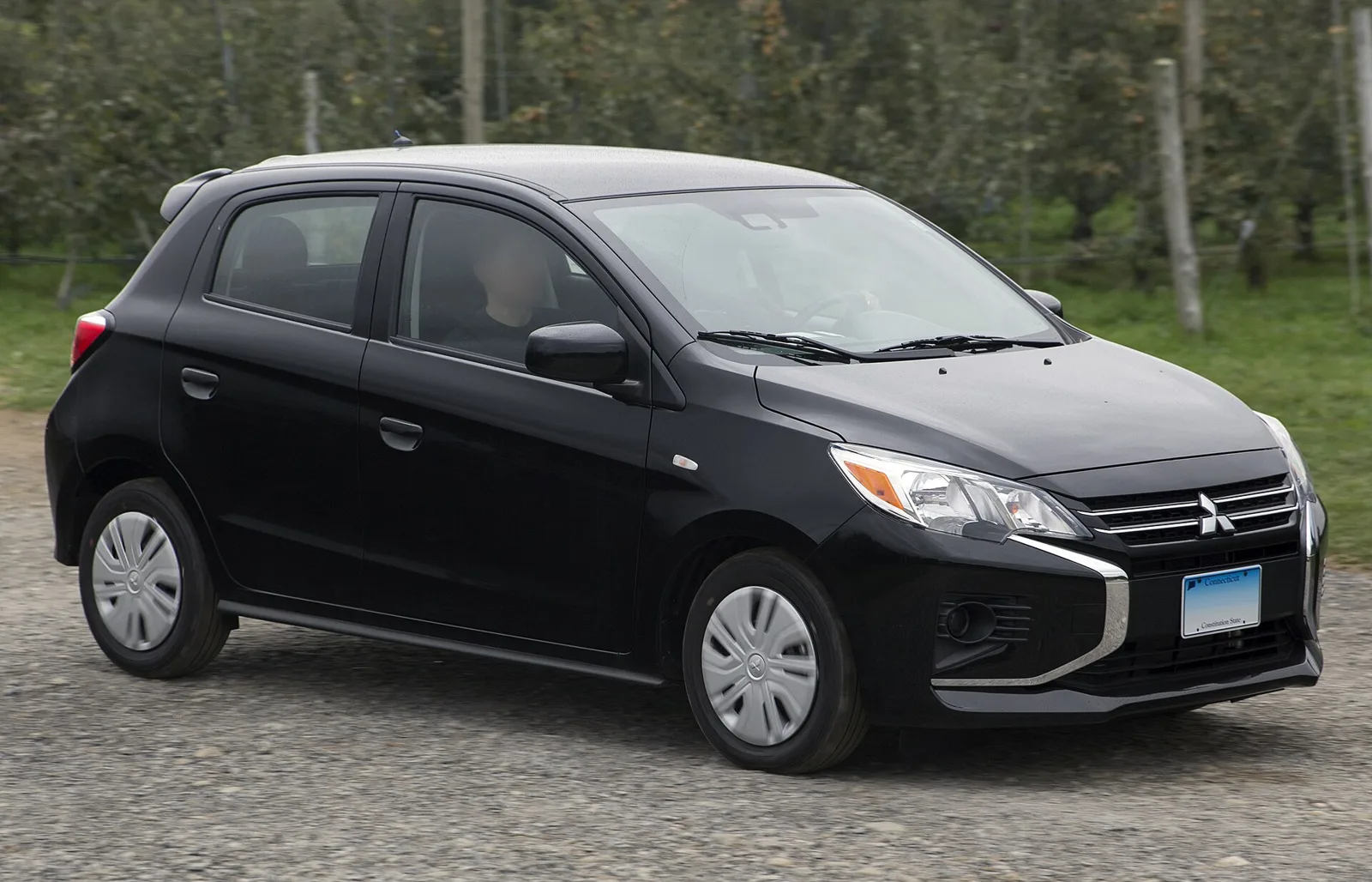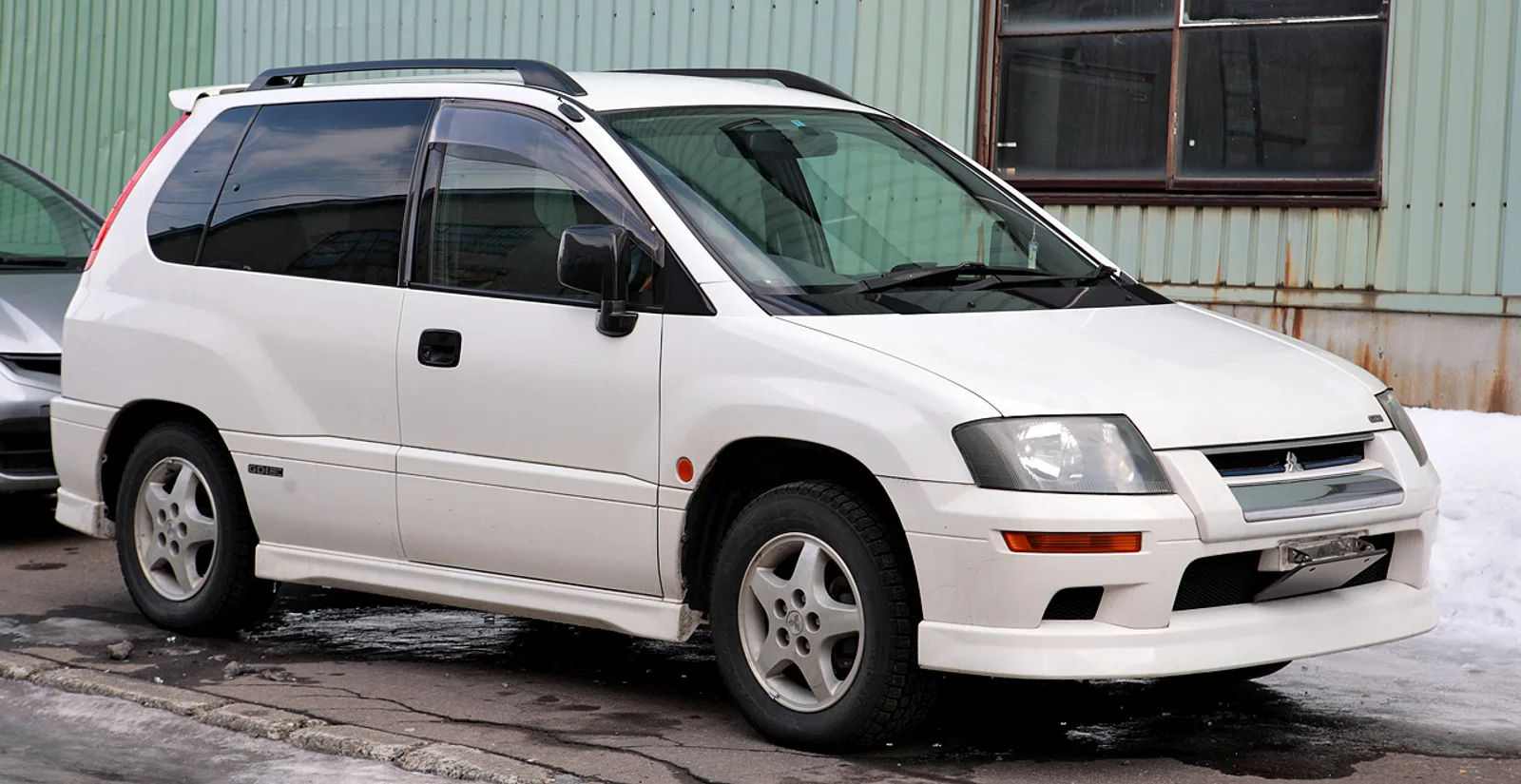
A 1991 recreational wagon built on a shortened Chariot, revived in 2010 as a subcompact SUV for a very different market.
The Mitsubishi RVR is a Japanese compact wagon built from 1991 to 2002, then revived as a subcompact SUV from 2010. Its first two generations were classed as compact multi-purpose vehicles, and the sliding passenger door and tall body helped it win a young audience in Japan.
The RVR was Mitsubishi's first recreational vehicle, a tall wagon that appeared during Japan's bubble economy. Its name stands for Recreation Vehicle Runner. The model has come back twice, first as a compact multi-purpose wagon and later as a subcompact SUV that dropped the sliding door.
What is the Mitsubishi RVR?
The RVR is a Japanese tall wagon with some off-road character, aimed at the outdoor and sports gear crowd. It was sold through Mitsubishi's Car Plaza dealers in Japan and later through export and North American channels. Mitsubishi's own marketing leaned on a youthful image, with cartoon stars in the commercials.
The design targeted the sports gear and outdoor lifestyle market, a position similar to the one Honda took with the CR-V. The RVR sold especially well at first, even as the recreational vehicle boom faded in Japan. Sales declined later, and the original car was discontinued in August 2002.
A tall wagon built for weekend outings that later became a subcompact SUV with conventional doors.
How was the first-generation RVR built?
The first-generation RVR, introduced in February 1991, was a compact MPV built until 1997. It was essentially a Mitsubishi Chariot whose chassis was 20 cm (7.9 in) shorter, and it carried two rows of seats with a sliding door on the passenger side.
The tall wagon layout can be traced to a 1978 Lancia Megagamma concept by Italdesign. The sliding door of Mitsubishi's car fastened to a B pillar, unlike the Toyota and Nissan equivalents. Unlike the longer Chariot, the rear windows could not wind down; they were hinged to open forward.
The fuel filler door sat on the right side in every version sold abroad. On left-hand-drive cars, where the sliding door was also on the right, an interlock stopped that door opening too far while the filler door was open.
Seating and load space
The standard rear bench was fixed for three people, and its seatbacks split 50:50. The seatbacks could be folded flat, and the cushion lifted forward, leaving a flat floor for large items. With the whole bench out, the floor stretched from the front seatbacks to the tailgate.
An optional sliding bench gave rear passengers extra leg room. Slid fully forward, with the seatbacks laid flat, it opened a larger load area. The arrangement made the RVR practical for families and for owners who wanted to carry gear to a trail or a beach.
What engines did the RVR use?
The first generation launched with a naturally aspirated 2.0-litre or 1.8-litre petrol engine, and a turbodiesel option came later. The sportier variants used a detuned turbo version of the 4G63 engine, also found in the Lancer Evolution. The most powerful model, the Hyper Sports Gear, arrived in January 1997.
| Specification | Detail |
|---|---|
| Launch | February 1991 (first generation); 1997 (second); 17 February 2010 (third) |
| Original engine | 2.0-litre or 1.8-litre petrol, naturally aspirated |
| Turbo engine | 4G63T 2.0-litre DOHC turbo, 228-247 hp (231-250 PS; 170-184 kW) under JIS |
| North American engine | 2.4-litre 4G64, 135 hp (101 kW), 2,351 cc |
| Second-generation width | 1,780 mm (70.1 in) with the 2.4-litre; 1,695 mm (66.7 in) with the smaller engines |
| Original RVR ended | August 2002 |
The Hyper Sports Gear R package in Japan borrowed the drivetrain of the first Galant VR-4, pairing the 2.0-litre turbo with either a four-speed automatic or a five-speed manual. Four-wheel-drive versions used open front and rear differentials. Automatic shift lock worked mechanically through a link to the brake pedal, so the battery did not affect it.
Which grades and special editions followed?
Three grades were offered at launch: S for two-wheel drive, and R or X for four-wheel drive, all available with manual or automatic gearboxes. The 1.8-litre Z joined in June 1991, Sports Gear arrived in October 1992, and a diesel four-wheel-drive Z was added the same month.
Special editions came steadily through the first generation's life. The Z Special Version of May 1993 added roof rails, a grille guard and keyless entry. Several more followed, and the Sports Gear models finished the decade with the Hyper Sports Gear Z and Hyper Sports Gear R in January 1997.
What was the Expo LRV in North America?
On the North American market, the RVR went by the Expo LRV name, short for Light Recreational Vehicle, from 1991 to 1995 alongside the larger Expo. Chrysler also sold rebadged versions as the Dodge and Plymouth Colt Vista Wagon and the Eagle Summit Wagon, which ran for model years 1992 to 1996.
The Expo LRV used a 2.4-litre 4G64 or a 1.8-litre 4G93 four-cylinder, with front-wheel or all-wheel drive, and no diesel was offered. The Chrysler wagons shared little beyond the nameplate, since they were rebadged Mitsubishi Mirage and Lancer models. The Summit Wagon came in DL and LX trims, and was pitched as a small car with minivan roominess.
How did the second generation change the RVR?
The second generation arrived in 1997 and split into a more minivan-like RVR GDI and a sportier RVR Sports Gear. Because the Sports Gear's bumpers and fender extensions made it too large for the compact class in Japan, it fell into a higher tax group. This generation never reached North American showrooms, Mexico aside.
A significant facelift mirrored the look of the Chariot Grandis, which was selling strongly in 1999. Standard cars were called X, later renamed Exceed, and used a 1.8-litre petrol engine. The Sports Gear was offered with a 2.4-litre GDI unit or the turbocharged 2.0-litre 4G63.
Cars with the 2.4-litre engine measured 1,780 mm (70.1 in) across and paid extra annual tax in Japan, while the smaller-engined cars were 1,695 mm (66.7 in) wide to avoid it. The top Sports Gear X3 had a leather-wrapped steering wheel, shift knob and self-levelling xenon headlights. In Europe the car was restyled and sold as the Space Runner.
In February 1999 a Fishing Gear package appeared for the whole range, aimed at anglers, especially bass fishers. It included a built-in refrigerator, a rod stand and holder, a roof box, extra lights and water-repellent seat covers.
Why did the third generation become a subcompact SUV?
The third-generation RVR, first released in Japan on 17 February 2010, was a subcompact SUV rather than a wagon. It was sold as the ASX in most markets and as the Outlander Sport in the American market, plus Argentina, Brazil and Indonesia. The RVR name itself was used only in Japan, South Korea and Canada.
The look came from the Concept-cX prototype, unveiled in July 2007 at Frankfurt's 62nd motor show. Fuel economy and low emissions were the priorities, in line with a shift towards smaller, efficient cars and away from the large SUVs behind the company's earlier success.
The sliding rear door did not return. The 2010 car was built on the reasoning that SUVs are expected to have conventional doors, while sliding doors suit family vehicles. The revived name was intended to carry over some of the first car's popularity.