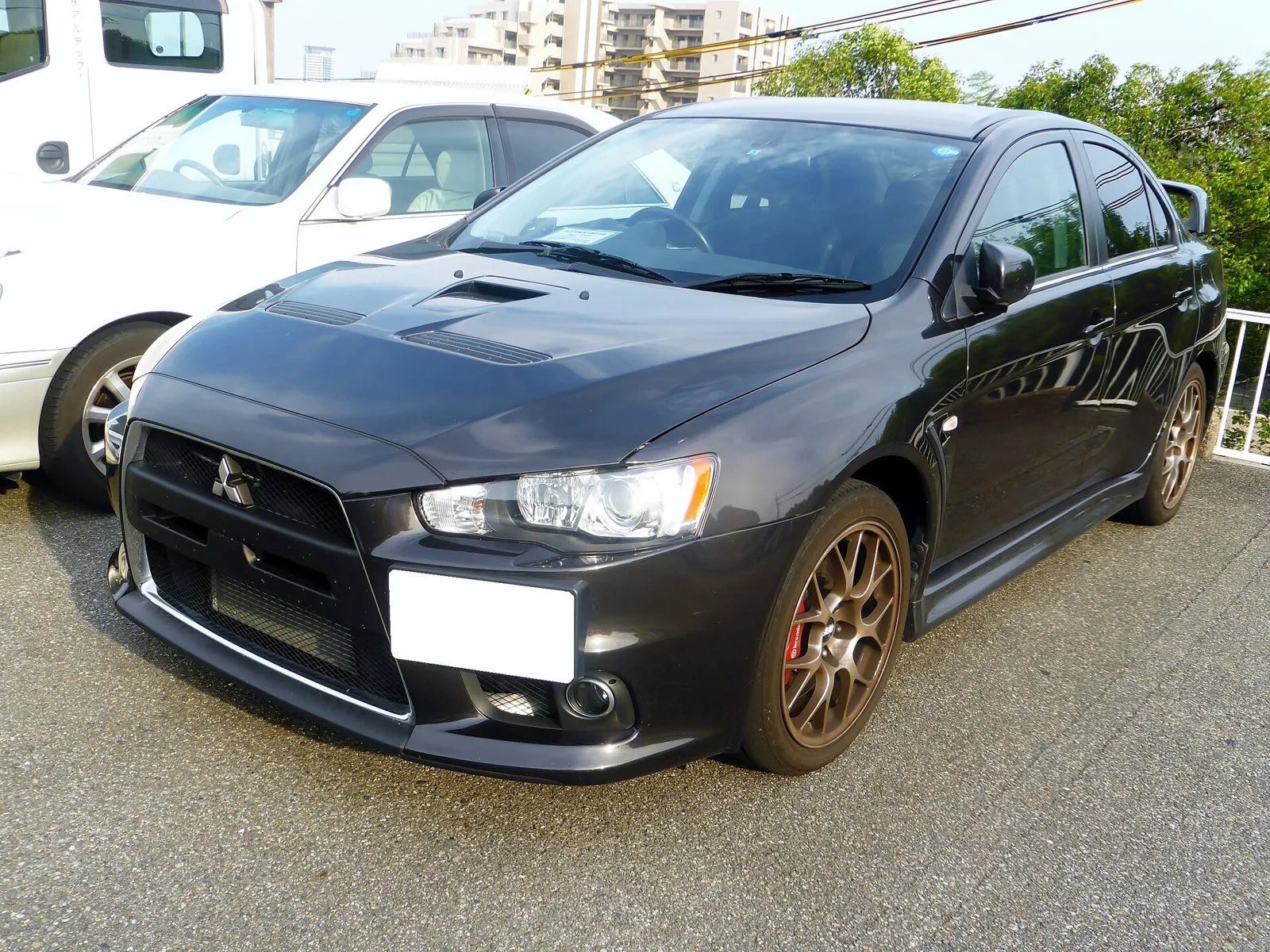
The tenth and last Evo, from the 280 PS Japanese launch car to the 446 PS UK special: engines, gearboxes, market versions and the send-off editions.
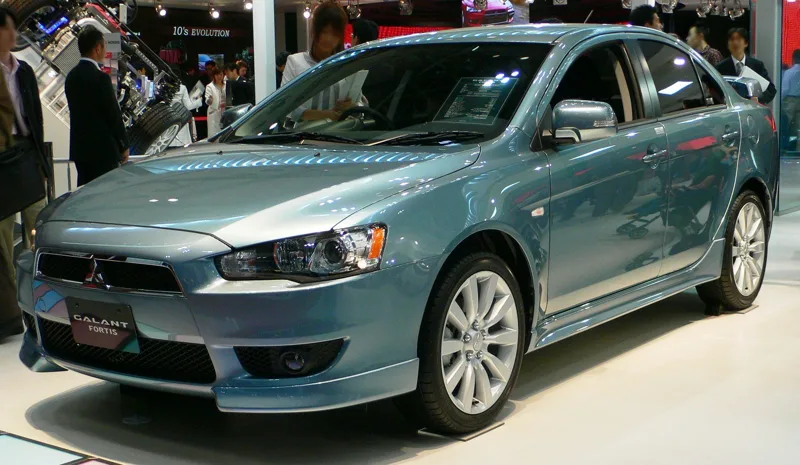
The Mitsubishi Lancer Evolution X was the tenth and last Lancer Evolution, launched in Japan on 2 October 2007. It used a 2.0-litre turbocharged 4B11T engine with S-AWC four-wheel drive and a five-speed manual or six-speed twin-clutch gearbox. Power ranged from 280 PS in Japan to 446 PS in a UK special.
Japanese makers once agreed to pretend their fastest cars made no more than 280 PS (206 kW; 276 hp), and the Lancer Evolution was the most famous victim of that polite fiction. The tenth and last Evolution launched at exactly that figure in Japan in 2007. By the time the line ended, a Mitsubishi special edition in Britain was officially rated at 446 PS (328 kW; 440 hp). In between lay the most varied run of versions any Evo produced, with something different for almost every market.
How did the Evolution lead up to the X?
The Lancer Evolution was built from 1992 until 2016, in ten official versions, each usually known by a Roman numeral. It began as a Japanese-market special, though demand for grey imports led Mitsubishi to sell the car through Ralliart dealers in Britain and parts of Europe from around 1997 with the Evolution IV. In the US, the Evolution VIII went on sale in 2003, after Subaru's success there with the Impreza WRX the previous year. Some European markets saw the IV to VII sold as the Carisma GT, and Proton rebadged several of them for rallying.
The first car, in 1992 and 1993, put the turbocharged two-litre and all-wheel drive from the Galant VR-4 into a Lancer body. It made 250 PS (184 kW; 247 hp), reached 228 km/h (142 mph) and sold about 5,000 units. The stripped-out RS shed about 70 kg (154 lb) from the GSR, which weighed 1,238 kg (2,729 lb). The Evolution II, in production from December 1993 to February 1995, took power to 260 PS (191 kW; 256 hp). The III arrived in February 1995 with 270 PS (199 kW; 266 hp) and a larger turbocharger compressor, and 10,080 were built, of which 8,998 were GSRs and 1,082 RS models.
The IV of 1996 changed the layout, turning the engine and transaxle through 180 degrees to improve balance and remove torque steer. A twin-scroll turbo lifted output to 280 PS at 6,500 rpm with 353 N-m (260 lb-ft), and the GSR gained Active Yaw Control, which used steering, throttle and g sensors to vary the torque going to each rear wheel. Mitsubishi had planned only 6,000 and sold them all in three days. It was also the last Evolution that counted as compact under Japanese dimension rules.
The Japanese 280 PS ceiling was a gentleman's agreement among manufacturers, and it lasted until the Evolution IX of 2005. Many suspected that real outputs sat above the advertised ones; the IX was said to reach about 320 PS (235 kW; 316 hp) in Japan.
Launched at 280 PS to honour a gentleman's agreement, the last Evo ended with a 446 PS special for Britain.
Where did the Evolution X come from?
The new car's story began with the Concept-X, shown at the 39th Tokyo Motor Show in September 2005 and designed by Omer Halilhodzic at Mitsubishi's European design centre. A second concept, the Prototype-X, followed at the 2007 North American International Auto Show. The production Evolution X went on sale in Japan on 2 October 2007, with the Twin Clutch SST version available from November. The United States followed in January 2008, then Canada in February as the first Evolution ever sold there, and the UK by March. Other European countries began in May.
The 2010 MR-Touring moved the car further upmarket. Leather and a moonroof became standard, and the big wing gave way to a simple lip spoiler.
What was under the bonnet?
Every Evolution X used the 4B11T, a turbocharged all-aluminium inline-four of two litres. The Japanese car also used aluminium for the roof panel, bonnet, front wings and the frame of the rear spoiler. Output depended on the market, though no version made less than the 280 PS of the Japanese launch car, which delivered 422 N-m (311 lb-ft) at 3,500 rpm and reached 100 km/h from rest in 4.5 to 4.7 seconds. After the old 276 hp agreement was repealed, Japanese output went up to 300 PS (221 kW; 296 hp) from the 2009 model year.
North American cars were rated at 295 PS (217 kW; 291 hp) with 407 N-m (300 lb-ft) at 4,400 rpm. Mainland Europe also had 295 PS, but with 366 N-m (270 lb-ft) at 3,500 rpm, and Mitsubishi quoted 0-100 km/h in 4.8 seconds for a car weighing 1,560 kg (3,439 lb) and 4.9 seconds at 1,600 kg (3,527 lb). Australia and New Zealand used the same 295 PS and 366 N-m.
How did the drivetrain work?
The Evolution X introduced S-AWC, or Super All Wheel Control, a full-time four-wheel-drive system that built on the AWC layout of earlier generations. It used torque vectoring to send varying amounts of drive to the rear wheels. Two gearboxes were on offer: a five-speed manual, and a six-speed SST dual-clutch automatic with magnesium alloy paddles on the steering column. The SST replaced the Tiptronic automatic of earlier cars and took the place of the GT-A that had been fitted to the Evolution VII and the IX Wagon. The body used Mitsubishi's next-generation RISE safety structure.
What did Japanese buyers get?
The entry-level Japanese RS had a five-speed manual and 16-inch wheels. The GSR was the core model, with a standard spoiler, the manual or SST gearbox, 245/40R18 Yokohama Advan A13C tyres on Enkei 12-spoke wheels (BBS lightweight alloys were optional), ventilated Brembo discs, standard S-AWC and dual-stage front airbags. An immobiliser and alarm were fitted, and options included the MMCS audio and navigation system with a 30 Gb hard disk and 7 in (177.8 mm) screen, a Rockford Fosgate sound system and keyless remote entry.
Buyers could add packages to a GSR. The High Performance pack brought Bilstein single-tube dampers, Eibach springs, two-piece Brembo discs and stiffer-sidewall tyres. A Stylish Exterior pack added a chrome grille lattice, body-coloured fender vents and fog lamps, and a Leather Combination Interior matched seat colour to the paint. The Premium Package bundled all three with 18 in (457 mm) BBS wheels, and from the 2009 model year the GSR-Premium replaced it and added the MMCS and Rockford Fosgate audio.
Mitsubishi Ralliart Japan relaunched its tuned GSR in 2007 as a limited edition. It came with a five-speed manual, black forged one-piece 18-inch Ralliart RA04 wheels on Yokohama Advan Neova AD08 tyres, a carbon fibre front under-spoiler, a bonnet air dam and a bumper intake duct, plus a retuned intake and exhaust. The Recaro-developed full bucket seat and official Ralliart livery completed the picture. The 4B11T in that car delivered 300 bhp (304 PS; 224 kW) or more.
What was sold in North America?
The US range was built round two cars. The GSR had a five-speed manual and the large spoiler, and the MR added the six-speed TC-SST, Eibach springs, Bilstein struts, 18-inch BBS forged wheels, xenon headlamps, leather and suede seats, keyless entry and start, steering-wheel audio controls and a Bluetooth phone link with voice recognition. The MR Premium added a nine-speaker Rockford Fosgate navigation and stereo system. The 2010 MR Touring swapped the big wing for a lip spoiler and added full leather with heating, better interior trim and a power sunroof in a steel roof.
The SE, sold from late 2010 into 2011, pulled the 2010 models together: the GSR grille and interior, MR rear diffusers, the TC-SST gearbox, the same Eibach and Bilstein suspension, the Touring's lip spoiler with its heated seats. Just 340 were made for the US, and buyers received a key fob carrying the car's series number and a letter of thanks from Shin Kurihara. From 2011 the big rear spoiler was standard on every US model.
Option packs varied by model. The Sight, Sound and Spoiler pack for the GSR bundled xenon headlamps, the large wing, keyless entry and a 750-watt Rockford Fosgate system with a six-disc changer. Canadian GSR buyers had a handling pack with Bilstein dampers, Eibach springs, two-piece front rotors and forged BBS wheels. MR and MR Touring owners could order a Technology Package with GPS navigation, a hard disk music server and a 7 in (177.8 mm) touchscreen.
How did the UK and Europe differ?
UK cars kept the Evolution X name but were reworked by Mitsubishi UK under the FQ badge, a tradition from earlier MR Evolutions. The GS was the base car, a Japanese-spec GSR with a five-speed manual, Enkei or BBS wheels and Rockford Fosgate audio. The SST version carried three modes for the gearbox: normal, sport and super sport.
The FQ numbers tell the story. The FQ-300 matched other markets at 295 PS, with 407 N-m. The FQ-330, released in 2009, produced 329 PS (242 kW) and 437 N-m (322 lb-ft). The FQ-360 stepped up to 359 PS (264 kW; 354 hp) and 492 N-m, with a carbon fibre front lip spoiler, a rear vortex generator and Recaro leather seats.
The FQ-400 was a different animal. Its 409 PS (301 kW; 403 hp) and 525 N-m (387 lb-ft) came with a five-speed manual, six-piston brake calipers, 18-inch wheels on Toyo Proxes R1R tyres and an aero kit with extra cooling intakes and a larger bonnet vent. Mitsubishi expected to build about 100. It was estimated to reach 100 km/h in 3.8 seconds, was limited electronically to 249 km/h (155 mph) and listed at GBP 49,999. Then in 2014 came the FQ-440 MR: 446 PS at 6,800 rpm, 559 N-m (412 lb-ft) at 3,100 rpm, a six-speed TC-SST, Frost White paint only, a price of GBP 50,000 and just 40 units.
On the Continent, the GSR was offered with either the five-speed manual or the TC-SST, while the MR was TC-SST only, with Bilstein and Eibach suspension, forged BBS wheels, xenon headlamps and the Multi Communication System.
What about Brazil, Australia and Asia?
Brazil received the car in 2008 and sold it only with the twin-clutch gearbox. The GSR there had 18-inch BBS wheels, Recaro seats and a 7-inch multimedia system. The Carbon Series, limited to 40 units, added carbon fibre bonnet vents, mirrors, a rear extractor and a ducktail spoiler, with graphite wheels. The last Brazilian car, the 2015 John Easton Edition, was made for that market with 340 PS (335 bhp; 250 kW) and 475 N-m (350 lb-ft), a red-outlined grille and a limit of 100 cars.
In Australia and New Zealand, the GSR came with the manual or the TC-SST, and the MR added two-piece front brakes, an aluminium rear spoiler, self-levelling xenon lamps, leather and heated seats. Team Mitsubishi Ralliart Australia produced the Bathurst Edition, rated at 336 PS (247 kW) with 436 N-m. It was the most powerful Evolution X to be sold new in Australia, was made in a run of 100 cars with a choice of manual or TC-SST, and carried the factory warranty.
Elsewhere, Singapore offered the RS with a manual, the Japanese-spec GSR and a GSR SST. The Philippines received the car in November 2008 in GSR and MR forms matching the US versions, without the MR Touring or the Technology Package. Malaysia sold the car only with the TC-SST, and in 2009 the Royal Malaysian Police bought a fleet of manual-gearbox cars for high-speed pursuit work.
What was the Final Edition?
In 2014 Mitsubishi confirmed the Lancer Evolution would stop after the 2015 model year, and it built a send-off model on the GSR, which meant the five-speed manual was compulsory. A black roof, special badges, a numbered plaque on the centre console and darker Enkei wheels set it apart, and power rose from 291 hp to 303 hp.
Japan received 1,000 cars. In Australia, 150 were delivered, with a further 30 for New Zealand. Those cars made 226 kW (307 PS) and 414 N-m of torque, and they came with black leather Recaro seats stitched in red, 18-inch BBS wheels, Bilstein and Eibach upgrades and Brembo brakes. North America took 1,600 US cars and 350 Canadian ones, with a black-painted aluminium roof and an all-black interior with red stitching. Mitsubishi retired the Lancer Evolution in April 2016, ending nine years of Evolution X production.
Mitsubishi Lancer Evolution X specifications at a glance
| Market and version | Output and torque | Notes |
|---|---|---|
| Japan, launch | 280 PS (206 kW; 276 hp) at 6,500 rpm; 422 N-m (311 lb-ft) | 0-100 km/h in 4.5 to 4.7 seconds |
| Japan, from 2009 | 300 PS (221 kW; 296 hp) at 6,500 rpm | After the 276 hp agreement was repealed |
| North America | 295 PS (217 kW; 291 hp); 407 N-m (300 lb-ft) | GSR five-speed manual; MR six-speed TC-SST |
| Europe, Australia, New Zealand | 295 PS (217 kW); 366 N-m (270 lb-ft) | Europe 0-100 km/h in 4.8 to 4.9 seconds |
| UK FQ-330 | 329 PS (242 kW; 324 hp); 437 N-m (322 lb-ft) | Released in 2009 |
| UK FQ-360 | 359 PS (264 kW; 354 hp); 492 N-m (363 lb-ft) | Carbon fibre lip spoiler, Recaro seats |
| UK FQ-400 | 409 PS (301 kW; 403 hp); 525 N-m (387 lb-ft) | Five-speed manual; about 100 planned |
| UK FQ-440 MR | 446 PS (328 kW; 440 hp); 559 N-m (412 lb-ft) | 2014; 40 units |
| Australia, Bathurst Edition | 336 PS (247 kW); 436 N-m (322 lbf ft) | 100 units |
| Brazil, John Easton Edition | 340 PS (250 kW); 475 N-m (350 lb-ft) | 2015; 100 units |
| Final Edition, US and Canada | 303 hp (307 PS; 226 kW); 414 N-m (305 lb-ft) | 1,600 US and 350 Canadian cars |