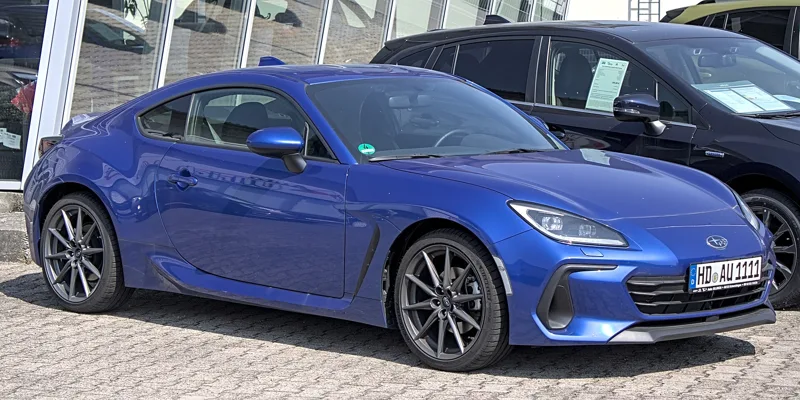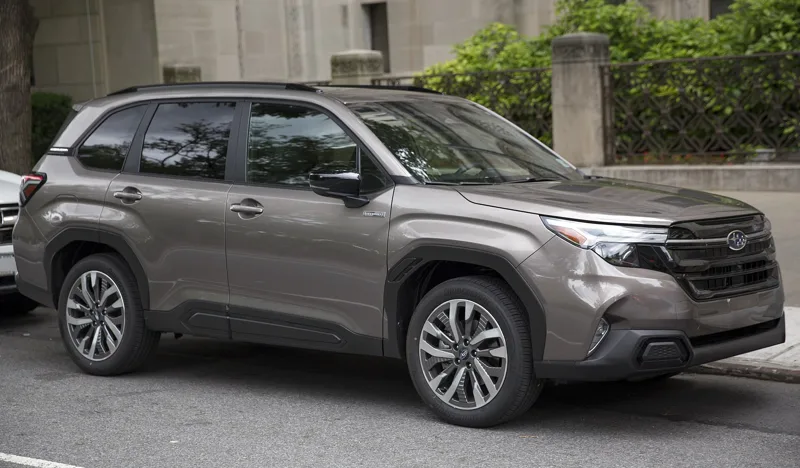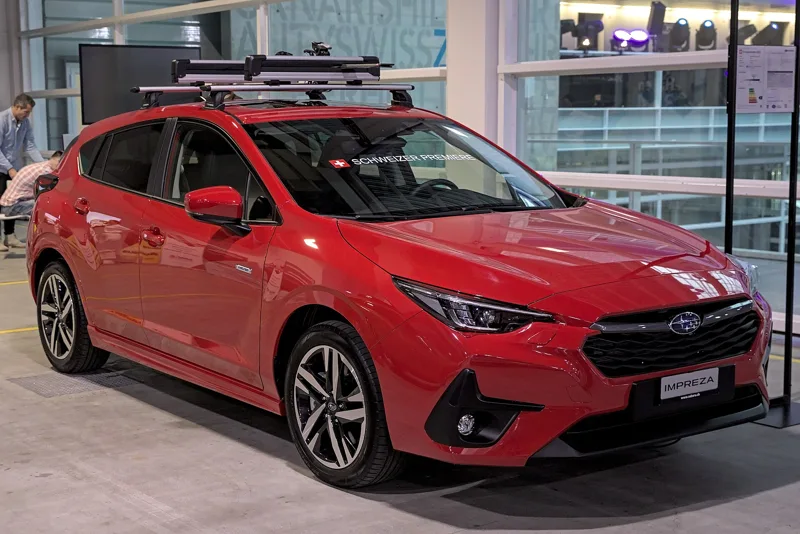
Rally roots, STI special editions and turbocharged boxer engines that carried the badge from the Impreza into its own model line.
The Subaru Impreza WRX is an all-wheel drive sport sedan that began as the Impreza-based road car for the World Rally Championship. It became a standalone model in 2015, and the current VB generation uses a 2.4-litre turbo boxer making 271 hp (202 kW; 275 PS).
The Subaru Impreza WRX began as the road-going counterpart of a rally car built for the World Rally Championship. From the 2015 model year the car stopped carrying the Impreza name and became a standalone performance sedan, keeping all-wheel drive and turbocharged boxer engines at its core. The current second generation VB, revealed in 2021, sits on the Subaru Global Platform.
Where did the Subaru WRX come from?
The WRX grew out of the Impreza, a car Subaru created for the World Rally Championship in 1992. Subaru claimed the letters stand for World Rally eXperimental, and the name stuck to road cars that carried the racing formula forward. The first generation Impreza reached showrooms in November 1992, and the STI version followed in January 1994.
The rally programme shaped the road car from the start. Subaru's motorsport division, STI, had been founded in 1988 to develop and compete in rallying and other motorsport. Its work gave the road cars a performance identity that carried over into every later generation.
A rally-bred turbo boxer that grew into a standalone sports sedan without losing its all-wheel drive character.
How did the STI version fit in?
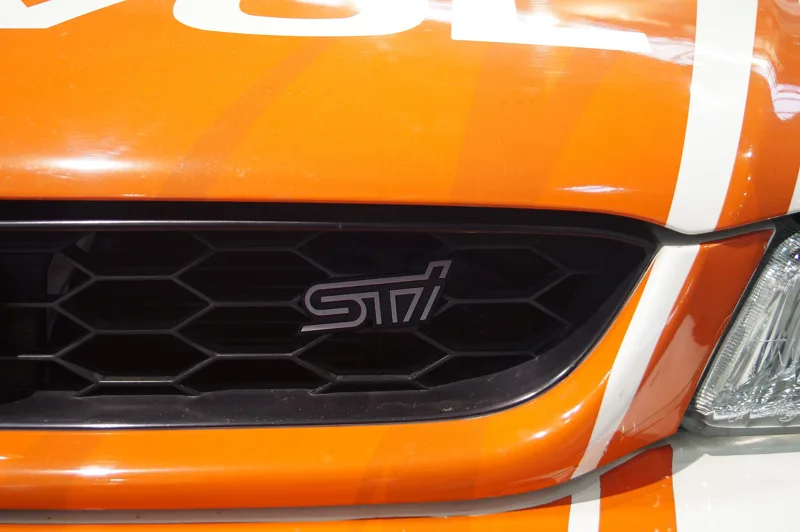
STI, short for Subaru Tecnica International, was founded in 1988 as the motorsport division of Subaru. Its high-performance models came in two forms: fully developed homologation cars sold on the street, and factory-prepared cars fitted with parts from the STI catalogue. The STI badge usually marked the top specification of each Impreza.
Many STI versions were sold only in Japan, while others reached selected world markets. The name became popular with rally drivers, circuit racers and tuners, because the cars made a strong base for competition use.
What changed across the Impreza-based generations?
The first three generations sold until the 2015 model year sat on Impreza platforms. The second generation arrived in the US for model year 2002, with the STI following for model year 2004. Its front end moved from bugeye to blobeye and then hawkeye styling in 2000, 2004 and 2006.
The third generation was offered as a saloon and a hatchback, and later models moved to widebody chassis. A widebody saloon STI was also sold, which made the performance cars wider than the standard Impreza. Each step kept the same basic formula of all-wheel drive, a turbocharged boxer and a sporty chassis.
What engine powered the 2015 WRX?
The 2015 WRX moved to a 2.0-litre FA20F engine with direct injection and a twin-scroll turbocharger, replacing the 2.5-litre EJ of earlier cars. Subaru rated the international version at 268 hp (200 kW) at 5,600 rpm, with 258 lb ft (350 N m) peaking at 2,000 rpm.
The engine's torque curve was broader than the old unit's. The old 2.5-litre EJ peaked at 240 lb ft (325 N m) at 4,000 rpm, so the new unit delivers its peak much earlier in the rev range. A 6-speed TY75 manual was fitted as standard, with a Lineartronic CVT offering 6 or 8 simulated gears as an option.
The WRX STI kept the older EJ engine family, with dual AVCS and a 2.5-litre EJ257 for international models. Its steering rack changed to a quicker 13:1 ratio from the 15:1 of earlier cars, which sharpened the response of the hydraulically assisted system.
How was the 2015 WRX received?
Reviewers were mixed on the 2015 car. It placed second to the 2015 Volkswagen GTI in comparison tests, and critics said its interior felt cheaper and its ride less comfortable. Road tests still recorded 0-60 mph times between 4.8 and 5.5 seconds.
Quarter-mile runs were just as competitive. One test recorded 13.6 sec at 102 mph (164 km/h), while the slowest run was 14.0 sec at 98 mph (158 km/h). Skidpad roadholding landed between 0.92 G and 0.96 G, and braking from 70 mph stopped in 156-166 feet.
Rev hang affected 2015 to 2019 models, which owners raised as a recurring complaint. The EJ257 engine in the STI also had known problems with piston ring and rod bearing failure under certain conditions.
What is the current VB generation?
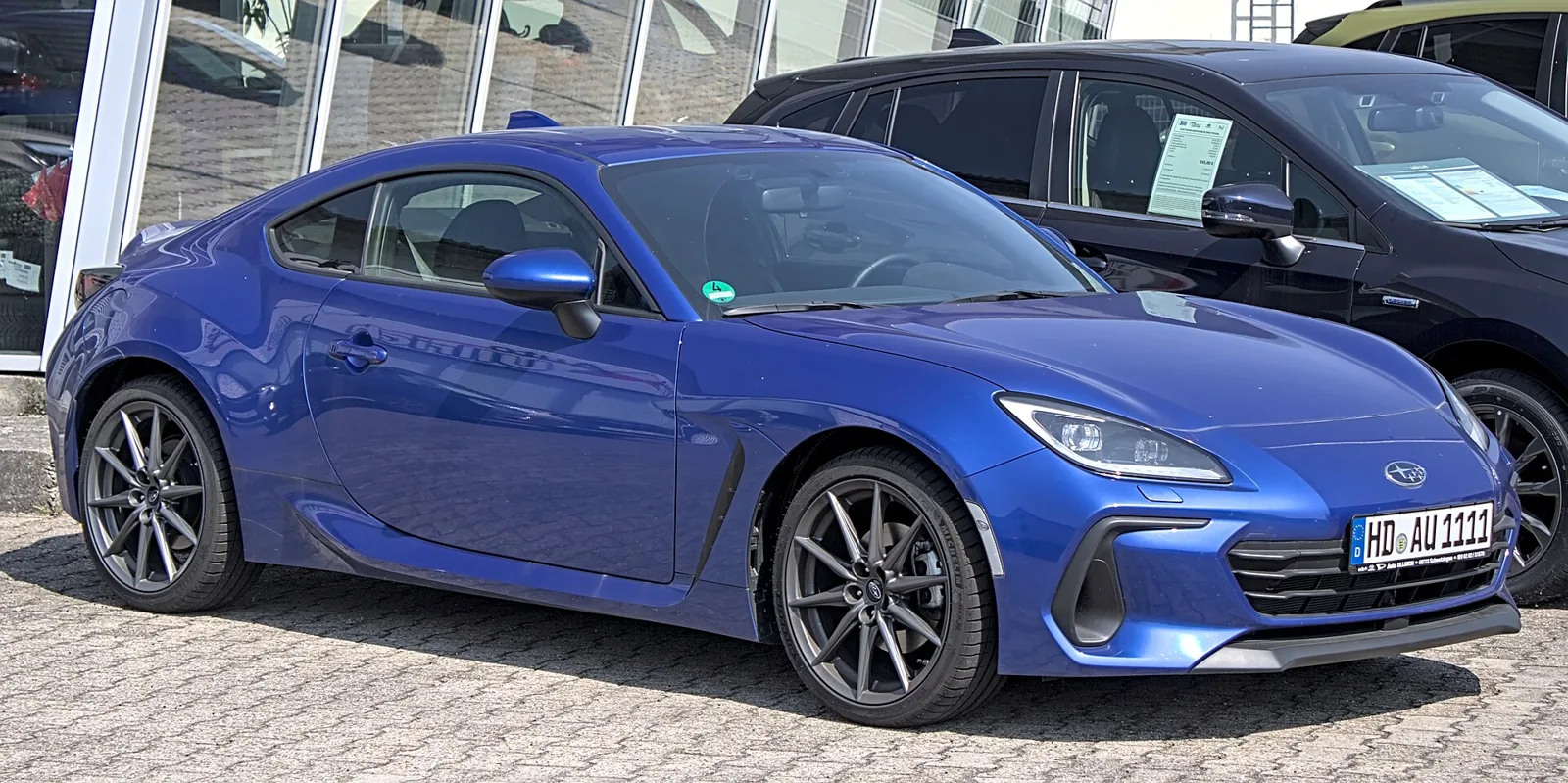
The second generation VB arrived as a standalone model with a 2.4-litre FA24F turbocharged boxer producing 271 hp (202 kW; 275 PS). It uses the Subaru Global Platform and offers a Subaru Performance Transmission CVT or a revised six-speed manual. Japanese buyers received the WRX S4 with a version of the same engine.
Adaptive dampers with Drive Mode Select appeared on the VB, which made them a first for the WRX. The second generation was revealed on 10 September 2021 for North America, with sales starting in February 2022.
Subaru also made a clear statement about the future of the high-performance model. In March 2022 it said it would not sell an internal-combustion WRX STI.
How did the WRX fare in motorsport?
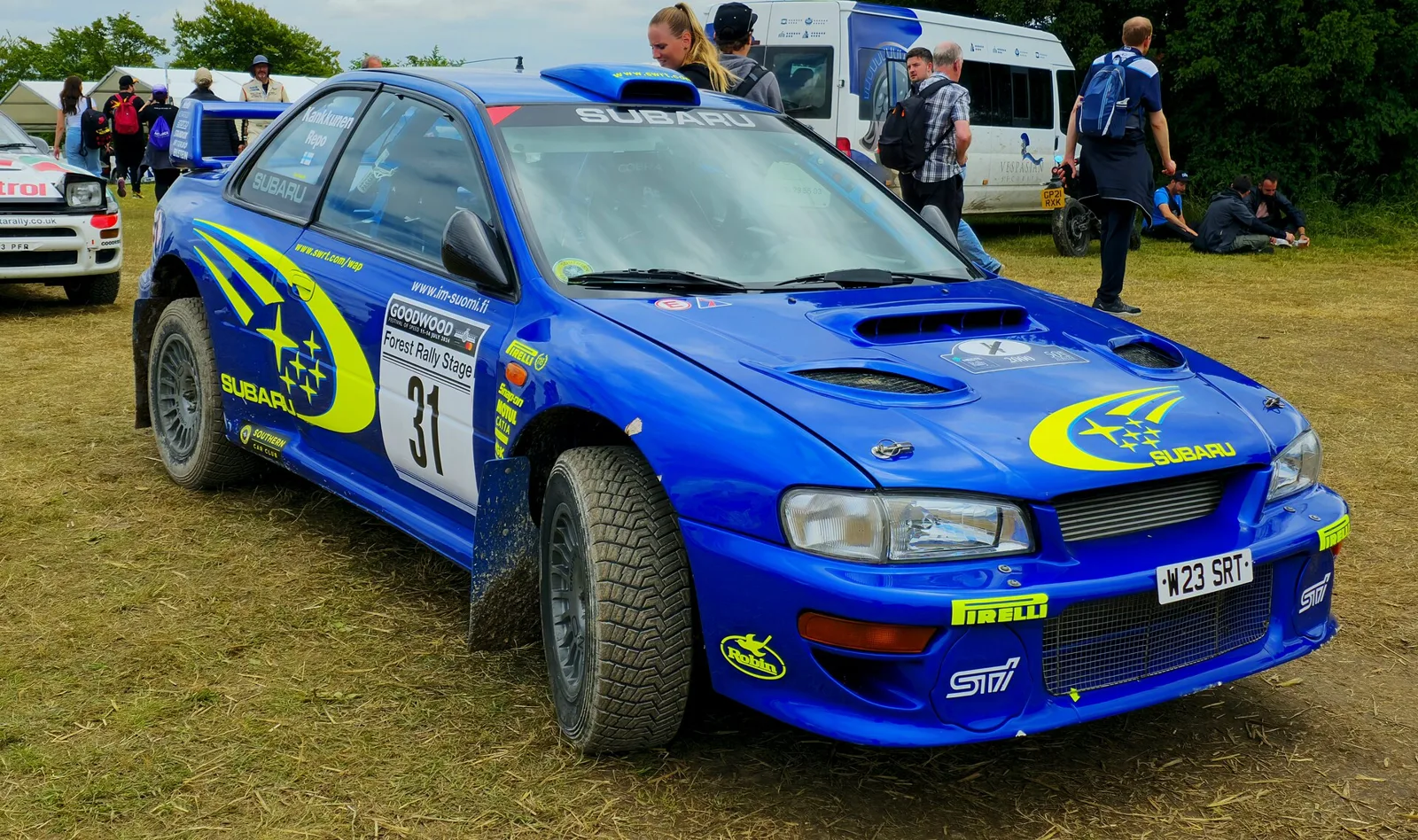
The Impreza WRC won six world rally titles in total, including three consecutive manufacturers' titles and three drivers' titles. The car replaced the Subaru Legacy RS in 1993 and debuted at Rally Finland.The WRC2000 won on its debut at Rally Portugal.
Subaru World Rally Team withdrew from the championship at the end of 2008, during the financial crisis. The WRC2008 had scored its first podium at the 2008 Acropolis Rally before the team left. Its STI-campaigned WRX has continued in endurance racing, and it has won the SP3T class at the Nurburgring 24 Hours six times.
Track records followed the road cars as well. Mark Higgins lapped the Isle of Man TT in 17 minutes, 35.139 seconds in 2016 in a VA WRX STI. Several TCR touring cars based on the WRX STI were developed by Top Run Motorsport and raced in TCR International from 2015 to 2017.
Special editions and limited runs
Subaru built a long run of limited models. The WRX STI Launch Edition offered 1,000 units in North America in 2015, all painted in World Rally Blue Pearl with gold-painted BBS wheels. Japan's S207 was limited to 400 units, with a quicker steering rack and Brembo brakes.
The WRX STI Hyper Blue series gave the US 700 units in 2016, with gloss black BBS wheels and blue stitching inside. The S208 followed in Japan with 450 units in 2017, while the Diamond Edition offered 30 units for Southern Africa in 2018. The Type RA was limited to 500 examples for the US and 75 for Canada.
Later editions were smaller still. Canada received 100 units of the Raiu Edition, priced at $40,995 CAD. The WRX Series.Gray had 750 units in the US for 2019, and the TC380 limited Japanese run stopped at 50 cars. The S209 reached US$64,000 with 209 built, while Series.White offered 500 units for 2020.
The WRX STI Kanrai Edition gave Canada 75 units, and the WRX STI EJ20 Final Edition marked the end of the EJ20 engine with 555 units in Japan in late 2019. The 50th Anniversary Edition for 2018 included 600 WRX units. For 2026 a Series.Yellow model arrived, limited to 350 units.
Key specifications
| Specification | Detail |
|---|---|
| Original basis | Impreza created for the 1992 World Rally Championship |
| Standalone model | From 2015 model year, split from the Impreza |
| 2015 engine | 2.0-litre FA20F turbo, direct injection |
| 2015 output | 268 hp (200 kW) at 5,600 rpm, international |
| 2015 torque | 258 lb ft (350 N m) at 2,000 rpm |
| 2015 gearbox | 6-speed TY75 manual; Lineartronic CVT with 6 or 8 simulated gears |
| Current engine | 2.4-litre FA24F turbo boxer |
| Current output | 271 hp (202 kW; 275 PS); 258 lb ft (350 N m) |
| 0-60 mph (road tests) | 4.8 to 5.5 seconds |
| Quarter-mile | 13.6 sec at 102 mph (164 km/h) |
| Skidpad | 0.92 G to 0.96 G |
| Braking from 70 mph | 156-166 feet |
What is Project Midnight?
Project Midnight is a prototype WRX built by Subaru Motorsports USA and Vermont SportsCar, designed for tarmac speed. Its 2.0 liter flat-four produces 670 horsepower (500 kW), and the car weighs 2,469 pounds (1,120 kg). It debuted in 2024, taking second place in the hillclimb shootout at the Goodwood Festival of Speed.
Scott Speed drove the car at Goodwood, finishing second again in 2025 with a time of 0:45.03. In August 2026 Speed set a new record at the Mount Washington Hillclimb Auto Race with a time of 5:11.89.
How did the Japanese and Canadian line-ups differ?
Japan received its own WRX S4 on 25 November 2021 in GT-H and STI Sport R grades. An EX grade added EyeSight X driver assistance, and the STI Sport R added electronically controlled dampers. Canada sold Base, Sport and Sport-tech trims, with the two upper trims able to take EyeSight.
The wagon was sold in Australia as the WRX Sportswagon and in New Zealand as the WRX GT, from 14 October 2021. It uses the same 2.4-litre turbo boxer as the saloon. It later reached the Philippines in June 2022, Thailand in August 2022 and Singapore in January 2023.
Why did the WRX leave the Impreza name?
Subaru had promised to move the WRX and STI off the Impreza chassis and body. The VA-body car still used a modified Impreza body and chassis, but the Impreza name was dropped in every market. In Japan the car was sold as the WRX S4, and the STI kept its own identity.
What changed with the 2017 and 2018 updates?
For North America in January 2017, Subaru announced a revised suspension, upgraded interior materials, a quieter cabin and a revised front styling. The 2018 model year made the 6-speed manual standard and replaced the 4.3-inch display with a 5.9-inch unit. Heated exterior mirrors also became standard on the base car.
The 2019 model year introduced the STARLINK infotainment system with Apple CarPlay and Android Auto as standard, plus an optional Harman Kardon audio system. EyeSight became standard on all CVT models from the 2020 model year, and reverse automatic braking was optional on the CVT. European sales of the WRX STI ended in 2018.
What was the WRX STI RA-R?
The RA-R arrived for the 2018 model year and was sold only in Japan. It was named for Record Attempt-Racing, a nod to earlier track-focused STI models, and Subaru Tecnica International cut 22 lb (10 kg) from the car. It used the turbocharged flat-four from the S208, rated at 324 hp (242 kW; 328 PS) at 7200 rpm.
A new muffler improved gas flow and gave the RA-R a throatier exhaust note. The car was built to carry the STI name into a lighter, more focused form than the standard model.